Connect with us

Business

The Standard Club: Issues to consider prior to IMO sulphur cap carriage ban

Shipping industry should be well informed on compliance regulations due to upcoming deadline on 1 March and delay of scrubber installations in China.

Admin

Published

on

shaah shahidh subrrYxv8A unsplash 1

Akshat Aurora, Senior Surveyor and Yves Vandenborn, Director of Loss Prevention, of The Standard Club on Tuesday (11 February) published an article on issues that the shipping industry should consider with prior to the implementation of the carriage ban on 1 March 2020:

With the IMO 2020 global sulphur cap now in force, members should bear in mind another significant date in relation to the ‘carriage ban’ – coming into force on 1 March 2020. The ban mandates that fuel oil used and carried on board ships must not exceed the 0.50% sulphur limit, unless the ship is provided with ‘equivalent’ compliance mechanism like exhaust gas cleaning system (EGCS), or ‘scrubbers’.

The carriage ban may prompt increased enforcement action in the coming months, as the breach will be clearly evident to authorities, and it will be relatively straightforward for port state control officers (PSCOs) to pursue action against ships (without scrubbers) that are found to have fuel oil above the 0.50% limit in any of its tanks.

There could also be potential disputes and/or claims arising due to complaints about bunker quality, or when the MARPOL bunker sample tests generate results which exceed the prescribed 0.50% limit. 

In order to comply with the carriage ban, members with ships without scrubbers will, therefore, need to ensure that any supplied fuel is in compliance with the sulphur limits set out in MARPOL Annex VI, and that any residual high sulphur fuel in the tanks does not push the limit above 0.50%.

Members are recommended to refer to the following news alerts published on the club’s website in order to prepare themselves for the carriage ban in advance of 1 March 2020 –

Alternatively, members may consider complying with the carriage ban by installing scrubbers before 1 March 2020. However, given the impact of the coronavirus outbreak in China, there have been reports of delays, and it is highly unlikely that installations will be completed in time. See here.


Source:
The Standard Club
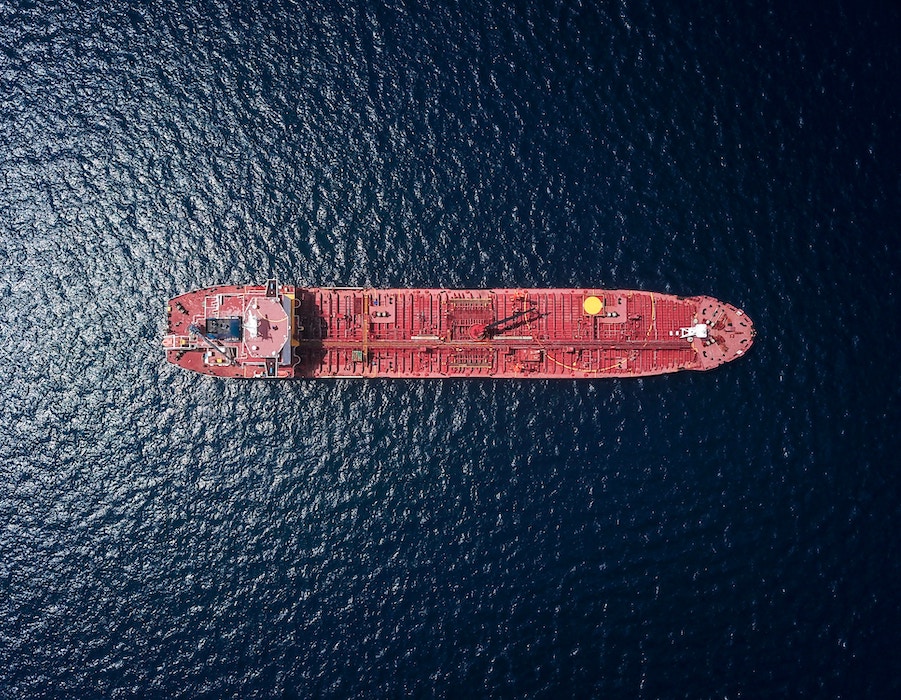
Photo credit: Shaah Shahidh on Unsplash
Published: 14 February, 2020

Continue Reading

Bunker Fuel

Huanghua Port expands bunkering capabilities with dedicated fuel oil terminal

Previously, bunkering vessels serving Huanghua Port were required to replenish marine fuel oil at other ports, including Tianjin, before returning to carry out bunkering operations, often resulting in delays.

Admin

Published

on

By

China Flag

Huanghua Port has strengthened its marine fuel supply infrastructure with the commissioning of its first dedicated, all-weather bunker terminal, a move aimed at improving vessel turnaround times and supporting growing shipping activity at the port, according to China-based news outlets on Thursday (11 June). 

On 9 June, bunker tanker Heng Feng You 165 completed fuel loading operations at the terminal in the Huanghua Port Comprehensive Port Area before proceeding to an anchorage to provide bunkering services to waiting cargo vessels.

According to local authorities, the new facility addresses a longstanding bottleneck in the port’s marine fuel supply chain. 

Yao Meichen, Deputy Director of the Cangzhou Municipal Ocean and Port Administration Bureau said bunkering vessels serving Huanghua Port were required to replenish marine fuel oil at other ports previously, including Tianjin, before returning to carry out bunkering operations, often resulting in delays for vessels awaiting bunkers.

As cargo throughput and vessel traffic have increased in recent years, the absence of a specialised bunker terminal became a constraint on port efficiency. To address the issue, local authorities invested RMB 266 million (USD 39 million) to develop Huanghua Port’s first dedicated marine fuel oil terminal and actively pursued regulatory approvals for both a domestic transfer export bonded warehouse and a liquid bonded storage facility.

The terminal, which entered service at the end of last year, features a dedicated 5,000-dwt berth and storage tanks with a combined capacity of 66,000 cubic metres. It has a designed annual throughput capacity of 820,000 tonnes and primarily handles marine gasoil as well as 120 CST and 180 CST fuel oils.

Authorities said the facility has been operating smoothly since its launch and is capable of ensuring a stable supply of bunker fuel for vessels calling at the port.

The bunkering infrastructure will be further enhanced following approval from Shijiazhuang Customs for the establishment of both the domestic transfer export bonded warehouse and liquid bonded storage facilities. The additions are expected to strengthen Huanghua Port’s ability to provide bunkering services to international-going vessels.

“The commissioning of the marine fuel oil terminal has completely changed the previous situation of off-site fuel supply and ships queuing for fuel, achieving benefits for both bunkering vessels and cargo ships,” said Dong Xianke, General Manager of Cangzhou Bohai New Area Gangkun Marine Fuel Co., Ltd., the terminal’s operator.


Photo credit: David Yu from Pixabay
Published: 16 June, 2026

Continue Reading

Methanol

China: Chimbusco takes delivery of new methanol bunkering vessel in Zhoushan

Company says commissioning of “Zhong Ran LV Neng 85” will further enhance its service capabilities in green methanol bunkering in major domestic ports.

Admin

Published

on

By

Chimbusco takes delivery of new methanol bunkering vessel in Zhoushan

China Marine Bunker (PetroChina) (Chimbusco) recently took delivery of its first bunkering vessel in China to deliver methanol to dual-fuel ships.

The 8,500-dwt duplex stainless steel chemical tanker Zhong Ran LV Neng 85 was successfully delivered in Zhoushan.

The company said the commissioning of this new ship will further enhance Chimbusco’s service capabilities in green methanol bunkering in major domestic ports and expand its national marine new energy service and support network

During the delivery period, Chimbusco said it focused on safe operations and conducted special training for all crew members of the vessel.

The training covered methanol bunkering operation specifications, prevention of collisions between commercial and fishing vessels, daily vessel reporting, and voyage report filling standards.

Manifold Times previously reported the launching of the bunkering vessel at Taizhou Fangzhen Shipbuilding Wharf in Zhejiang.

The floating out of the ship comes after Chimbusco has obtained methanol bunkering licences for Shanghai Port and Ningbo Port.

Related: Chimbusco launches new methanol bunkering vessel in Zhejiang


Photo credit: China Marine Bunker (PetroChina) (Chimbusco)
Published: 16 June, 2026

Continue Reading

LNG Bunkering

CCEC and CMA CGM form joint venture to build and operate LNG bunkering vessel

Each party will hold a 50% ownership stake in the joint venture, which has been established for the purpose of constructing, chartering, and operating one 20,000 cbm dual-fuel LNG bunkering vessel.

Admin

Published

on

By

RESIZED scott graham

Capital Clean Energy Carriers Corp. (CCEC), an international owner of ocean-going gas vessels, on Friday (12 June) announced the formation of a joint venture company with CMA CGM. 

Each party will hold a 50% ownership stake in the joint venture, which has been established for the purpose of constructing, chartering, and operating one 20,000 cbm dual-fuel LNG bunkering vessel. 

The joint venture marks CCEC’s entry into the LNG bunkering segment, the company’s first vessel dedicated to marine fuel supply.

In connection with this transaction, the joint venture has entered into a shipbuilding contract with Nantong CIMC Sinopacific Offshore & Engineering (CIMC SOE) for the construction of the vessel at a contract price of USD 82.8 million, with delivery expected in the third quarter of 2028.

Incorporating the latest technologies, the vessel is designed to enable safe and reliable LNG transfers across a wide range of operating conditions. Advanced emissions reduction systems, combined with highly efficient dual-fuel power generation, are designed to help the vessel meet applicable environmental standards of the global shipping industry.

In addition, the joint venture is expected to enter into a 12-year time charter with a joint venture company formed between CMA CGM and TotalEnergies, commencing upon delivery of the vessel from the shipyard.

Jerry Kalogiratos, CEO of Capital Clean Energy Carriers, commented: “This joint venture marks CCEC’s entry into LNG bunkering — a natural extension of our gas platform from carriage into marine fuel supply. 

“Working alongside counterparties of the calibre of CMA CGM and TotalEnergies, we can help build the infrastructure that allows LNG to deliver a cleaner emissions profile, alongside security and diversity of supply, while opening a new, long-term contracted revenue stream for the Company through the Joint Venture.”

Christine Cabau, Executive Vice President Operations and Assets of CMA CGM, said: “Together with Capital Clean Energy Carriers and TotalEnergies, we are committed to building a reliable and high-performance LNG bunkering supply chain, which is essential to ensuring the availability and reliability of fuels such as LNG that represent the first step in the decarbonization of our industry.”


Photo credit: Scott Graham
Published: 16 June, 2026

Continue Reading

Trending