Connect with us

Environment

Pacific Green Technologies highlights LSFO as ‘GHG timebomb’

Points to several studies showing producing and burning LSFO increases carbon emissions, whereas gas scrubbers save money and the environment.

Admin

Published

on

Go Media

Scrubber technology firm Pacific Green Technologies (PGT) on Thursday (10 February) published the following article outlining reasons why gas scrubbers are better for the environment than burning low sulphur fuel oil:

On 1 January 2020, the maritime industry changed tack.

To comply with IMO 2020, most of the world’s shipping fleet switched from high sulphur fuel oil (HSFO) to low sulphur fuel oil (LSFO).

After decades of use, HSFO was effectively banned, though an exception was made for shipowners who chose to fit an exhaust gas cleaning system, or marine gas scrubber.

This last decision could have been one of the best the IMO made in the process of establishing new sulphur oxide (SOx) emissions targets.

Contrary to the hysteria calling for the total elimination of heavy fuel oil from the global marine energy mix, the combination of HSFO and a scrubber continues to gain credibility as the most environmentally sound response to satisfying new greenhouse gas (GHG) limitations.

The motivation for the International Maritime Organization’s (IMO’s) new regulation was a need to lower the sulphur content of marine fuel to 0.5% or below.

But, as more scientific evidence emerges, it seems there may have been gaps in the IMO’s thinking. Perhaps insufficient consideration was given to the full environmental impact of burning LSFO.

Gas scrubbers are better for the environment

Low sulphur fuels contain lower levels of SOx and nitrogen oxides (NOx) than HSFO.

However, research recently submitted to the IMO by Germany and Finland confirms that the overall effect of burning LSFO is environmentally negative.

Very low sulphur fuel oil was only developed recently in order to create a fuel that would comply with the IMO’s 2020 SOx requirements. It has not had widespread use for a prolonged period of time.

It is not fully understood.

The Finnish/German paper details the results from controlled burnings of various marine fuels, and blended LSFO showed a marked increase in black carbon emissions.

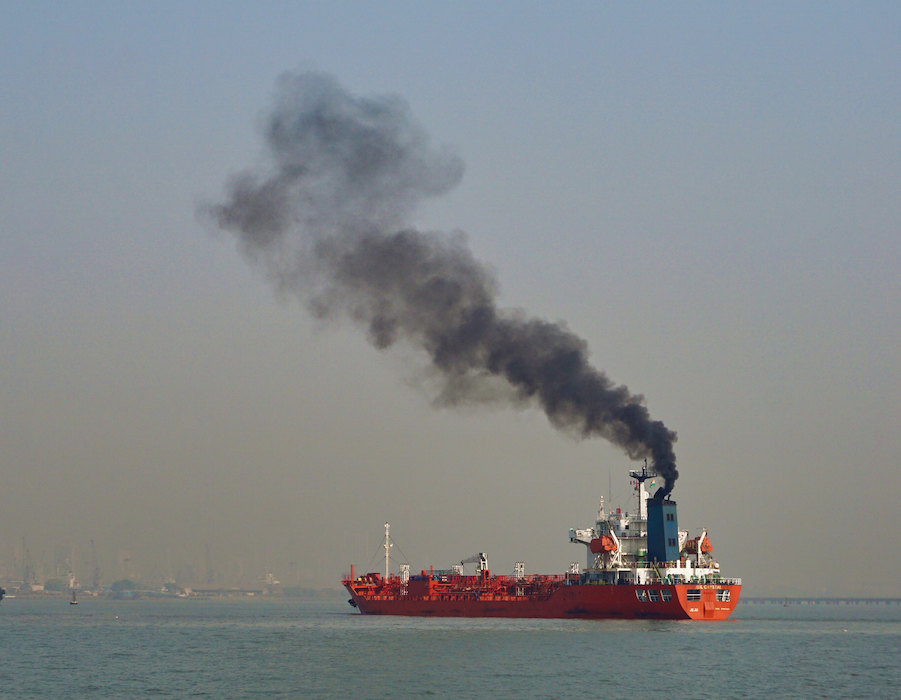
Second only to CO2 in terms of the maritime industry’s contribution to climate change, black carbon is a dangerous greenhouse gas. It is responsible for 7% to 21% of shipping’s overall GHG equivalent impact.

Despite the IMO’s proposed commitment to reducing carbon emissions – the organization has set an ambitious target of halving maritime production of GHG by 2050 – the explosion in LSFO use could spell disaster for its air pollution negation strategy.

Environmental pressure groups have taken notice.

Dr Sian Prior, Lead Advisor to the Clean Arctic Alliance, views the use of LSFO as a significant risk.

“If immediate action isn’t taken by the International Maritime Organization, the shipping industry’s use of VLSFO – introduced to comply with the 2020 sulphur cap – will lead to a massive increase in black carbon emissions, and this will both accelerate the melting of Arctic sea ice and have a major impact on Earth’s climate,”

Seas at Risk, a coalition of European NGOs focused on the protection of marine ecosystems, has also voiced alarm. John Maggs is a Senior Policy Advisor for the group:

“There are serious questions to be answered about how these blended super pollutant ‘Frankenstein’ fuels ever came to market, especially as the IMO has spent almost a decade considering how to reduce black carbon emissions from shipping.”

The recent study found that “new blends of marine fuels with 0.50% sulphur content can contain a large percentage of aromatic compounds which have a direct impact on black carbon emissions”, and “demonstrated that the combustion of fuels with higher aromatic content emits higher concentrations of black carbon.”

Thanks to the fuel price spreads, scrubbers save money too

When burnt, LSFO blends showed a 10% to 85% increase in black carbon emissions compared to heavy fuel oil, and between 67% to 145% increase when compared to marine-quality distillate fuel.

Distillate fuels, however, have their own questionable carbon record.

A study published last year by the independent Norwegian research organization, SINTEF, considered the full lifecycle of marine fuel production. It found that the global production of LSFO emits far more GHG than the production of HSFO.

In the report, SINTEF’S Chief Scientist, Dr Elizabeth Lindstad, concludes that, measured from well to wake, using HSFO with an exhaust gas cleaning system (marine gas scrubber) was the most environmentally beneficial way of meeting IMO 2020 requirements.

Her views are corroborated by the findings in Germany and Finland’s latest paper, which has been submitted for discussion at the next meeting of the IMO’s Sub-Committee On Pollution Prevention And Response (PPR7).

The submission includes a call to phase out fuels with high black carbon emissions.

Shipowners who have fitted their vessels with scrubbers may have a wry smile at this proposal.

They will be comfortable in the knowledge that, despite burning high sulphur fuel oil, their ships emit cleaner exhaust gases than the thousands of vessels using LSFO.

And, thanks to the fuel price spreads, they’re saving money too.


Photo credit:
Cyprien Hauser
Published: 11 February, 2020

Continue Reading

Emissions reporting

StormGeo and OceanScore link emissions data, compliance workflows

Cooperation combines StormGeo’s expertise in operational vessel and emissions data with OceanScore’s expertise in emissions compliance workflows across EU ETS, FuelEU Maritime and UK ETS requirements.

Admin

Published

on

By

StormGeo and OceanScore link emissions data, compliance workflows

Weather intelligence and decision support solutions provider StormGeo and Hamburg-based technology platform OceanScore on Wednesday (3 June) said they have deepened their ongoing cooperation through the signing of a collaboration agreement during Posidonia 2026 in Athens on 2 June.

The cooperation combines StormGeo’s expertise in operational vessel and emissions data with OceanScore’s expertise in emissions compliance workflows across EU ETS, FuelEU Maritime and upcoming UK ETS requirements.

Together, the companies aim to help shipping companies seamlessly navigate increasing regulatory complexity more efficiently — from emissions reporting and data validation to compliance exposure management, pooling and financial settlement.

As emissions regulation becomes an increasingly important part of commercial shipping operations, the need for reliable operational data and streamlined compliance processes continues to grow. The cooperation between StormGeo and OceanScore is designed to support shipping companies with more connected, transparent and actionable processes across operational and commercial teams.

“From the outside, companies like StormGeo and OceanScore may sometimes be perceived as competitors because both operate around emissions and compliance workflows,” said Albrecht Grell, Managing Director at OceanScore. 

“But in reality, the industry increasingly needs both perspectives working together: trusted operational emissions data on one side and commercial compliance execution on the other. Our cooperation reflects that shipping companies are no longer looking for isolated solutions — they need connected processes, automated across different systems and reliable decision-making throughout the full compliance chain.”

By connecting validated operational emissions data with commercial compliance management, the cooperation supports workflows across:

  • emissions reporting and validation 
  • compliance management across EU ETS, FuelEU Maritime and upcoming UK ETS requirements
  • exposure visibility and cost transparency
  • pooling, settlement and financial processes 

The cooperation also aims to improve commercial transparency and coordination across operational and commercial stakeholders.

“StormGeo plays a central role in helping shipping companies turn operational vessel and emissions data into trusted, decision-ready insights,” said Espen Martinsen, Chief Commercial Officer at StormGeo. 

“As emissions regulations become more complex, this data is essential for transparent and efficient compliance management. By working with OceanScore, we can help customers connect StormGeo’s validated operational data with commercial compliance processes, creating a more integrated and practical approach to emissions management.”

The signing ceremony took place at the StormGeo booth during Posidonia 2026 in Athens and was attended by representatives from both companies.

Both companies expect the cooperation to continue evolving alongside upcoming regulatory developments, including FuelEU Maritime, EU ETS, the upcoming UK ETS and future emissions-related frameworks affecting global shipping.


Photo credit: StormGeo
Published: 4 June, 2026

Continue Reading

Methanol

Seaspan and Hapag-Lloyd complete first of five methanol vessel retrofit

Following “Seaspan Yangtze”, the remaining vessels planned for retrofit under the methanol retrofit programme are “Seaspan Amazon”, “Seaspan Ganges”, “Seaspan Thames”, and “Seaspan Zambezi”.

Admin

Published

on

By

Seaspan and Hapag-Lloyd complete first of five methanol vessel retrofit

Seaspan Corporation (Seaspan) and Hapag-Lloyd on Wednesday (3 June) announced the successful completion of the first of the five vessel conversions under their methanol retrofit programme with the delivery of Seaspan Yangtze.

From the early SAVER (Seaspan Action for Vessel Energy Reduction) programme to today’s CleanBlue initiative, Seaspan has committed over USD 230 USD million across 86 vessels, executing more than 550 efficiency and retrofit projects.

Following Seaspan Yangtze, the remaining vessels planned for retrofit under the programme are Seaspan Amazon, Seaspan Ganges, Seaspan Thames, and Seaspan Zambezi. Each retrofit is expected to reduce well-to-wake CO₂e emissions by approximately 30,000 to 50,000 metric tonnes per vessel annually when operating on low-carbon methanol, while also extending vessel lifespan and enhancing fuel flexibility.

“Decarbonisation is not just about building the fleet of tomorrow, it is also about unlocking the full potential of the fleet we have today. Retrofitting and upgrades on existing fleets play a practical, immediate, and economical role in accelerating shipping’s decarbonization journey,” said Bing Chen, Chairman, President and CEO of Seaspan. 

“Project SAVER CleanBlue highlights Seaspan’s strong customer partnerships, deep technical expertise, and unique platform integrated with JV partners, such as WattSpan Maritime Technology, in executing complex and large-scale retrofit projects.”

“The successful conversion of the Seaspan Yangtze together with the planned retrofit of its four sister vessels is another important step on our ambitious path towards net-zero fleet operations by 2045,” said Silke Lehmköster, Managing Director, Fleet, Hapag-Lloyd. 

“Together with Seaspan, we are demonstrating that retrofitting existing vessels for low-carbon methanol can be a practical way to reduce emissions in shipping.”


Photo credit: Seaspan
Published: 4 June, 2026

Continue Reading

LNG Bunkering

MOL and Seaspan sign annual LNG bunkering deal for car carriers in Port of Vancouver

MOL says North America is one of the key trade lanes for car carriers, and with recent delivery of new LNG-fuelled vessels, securing a stable LNG fuel supply in the area has become increasingly important.

Admin

Published

on

By

MOL and Seaspan sign annual LNG bunkering deal for car carriers in Port of Vancouver

Mitsui O.S.K. Lines, Ltd. (MOL) on Thursday  (21 May) announced that MOL and Seaspan Energy have signed the first annual contract for LNG bunkering for car carriers at the Port of Vancouver, Canada. 

On 29 April, MOL completed the first LNG bunkering under this contract. Since completing the first LNG bunkering on the West Coast of North America on 1 March 2025 – the first by a Japanese shipping company – MOL has conducted several additional LNG bunkering operations in the region. 

North America is one of the key trade lanes for car carriers, and with the recent delivery of new LNG-fuelled vessels, securing a stable LNG fuel supply in the area has become increasingly important. This contract underscores the company’s commitment to establishing a stable and seamless regional LNG fuel procurement framework.

Seaspan expanded its LNG bunkering capabilities in 2026 from Vancouver to Long Beach, California, and continues to proactively support the growth of a clean marine supply chain.

Seaspan Energy President Harly Penner, said: “The relationship between Seaspan Energy and MOL is highly valued. MOL was the first car carrier operator to receive LNG bunkering services in the Port of Vancouver, and we are proud to continue supporting their operations in Vancouver through this annual LNG bunkering agreement. 

“This partnership reflects our shared commitment to advancing lower-emission marine transportation and supporting the industry’s transition toward net-zero GHG emissions.”

Marine Fuel GX Division General Manager Daisuke Fujihashi, said: “We are very pleased to further strengthen our partnership with Seaspan Energy through this contract for LNG fuel procurement. 

“Looking ahead, we will continue to deepen our collaboration with Seaspan Energy in the field of clean fuels, including bio LNG, and remain committed to offering our customers more pathways toward cleaner supply chains.”


Photo credit: MOL
Published: 22 May, 2026

Continue Reading

Trending