
Business
Vietnam: Fishing vessels seized over 340,000 litres of illegal diesel
Four fishing boats – ‘KG 95983 TS’, ‘KG 91577 TS’, ‘TG 92008 TS’, ‘BT 99889 TS’- were detected displaying many suspicious signs, says Vietnam Coastguard.

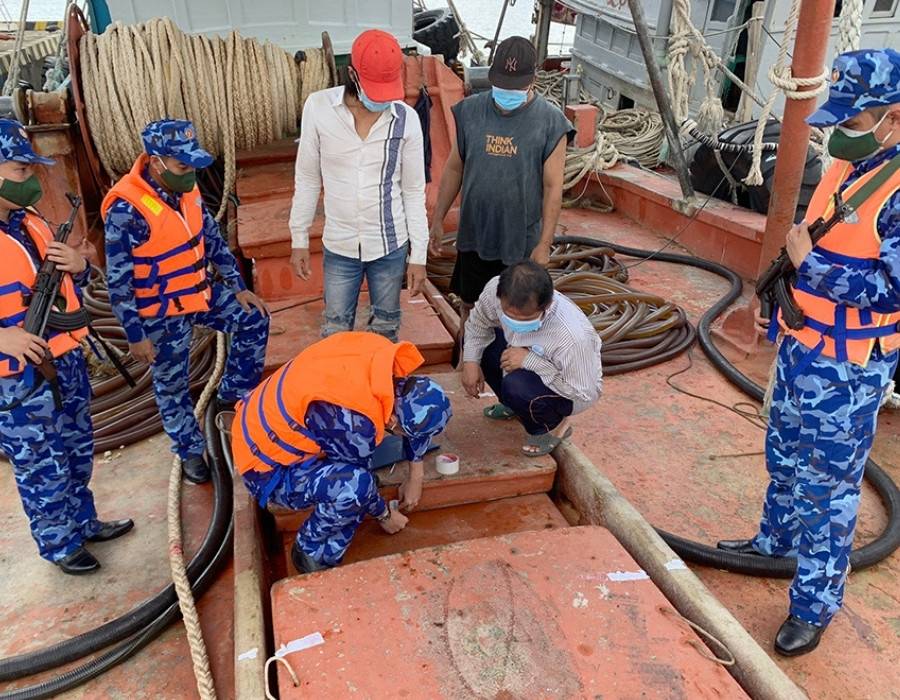
The Vietnam Coast Guard Command on Wednesday (18 May) said it has seized a total 340,000 litres of unknown origin diesel oil in a series of operations between May 12 to 17 in the Southwest Sea.
A patrol boat belonging to Squadron 422 and Squadron 42 detected four fishing boats – KG 95983 TS, KG 91577 TS, TG 92008 TS, BT 99889 TS – displaying several suspicious signs.
Initial investigations found all vessels without invoices and documents proving legal origin of the oil material.
The vessels were transporting various quantities of oil material: KG 95983 TS was transporting about 15,000 litres; KG 91577 TS transported about 25,000 litres; TG 92008 TS transported about 100,000 litres and BT 99889 TS transported about 200,000 litres, according to testimonies from the Captains.
As such, the authorities made records of administrative violations, sealed the infringing goods, and escorted the vessels to port of Squadron 421 in Nam Can district, Ca Mau province for further investigations and handling in accordance with the law.

A series of earlier Vietnamese Coast Guard arrests covered by Manifold Times in 2022 are as follows:
Related: Vietnam: Coast Guard detains vessel transporting about 70,000 litres of unknown diesel
Related: Vietnam: Coast Guard arrests fishing vessel transporting about 60,000 litres of unknown diesel
Related: Vietnam Coast Guard detains wooden-hulled ship, seizes 27,000 litres of illegal diesel
Related: Vietnam Coast Guard detains tanker carrying 110,000 litres of illegal oil
Related: Vietnam: “TG 92267 TS” arrested over 50,000 litres of unknown origin diesel oil
Related: Vietnam Coast Guard seizes “Duc Minh 06” for illegally transporting oil at sea
Photo credit and source: Vietnam Coast Guard
Published: 20 May, 2022
Business
FLEX Commodities appoints Euwyn Tan as Senior Marine Fuels Trader in Singapore
Tan has experience across the marine fuels, bunkering and shipping markets, with a strong background in trading, procurement, commercial negotiations and developing relationships.

LNG Bunkering
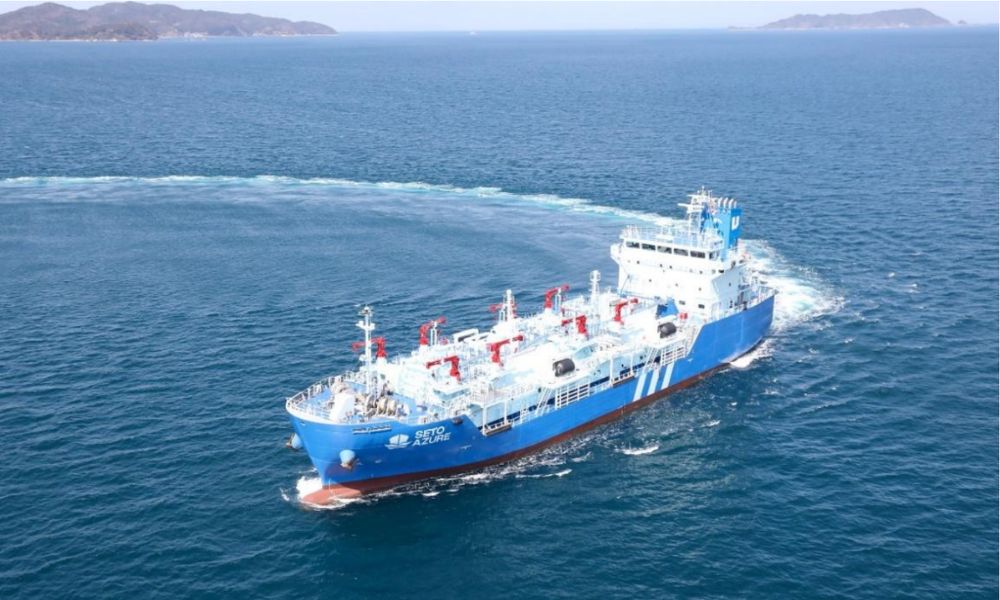
Osaka Gas conducts Osaka Bay’s first STS LNG bunkering operation
Acting through Singapore-based marine fuel trading firm Integr8 Fuels, Osaka Gas supplied LNG bunker fuel to an LNG-fuelled PCTC operated by an overseas shipping company calling at the Port of Kobe.
Bunker Fuel
Bunker Holding, Dan-Bunkering to join USTC units at new Copenhagen hub
Employees from Bunker Holding, Dan-Bunkering, Global Risk Management, CM Biomass, Unit IT, Uni-Tankers, Selfinvest, and USTC will all be based together in a new shared USTC Hub.


OUR INDUSTRY PARTNERS

FLEX Commodities appoints Euwyn Tan as Senior Marine Fuels Trader in Singapore

Osaka Gas conducts Osaka Bay’s first STS LNG bunkering operation

Bunker Holding, Dan-Bunkering to join USTC units at new Copenhagen hub

DNV at SMM: Yanmar Maritime awarded type approval for fuel cell system

New TotalEnergies lubricant for marine engines delivers 1.5% fuel savings in tests

ORLEN and Port of Gdynia to explore LNG and bio-LNG bunkering in Poland

Kongsberg Maritime to buy Finnish marine propulsion designer Steerprop

Singapore-flagged tugboat “Kim Heng 3203” placed under Sheriff’s arrest

US targets five bunker companies in latest sanctions campaign against Iran

China’s bunker market reshaped by tax rebates, trade flows and refining changes, says economist

Rajah & Tann: Bunker disputes are won in the first 48 hours

Hengli Petrochemical’s ex-Singapore trading arm faces winding up application

Report: GCMD outlines practical approach to quantity assurance in marine biofuel supply chains

Singapore: Notices of annual meeting issued for Vroon Shipping Asia and related firms
-
 Vessel Arrest2 weeks ago
Singapore-flagged tugboat “Kim Heng 3203” placed under Sheriff’s arrest
-
 Sanctions2 weeks ago
US targets five bunker companies in latest sanctions campaign against Iran
-
 Interview2 weeks ago
China’s bunker market reshaped by tax rebates, trade flows and refining changes, says economist
-
 Bunker Claim7 days ago
Rajah & Tann: Bunker disputes are won in the first 48 hours
-
 Winding up2 weeks ago
Hengli Petrochemical’s ex-Singapore trading arm faces winding up application
-
 Biofuel2 weeks ago
Report: GCMD outlines practical approach to quantity assurance in marine biofuel supply chains
-
 Winding up2 weeks ago
Singapore: Notices of annual meeting issued for Vroon Shipping Asia and related firms
-
 Vessel Arrest6 days ago
Malaysia: MMEA detains two vessels over suspected illegal ship-to-ship transfer off Johor