Connect with us

LNG Bunkering

LR: LNG remains most cost-effective alternative marine fuel pathway to 2050

Report also showed that blending LNG with bio-LNG and e-LNG could strengthen this advantage further, allowing LNG-fuelled vessels to generate compliance surpluses in the early years of new regulatory regimes.

Admin

Published

on

LR: LNG remains most cost-effective alternative marine fuel pathway to 2050

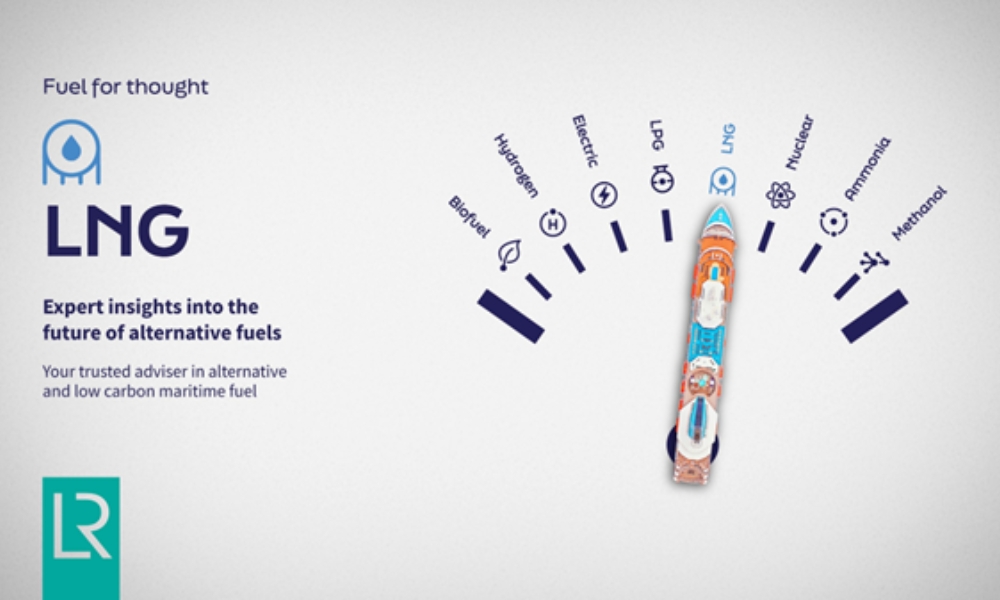
Classification society Lloyd’s Register (LR) on Wednesday (6 May) released its latest Fuel for thought: LNG report, offering a refreshed and data-driven assessment of LNG’s evolving role as a mature and significant fuel in transition for the shipping industry.

As of March 2026, the dual-fuel LNG fleet has reached 1,665 vessels, with an additional 982 on order — expanding the gas-fuelled fleet. Although recent developments may have created uncertainty that has impacted investment in alternative fuels, LNG continues to be the key alternative fuel in the existing orderbook.

Growth is being driven particularly by the container sector, which is on course to more than double its LNG capable fleet, while cruise, tanker and PCC/RoRo operators are also accelerating their uptake.

LR’s economic modelling confirms LNG remains the most cost-effective alternative fuel pathway to 2050 under any proposed framework so far.

The report also showed that blending LNG with bio-LNG and e-LNG could strengthen this advantage further, allowing LNG-fuelled vessels to generate compliance surpluses in the early years of new regulatory regimes.

A major focus of the updated report is the significant progress in methane slip reduction. High-pressure two-stroke engines are now achieving slip as low as 0.2 g/kWh, while low-pressure engines fitted with exhaust gas recirculation are delivering reductions of more than 60%.

However, these improvements are not yet reflected in the emissions factors under both FuelEU Maritime and the IMO’s Lifecycle Assessment guidelines. The report argued that updating these factors will be essential to ensure that regulation reflects current technology and incentivises genuine emissions reductions rather than penalising early movers.

The report also underlined the importance of upstream emissions and fuel certification. Cleaner LNG production, reduced methane leakage and the growth of independently verified certification schemes are essential if shipowners are to realise the full emissions reduction potential of cleaner supply chains.

Additionally, the operational considerations of LNG-fuelled vessels during drydocking are examined with recommendations for planning, execution and safety.

Constantinos Chaelis, Global Gas Segment Director, Lloyd’s Register, said: “LNG represents an immediately deployable, scalable, and well-established fuel in transition  that aligns with both operational imperatives and emerging regulatory requirements.

“As global bunkering infrastructure continues to expand, renewable gas supply chains mature, and emissions control technologies become more widely adopted, LNG is expected to remain a central component of the maritime sector’s transitional energy landscape.”

Panos Mitrou, SVP Shipping Strategy, Lloyd’s Register, said: “The findings in our new report underline that this continued interest in LNG is not solely a bridge to other fuels, but a strategic response to tightening global and regional regulation. We need to intensify our focus on methane emissions, clean LNG variants and improving the LNG value chain GHG footprint.”

Note: The Fuel for thought:LNG report is available at Fuel for Thought – alternative marine fuels | LR


Photo credit: Lloyd’s Register
Published: 7 May, 2026

Continue Reading

LNG Bunkering

Dan-Bunkering supports Sallaum Lines with LNG bunkering operation in China

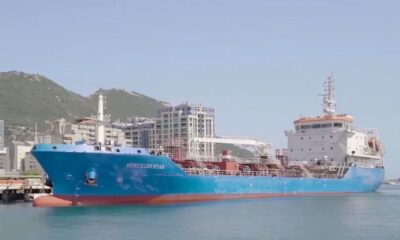
“Ocean Express” is one of six newbuilds in the series and represents the fourth supply opportunity Dan-Bunkering has supported so far.

Admin

Published

on

By

Dan-Bunkering supports Sallaum Lines with LNG bunkering operation in China

Global bunker supplier Dan-Bunkering on Friday (19 June) said it has recently concluded an LNG delivery in China for Sallaum Lines’ newbuild Pure Car and Truck Carrier (PCTC), Ocean Express

The delivery involved approximately 1,400 metric tonnes (mt) of LNG bunker fuel. 

This delivery is the outcome of a development process that began around April 2025, during which Dan-Bunkering worked with Sallaum Lines to evaluate several LNG supply opportunities in China linked to the company’s newbuild programme. 

Ocean Express is one of six newbuilds in the series and represents the fourth supply opportunity Dan-Bunkering has supported so far.

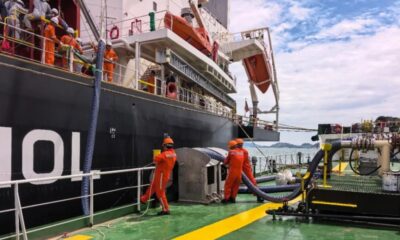
For this delivery, Dan-Bunkering said it secured a ship-to-ship supply solution aligned with the vessel’s operational requirements. The solution was made possible through close cooperation with supply partner SIPG Energy.

“This is a great example of what it takes to support clients in the transition to alternative fuels,” said James Shiller, Global Lead of New Fuels at Dan-Bunkering, and continues:

“LNG bunkering is not always straightforward, particularly during a first full bunker operation. Success depends on local knowledge and persistent cooperation across teams. Sallaum Lines trusted us and SIPG Energy to keep working the options, and we are proud that all involved teams turned a challenging situation into a successful delivery. We value the relationship and look forward to supporting their remaining newbuild deliveries.”

The company added that the delivery was made possible through close coordination across Dan-Bunkering and the wider Group, including Dan-Bunkering’s Netherlands office, Bunker Holding’s specialists and sourcing team.


Photo credit: Dan-Bunkering
Published: 22 June, 2026

Continue Reading

Alternative Fuels

Verra releases new methodology for alternative low-carbon bunker fuels

New methodology provides the first structured, independent accounting framework for quantifying emission reductions in maritime transport, bridging a critical regulatory gap in global trade.

Admin

Published

on

By

CHUTTERSNAP MT

Verra, a nonprofit organisation that develops and manages the standards for climate and sustainable development, recently released a new methodology in the Verified Carbon Standard (VCS) Programme, VM0053 Alternative Low-Carbon Fuels for Shipping, v1.0. 

Verra said the methodology provides the first structured, independent accounting framework for quantifying emission reductions in maritime transport, bridging a critical regulatory gap in global trade and enabling the related climate benefits to scale.

VM0053 applies to project activities that involve using low-carbon alternative fuels (e.g., hydrogen produced through water electrolysis, green ammonia, and electro fuels [e-fuels] such as e-LNG, e-LPG, e-diesel, and e-methanol) to replace fossil fuels in shipping. 

The methodology applies to new or existing ships, regardless of gross tonnage, operating in territorial or high seas.

Verra added that maritime shipping carries over 80% of global freight and remains a hard-to-abate sector where reducing greenhouse gas emissions has proven to be challenging. 

“This methodology helps unlock finance for low-carbon alternative fuels by creating a new revenue stream that can offset the high premium associated with e-fuels,” it said.

“It supports the use of drop-in alternative fuels that can be used to displace fossil fuels in the engines of existing fleets, leveraging these fleets to realise emission reductions. Additionally, this methodology provides a credible mechanism for sourcing, verifying, and scaling reductions in value chain emissions.”

VMD0053 was developed by Iino Kaiun Kaisha, Ltd., Grütter Consulting, and Verra. The methodology underwent public consultation in 2024 as part of Verra’s methodology development process.

Note: The  new methodology ‘VM0053 Alternative Low-Carbon Fuels for Shipping, v1.0’ can be viewed here


Photo credit: CHUTTERSNAP on Unsplash
Published: 22 June, 2026

Continue Reading

Alternative Fuels

MOL inks bio-LNG bunker fuel supply deals with Titan and Axpo for car carriers in Europe

Titan, part of Amsterdam-based Molgas, will continue to supply bio-LNG fuel in Northwest Europe, while Axpo will take charge of supply in the Mediterranean region.

Admin

Published

on

By

MOL inks bio-LNG bunker fuel supply deals with Titan and Axpo for car carriers in Europe

Mitsui OSK Lines (MOL) on Thursday (18 July) said it has signed new supply agreements in Northern Europe and the Mediterranean region to expand the use of bio-LNG marine fuel on MOL-operated LNG-fuelled car carriers.

Titan, part of Amsterdam-based Molgas, will continue to supply bio-LNG fuel in Northwest Europe, while Axpo will take charge of supply in the Mediterranean region.

MOL said the agreement makes it possible for its company to supply bio-LNG fuel for automobile carriers in the Mediterranean region, specifically Port of Malaga and Barcelona in Spain, following the bio-LNG fuel supply agreement in Western Europe, which commenced in March last year.

The bio-LNG fuel to be supplied in this initiative has a lifecycle carbon intensity (carbon dioxide emissions per unit of energy consumption) of -15 g-CO2/MJ or less, from production through consumption. Furthermore, this bio-LNG fuel has obtained International Sustainability and Carbon Certification (ISCC-EU). 

“Through this supply agreement, MOL has established a framework that ensures a continuous and stable supply of bio-LNG fuel not only in Northern Europe but also in the Mediterranean,” the company said.

As part of the group’s efforts to adopt alternative fuels and achieve net-zero greenhouse gas (GHG) emissions, it is utilising LNG-fuelled vessels as a bridge solution to facilitate the transition to carbon-neutral fuels such as bio-LNG and synthetic LNG (e-methane).

In 2025, MOL signed a bio LNG fuel supply agreement in Northwest Europe with Titan, part of the Molgas, and MOL has continued this bio LNG fuel supply agreement with the same company in 2026 as well.


Photo credit: Mitsui OSK Lines
Published: 19 June, 2026

Continue Reading

Trending