Connect with us

Alternative Fuels

IRClass undertakes successful sea trials for pioneer batch of vessels in India to use biofuel

Biodiesel blend (B20) used for Ambuja Mukund and Ambuja Vaibhav; vessels are owned by Ambuja Cements Ltd., which is a part of the global conglomerate Lafarge Holcim.

Admin

Published

on

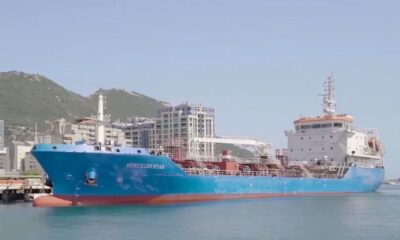
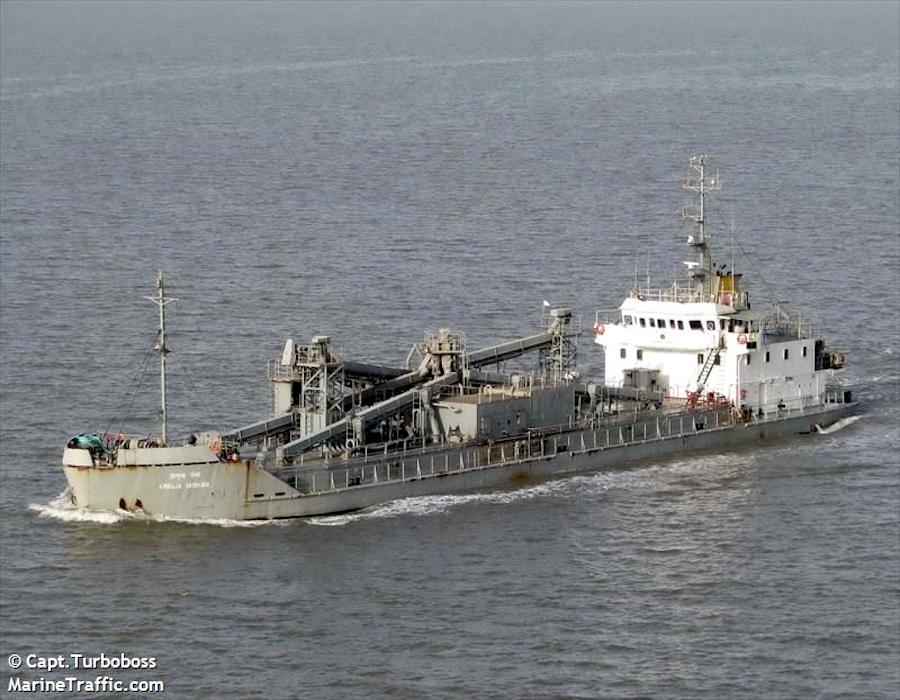
AMBUJA VAIBHAVA Capt Turboboss Marine Traffic

The Indian Register of Shipping (IRClass) has undertaken successful sea trials for two vessels towards use of biofuels in concurrence with the Indian flag administration.

The two vessels, namely Ambuja Mukund and Ambuja Vaibhav, are owned by Ambuja Cements Ltd., which is a part of the global conglomerate Lafarge Holcim, a leader in building solutions.

In a bid to move towards reducing Greenhouse Gases (GHGs), the trials were carried out and the emission levels for CO2 and NOx at both ballast and loaded voyages were monitored during the trial period.

The results of the trials were found to be “satisfactory”, according to IRClass.

The biodiesel blend (B20) was in compliance with Marpol Annex VI (Reg.14) sulphur content requirements and met SOLAS (Ch. II-2/Reg.4.2.1) in terms of flash point requirements. No increase of NOx was observed with biodiesel blend as compared to LSHSD, rather the emission level was found to be less.

Though the reduction in CO2 was found to be around 7%, the total life cycle reduction of CO2 by Life Cycle Analysis (LCA) was measured to be around 21% as the biodiesel from Soya extract had a reduction of life cycle GHG emissions by 70%.

Based on the above, Indian Administration has accorded approval of bio-fuels trials for the remaining fleet of vessels of Ambuja Cement which are mainly deployed on the Indian coastal routes.

To date, the Indian government has taken a firm stance to reduce the country’s carbon footprint through the implementation of the National Policy on Biofuels, which was approved in 2018, and the policy targets to blend 20% of biofuels into traditional fuels by 2030.

“Sustainability remains at the heart of our work and we are honoured to be part of this ground-breaking exercise,” stated Vijay Arora, Joint Managing Director of IRClass.

“IRClass works closely with the industry for decarbonisation projects and we would like to thank Ambuja Cement for this initiative. We also thank the Directorate General of Shipping, the flag administration of India whose support and guidance is critical.

“The efforts of our various teams from Ship Technical Services, Plan Approval Centre (Machinery) and attending Surveyors from Survey Station are also appreciated.

“We are positive that such progressive steps will lead to discernible reduction in GHG emissions. Sustainable biofuels have great potential to reduce emission levels substantially and once successfully trialled – will pave a cleaner new future for shipping in India’ he added.”


Photo credit: MarineTraffic / Capt. Turboboss 

Published: 13 April, 2021

Continue Reading

Biofuel

BHP and GCMD trial multi-feedstock B100 bio bunker fuel on bulk carrier

Bio-blend in the BHP and GCMD pilot is being used on a BHP-chartered bulk carrier “Berge Lyngor”, which was bunkered in Singapore in early May.

Admin

Published

on

By

BHP and GCMD trial multi-feedstock B100 bio bunker fuel on bulk carrier

BHP and the Global Centre for Maritime Decarbonisation (GCMD) on Wednesday (3 June) said they have blended biofuels from two distinct feedstocks—used cooking oil and waste animal fats —and introduced the lower-emissions marine fuel into a BHP-chartered bulk carrier as part of a pilot project.

The bio-blend in the BHP and GCMD pilot is being used on a BHP-chartered bulk carrier Berge Lyngor, owned and operated by Berge Bulk, transporting BHP iron ore from Western Australia to China. When run on bio-blend, the vessel has the potential to reduce well-to-wake greenhouse gas emissions by approximately 79 per cent per voyage compared to sailing on very low sulphur fuel oil (VLSFO).

The vessel bunkered in Singapore in early May with a B100 bio-blend comprising 50 percent tallow-derived biodiesel, sourced and supplied by HAMR Energy, and 50 per cent used cooking oil (UCOME) supplied by Mitsui & Co Energy Trading Singapore (METS).

Mitsui also blended the fuel and Dan-Bunkering coordinated and executed the bunkering operation, which was performed by Global Energy’s barge MT Maple.

The BHP and GCMD pilot will assess how biofuels from multiple feedstocks can be blended, handled, and introduced under real-world operating conditions using existing used cooking oil bunkering infrastructure.

At the same time, insights from this pilot will help identify solutions to challenges related to fuel quality, handling, traceability, and onboard vessel performance.

Biofuels for global shipping today rely heavily on used cooking oil – a feedstock whose availability is approaching its projected limits. Biofuel from waste animal fats presents a promising option to expand the supply of lower-emissions marine fuels.

The outcomes of the pilot are expected to shed light on the practical steps to integrate biofuel blends from different feedstocks into existing supply chains. The diversity of biofuels will provide shipowners and operators with greater flexibility to optimise fuel procurement based on cost, availability, and lifecycle emissions performance.

Biofuels derived from different feedstocks can exhibit varying properties that may impact operations, including potential corrosion from oxidation, fuel system clogging caused by wax formation, which this pilot aims to assess.

The pilot will trace and verify the biofuel blend’s integrity aimed at bolstering confidence in emissions reductions reporting. The pilot will also provide insights into how robust tracing can support future marine fuel supply chains where biofuels from multiple feedstocks with varying lifecycle greenhouse gas emissions footprints are blended together.

This project is co-funded by the Maritime and Port Authority of Singapore under the Maritime Innovation and Technology Fund (MINT).


Photo credit: Global Centre for Maritime Decarbonisation
Published: 3 June, 2026

Continue Reading

Biofuel

NYK starts one-year B100 bio bunker fuel trial on car carrier

In this trial, NYK will operate a car carrier continuously on B100 for one year to evaluate the impact on engines, fuel supply systems, and operational practices.

Admin

Published

on

By

NYK starts one-year B100 bio bunker fuel trial on car carrier

Japanese shipping firm NYK on Tuesday (2 June) said it has commenced a one-year long-term trial involving the continuous use of 100% biofuel (B100) on an NYK-operated car carrier. 

In this trial, NYK will operate a car carrier continuously on B100 for one year to evaluate the impact on engines, fuel supply systems, and operational practices. High-purity biofuels such as B100 are known to be susceptible to degradation from oxygen, light, and heat, raising concerns about the stability of such fuels during long-term use.

In this trial, the biofuel primarily comprises FAME (Fatty Acid Methyl Ester) derived from used cooking oil and similar feedstocks.

The initiative is designed to evaluate the fuel’s effects on the vessel’s equipment and verify operational safety under real-world conditions. 

Through this effort, NYK seeks to accumulate technical expertise that will support the broader use of high-purity biofuels and further accelerate efforts to reduce greenhouse gas (GHG) emissions.

NYK has been advancing the use of biofuels through various initiatives. In 2024, the company conducted a trial using biofuel blend B24 and subsequently expanded practical usage to B30. However, the company said there remains limited global experience with the long-term continuous use of B100.

“By collecting long-term operational data through this trial, NYK aims to accumulate valuable technical insights to support both the safe operation of vessels and the wider adoption of high-purity biofuels,” it said. 


Photo credit: NYK
Published: 3 June, 2026

Continue Reading

Ammonia

AM Green plans to build green ammonia plant at Indian port

Initiative also includes development of green ammonia handling, storage and bunkering infrastructure, pilot bunkering operations, safety procedures and training programmes, says VOC Port Authority.

Admin

Published

on

By

india flag

VO Chidambaranar (VOC) Port Authority on Friday (29 May) said it has signed a Memorandum of Understanding (MoU) with India’s ammonia producer AM Green Ammonia to collaborate in the development of a green ammonia production plant.

The plant will have a capacity of one million tonnes per annum (MTPA) at Tuticorin.

The initiative also includes development of green ammonia handling, storage and bunkering infrastructure, pilot bunkering operations, safety procedures and training programmes. 

The project is expected to support the development of green fuel corridors connecting VOC Port with major ports in Europe and Asia, thereby strengthening India’s position in the global green fuels value chain.

VOC Port also signed a Memorandum of Understanding (MoU) with Bureau Veritas (India) Pvt. Ltd., to collaborate on Green Port certification, emissions accounting, ESG reporting, safety validation, development of green bunkering practices, and establishment of a Centre of Excellence for green fuels and sustainability.

The port also plans for an upcoming 750 m³ green methanol bunkering facility.


Photo credit: Naveed Ahmed on Unsplash
Published: 3 June, 2026

Continue Reading

Trending