Connect with us

Business

IBIA questions new claims about VLSFO and black carbon emissions

Understanding factors behind BC is a complex science as BC formation depends on multiple and variable factors and how they interact i.e. engine type, engine load etc.

Admin

Published

on

IBIA

Unni Einemo of the International Bunker Industry Association (IBIA) on Wednesday (15 July) published an article explaining why comprehending factors behind black carbon emissions from VLSFO is a complex science that even experts struggle to grasp completely, and thus the shipping industry should have solid data backing their claims before drawing conclusions about its environmental impact: 

Fuel oil blends produced to meet the IMO 2020 sulphur limit, referred to as very low sulphur fuel oil (VLSFO), have had a lot of bad press. Most of it has been based on alarmist predictions about the quality and other characteristics of these fuels, which have later proven to be unjustified or only partially accurate.

Earlier this year, IBIA addressed claims that the shift from high sulphur fuel oil (HSFO) with up to 3.50% sulphur to VLSO blends meeting the new 0.50% sulphur limit for marine fuels would increase black carbon (BC) emissions. The claims, which proliferated in the press and on social media, were based on a study submitted to the IMO indicating that the new VLSFO blends could potentially be highly aromatic, and therefore increase black carbon (BC) emissions.

IBIA and others explained to an IMO meeting (PPR 7) in February 2020 that the fuel specimens used in the BC measurement study were not representative of most VLSFOs that were actually in the market. IBIA made a statement at PPR 7, and interventions by ISO and IMarEST are on record in an annex to the IMO’s report from PPR 7. VLSFOs delivered to ships have so far generally been more paraffinic and less aromatic than the HSFOs they have replaced.

Now, a new theory has been circulated in the press based on an article published on LinkedIn by Francisco Malta of VM Industrials, a distributor for additive maker Aderco. The article, originally* published with the headline “Why new VLSFO 0.5% Sulphur fuels emit higher Black Carbon Emissions” claimed that it isn’t a high aromatics content, but rather paraffinic hydrocarbons in VLSFO that are to blame for BC emissions.

IBIA finds claims made in the article questionable. Without getting into too much detail, let’s explain some of the issues.

First of all, the article gave the impression that the introduction of VLSFO has led to an increase in black carbon (BC) emissions.* However, the article did not present or reference any independently validated data from actual measurements of actual VLSFOs in use so far to support this observation.

It is important to note that the discussion at IMO in February was about a theoretical increase in BC emissions based on the BC measurement study, not an actual observed increase since ships began to use VLSFOs. The BC measurement study, which had been submitted to the IMO in November 2019, showed that an increase in aromatic content was associated with increased BC emissions. This was well understood by industry, which welcomed the study as an important contribution to build better knowledge about factors contributing to BC emissions. It was the assumption that VLSFOs would be more aromatic than the HSFOs they were replacing that was disputed.

Understanding all the factors behind black carbon emissions is a complex science and many people struggle to get a good understanding of it, including experts on chemistry and combustion processes. Formation of BC depends on multiple and variable factors and how they interact, including the engine type, engine load, engine condition, the makeup of the fuel and the pre-conditioning of the fuel prior to injection.

While the article claimed that it was an increased level of paraffinic hydrocarbons in VLSFO that were causing an increase in BC emissions, we should not forget that a large portion of marine distillates are mainly paraffinic in nature. Yet there have not been any reports of an increase in BC emissions in emission control areas (ECAs), where most ships have been using marine gasoil to meet the 0.10% sulphur limit since 2015. We do note, however, that even clear and bright distillates can cause very visible black smoke when the engine is not in an optimum condition/and or setting.

The article stated that the asphaltenes in HFO 3.5% S “drop from suspension and end up as sludge in tanks” hence “they rarely ever make their way to combustion” whereas in the new VLSFO scenario, they “do make their way to the combustion chamber.” This isn’t what we have seen in practice. Conventional high sulphur fuel oils (HSFOs) are typically less prone to forming asphaltenic sludge prior to combustion than we have seen with VLSFOs so far. HSFO is typically more aromatic than VLSFO, and this helps keep the asphaltenes in suspension and stable. Hence, there would be more asphaltenes reaching the combustion chamber when using HSFO than VLSFOs. Also, VLSFOs typically contain less asphaltenes than HSFOs so it seems counterintuitive to suggest that more asphaltenes reach the combustion chamber when using VLSFO compared to HSFO.

Simply put, black carbon, or soot, is a result of incomplete combustion. From what we have heard, fuels with higher paraffinic content are associated with improved combustion compared to highly aromatic fuels. So far, we have not heard about VLSFOs being particularly prone to poor and/or incomplete combustion compared to HSFOs (which are typically more aromatic). Hence the claims in the article appear to run counter to real world experience.

We learnt from the discussions about VLSFO and BC emissions prior to the IMO meeting in February that misunderstandings can take hold when theories are taken as evidence of fact, when the reality may be quite different.

IBIA believes it is important to have proper data and empirical evidence to back up theories. When pointing to a certain fuel characteristic as the cause of an increase in BC emissions, it needs to be backed by independently validated data and specifics on the measurement methodology used to define black carbon.

VLSFO is currently the most widely adopted solution to meeting the 0.50% sulphur limit and for the most part it has performed better than predicted in the run-up to IMO 2020. As such, VLSFO blends have confounded much of the bad press. As VLSFOs are still quite new, we are still learning. We should, however, ensure that any conclusions drawn about the performance and environmental impact of VLSFOs are based on solid evidence.

Unni Einemo
[email protected]

*Following communications with IBIA, the author of the article has edited the LinkedIn post to insert “may” in the headline so it reads “Why new VLSFO 0.5% Sulphur fuels may emit higher Black Carbon Emissions”, and has moderated some of the language that suggested that VLSFOs have caused an increase in black carbon emissions.

Related: Aderco: Why new VLSFO 0.5% Sulphur fuels may emit higher Black Carbon Emissions


Source:
IBIA
Published: 16 July, 2020


Continue Reading

Alternative Fuels

Yang Ming orders six LNG dual-fuel, ammonia-ready containerships from Hanwha Ocean

Each of the six new vessels will have a capacity of up to 13,650 TEU and feature LNG dual-fuel propulsion and Ammonia Fuel Ready specifications.
Admin

Published

on

By

Yang Ming orders six LNG dual-fuel, ammonia-ready containerships from Hanwha Ocean

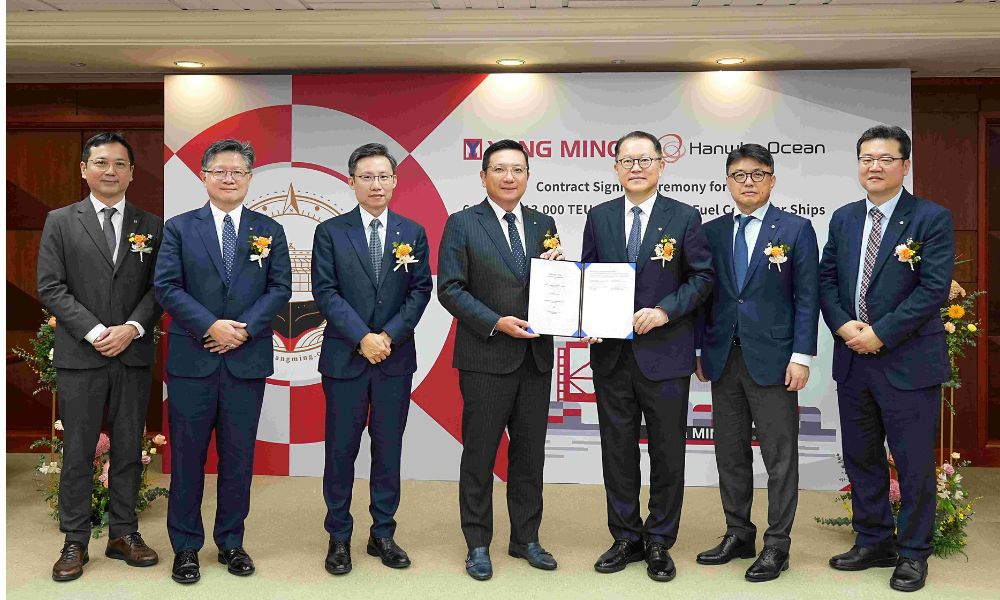
Taiwanese shipping firm Yang Ming Marine Transport Corporation (Yang Ming) and South Korean shipbuilder Hanwha Ocean on Wednesday (2 September) signed a shipbuilding contract for six 13,000 TEU class LNG dual-fuel container vessels. 

The contract was signed by Dr. Chuck Tsai, Chairman of Yang Ming, and Mr. Charles Kim, CEO of Hanwha Ocean. The vessels are scheduled for delivery between 2028 and 2029. 

They will complement Yang Ming’s existing fleet of 10,000+ TEU vessels and serve as key vessels on East-West services, with deployment flexibility across trade lanes connecting Asia with the East and West Coasts of North America, South America, and the Mediterranean. 

Each of the six new vessels will have a capacity of up to 13,650 TEU and feature LNG dual-fuel propulsion and Ammonia Fuel Ready specifications.

“As Yang Ming transitions toward net-zero emissions, LNG provides a relatively mature and economically viable alternative fuel solution, capable of reducing greenhouse gas emissions by approximately 20%,” the company said. 

“At the same time, ammonia can serve as a carbon-free fuel by utilising converted LNG storage facilities, while offering relatively lower conversion costs and comparatively well-developed supply chains and infrastructure. The Ammonia Fuel Ready design will therefore provide Yang Ming with greater flexibility in responding to increasingly stringent international regulations on greenhouse gas emissions.”

In addition, the vessels will be equipped with Type B LNG fuel tanks with a design pressure of 1.0 bar to enhance the safety and efficiency of LNG operations, together with a range of energy-saving technologies, including Wind Shields, Rudder Bulbs, Pre-Swirl Stators, and Shore Power Systems. Smart ship technologies and cybersecurity protection features will also be incorporated to enhance operational efficiency, safety, and reliability while effectively reducing fuel consumption and greenhouse gas emissions.

Deliveries under Yang Ming’s next-generation fleet optimization plan commenced earlier this year. By 2030, a total of 24 new vessels are expected to enter service. 

This includes 18 LNG dual-fuel vessels—comprising five 15,500 TEU, seven 16,000 TEU, and the six 13,000 TEU vessels under this contract—alongside six 8,000 TEU methanol dual-fuel-ready ships. 


Photo credit: Yang Ming Marine Transport
Published: 4 September, 2026

Continue Reading

Alternative Fuels

LR, China’s MARIC unveil tanker concept ready for three future bunker fuels

Both secured AiP for a new 114,000 DWT product and crude oil tanker designed to accommodate future conversion to LNG, methanol or ammonia.
Admin

Published

on

By

LR, China’s MARIC unveil tanker concept ready for three future bunker fuels

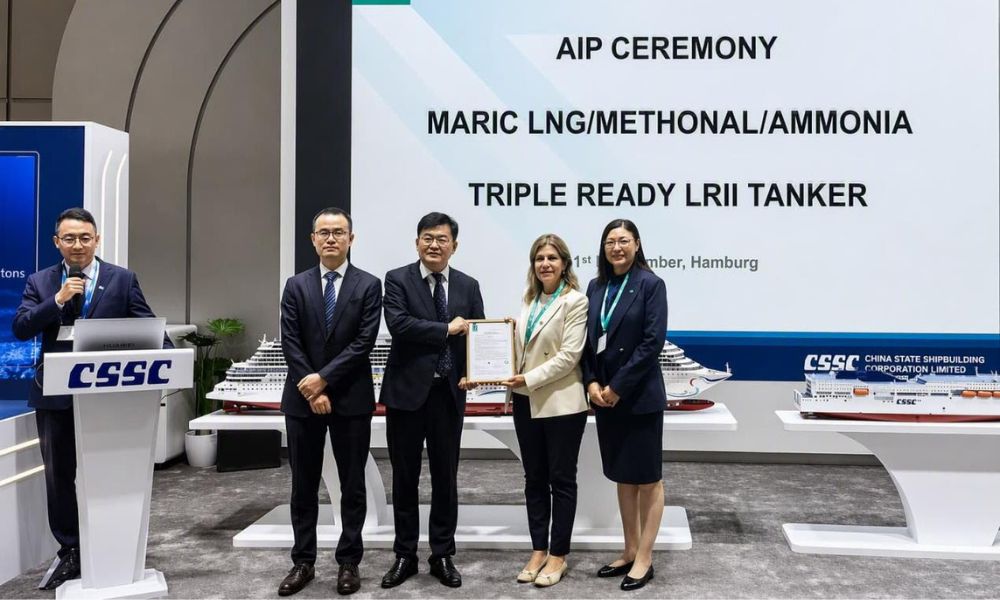
Lloyd’s Register (LR) and the Marine Design and Research Institute of China (MARIC) on Thursday (3 September) have secured Approval in Principle (AiP) for a new 114,000 DWT product and crude oil tanker designed to accommodate future conversion to LNG, methanol or ammonia.

Announced at SMM 2026, the concept addresses one of the biggest investment challenges facing shipping today: the need to develop vessels and capabilities that can support a range of alternative fuel options and pathways as technologies, infrastructure and regulations evolve.

While LNG is already a mature fuel pathway, methanol and ammonia remain at an earlier stage of development, with questions around global fuel availability, infrastructure development, economics and long-term adoption.

The 114,000 DWT tanker concept has been designed as a product and crude oil carrier that can accommodate future conversion to LNG, methanol or ammonia as technologies, regulations and fuel supply chains mature. By incorporating conversion readiness at the design stage, the concept aims to reduce future retrofit complexity and provide owners with greater confidence when planning long-term fleet investments.

The design concept was reviewed against LR’s July 2026 class rules and regulations, including requirements relating to ships using gases and other low-flashpoint fuels, alongside relevant IACS Common Structural Rules for oil tankers. Final classification and statutory approval remain subject to full compliance with all applicable rules and regulations.

Theo Kourmpelis, Global Business Director for Tankers, Lloyd’s Register, said: “Shipowners are being asked to make major investment decisions today despite continued uncertainty around which fuels will dominate in the decades ahead. Alternative fuel solutions each offer potential pathways to compliance, but fuel infrastructure, regulation and economics continue to evolve at different speeds around the world.

“Designs that preserve flexibility will be critical in helping owners manage risk while preparing for multiple future scenarios.”

Si Nan, Marine & Offshore Marketing Department Vice Director, MARIC, said: “As the industry explores different decarbonisation pathways, shipowners need vessel designs that can adapt alongside technological and regulatory developments. This concept was developed specifically to provide greater fuel flexibility and long-term resilience, allowing owners to respond to changing market requirements without being locked into a single fuel strategy.

“Receiving Approval in Principle from Lloyd’s Register is an important milestone that validates the design concept and supports its future development.”


Photo credit: Lloyd’s Register
Published: 4 September, 2026

Continue Reading

Alternative Fuels

DNV: Alternative-fuelled vessel orders hit highest monthly level since October 2024

LNG-fuelled vessels accounted for the vast majority of August activity while the strong summer performance marked a significant acceleration in ordering activity after a relatively slow start to the year.
Admin

Published

on

By

DNV: Alternative-fuelled vessel orders hit highest monthly level since October 2024

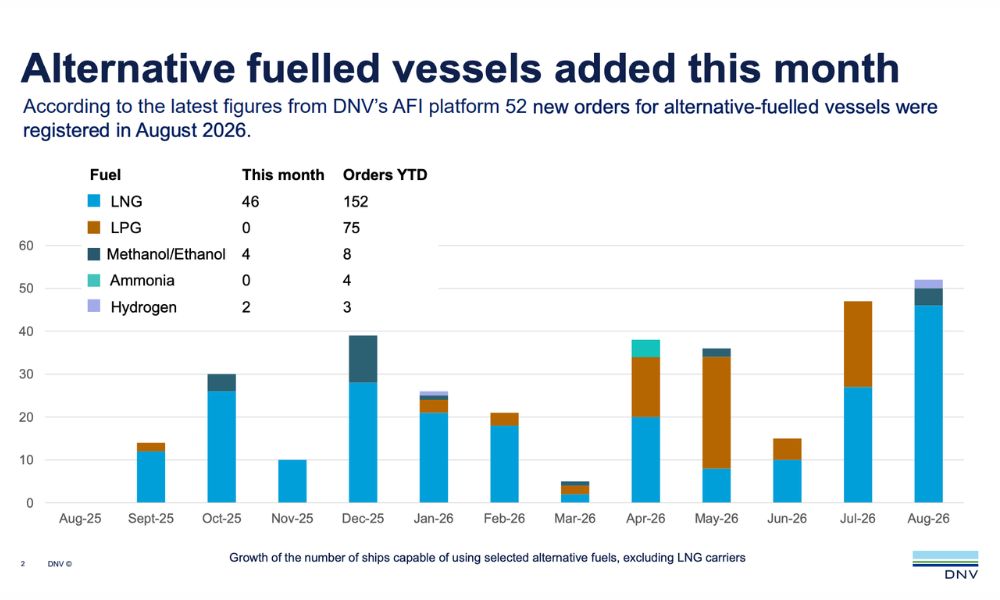
Latest data from classification society DNV’s Alternative Fuels Insight (AFI) platform alternative-fuelled vessel ordering was strong in August, with 52 new vessels added to the platform.

This is the highest monthly total since October 2024 and follows another active month in July, when 47 vessels were added to the database.

LNG-fuelled vessels accounted for the vast majority of August activity, with 46 orders recorded. The container segment led the way with 30 orders, while the car carrier segment contributed a further 12 LNG-fuelled vessels. In addition, four ethanol-fuelled bulk carriers and two hydrogen-powered bulk carriers were added during the month, as well as one LNG bunker vessel.

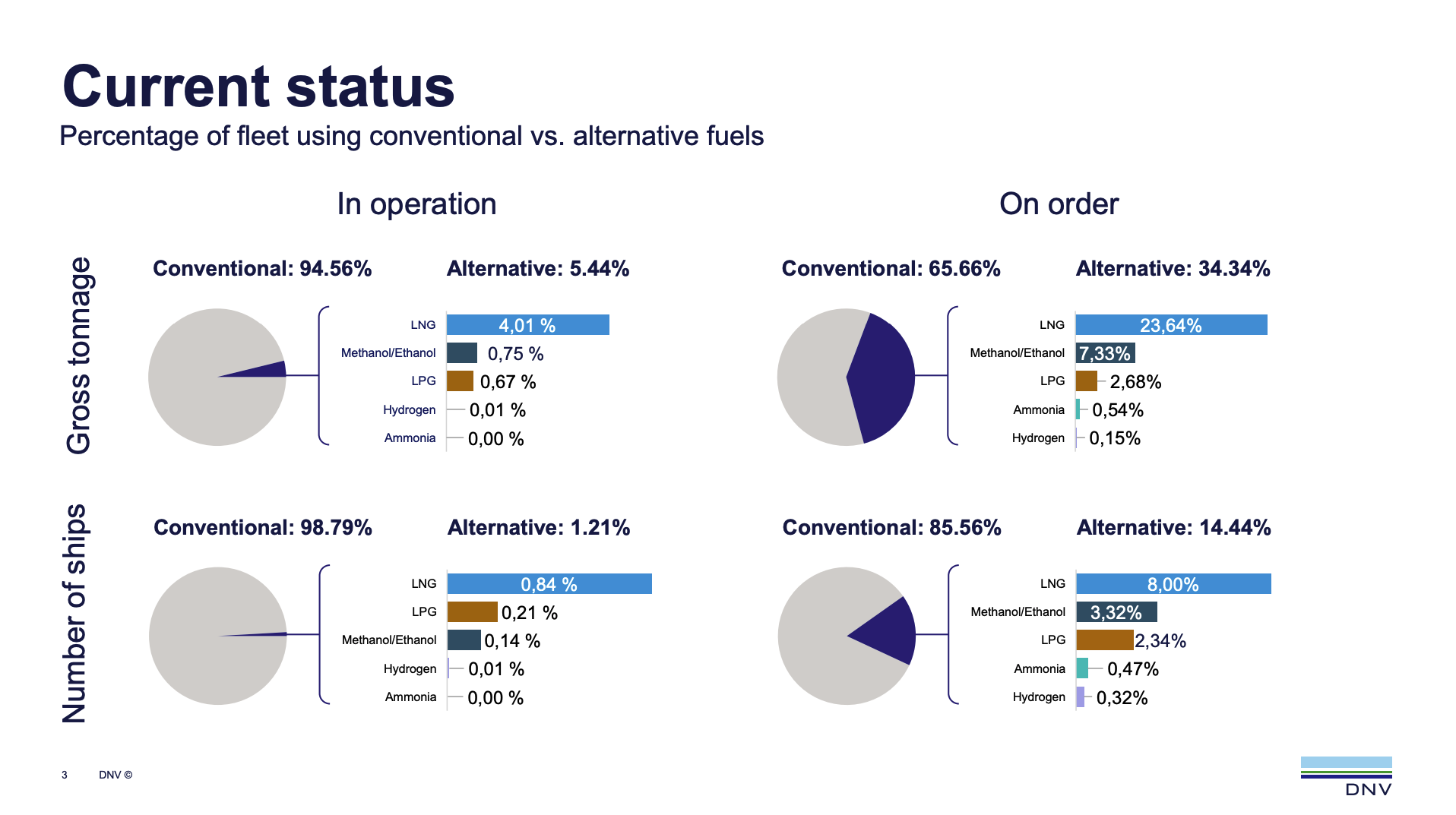
The strong summer performance marked a significant acceleration in ordering activity after a relatively slow start to the year. In total, 242 alternative-fuelled vessel orders have been placed in the first eight months of 2026, representing a 27% increase compared with the same period in 2025.

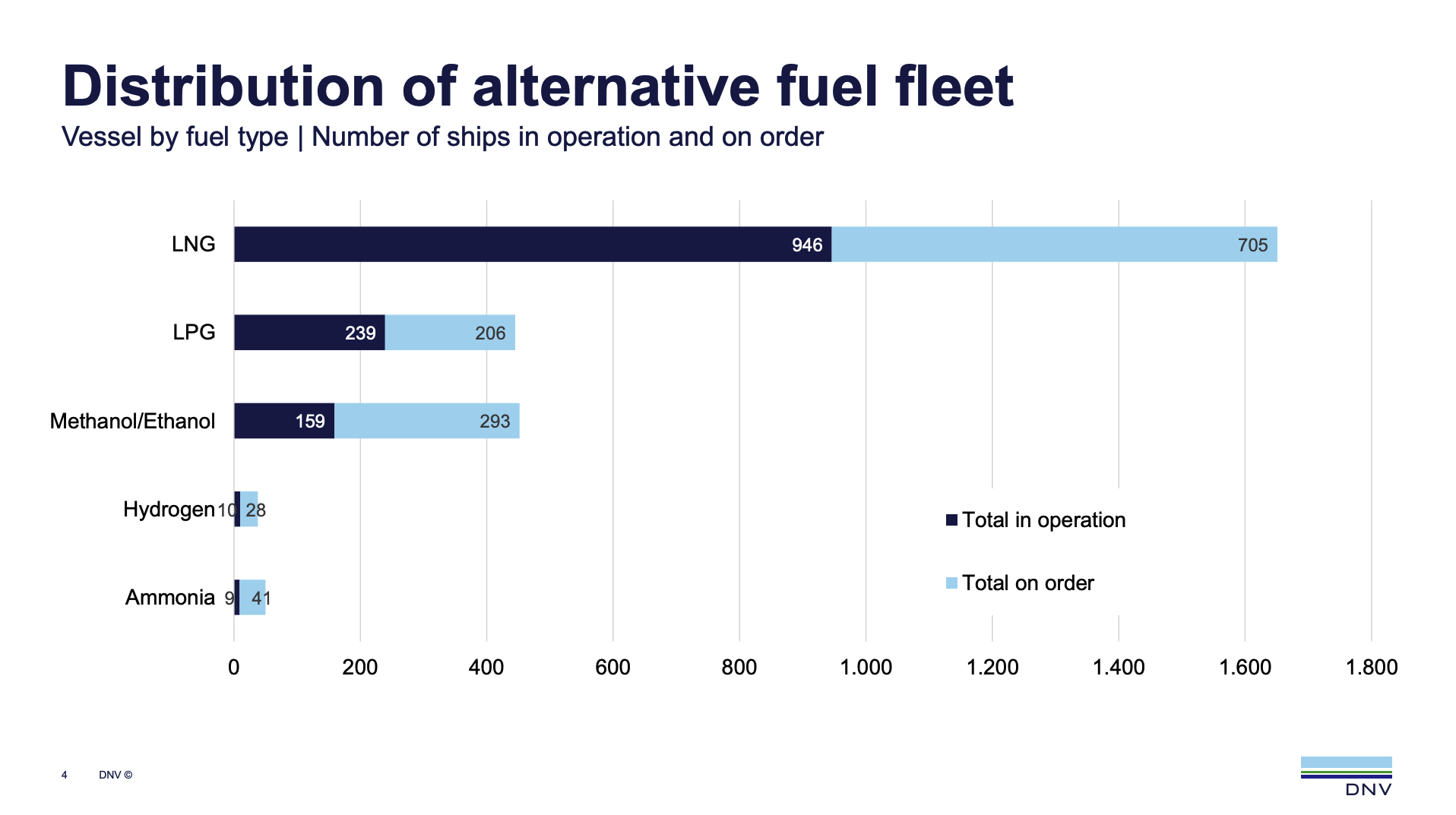
LNG remains the dominant fuel choice, accounting for 63% of all alternative-fuelled vessel orders registered so far this year. Container vessels represent the largest share of these LNG orders (59%), followed by car carriers (30%).

Jason Stefanatos, Global Decarbonization Director at DNV Maritime, said: “The past two months have been particularly strong for alternative-fuelled vessel ordering, with August recording the highest monthly total we’ve seen since October 2024. This has helped lift year-to-date orders to a level well above the same period last year.

“LNG remains the leading fuel choice, driven largely by activity in the container and car carrier segments. These sectors have been among the earliest adopters of alternative fuels, supported by predictable liner operations and increasing demand from cargo owners to reduce emissions across supply chains. 

“For many owners, LNG offers a combination of emissions reductions, fuel availability and future flexibility while the longer-term fuel landscape continues to evolve. 

“At the same time, the latest figures include orders for ethanol- and hydrogen-fuelled vessels, highlighting that owners continue to explore a range of decarbonization pathways. Different segments are making different fuel choices, but the overall level of activity demonstrates continued investment in lower-emission shipping.”
Screenshot 2026 09 04 at 12.29.26 PM Screenshot 2026 09 04 at 12.29.36 PM


Photo credit: DNV
Published: 4 September, 2026

Continue Reading
Advertisement

OUR INDUSTRY PARTNERS


Trending