Connect with us

Business

Gard: Bunker supply contracts – key considerations for the buyer

Guest authors from law firm Holman Fenwick Willan provided a checklist for buyers as a starting point to to negotiate on key items including identifying correct specifications of the bunker fuels.

Admin

Published

on

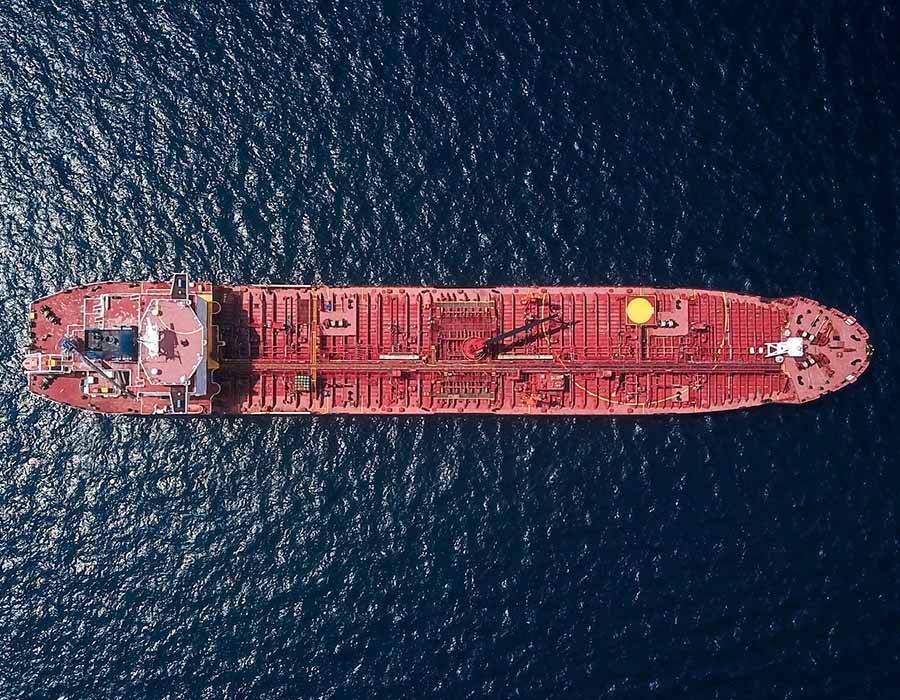
shaah shahidh subrrYxv8A unsplash v2 BIG

Norwegian maritime insurance company Gard on Wednesday (15 March) published an insight to discuss on bunker supply contracts and provided a checklist for buyers to protect themselves when negotiating contracts:

Bunker sales are generally offered on terms prepared by the sellers and should there be a problem with the quality or quantity of the bunkers supplied, the rights of the buyers may well be restricted by the sale contract terms.  Our guest authors update their previous article to point out ways buyers can protect themselves.

Introduction

Purchase of bunkers can generate significant risks/claims and sellers’ terms often incorporate fixed (often low) limits on sellers’ liability, exclusions for certain types of loss (e.g. loss of time, profit, indirect or consequential loss), short time bars for buyers’ claims, and evidential and law and jurisdiction clauses in sellers’ favour. There have been moves to try and work towards standard bunker purchase contracts with BIMCO introducing the BIMCO Bunker Purchase Terms in 2015 which were updated in 2018. These contracts are generally more balanced than typical sellers’ standard terms, and representatives from owners, charterers and bunker companies were all involved in the drafting process.

From a commercial bargaining perspective, it may be easier to negotiate more balanced terms if they are agreed in advance as part of a worldwide framework agreement to buy bunkers from a single or small number of sellers instead of making more ad hoc arrangements. This is also sensible in terms of reducing compliance/KYC/sanctions checks and risks by having a reduced number of counterparts.

The BIMCO Bunker Terms 2018 attach an Election Sheet as Appendix A which allows for easy customisation if the Parties as well as a space to add additional clauses or make amendment to the standard BIMCO text.

Bunker supply contracts – key issues checklist

Taking the BIMCO 2018 Terms as a starting point buyers may try to negotiate on some of the following key items:

  • Due diligence with respect to the seller: consider market reputation and financial standing of sellers, in terms of financial standing and insurance position (see below) and involvement in previous supply issues. Are they also a physical supplier or only an intermediary? How do they verify the quality and origin of the fuel supplied and how will they evidence this to buyers if required? What are their supply chain quality management procedures?
  • Greater focus on KYC/vetting and who the seller is for sanctions purposes: this ties into conducting proper compliance checks for general KYC and for sanctions purposes.
  • Due diligence with respect to the fuel: consider what information you need about the fuel and its origin. Are there any special parameters regarding storage, handling, treatment and use of the fuel on board? Do you require specific information in the Certificate of Quality?
  • Fuel specification: the contract should identify the correct specification of the fuel – for example by expressly stating the relevant ISO specification. For residual fuels, the most widely used specification is ISO 8217 Table 2. ISO 8217 is periodically revised and the industry guidance recommends the most recent version, ISO 8217 2017. Check whether the fuel specified in your bunker supply terms complies with up to date IMO and Marpol regulations and any local regulations that apply to the vessel based on the trade conducted and that this also accords with charterparty and main engine maker’s requirements. A further point to consider adding is an express contract term that the fuel is free of contaminants, is fit for purpose and complies with MARPOL. If the buyers have a strong bargaining position, then consider also if contractually you can negotiate that sellers will take back proven off specification bunkers.
  • Sampling and quality testing: the contract should specify the agreed sampling and quality testing regime, including for sulphur content. Ideally, a sample from each of the bunker supplier/barge and the vessel should be analysed as opposed to only the supplier’s sample. Again, insofar as possible, sampling and testing requirements need to match the charterparty so the buyers are not exposed to different test standards. Ideally, the sampling process should be set out in detail in the contract together with the agreed analysis regime that is to be used. Consideration should also be given as to whether preferred accredited labs for testing should be identified in the contract (we recommend they are). In the event there is a dispute about the quality or characteristic of the particular stem, an inability to agree to a lab for testing may complicate and delay resolution.
  • Non delivery/delayed delivery of the bunkers: consider the delivery clauses of your contract and whether they give buyers a right to cancel the contract/bunker supply promptly in the event of a delay. Consider also specifying in the contract what constitutes a delay (by setting out the relevant period) following which a cancellation right in buyers’ favour arises.   Where charter rates are high buyers may not want to be obliged to “wait” for supply of bunkers if they are not ready to be supplied.
  • Force majeure duration: consider how long the duration of a force majeure event is reasonable for the trade conducted by the vessel. The BIMCO Bunker Terms 2018 for example provide for a 10 day period. Buyers may wish to opt for a much shorter force majeure period so as to reduce delays to the vessel as much as possible.

By Rory Butler, Partner and Louise Lazarou, Senior Associate of Holman Fenwick Willan, London

Note: The full article on ‘Bunker supply contracts – key considerations for the buyer’ by Gard can be viewed here


Photo credit: Shaah Shahidh on Unsplash
Published: 21 March, 2023

Continue Reading

Winding up

Singapore: High Court to hear Norvic Shipping Asia winding up application on 31 July

Application for the winding up of Norvic Shipping Asia Pte Ltd was filed by Netherlands-registered Mur Shipping BV on 8 April, according to Government Gazette notice.

Admin

Published

on

By

RESIZED singapore high court

An application for the winding up of Norvic Shipping Asia Pte Ltd was filed by Netherlands-registered Mur Shipping BV on 8 April, according to a Tuesday (21 July) notice on the Government Gazette.

It noted the winding up application is directed to be heard before the Judge sitting in the General Division of the High Court at 10am on 31 July.

Any creditor or contributory of the company desiring to support or oppose the making of an order on the winding up application may appear at the time of hearing by himself or his counsel for that purpose.

A copy of the winding up application will be furnished to any creditor or contributory of the company requiring the copy of the winding up application by the solicitors of the applicant’s, Oon & Bazul LLC, on payment of the regulated charge for the same.

The Applicant’s address is Hiridostraat 5, Gebouw Prismatrium, 1101CW Amsterdam, The Netherlands.

The Applicant’s solicitors are Oon & Bazul LLC of 103 Penang Rd, #04-04/05/06 Singapore 238467. 

Queries on the winding up application may be directed to the following email addresses: [email protected] and [email protected].


Photo credit: Manifold Times
Published: 22 July, 2026

Continue Reading

Methanol

World Fuel and partners complete first green methanol bunkering of car carrier in Shanghai

Operation involved the delivery of approximately 2,800 MT of green methanol to “Arctic Tern” via a ship-to-ship transfer using SIPG Energy’s dedicated methanol bunkering vessel “M/V Hai Gang Zhi Yuan”.

Admin

Published

on

By

World Fuel and partners complete first green methanol bunkering of car carrier in Shanghai

Marine fuel provider World Fuel on Tuesday (21 July) said it successfully completed the first green methanol bunkering of M/V Arctic Tern, with EUKOR Car Carriers and SIPG Energy at the Port of Shanghai. 

Arctic Tern is the first vessel in the new Shaper Class series of car carriers. 

The operation involved the delivery of approximately 2,800 MT of green methanol to Arctic Tern via a ship-to-ship transfer using SIPG Energy’s dedicated methanol bunkering vessel M/V Hai Gang Zhi Yuan, the largest vessel of its kind in operation. 

The bunkering operation was carried out at Haitong Terminal, Waigaoqiao Port Area, Shanghai Port, with cargo handling operations conducted simultaneously during bunkering.

This marks EUKOR Car Carriers’ first green methanol operation and the first time Arctic Tern has bunkered methanol since its delivery on 9 July. The operation marked the first bunkering at Shanghai Port of green methanol produced locally in Shanghai for an international PCTC operator. 

It also demonstrated the city’s integrated green methanol value chain, spanning local production, storage and bunkering, and established a replicable “Shanghai Model” for green methanol supply.

World Fuel arranged the supply and delivery of the fuel on behalf of EUKOR Car Carriers, working with SIPG Energy as the physical supplier at the Port of Shanghai.

The green methanol supplied was produced from municipal solid waste, ISCC-EU certified, and had a carbon intensity value below 25 gCO₂e/MJ.

Arctic Tern is the first of fourteen Shaper Class vessels ordered by Wallenius Wilhelmsen. With a capacity of 9,300 car equivalent units and methanol dual-fuel capability, the vessel will be operated by EUKOR Car Carriers, jointly owned by Wallenius Wilhelmsen and Hyundai Motor Group. Following her first green methanol bunkering, Arctic Tern will continue her maiden voyage from Asia to Europe.

Xavier Leroi, COO Shipping Services at Wallenius Wilhelmsen and CEO of EUKOR Car Carriers, said: “Completing Arctic Tern’s first green methanol bunkering shortly after delivery is a significant milestone towards our decarbonisation ambition for both EUKOR Car Carriers and Wallenius Wilhelmsen. It demonstrates how investments in next-generation vessel technology and fuel flexibility are being translated into real-world operations. 

“This achievement reflects the strong collaboration between all parties involved. Together, we have shown how partnerships across the maritime value chain can help make lower-emission fuels available and operationally viable at scale.”

Mark Tamsitt, SVP Global Marine Sales at World Fuel, said, “The first bunkering event with a new fuel is a significant moment for any shipowner, and our role is to make it as seamless as possible. By connecting EUKOR Car Carriers with SIPG Energy’s proven green methanol capability at the Port of Shanghai, we were able to deliver on reliable supply, fuel quality, and safe processes. As more of our customers bring methanol dual-fuel tonnage into service, we are committed to being the partner that makes these kinds of operations routine.”

Mr. Zhang Da, General Manager of SIPG Energy, said, “Welcoming Arctic Tern to the Port of Shanghai for her first green methanol bunkering demonstrates the strength and maturity of our supply capability. Building on our well-established methanol ship-to-ship bunkering services for container vessels, we have already extended such services to pure car and truck carriers (PCTCs). This bunkering sets a new record for the largest single SIMOPs green methanol bunkering for PCTCs in China, marking another step in building Shanghai’s position as a global green energy hub for international shipping.”

This operation follows Wallenius Wilhelmsen’s announcement on 9 July that Arctic Tern would complete her first methanol bunkering shortly after delivery. The vessel entered service on routes between Asia and Europe immediately following handover from China Merchants Jinling Shipyard in Nanjing.


Photo credit: World Fuel
Published: 22 July, 2026

Continue Reading

Ammonia

HPA and MB Energy develop safety concept for STS ammonia bunkering

HPA says the Port of Hamburg will become “bunker ready” for ammonia, laying the groundwork for safe and reliable ammonia bunkering in the future.

Admin

Published

on

By

HPA and MB Energy develop safety concept for STS ammonia bunkering

The Hamburg Port Authority (HPA) and integrated energy company MB Energy on Tuesday (21 July) said they have completed a comprehensive risk analysis and developed a dedicated safety concept for ship-to-ship ammonia bunkering.

MB Energy said the analysis lays the groundwork for the safe introduction of ammonia as a future marine fuel.

“With our planned ammonia import terminal in Hamburg-Blumensand, MB Energy intends to provide the reliable land side supply infrastructure needed to support this transition across northern German ports,” it said in a social media post. 

Mabanaft Group was renamed to MB Energy last year and merged over 50 existing brands under one identity. 

Separately, HPA said the Port of Hamburg will become “bunker ready” for ammonia, laying the groundwork for safe and reliable ammonia bunkering in the future.

“The focus is in particular on container ships, cruise ships as well as RoRo and ConRo (Container/RoRo) ships,” it said. 

“We expect ammonia to establish itself as an alternative marine marine fuel in the coming years. With our preparatory work, we are already creating the conditions to welcome the first ammonia-powered ships in Hamburg and to bunker them safely.:

HPA added that the import terminal for ammonia planned by MB Energy from 2029 will make a decisive contribution to ensuring the reliable availability of ammonia as a bunker fuel in northern German ports in the long term. 

“The use of an ammonia bunker barge is considered a possible addition to the landside infrastructure to enable ship bunkering in the port and beyond in the future,” it said.

Related: Mabanaft Group renames as MB Energy, merging over 50 brands under one identity


Photo credit: Hamburg Port Authority
Published: 22 July, 2026

Continue Reading

Trending