Connect with us

LNG Bunkering

GAC Bunker Fuels inks agreement to supply LNG bunker fuel to Pilot LNG

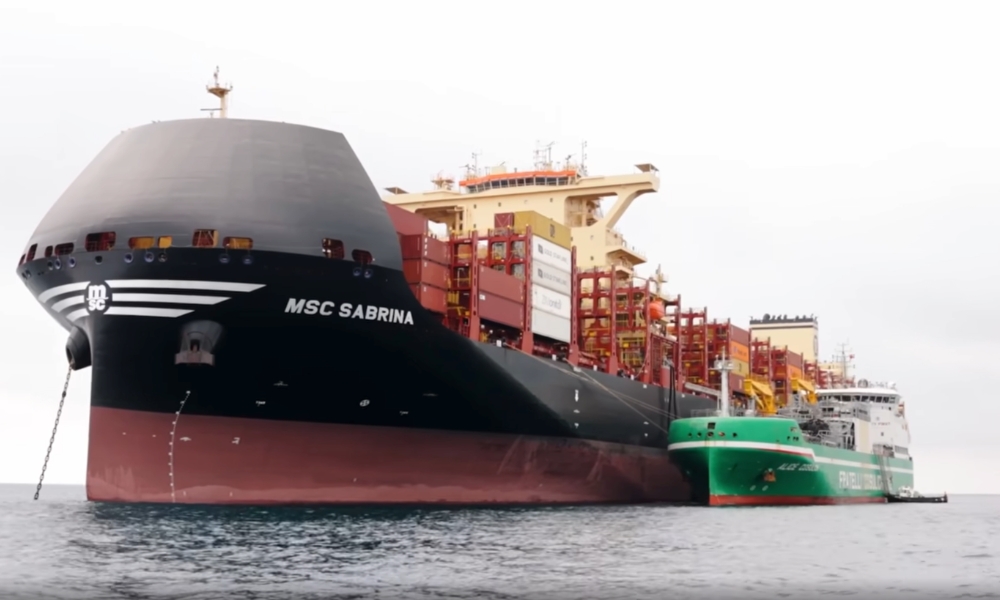
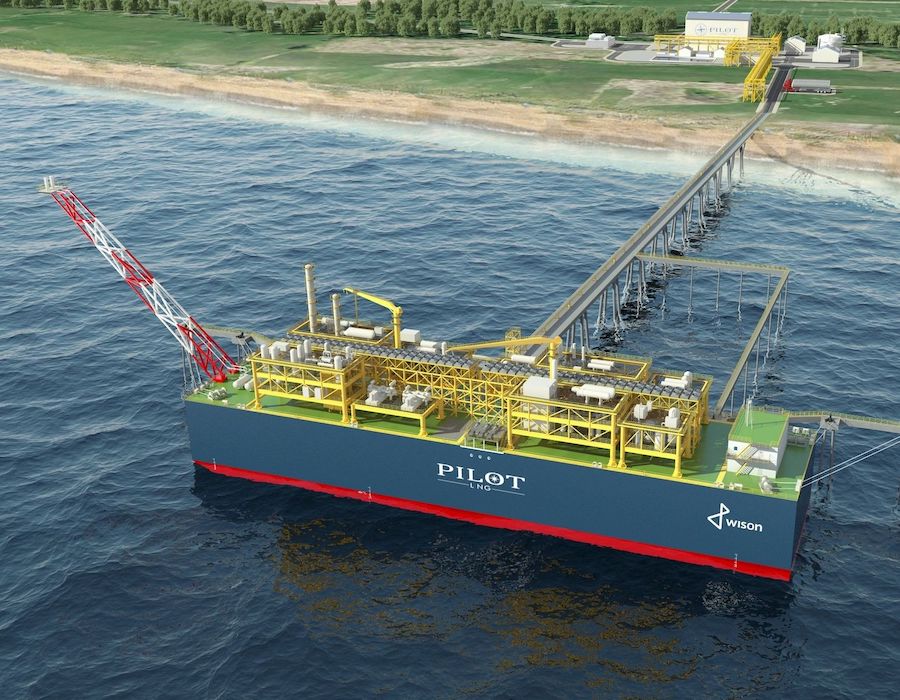
GAC said it will supply LNG as marine fuel from Pilot’s proposed Galveston LNG Bunker Port terminal project, the first dedicated LNG bunker terminal in the region.

Admin

Published

on

Galveston LNG Pilot

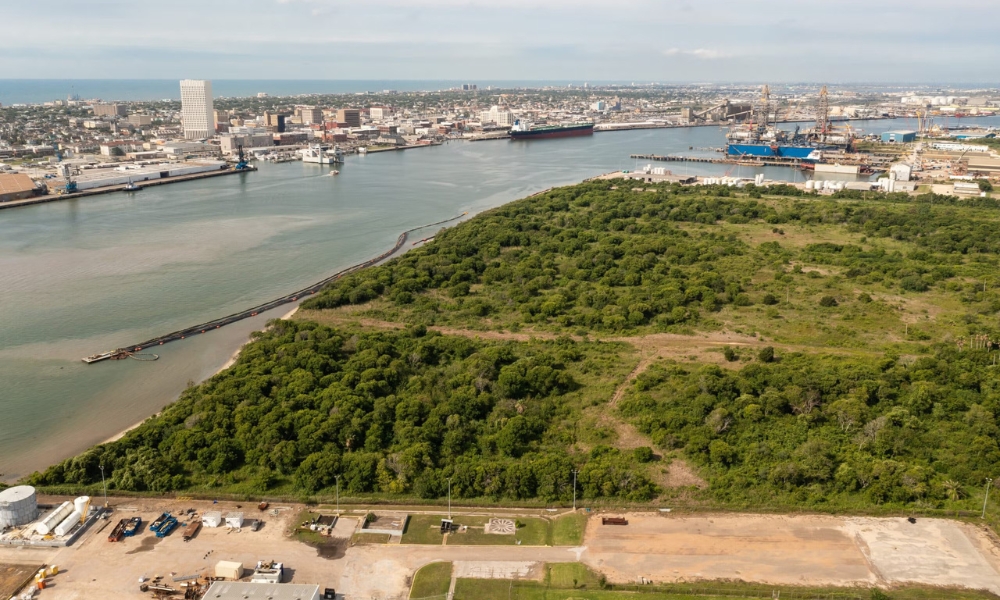
GAC Bunker Fuels (GAC) on Tuesday (20 October) said it has partnered Texas-based Pilot LNG, LLC (Pilot) for the supply of Liquefied Natural Gas (LNG) as a marine fuel from its proposed Galveston LNG Bunker Port terminal project, which will be the first dedicated LNG bunker terminal in the region.

GAC said the two companies have executed a Heads of Agreement (HOA), which outlines the terms of a partnership.

The agreement prepares the ground for Pilot to provide LNG marine fuel to GAC on a Delivered Ex-Ship (DES) basis for its customers in the Galveston Bay Port complex, including the ports of Houston, Galveston and Texas City, as well as Galveston Offshore Lightering Area, on a long-term basis.

“The Galveston LNG Bunker Port will provide the LNG to supply GAC’s growing market for cleaner marine fuel, particularly as its customers seek economic ways to comply with tightening emissions regulations, including IMO 2020,” said Jonathan Cook, Pilot Chief Executive.

“The opportunity to work with such a strong global player like GAC is a very exciting step forward for Pilot and the Galveston project.”

 “We have a proven track record of more than three decades supplying quality marine fuels to the shipping sector, and we continually adapt to meet our customers’ evolving needs,” said Nicholas Brown, Bunker Fuels’ Global, GAC.

“This agreement with Pilot will allow us to grow our portfolio of alternative fuels, with LNG as the cleanest and most cost-effective way for shippers to meet compliance.”

GAC Bunker Fuels noted it is the world’s only bunkering company with an integrated ISO 9001, 14001, and 45001 certification for bunker procurement that also covers LNG as a marine fuel.

Related: Houston: Pilot LNG announces regulatory filing for Galveston LNG Bunker Port


Photo credit: GAC Bunker Fuels

Published: 21 October, 2020

Continue Reading

LNG Bunkering

CCEC and CMA CGM form joint venture to build and operate LNG bunkering vessel

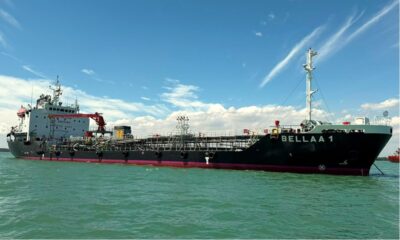
Each party will hold a 50% ownership stake in the joint venture, which has been established for the purpose of constructing, chartering, and operating one 20,000 cbm dual-fuel LNG bunkering vessel.

Admin

Published

on

By

RESIZED scott graham

Capital Clean Energy Carriers Corp. (CCEC), an international owner of ocean-going gas vessels, on Friday (12 June) announced the formation of a joint venture company with CMA CGM. 

Each party will hold a 50% ownership stake in the joint venture, which has been established for the purpose of constructing, chartering, and operating one 20,000 cbm dual-fuel LNG bunkering vessel. 

The joint venture marks CCEC’s entry into the LNG bunkering segment, the company’s first vessel dedicated to marine fuel supply.

In connection with this transaction, the joint venture has entered into a shipbuilding contract with Nantong CIMC Sinopacific Offshore & Engineering (CIMC SOE) for the construction of the vessel at a contract price of USD 82.8 million, with delivery expected in the third quarter of 2028.

Incorporating the latest technologies, the vessel is designed to enable safe and reliable LNG transfers across a wide range of operating conditions. Advanced emissions reduction systems, combined with highly efficient dual-fuel power generation, are designed to help the vessel meet applicable environmental standards of the global shipping industry.

In addition, the joint venture is expected to enter into a 12-year time charter with a joint venture company formed between CMA CGM and TotalEnergies, commencing upon delivery of the vessel from the shipyard.

Jerry Kalogiratos, CEO of Capital Clean Energy Carriers, commented: “This joint venture marks CCEC’s entry into LNG bunkering — a natural extension of our gas platform from carriage into marine fuel supply. 

“Working alongside counterparties of the calibre of CMA CGM and TotalEnergies, we can help build the infrastructure that allows LNG to deliver a cleaner emissions profile, alongside security and diversity of supply, while opening a new, long-term contracted revenue stream for the Company through the Joint Venture.”

Christine Cabau, Executive Vice President Operations and Assets of CMA CGM, said: “Together with Capital Clean Energy Carriers and TotalEnergies, we are committed to building a reliable and high-performance LNG bunkering supply chain, which is essential to ensuring the availability and reliability of fuels such as LNG that represent the first step in the decarbonization of our industry.”


Photo credit: Scott Graham
Published: 16 June, 2026

Continue Reading

Alternative Fuels

ENGINE on Fuel Switch Snapshot: Conventional fuels slump in major ports

HSFO becomes cheaper than B100 in Rotterdam; Singapore’s B100 flips to premium over LSMGO; Rotterdam LBM discounts to LNG widen.

Admin

Published

on

By

ENGINE on Fuel Switch Snapshot: Conventional fuels slump in major ports

Once a week, bunker intelligence platform ENGINE will publish a snapshot of alternative and conventional bunker fuel prices in the world’s two biggest bunkering hubs. The following is the latest snapshot:

  • HSFO becomes cheaper than B100 in Rotterdam
  • Singapore’s B100 flips to premium over LSMGO
  • Rotterdam LBM discounts to LNG widen

Brent’s price has slumped by $14.73/bbl ($108/mt) on the week after US President Donald Trump announced a preliminary peace deal with Iran yesterday. The sharp decline has dragged conventional fuel prices lower in both Rotterdam and Singapore.

Rotterdam’s B100 has shifted to a $14/mt premium over HSFO, from a $1/mt discount seen a week ago.

B100 discounts to VLSFO and LSMGO have narrowed by $54/mt and $89/mt to $50/mt and $343/mt, respectively.

In Singapore, B100 has shifted from a $79/mt discount to LSMGO to a $16/mt premium.

ENGINE on Fuel Switch Snapshot: Conventional fuels slump in major ports

Rotterdam’s liquefied biomethane (LBM) discounts to its LSMGO have narrowed by $21-28/mt in the past week, to $639-844/mt, depending on the LNG engine type.

Liquid fuels

Rotterdam’s HSFO (-$71/mt) and VLSFO (-$110/mt) prices have to some extent tracked a $14.73/bbl ($108/mt) drop in front-month ICE Brent futures. Its LSMGO benchmark has fallen by $145/mt, exceeding a $125/mt decline in front-month ICE low sulphur gasoil futures.

The port’s B100 price has dropped by $56/mt over the past week. Dutch ZRE A ticket prices have edged down by €2/mtCO2e to €108/mtCO2e.

Singapore’s conventional fuel prices have fallen by $112-167/mt, and its B100 price by $72/mt.

Liquid gases

Rotterdam’s LNG bunker prices have dropped by $77-83/mt in the past week, largely tracking a 12% decline in the front-month Dutch TTF Natural Gas contract.

Its LBM prices have fallen by $117-124/mt. LBM discounts to LNG have widened by $40-41/mt to $455-462/mt in the past week.

Singapore’s LNG prices have risen by $13-16/mt. The rises came amid spot market demand from India for fertiliser plants, power generation and households, noted ANZ Bank’s Daniel Hynes. Japan and South Korea tend to import more gas for power generation during their summer months, and China has been active in the market, Hynes said.

By Konica Bhatt


Photo credit and source: ENGINE
Published: 16 June, 2026

Continue Reading

Bunker Fuel

Singapore: Bunker fuel sales drops by 6.8% on year in May 2026

4.55 million mt of various marine fuel grades were delivered at the world’s largest bunkering port in May, down from 4.88 million mt recorded during the similar month in 2025, according to MPA data.

Admin

Published

on

By

Singapore: Bunker fuel sales drops by 6.8% on year in May 2026

Sales of marine fuel at Singapore port dropped by 6.8% on year in May 2026, according to data from the Maritime and Port Authority of Singapore (MPA).

In total, 4.55 million metric tonnes (mt) (exact 4,548,000 mt) of various marine fuel grades were delivered at the world’s largest bunkering port in May, down from 4.88 million mt (4,878,100 mt) recorded during the similar month in 2025.

Deliveries of marine fuel oil, low sulphur fuel oil, ultra low sulphur fuel oil, marine gas oil and marine diesel oil in May (against on year) recorded respectively 1.79 million mt (-5.3% from 1.89 million mt), 2.29 million mt (-6.5% from 2.45 million mt), zero (-100% from 1,200 mt), 600 (35.2% from 1,700 mt) and zero (from zero).

Singapore: Bunker fuel sales drops by 6.8% on year in May 2026

Bio-blended variants of marine fuel oil, low sulphur fuel oil, ultra low sulphur fuel oil, marine gas oil and marine diesel oil in May, (against on year) recorded respectively 11,600 mt (-71.6% from 40,900 mt), 36,400 mt (-62.1% from 96,100 mt), zero (from zero), zero (from zero) and zero (from zero). B100 biofuel bunkers, introduced in February last year, recorded 12,800 mt (+573.7% from 1,900 mt). 

LNG and methanol sales were 70,300 mt (+56.2% from 45,000 mt) and zero (from zero) respectively. There were no recorded sales of ammonia for the month and so far since 2025.


Photo credit: Maritime and Port Authority of Singapore
Published: 15 June, 2026

Continue Reading

Trending