
Business
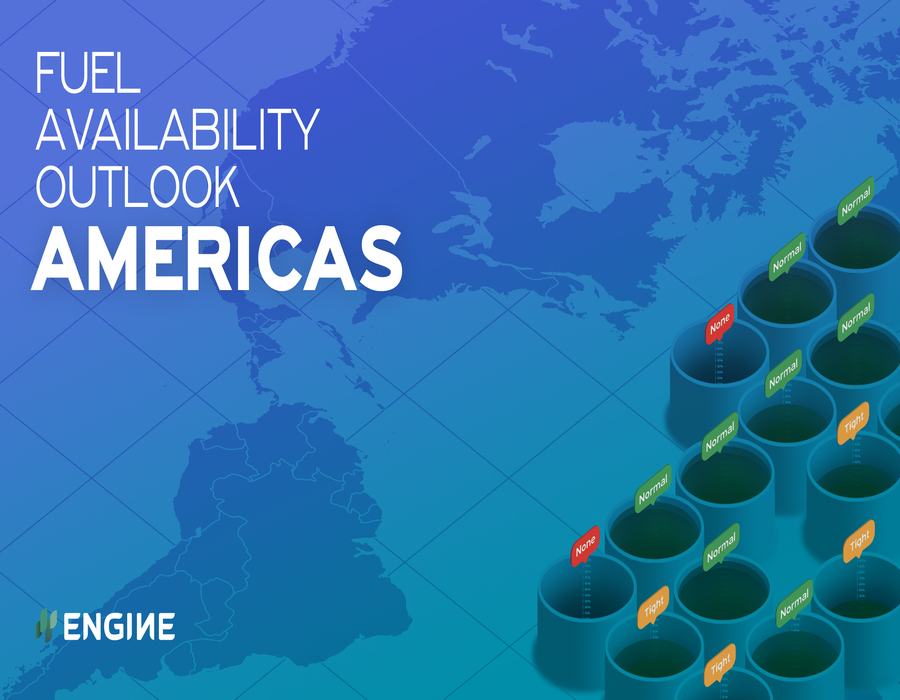
ENGINE: Americas Bunker Fuel Availability Outlook
Bunkering resumes in GOLA after five days; Los Angeles’ HSFO price slumps to multi-month lows; prompt supply tight in Panama ports.

Legal
“Yangtze Harmony”: The practical effects of enforcing bunkers arbitral awards in Rem
Helmsman says Singapore High Court in The “Yangtze Harmony” [2026] SGHC 3 confirmed that the court can lift a ‘stay’ on in rem proceedings, which were put on hold in favor of arbitration.

In shipping law, in rem proceedings are unique as a claim may be brought against the ship itself as a separate legal entity rather than the owner personally. This is what allows a ship to be arrested and used as security for such a claim.
Earlier this year, the Singapore High Court in The “Yangtze Harmony” [2026] SGHC 3 clarified an unanswered question: whether the court can lift a “stay” on in rem proceedings – which had earlier been put on hold in favor of arbitration. The court has now confirmed that it can. This means that if a party wins an arbitration, it can return to court and enforce the award as a judgment against the ship or its judicial sale proceeds.
Multi-disciplinary law firm Helmsman LLC focuses on the significance of the “Yangtze Harmony” judgment in enforcing arbitral awards in rem proceedings:

MT: How are arbitration claims against ships usually enforced in Singapore?
In shipping disputes, it is common for a claimant to start court proceedings against a ship to arrest the ship as security, even though the dispute is to be decided by arbitration. These proceedings are then stayed, pending the arbitration’s conclusion, while the claim remains secured in the form of (a) the arrested ship, or (b) its sale proceeds, or (c) any alternate form of security (such as a bank guarantee or an insurer’s letter of undertaking).
Ordinarily, arbitration awards are enforceable only against the parties named in the award (i.e. in personam). If a shipowner fails to pay, the award holder must enforce the award against the shipowner. The significance of the Yangtze Harmony judgment is that it allows an award holder to enforce the award directly against the ship which it previously arrested. This is crucial for cases against one-ship companies where the ship (or its sale proceeds) may be the only meaningful asset for recovery.
MT: If a ship is sold, where do bunker claims rank in getting paid?
While the decision makes enforcement easier, it does not affect the priority in which sale proceeds are distributed. In Singapore, judicial sale proceeds generally satisfy claims in an order of priorities. Higher ranking claims such as dues, Sheriff costs and secured claims are paid first.
A claim for bunkers supplied for a ship’s operation or maintenance are typically considered a statutory lien claim, which ranks at the bottom of the priorities ladder. Bunker suppliers are only paid from whatever funds remain and they share this equally with other similar claimants. A bunker supplier may not know what other high ranking claims exist until after the vessel is arrested or sold. If those claims are substantial, there may be little or nothing left to satisfy bunker claims.
MT: Can bunker suppliers improve their chances of getting paid?
The court has the power to alter the order of priorities when it is equitable to do so, but it is rare and requires evidence of exceptional circumstances. Ordinarily, a claim for the price of unpaid bunkers would not meet this threshold.
While the Yangtze Harmony brings welcome clarity to allow enforcement of arbitral awards as in rem judgments, this does not guarantee recovery, given the risk of priorities. Bunker suppliers in particular should carefully assess the likelihood of being paid in the event of a judicial sale before taking steps such as arresting a ship.
Photo credit: Helmsman
Published: 17 June, 2026
Bunker Fuel
Huanghua Port expands bunkering capabilities with dedicated fuel oil terminal
Previously, bunkering vessels serving Huanghua Port were required to replenish marine fuel oil at other ports, including Tianjin, before returning to carry out bunkering operations, often resulting in delays.
Methanol
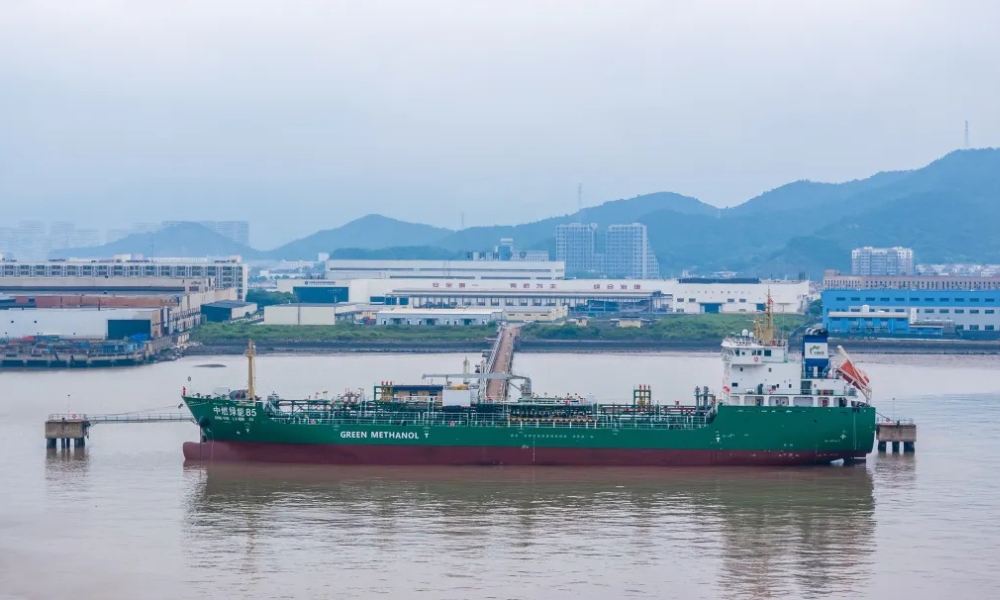
China: Chimbusco takes delivery of new methanol bunkering vessel in Zhoushan
Company says commissioning of “Zhong Ran LV Neng 85” will further enhance its service capabilities in green methanol bunkering in major domestic ports.

OUR INDUSTRY PARTNERS

“Yangtze Harmony”: The practical effects of enforcing bunkers arbitral awards in Rem

Huanghua Port expands bunkering capabilities with dedicated fuel oil terminal

China: Chimbusco takes delivery of new methanol bunkering vessel in Zhoushan

CCEC and CMA CGM form joint venture to build and operate LNG bunkering vessel

UK forces intercept suspected Russian shadow fleet tanker in English Channel

LR: Rotterdam study sets out pathway for nuclear-powered commercial ship port calls

ARACON 2026 returns to Rotterdam to explore bunker fuel supply trends in ARA region

Singapore: China Merchants Bank accuses fraud against Sinfeng Marine Services in USD 9.2 million bunker claim

Singapore: Court to hear Bunker Partner’s winding-up bid against Victory Shipping on 12 June

ENGINE: Americas Fuel Availability Outlook (4 June 2026)

China: CNOOC achieves over 200,000 m3 of bonded LNG bunkering volume in 2026 so far

MPA: Tanzania-registered container ship sinks off Batam

India’s Agastya inks green methanol offtake agreement with SAR Group

Singapore: Liquidator of Xihe Capital issues notice of dividend
-
 Legal1 week ago
Singapore: China Merchants Bank accuses fraud against Sinfeng Marine Services in USD 9.2 million bunker claim
-
 Winding up1 week ago
Singapore: Court to hear Bunker Partner’s winding-up bid against Victory Shipping on 12 June
-
 Bunker Fuel Availability2 weeks ago
ENGINE: Americas Fuel Availability Outlook (4 June 2026)
-
 LNG Bunkering1 week ago
China: CNOOC achieves over 200,000 m3 of bonded LNG bunkering volume in 2026 so far
-
 Incident1 week ago
MPA: Tanzania-registered container ship sinks off Batam
-
 Methanol2 weeks ago
India’s Agastya inks green methanol offtake agreement with SAR Group
-
 Winding up1 week ago
Singapore: Liquidator of Xihe Capital issues notice of dividend
-
 Mass Flowmeter2 weeks ago
Hong Kong backs MFM adoption with voluntary scheme to boost bunkering competitiveness