Connect with us

Engine

CMT: The strategic edge behind China’s push on engine and fuel monitoring

Rather than relying solely on alternative marine fuels or engine retrofits, Uwe Krüger says China is becoming more proficient in measuring, monitoring, and reading the data to optimise engine performance.


Admin

Published

on

CMT: The strategic edge behind China’s push on engine and fuel monitoring

As global regulations tighten and fuel prices remain volatile, shipping companies everywhere are looking to reduce fuel consumption, cut emissions, and control costs. But in China, the world’s largest trading nation and still a shipowning and shipbuilding powerhouse, the solution is a seemingly simple one, writes Uwe Krüger, joint-Managing Director, CM Technologies.

Rather than relying solely on big-ticket investments like alternative marine fuels or complete engine retrofits, Chinese ship operators are becoming increasingly proficient in measuring, monitoring, and reading the data to optimise engine performance. They see engine optimisation offering a more technically proven and financially attractive pathway to meeting IMO decarbonisation goals.

We are seeing a growing take‑up of engine condition monitoring and fuel testing tools in Asia, largely driven by a mix of compliance pressure and commercial opportunity.

Global decarbonisation rules such as EEXI and CII make it increasingly important for owners to know – and prove – how efficiently their engines are operating, rather than relying on assumptions. Charterers and regulators, especially, are starting to look for hard evidence of environmental performance and fuel efficiency. And monitoring data, backed by analysis, provides the proof ship operators are actively managing emissions.

At the same time, quality lube oil and bunker suppliers are recognising that simply selling their wares is not enough; they are adding test kits to their product range and adding advisory support to create longer‑term, higher‑value relationships with their customers. This is resulting in Chinese fuel and lube suppliers being more able to compete with Western companies, moving up the value chain as technical partners.

Recent market reports suggest that this growing emphasis on testing and data is unfolding against a backdrop of intensifying competition among fuel and lubricant suppliers themselves.

At times throughout 2024 and early 2025, Chinese bunkering hubs, particularly, Zhoushan, offered very-low-sulphur fuel oil below Singapore, traditionally the region’s reference point. These price gaps may not be permanent, but they indicate a market in which Chinese suppliers are increasingly able to compete on commercial terms. And as supplier options widen, shipowners are less willing to rely on assumptions about fuel quality. Regular testing allows operators to verify whether lower-priced bunker delivers the expected engine efficiency in practice, and to quantify the operational impact of fuel variability rather than absorbing it through higher consumption or accelerated wear.

A similar, if more gradual, shift is visible in marine lubricants. Chinese suppliers have been expanding their marine footprints and product availability, positioning themselves more directly alongside established Western brands. While parity remains limited, there are clear signs that suppliers are increasingly recognising the need to complement products with diagnostics and condition insight.

Seen in this light, China’s growing focus on engine and fuel monitoring is not simply a response to regulation or cost pressure. It’s data-driven decision-making that allows shipowners to extract value, manage risk and turn incremental efficiency gains into a sustained operational advantage.

Even small engine efficiency gains from better combustion can translate into huge savings. Certainly, by balancing the engine properly, monitoring combustion performance, checking cylinder condition, and tracking how changes in fuel, lube oil, and engine load affects performance, engine emissions and operational costs can be substantially reduced. Monitoring lube condition also helps avoid engine failure and off‑hire, while extending component life and emergency drydocking. Through life running costs are reduced as a result.

This means CO₂ and other exhaust emissions can be slashed without radical changes in fuel infrastructure. Although, it must be borne in mind that because every engine is different the key is not a single test, but regular testing over time. Because combustion behaviour varies by engine design, operating profile and fuel quality, the greatest value comes not from isolated measurements but from long term trend analysis.

Consistent and fleet wide comparative testing allows technical teams to detect early signs of wear or poor combustion, plan targeted maintenance rather than reactive repairs, and verify that corrective actions are delivering genuine performance improvements.

In general, there is something of a “wake‑up moment” that systematic monitoring of engines and fuels pays off and helps fleet “digitalise” as test results feed into performance dashboards, fuel‑efficiency tracking and ESG reporting.

Importantly, this approach fits well with China’s strengths in data management and digitalisation as test results feed into a broader picture of vessel performance, supporting the move towards smarter, more connected fleets.

We do see Asian shipowners setting higher expectations for performance and reliability, grounded in data, while lube oil and bunker companies are repositioning themselves as technical partners, not just suppliers.

In a global industry, this matters. As Chinese companies and service providers adopt and refine monitoring practices, they help set new benchmarks for what “quality” looks like, not only in Asia but beyond.


Photo credit: CM Technologies
Published: 27 January, 2026

Continue Reading

Ammonia

Mitsui E&S commercialises ammonia dual-fuel engines and fuel supply systems

Company says it has established a supply framework for marine propulsion systems aimed at the practical implementation of ammonia-fuelled vessels.
Admin

Published

on

By

Mitsui E&S commercialises ammonia dual-fuel engines and fuel supply systems

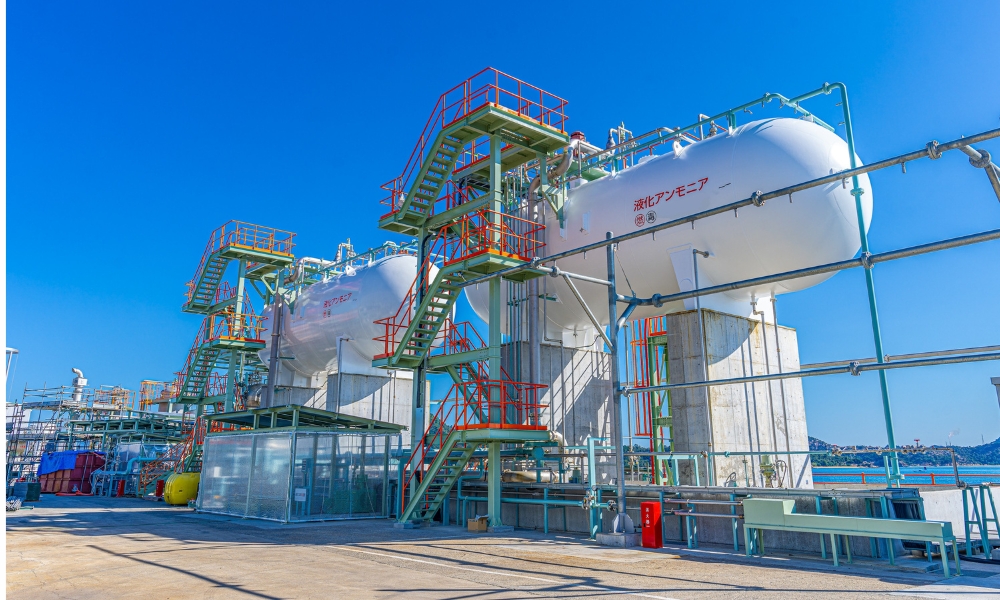
Mitsui E&S on Thursday (20 August) said it has completed the commercialisation of large ammonia dual-fuel marine engines and ammonia fuel supply systems (AFSS).

As the only company in Japan manufacturing both ammonia dual fuel engines and AFSS, the company said it has established a supply framework for marine propulsion systems aimed at the practical implementation of ammonia-fuelled vessels.

“While ammonia holds promise as a next-generation fuel that emits no carbon dioxide during combustion, it is difficult to ignite and poses risks related to toxicity and corrosiveness; therefore, ensuring safety, reliability, and environmental performance is crucial for its practical implementation in society,” it said. 

In February, Mitsui E&S conducted land-based tests involving the integrated operation of the Ammonia dual fuel engine MITSUI-Everllence B&W 7S60ME-C10.5-LGIA-HPSCR and the AFSS, witnessed by ClassNK (Nippon Kaiji Kyokai), and verified their performance. 

Following the completion of the tests and the subsequent review, Mitsui E&S confirmed the completion of onshore testing in accordance with classification society rules and verified compliance with International Maritime Organization (IMO) NOx regulations through NOx certification. 

“Consequently, we have finalised the commercialisation of the ammonia dual fuel engines and the AFSS and are now able to supply it for actual vessels,” it added. 

Mitsui E&S said it has already decided to expand its land-based testing facilities for AFSS compatible with both Everllence and WinGD licensed engines. 

“In conjunction with this, we will establish a mass-production system for both the engines and the AFSS to meet the anticipated rise in demand,” it said. 

Mitsui E&S added the company is expanding its engine lineup to accommodate a diverse range of next-generation marine fuels, including ammonia, by offering ammonia-fuelled engines and AFSS as an integrated package.


Photo credit: Mitsui E&S
Published: 24 August, 2026

Continue Reading

Events

London forum to address critical bottlenecks holding back maritime decarbonisation

Marine Energy Transition Forum 2026 will be held on 11 November to address bunker fuel, technology and infrastructure barriers that continue to slow the industry’s transition to net-zero emissions.
Admin

Published

on

By

London forum to address critical bottlenecks holding back maritime decarbonisation

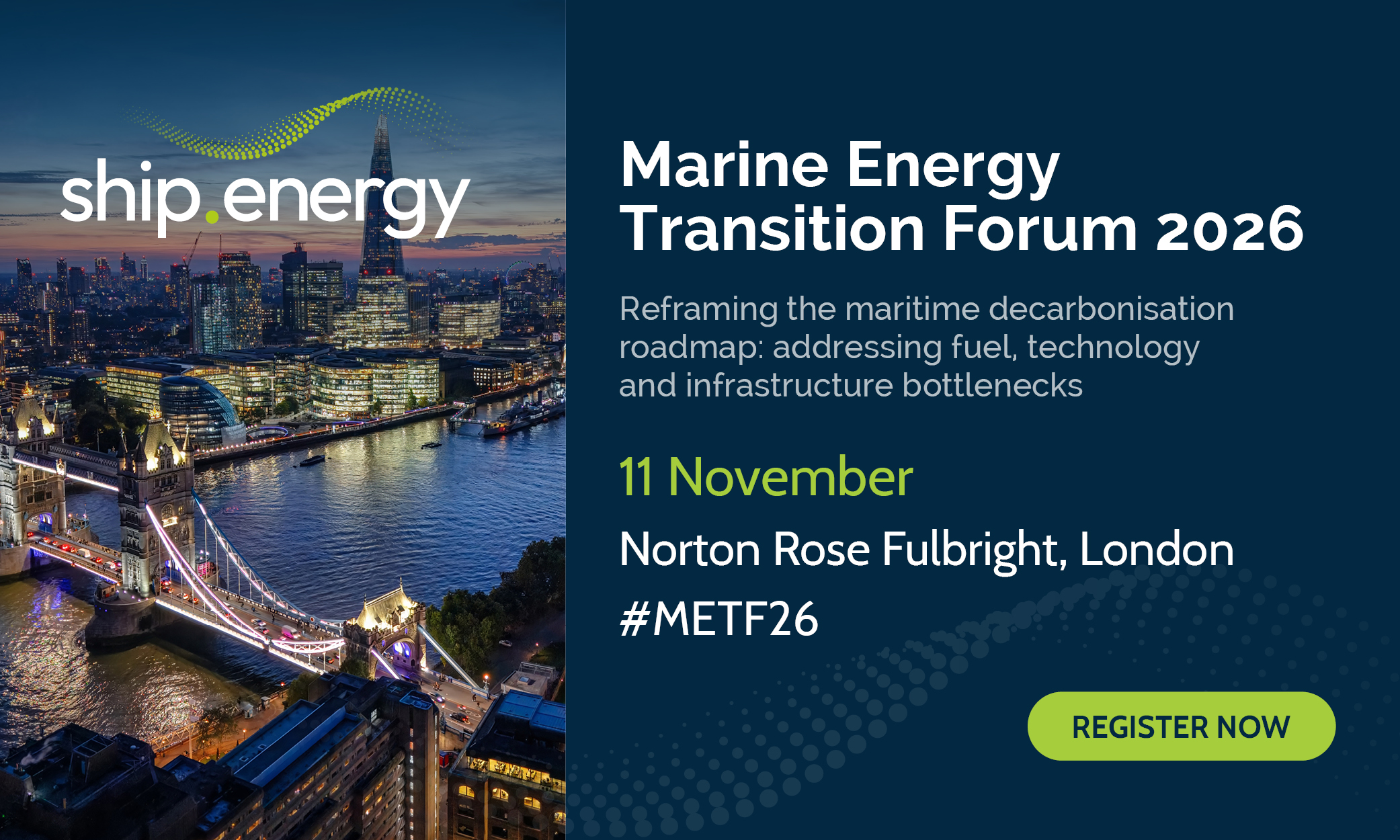
The Marine Energy Transition Forum (METF) 2026 will bring together leading voices from across the global maritime sector on 11 November 2026 at Norton Rose Fulbright, London.

The forum will tackle one of shipping’s most pressing challenges: how to overcome the fuel, technology and infrastructure barriers that continue to slow the industry’s transition to net-zero emissions.

Under the theme “Reframing the maritime decarbonisation roadmap: addressing fuel, technology and infrastructure bottlenecks,” the one-day forum will provide a platform for shipowners, fuel suppliers, technology developers, ports, policymakers and financiers to examine the practical steps needed to accelerate progress while maintaining commercial competitiveness.

As the maritime industry navigates an increasingly complex regulatory and commercial landscape, METF 2026 will focus on delivering practical insight into the challenges—and opportunities—shaping the next phase of the energy transition.

The conference programme will explore five key themes:

  • The effectiveness of current regulatory frameworks and policy measures, including regional and international initiatives driving maritime decarbonisation.
  • Progress in developing a resilient multi-fuel future, examining investment, fuel availability, supply chains and infrastructure.
  • The commercial readiness of emerging technologies, including alternative propulsion systems, vessel optimisation, batteries, carbon capture, wind propulsion and digital solutions.
  • Building a supportive business environment for energy transition companies, with discussions covering finance, innovation, scaling businesses and market development.
  • The evolving role of ports as critical enablers of shipping’s energy transition through new fuel infrastructure, shore power and energy cluster development.

METF 2026 is designed to encourage open discussion between every part of the maritime value chain, recognising that collaboration across fuel producers, shipowners, ports, technology providers, investors and policymakers will be essential if global decarbonisation ambitions are to be achieved.

The event will feature expert speakers, panel discussions and extensive networking opportunities, enabling delegates to exchange ideas, develop partnerships and gain practical insight into the strategies shaping the future of maritime energy.

Registration for METF 2026 is now open. Further information and registration can be found here


Photo credit: ship.energy
Published: 13 August, 2026

Continue Reading

Engine

Japan’s first WinGD methanol dual-fuel marine engine passes FAT at MITSUI E&S

Company successfully completed the Factory Acceptance Test of the DU-WinGD 6X82DF-M-1.0 LP-SCR, the first methanol dual-fuel WinGD large marine engine built in Japan.
Admin

Published

on

By

MITSUI E&S completes FAT of Japan's first WinGD methanol dual-fuel engine

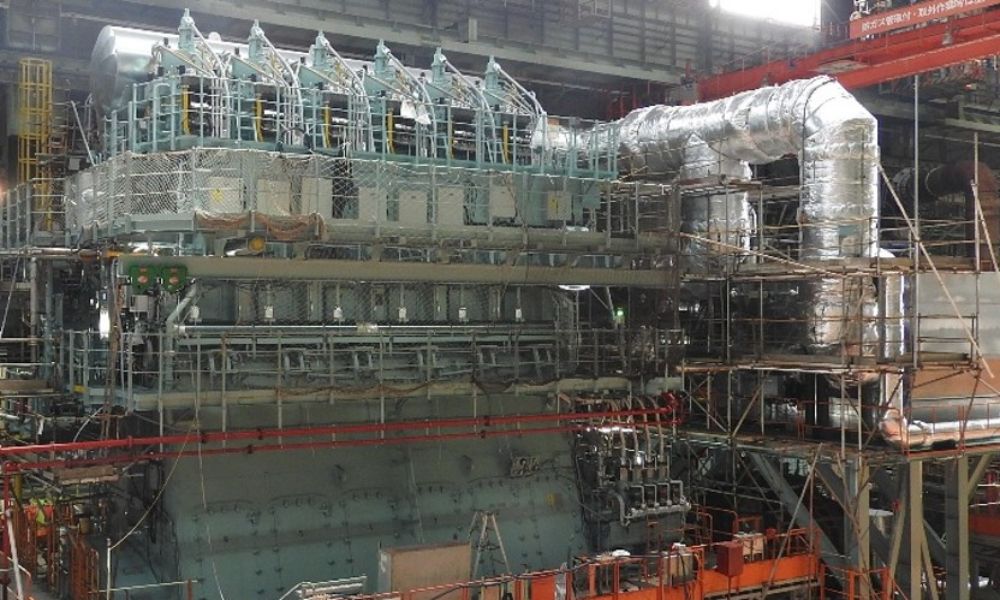
MITSUI E&S on Monday (3 August) announced that Mitsui E&S DU, a group company of MITSUI E&S, has successfully completed the Factory Acceptance Test (FAT) of the DU-WinGD 6X82DF-M-1.0 LP-SCR, the first methanol dual-fuel WinGD large marine engine built in Japan.

The engine is also the first WinGD large marine engine manufactured at MITSUI E&S Tamano Works.

“The engine is scheduled to be installed on the first vessel in a series of four vessels being built for a domestic shipowner,” the company said on its website. 

By utilising green methanol as fuel, it will contribute to a substantial reduction in greenhouse gas (GHG) emissions from shipping operations.

“To meet the expected increase in marine engine demand under the Japanese government’s Shipbuilding Industry Revitalisation Roadmap, the MITSUI E&S Group is working to enhance production efficiency for large marine engines through integrated operation at MITSUI E&S Tamano and Mitsui E&S DU Aioi,” the company added.


Photo credit: MITSUI E&S
Published: 4 August, 2026

Continue Reading
Advertisement

OUR INDUSTRY PARTNERS


Trending