
Alternative Fuels
Austal Philippines launches LNG-capable ferry “Express 5” for Danish Molslinjen
Express 5, which has the capacity for 1,610 passengers, is scheduled for delivery early in the first quarter of CY2023 following final fit-out of the vessel alongside at Austal Philippines.


Australia’s global shipbuilder Austal Philippines on Monday (26 September) said it has successfully launched the 115-metre, high speed vehicle-passenger ferry Express 5 for Danish ferry company Molslinjen utilising a new vessel transportation system designed by Austal.
Express 5 has the capacity for 1,610 passengers, space for 450 cars (or 617 lane metres for trucks plus 257 cars) over 2 vehicle decks and an operating service speed of 37 knots. It is powered by an LNG-capable, medium-speed power plant that offers a powerful yet economic and environmentally friendly solution.
The ‘Auto Express 115’ high-speed catamaran ferry is the largest ferry (by volume) constructed by an Austal shipyard and was securely transported onto Austal Philippines’ floating dock by a new, rail-based system called ‘ANTS’, featuring self-drive trollies with variable geometry to suit any hull configuration.
 Austal Limited Chief Executive Officer Paddy Gregg said the successful launch of the Company’s largest commercial ferry build, utilising Austal’s new ‘ANTS’ vessel transportation system, demonstrated both capability and innovation.
“The launch of Express 5 is a genuine milestone on a number of levels, as the largest ferry ever constructed by an Austal shipyard; and the first to be launched using our proprietary new vessel transport system,” Gregg said.
“The Austal Nautical Transportation System (ANTS) allows us to move any large vessel safely, securely, and efficiently – monohull, catamaran or trimaran – at a fraction of the cost of traditional mobile transporters.”
“Congratulations to the Austal Philippines team, who have not only successfully constructed and launched Express 5 but designed and developed a new vessel transport system to improve efficiency, reduce costs and enhance operations, for the benefit of our customer.”
“Our congratulations also to Molslinjen, whom I know are just as excited as us to see this impressive new ferry in the water, with sea trials commencing soon.”
Austal Philippines President Wayne Murray said the launch of Express 5 demonstrated the ingenuity and dedication of the local team – and the shipyard’s capability to deliver large, world class ships, cost effectively.
“I am so proud of the Austal Philippines team who have constructed this impressive new high-speed ferry – the largest ever built by any Austal shipyard – and developed an innovative new transportation system that improves shipbuilding operations and reduces costs,” Mr Murray said.
The sleek looking 115-metre catamaran was designed by the same Austal Australia team who developed the original, signature raked-bow hull for Molslinjen’s Express 4 (delivered in 2019); and includes Austal’s proprietary Motion Control and MARINELINK-Smart systems that help deliver a smoother journey for passengers and crew and a more efficient, better performing, ‘smart’ ship for operators.
Following final fit-out of the vessel alongside at Austal Philippines, Express 5 is scheduled for delivery early in the first quarter of CY2023.
Photo credit: Austal Philippines
Published: 27 September, 2022
Alternative Fuels
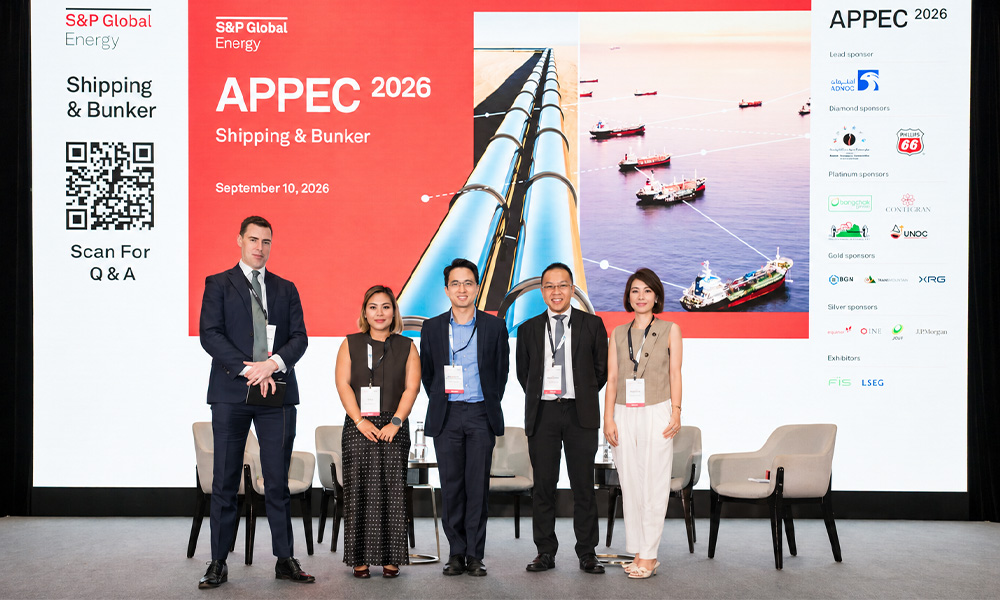
APPEC 2026: Panellists navigate maritime decarbonisation and alternative marine fuel strategies
Experts discuss maritime decarbonisation, emphasising global regulatory clarity, crew training, and collaborative strategies for adopting sustainable alternative marine fuels.
Methanol
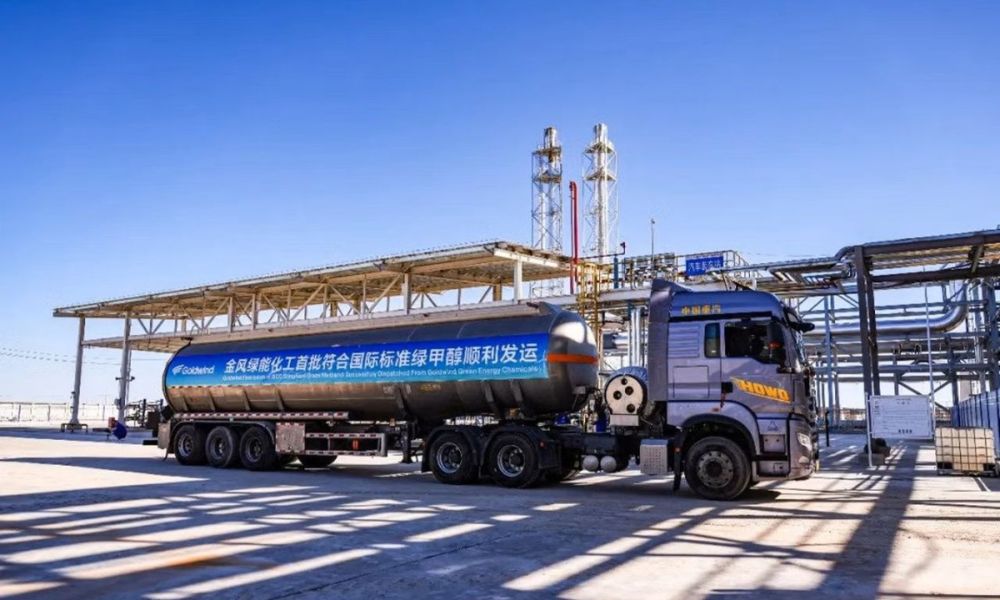
Goldwind green methanol facility completes trial production, ships first 500 mt
Goldwind has also secured long-term offtake agreements with A.P. Moller – Maersk and Hapag-Lloyd, connecting planned production with demand from shipping.
LNG Bunkering
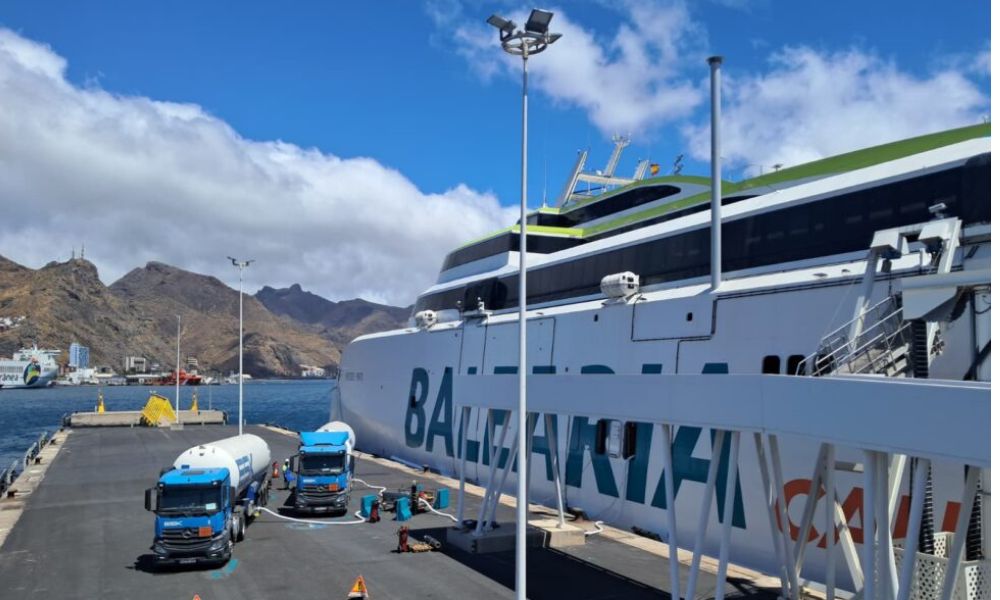
Tenerife achieves first truck-to-ship LNG bunkering operation
With the latest operation, the Port of Santa Cruz de Tenerife is now capable of truck-to-ship and multi truck-to-ship bunkering operations, in addition to the ship-to-ship method.

OUR INDUSTRY PARTNERS

APPEC 2026: Digitalisation in bunkering not merely a ‘paper-to-screen’ swap, states panellists

APPEC 2026: Panellists navigate maritime decarbonisation and alternative marine fuel strategies

High Court of Singapore issues winding up order against Hengli Petrochemical International

Goldwind green methanol facility completes trial production, ships first 500 mt

LDA’s methanol-powered “Spirit of Toulouse” gets Norsepower rotor sail in Shanghai

Tenerife achieves first truck-to-ship LNG bunkering operation

IMO technical seminar to focus on ammonia production, bunkering and safety

Rajah & Tann: Bunker disputes are won in the first 48 hours

Malaysia: MMEA detains two vessels over suspected illegal ship-to-ship transfer off Johor

Singapore strengthens LNG bunkering framework with new SS 727 standard

Yang Ming orders six LNG dual-fuel, ammonia-ready containerships from Hanwha Ocean

Ahti Climate and DNV connect verified emissions data to FuelEU pooling platform

TFG Marine advances global MFM rollout with two US Gulf bunker barges

Auramarine: Marine fuel flexibility will be key to shipping’s energy transition
-
 Bunker Claim2 weeks ago
Rajah & Tann: Bunker disputes are won in the first 48 hours
-
 Vessel Arrest2 weeks ago
Malaysia: MMEA detains two vessels over suspected illegal ship-to-ship transfer off Johor
-
 LNG Bunkering2 weeks ago
Singapore strengthens LNG bunkering framework with new SS 727 standard
-
 Alternative Fuels1 week ago
Yang Ming orders six LNG dual-fuel, ammonia-ready containerships from Hanwha Ocean
-
 FuelEU2 weeks ago
Ahti Climate and DNV connect verified emissions data to FuelEU pooling platform
-
 Mass Flowmeter1 week ago
TFG Marine advances global MFM rollout with two US Gulf bunker barges
-
 Alternative Fuels1 week ago
Auramarine: Marine fuel flexibility will be key to shipping’s energy transition
-

 Winding up1 week ago
Singapore: Liquidators of Nan Ho Maritime, Nan Xin Maritime issue notices of dividend