Connect with us

Shipping Corridor

Houston, Antwerp-Burges ports and partners to cooperate on green shipping corridor

Parties agreed to explore a partnership around an import-export coalition for renewable and low-carbon molecules, a green shipping corridor and exchange of best practices, knowledge and research.

Admin

Published

on

Houston, Antwerp-Burges ports and partners to cooperate on green shipping corridor

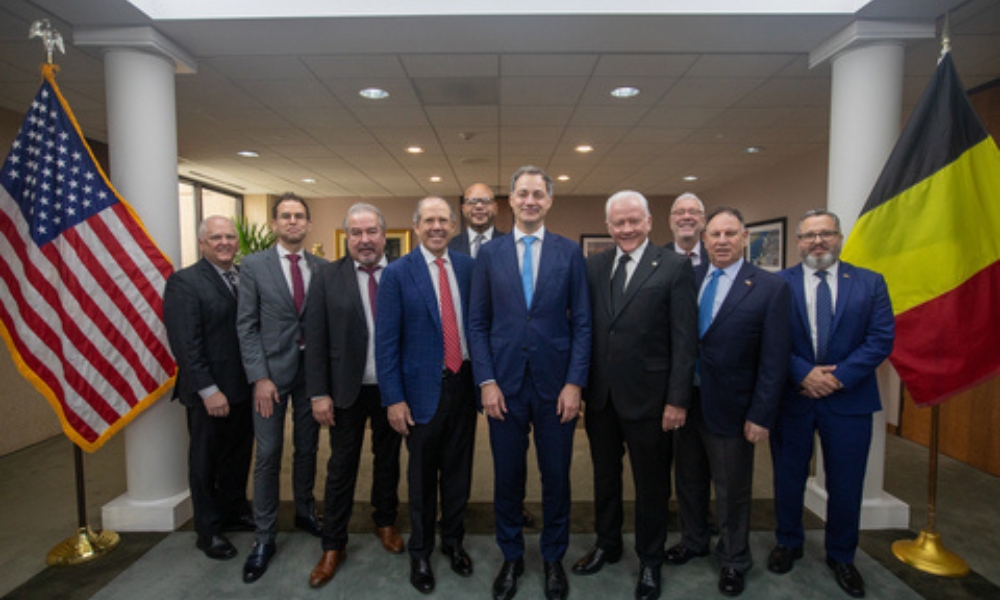
Port Houston on Saturday (9 December) said a Memorandum of Understanding on Energy Transition Cooperation was signed between three Belgian and three Houston-based partners to boost transatlantic cooperation on the green transition. 

The Center for Houston’s Future, Waterstofnet, Port Houston, the Port of Antwerp-Bruges, Exmar, and the Blue Sky Maritime Coalition agreed to explore a win-win partnership around an import-export coalition for renewable and low-carbon molecules, a green shipping corridor and the exchange of best practices, knowledge and research.

The changing regulatory landscape and ambitious climate targets on both sides of the Atlantic provide the background for ambitious cooperation. The Greater Houston area is home to some of the biggest energy producers in the world, and the increase in the production of renewable and low-carbon energy offers perspectives for future export.

Belgium is a strategic energy hub in the heart of Europe, including for the import and transit of renewable and low-carbon molecules, with the Port of Antwerp-Bruges as a crucial gateway with extensive storage capacity and connectivity to European markets and huge off-take.

Houston and Antwerp are the biggest petrochemical clusters in the world; many Belgian and US companies are present on both sides, and the long-standing commercial maritime connection between both ports is a backbone for cooperation.

The signing of this Memorandum of Understanding is a first step in solidifying such a partnership between crucial stakeholders based in countries that are strategic allies. Other stakeholders on both sides are welcome and encouraged to join as partners start working on a roadmap for implementation.

“The Center for Houston’s Future, building on our recent trade mission to Germany and Poland in which we explored developing a transatlantic clean hydrogen alliance, was excited to welcome Prime Minister De Croo as he participated in a clean energy roundtable hosted by the Greater Houston Partnership,” said Center CEO Brett Perlman. “The discussion highlighted opportunities for collaboration, while the MOU creates a framework for deeper engagement with our colleagues in Belgium.”

“We are pleased to be a signatory to this MOU, which helps further strengthen Port Houston’s mission to drive job creation and economic prosperity for our region,” said Port Houston Chairman Ric Campo. 

“Our history of collaboration between Port Houston and Port of Antwerp-Brugge, and between Texas and Belgium, is a century in the making,” he added.

“This agreement is a watershed moment to expand that cooperation and continue growing both relationships and critically important energy-related trade,” said Port Houston’s Chief Commercial Officer John Moseley.

“Today’s agreement advances our shared goals of growing prosperity through economic impact and environmental sustainability,” added Port Houston, Chief Infrastructure Officer Rich Byrnes.

Blue Sky Maritime Coalition brings together more than 120 member organisations, including leadership of the green shipping corridor from the American Bureau of Shipping (ABS), to work on maritime decarbonisation and transportation of clean energy fuels with the other partners.

Photo credit: Port Houston
Published: 12 December, 2023

Continue Reading

Alternative Fuels

Singapore-Brazil green shipping corridor to support alternative bunker fuel supply chains

Both inked a MOU to establish the Singapore-Brazil GDSC, bringing together their complementary strengths to support the development of alternative marine fuel supply chains.
Admin

Published

on

By

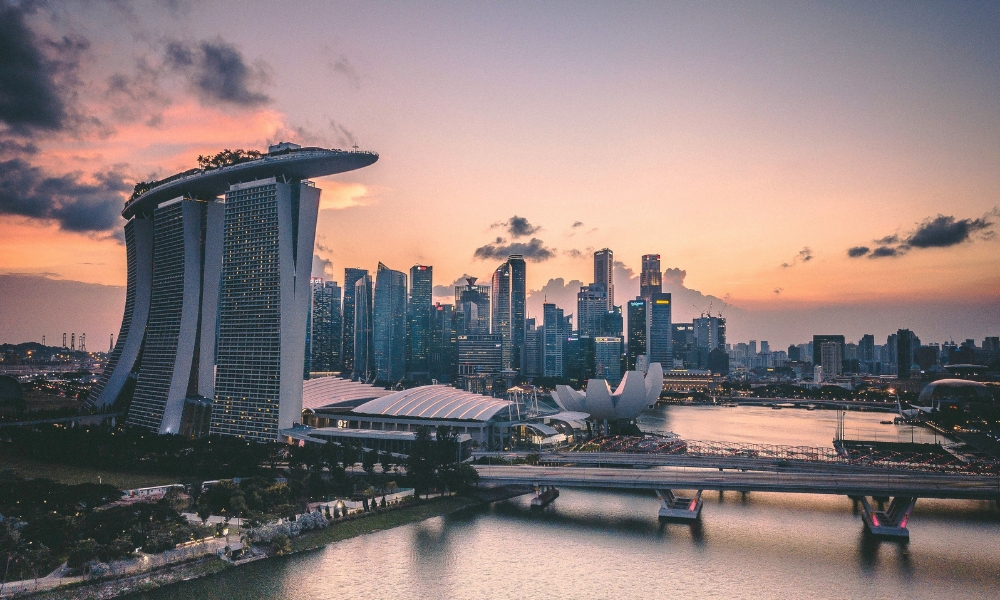
Swapnil Bapat on Unsplash

Singapore and Brazil have signed a Memorandum of Understanding (MOU) to establish the Singapore-Brazil Green and Digital Shipping Corridor (GDSC), according to the Maritime and Port Authority of Singapore (MPA) on Friday (28 August). 

The MOU was signed by Singapore’s Minister for Transport, Mr Jeffrey Siow, and Brazil’s Minister of Ports and Airports, Mr Tomé Franca.

MPA said the partnership will strengthen cooperation between Singapore and Brazil on maritime decarbonisation and digitalisation, and support more sustainable and efficient international shipping.

Brazil has significant renewable energy resources and production capabilities that could support the production of zero- and near-zero greenhouse gas emission marine fuels, while Singapore is the world’s largest bunkering port and a leading global hub port with a vibrant innovation ecosystem. 

“The GDSC will bring together these complementary strengths to support the development of alternative marine fuel supply chains,” MPA added. 

Under the MOU, Singapore and Brazil will also explore digital information exchanges to improve maritime and port operations. The two countries will work with industry to advance the research, development and adoption of emerging maritime technologies and solutions.


Photo credit: Swapnil Bapat on Unsplash
Published: 31 August, 2026

Continue Reading

Shipping Corridor

South Korea moves to establish green shipping corridors with new legislation

MOF has proposed implementing regulations for its Green Shipping Corridor Support Act and will open a public consultation on draft enforcement regulations for the legislation from 2 September to 13 October.

Admin

Published

on

By

Lauren Seo on Unsplash

South Korea’s Ministry of Oceans and Fisheries (MOF) on Wednesday (26 August) has proposed implementing regulations for its Green Shipping Corridor Support Act, as the country steps up efforts to accelerate maritime decarbonisation and expand the use of low- and zero-carbon fuels.

The ministry said it would open a public consultation on draft enforcement regulations for the legislation from 2 September to 13 October 2026. The Green Shipping Corridor Support Act is scheduled to enter into force on 1 April 2027.

Green shipping corridors are intended to enable carbon-free transportation between ports by using low- and zero-carbon fuels and environmentally friendly technologies throughout the logistics and shipping process.

South Korea enacted the Green Shipping Corridor Support Act as the world’s first dedicated legislation to support the development of green shipping corridors.

The proposed enforcement decree and regulations will establish detailed criteria and procedures covering matters delegated under the Act, including the marine fuels to be used by green vessels operating on designated corridors, requirements for environmentally friendly ports capable of supplying those fuels, development of basic plans, and the designation and public notification of green shipping corridors.

In parallel, the MOF and Ministry of Trade, Industry and Energy (MOTIE) are implementing the Second Basic Plan for the Development and Distribution of Eco-Friendly Ships (2026–2035), which was jointly developed to reflect rapidly changing technology and policy conditions in South Korea and overseas.

The plan is built around five strategic priorities: research and development of future ships capable of reducing carbon emissions; commercialisation of new technologies; expansion of environmentally friendly marine-fuel supply infrastructure; deployment of eco-friendly vessels; and development of a green shipping and shipbuilding ecosystem.

Under the plan, the government aims to support the conversion of 889 private and public-sector vessels to more environmentally friendly ships by 2035.

The government also plans to strengthen the competitiveness of small and medium-sized shipbuilders and marine equipment manufacturers, which it said remain relatively disadvantaged compared with major shipyards. Support will focus on areas including eco-friendly ship design and the demonstration of green marine equipment and technologies.

South Korea also intends to strengthen strategic links between the shipbuilding and shipping sectors to encourage the domestic construction of eco-friendly vessels.

The MOF said it would use the new legislation and the second basic plan as the foundation for building a maritime decarbonisation ecosystem and supporting South Korean companies in competing for a leading position in global markets.


Photo credit: Lauren Seo on Unsplash
Published: 31 August, 2026

Continue Reading

Alternative Fuels

Germany launches EUR 70 million funding programme for green inland shipping corridors

Eligible projects include the installation of zero- or low-emission propulsion systems on newbuild and existing cargo vessels, as well as investments in port infrastructure for alternative fuels.
Admin

Published

on

By

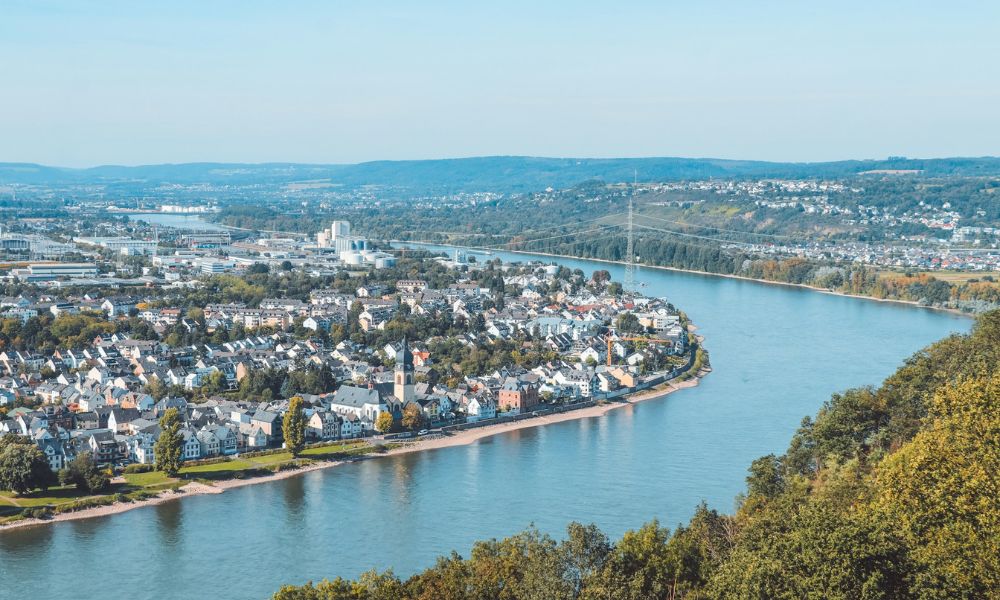
Maxime Vandenberge on Unsplash

Germany’s Federal Ministry for Transport (BMV) recently opened the first funding call under its new programme for green inland navigation, with up to EUR 70 million (USD 81 million) available for projects to develop green inland shipping corridors.

The funding will support the deployment of zero- and low-emission inland vessels and the development of associated infrastructure. 

Eligible projects include the installation of zero- or low-emission propulsion systems on newbuild and existing cargo vessels, as well as investments in port infrastructure for alternative fuels such as hydrogen, ammonia and methanol.

Funding will also cover facilities for producing renewable electricity and renewable hydrogen, along with storage systems. Infrastructure at transhipment and berthing facilities outside ports, including charging, refuelling and mobile supply equipment, is also eligible.

Companies, municipalities and other economically active organisations based in Germany can apply under the first funding call, which focuses exclusively on establishing green inland shipping corridors. Applications opened on 17 August through the German government’s easy-Online funding portal.

The initiative is also intended to encourage a greater shift of freight and passenger transport to inland waterways, while supporting Germany’s climate targets, European alternative-fuels infrastructure requirements and the long-term competitiveness of the country’s inland shipping sector.


Photo credit: Maxime Vandenberge on Unsplash
Published: 18 August, 2026

Continue Reading
Advertisement

OUR INDUSTRY PARTNERS


Trending