Connect with us

Alternative Fuels

BAR Technologies: Shipping must stop waiting for future bunker fuels to decarbonise

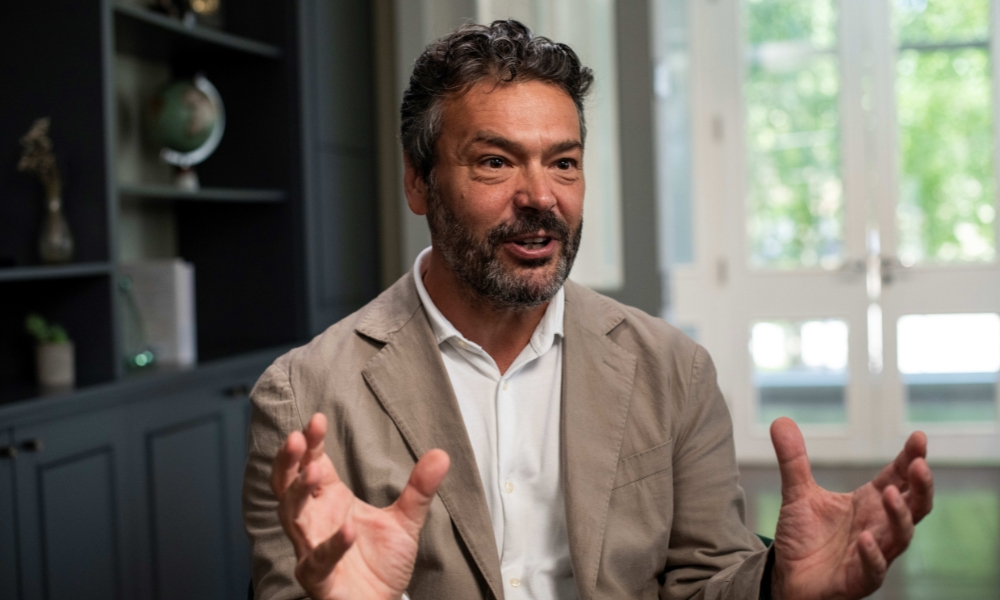
‘Shipping needs to stop treating decarbonisation as something that only begins when future fuels arrive or every detail of the IMO’s Net-Zero Framework is settled,’ says John Cooper, CEO of BAR Technologies.

Admin

Published

on

IMO move signals pivotal regulatory shift on wind propulsion, says BAR Technologies

BAR Technologies on Wednesday (29 July) said while the shipping industry is right to plan for long-term fuel pathways, too much of the decarbonisation debate remains focused on what may become available in the future rather than what can be deployed now.

The company said this in response to a new study by EY Greece warning that shipping’s transition to net zero will be uneven and capital intensive, constrained by factors including alternative fuel availability, infrastructure, shipyard capacity, access to finance and fragmented commercial incentives.

The EY study identifies energy efficiency and operational measures as among the most practical near-term actions available to shipping. BAR Technologies argued that wind propulsion, already delivering measurable fuel and emissions savings on commercial vessels, must be recognised as a proven part of that immediate response.

BAR Technologies said wind propulsion has also passed an important market milestone. 

According to the International Windship Association, more than 100 large commercial cargo ships, representing over five million tonnes of deadweight capacity, are now equipped to harness wind power. That is almost five times the number recorded in May 2022, clear evidence that the technology is moving into the commercial mainstream. 

BAR Technologies are playing a significant part in this transition: By the end of 2026, 10 vessels will be operating with 23 WindWings® installed, giving a combined saving of approximately 100t of CO2 per day.

John Cooper, CEO of BAR Technologies, said: “Shipping needs to stop treating decarbonisation as something that only begins when future fuels arrive or every detail of the IMO’s Net-Zero Framework is settled. The industry cannot allow the absence of perfect policy certainty to become an excuse for inaction. Proven technologies are available now, and owners can act today.”

Unlike alternative fuels, wind requires no new fuel-production facilities, bunkering infrastructure or global supply chain. It is freely available as an energy source and can reduce a vessel’s dependence on whichever fuel it uses.

“Wind propulsion is not waiting to be invented or proven. It is already operating on commercial vessels and reducing the amount of fuel they need. The priority now should be to remove the barriers preventing more owners from investing,” he said. 

For wind propulsion, those barriers are increasingly commercial and financial rather than technical.

Under many chartering arrangements, the owner funds the technology while the charterer receives much of the benefit through lower fuel consumption. Until charterparty structures allow the costs, risks and savings to be shared more effectively, owners can be left carrying the investment and long-term performance risk.

Access to finance is another significant constraint. Without competitive green lending or blended finance, owners may have to fund emissions-reduction technology at conventional commercial borrowing rates. This can lengthen the payback period, particularly in the tramp, bulk and tanker markets, where routes, earnings and charter durations are less predictable.

The EY study concluded that the pace of shipping’s transition will depend on coordination, commercial bankability, access to finance and action across the maritime value chain.

Cooper added: “But the real way to unlock action now is to make green investment affordable. Shipowners need access to financing that makes proven emissions-reduction technologies commercially viable today, not at some point in the future. If we can lower the cost of capital and create funding structures that recognise both the fuel savings and the environmental value these technologies deliver, far more owners will be able to invest.

“Wind propulsion has already passed the technology test. Affordable finance, alongside charterparty structures that share the benefits fairly, is what will unlock deployment at scale.”


Photo credit: BAR Technologies
Published: 30 July, 2026

Continue Reading

LNG Bunkering

Seaspan Energy hits 150 LNG bunkering milestone in 18 months

Company is now ranked seventh globally by LNG bunkering volume, according to the latest LANSDOWNE Moritz rankings.

Admin

Published

on

By

Seaspan Energy to offer renewable LNG bunker fuel along West Coast

Canadian low-carbon marine fuel provider Seaspan Energy on Wednesday (29 July) said it has completed its 150th ship-to-ship LNG bunkering less than two years after launching operations.

The company is now ranked seventh globally by LNG bunkering volume, according to the latest LANSDOWNE Moritz rankings. LANSDOWNE Moritz is a boutique advisory business specialising in the energy industry, with specific focus on the natural gas, LNG and maritime sectors. 

Since completing its first ship-to-ship LNG bunkering at the Port of Long Beach in December 2024, Seaspan Energy has all three of their LNG bunker vessels operating on the West Coast and is now averaging 12 LNG bunkering operations per month. 

Working closely with key stakeholders to obtain all necessary authorisations, Seaspan Energy serves cruise ships, container ships, car carriers and tankers across the ports of Vancouver, Nanaimo, Royal Roads, Long Beach, and Seattle.

More than half of Seaspan Energy’s LNG bunkering operations have taken place in the Port of Vancouver, reinforcing the port’s position as a leading gateway for LNG-powered vessels and alternative marine fuels.

Seaspan Energy delivers made-in-BC LNG sourced from FortisBC’s Tilbury LNG facility to help meet the growing global demand for lower-emission marine fuels.

Harly Penner, President, Seaspan Energy, said: “Completing 150 LNG bunkering operations in just 18 months is an incredible achievement for our team. This milestone reflects the hard work and commitment of our vessel crews and shoreside staff, who have built a reputation for delivering safe, reliable LNG bunkering. I am incredibly proud of what we have accomplished together and grateful for the trust our global customers continue to place in our team.”

Gary Regan, Managing Consultant, LANSDOWNE Moritz, said: “Seaspan Energy has become one of the world’s leading LNG bunker suppliers in a relatively short period of time. The company is now ranked seventh globally by LNG bunkering volume according to our data and is well positioned for future growth given its access to dedicated SSLNG loading facilities and competitive value proposition.”


Photo credit: Seaspan Energy
Published: 30 July, 2026

Continue Reading

Biofuel

Burando Energies holds 30% of Rotterdam’s biofuel blend market in H1 2026

Company supplied approximately 30% of all biofuel blended marine fuel and B100 volumes bunkered in the Port of Rotterdam in the first half of 2026, based on data from the Rotterdam Port Authority.

Admin

Published

on

By

Burando Energies holds 30% of Rotterdam's biofuel blend market in H1 2026

European marine fuel supplier Burando Energies on Wednesday (29 July) said it supplied approximately 30% of all biofuel blended marine fuel and B100 volumes bunkered in the Port of Rotterdam in the first half of 2026, based on data from the Rotterdam Port Authority. 

This excludes alternative fuels such as methanol, ethanol and LNG.

The company said Rotterdam remains one of the most cost-competitive locations in Europe to bunker biofuels.

The Netherlands is currently the only major bunkering hub in the ARA region where RED III has been transposed for marine, creating an ERE-based discount mechanism that makes blended fuels in Rotterdam meaningfully cheaper than equivalent products in other ports outside the Netherlands.

For shipowners focused on EU ETS and FuelEU Maritime compliance, the economics of bunkering biofuels in Rotterdam are the most cost-effective.

“We have positioned ourselves to capture this demand through deliberate infrastructure investment, including our dedicated, company-owned biofuel blending terminal at AFT Amsterdam,” it added. 

Backed by its wholly owned fleet of biofuel barges, the company said it ensures reliable and timely delivery, while its in-house sustainability team issues all compliance documentation accurately and promptly.

Burando Energies supply an array of biofuel blends across all Dutch and Belgian ports, including Zeebrugge.

Its portfolio includes HSFO, VLSFO and Marine Gasoil/Diesel-based blends alongside B100 FAME, B100 HVO and B100 FAME Residue products.

“We are extremely proud to see the trust of our new and repeat customers supporting the growth of our operation and enabling us to continuously improve both our physical products and associated compliance documents,” said Nick de Haan, Head of Decarbonisation Strategies at Burando Energies.

Biofuel uptake in Rotterdam is growing and Burando Energies expects that trajectory to continue as FuelEU Maritime obligations increase and the EU ETS cost of conventional fuel rises.

“Among other initiatives, we continue to invest in shore- and water-based logistics capacity for low-carbon methanol,” the firm added. 

“Our ambition is to continue to grow and further diversify our market position while continuing to deliver the reliability and documentation quality our clients depend on.” 


Photo credit: Burando Energies
Published: 30 July, 2026

Continue Reading

Bunker Fuel

Neste supplies renewable diesel marine fuel to “Tara Polar Station” for Arctic expedition

Company supplied about 90,000 litres of renewable diesel marine fuel to “Tara Polar Station”, Tara Ocean Foundation’s drifting laboratory and observatory station, for its first 18-month expedition.

Admin

Published

on

By

Neste supplies renewable diesel marine fuel to “Tara Polar Station” for Arctic expedition

Finnish oil company Neste on Tuesday (28 July) said it has supplied about 90,000 litres of renewable diesel marine fuel to Tara Polar Station, Tara Ocean Foundation’s drifting laboratory and observatory station, for its first 18-month expedition.

The Tara Ocean Foundation, a French foundation dedicated to ocean conservation, will embark on the Tara Polaris 1 scientific expedition to the Arctic to continue its work of monitoring climate change and researching its impact on the ocean. 

The Tara Polar Station will be at sea for the expedition during 2026-2027, starting a 20-year-long program in partnership with 30 renowned research institutes.

The Tara Polar Station started its journey towards the Arctic from its home port of Lorient in France on 19 July. 

It stopped in Dordrecht, the Netherlands, on 23 July for fueling with Neste MY Renewable Diesel™. Moored at a marine bunker fuel station of OK (Catom), one of Neste’s renewable diesel distributors in the Netherlands. After the fuelling, Tara Polar Station continued its journey to Norway before heading into the Arctic to start the expedition in mid-August.

Neste MY Renewable Diesel is a lower greenhouse gas emission alternative to conventional fossil diesel. Due to their similar chemical compositions, Neste’s renewable diesel can be used as a direct replacement for fossil diesel in existing diesel engines and fueling infrastructure and works at temperatures down to -32°C.

“We have designed the vessel energy systems to operate on renewable diesel since the very beginning for both its efficient combustion and its low carbon footprint. Neste is one of the leading producers of renewable diesel and I am very glad that they decided to become a partner of this fantastic and important scientific endeavor to the Arctic Ocean,” said Romain Troublé, Managing Director of the Tara Ocean Foundation.


Photo credit: Neste
Published: 30 July, 2026

Continue Reading

Trending