Connect with us
DNV Decarbonization Insight Series August 2026 - What maritime professionals should know about AI Training

Decarbonisation

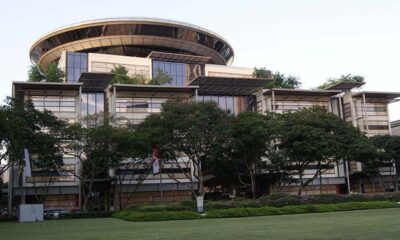
SMW 2026: DNV expands Singapore Centre of Excellence with Phase Two launch

‘DNV’s Phase 2 expansion of its Centre of Excellence will strengthen capabilities in remote operations, AI-enabled systems and new fuels in Singapore,’ says MPA’s Chief Transformation Officer Ng Yi Han.

Admin

Published

on

dnv technology centre sg

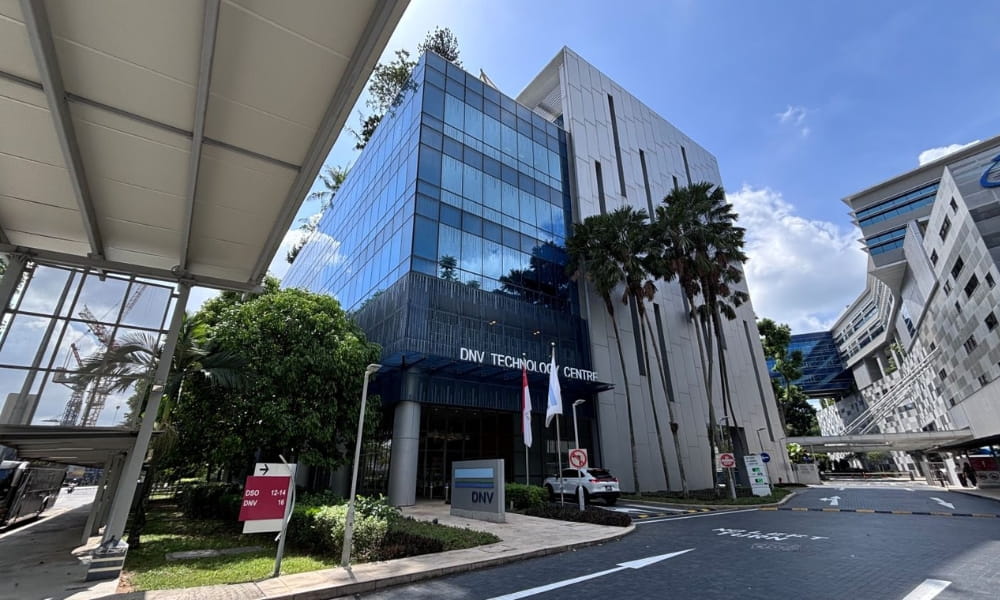
Classification society DNV on Tuesday (21 April) launched Phase Two of its Centre of Excellence for Maritime Decarbonization & Smart Shipping Asia Pacific (COE) in Singapore, reinforcing its commitment to advancing energy efficiency, new marine fuels, remote operations, and autonomous solutions, across the maritime sector. 

Supported by the Maritime and Port Authority of Singapore (MPA) and Singapore Economic Development Board, the expanded centre reinforces Singapore’s position as a global hub for smart and sustainable maritime transformation.

First launched in 2021, Phase 2 of the Centre’s rollout marked a shift from developing pilot projects to building scalable platforms focussed on the acceleration of maritime decarbonization and the broader adoption of smart shipping systems and processes. 

As part of this new scope, the COE will support projects that are working on developing next generation remote operation systems, AI enabled decision-making tools, and workload redistribution that helps safely to move complex tasks from ship to shore.

The expanded COE will bring additional local experts with expertise in autonomy, cyber security, remote operations centres, and emissions and data management, to support Singapore based maritime entities in developing and scaling remote and automated solutions through targeted training, advisory services and standards development.

Antony M DSouza, Regional President & Director, Southeast Asia, Pacific & India, Maritime at DNV, said: “Phase 2 places us in a stronger position to support the industry at a time when the maritime industry’s transition to new fuels and new technologies is gaining pace. Advanced digital capabilities are enabling new ways of planning and managing fleets, while remote operations and autonomy are slowly gaining traction.

Ng Yi Han, Senior Director, Innovation, Technology & Talent Development / Chief Transformation Officer, Maritime and Port Authority of Singapore, added: “DNV’s Phase 2 expansion of its Centre of Excellence will strengthen capabilities in remote operations, AI-enabled systems and new fuels in Singapore. This will support companies here in developing and deploying scalable solutions, and accelerate the adoption of safer and more efficient operations across the sector.” 

Junie Fo, Vice President & Head, Professional Services at Singapore’s Economic Development Board (EDB), noted: “Through its Phase 2 COE, DNV will build up expanded capabilities and solutions to support the maritime industry’s transition towards smarter and more sustainable operations, reinforcing Singapore’s position as a leading hub for trusted technical assurance services. This will also create new opportunities for our local talent to build deeper functional expertise, while expanding capabilities across the professional services ecosystem.”

With its strong maritime ecosystem, Singapore is well placed to lead this transformation – especially in the digital realm. The expansion of our Centre of Excellence allows us to work closely with partners to strengthen the knowledge, frameworks and assurance needed for more sustainable, efficient, and competitive maritime operations.”

Dr. Shahrin Osman, Director of the COE, said: “This next phase allows us to move from testing individual concepts to building readiness across the wider system. Remote operations and autonomy require more than technical progress; they must be built on models that are backed by trusted assurance. That’s why our work in Singapore focuses on developing methods, standards, and practical guidances that will help owners, operators, and regulators introduce and make the most of these capabilities in a responsible way.”

Phase 2 will help the COE act as an even greater force multiplier for the Singaporean maritime sector by enabling companies to create new business models based around smart shipping. A recent example is DNV’s application of its global Remote Operations Assurance (ROA) audit framework in a joint development project with Seatrium. The ROA assessment supported Seatrium’s advancement of its AssetCare platform, taking it from remote monitoring to remote control operations, demonstrating how the COE can help industry partners build new capabilities and unlock opportunities.

In its first phase, the COE conducted several feasibility studies, technical assessments and advisory work commissioned by government agencies and industry stakeholders. 

Key projects included a vessel‑electrification feasibility study for Anglo American in support of the Waterways Watch Society, safe ammonia bunkering guidelines developed for the Global Centre for Maritime Decarbonisation, and a joint study with the Singapore Maritime Foundation examining the future of seafarers. The COE also partnered with local organizations such as the MPA and Singapore Institute of Technology (SIT) and other stakeholders on applied research, pilot projects, and capability‑building efforts in decarbonization, digitalization, and emerging maritime technologies.

Related: DNV: Powering Singapore’s journey into a smart and sustainable future


Photo credit: DNV
Published: 22 April, 2026

Continue Reading

Engine

Japan’s first WinGD methanol dual-fuel marine engine passes FAT at MITSUI E&S

Company successfully completed the Factory Acceptance Test of the DU-WinGD 6X82DF-M-1.0 LP-SCR, the first methanol dual-fuel WinGD large marine engine built in Japan.

Admin

Published

on

By

MITSUI E&S completes FAT of Japan's first WinGD methanol dual-fuel engine

MITSUI E&S on Monday (3 August) announced that Mitsui E&S DU, a group company of MITSUI E&S, has successfully completed the Factory Acceptance Test (FAT) of the DU-WinGD 6X82DF-M-1.0 LP-SCR, the first methanol dual-fuel WinGD large marine engine built in Japan.

The engine is also the first WinGD large marine engine manufactured at MITSUI E&S Tamano Works.

“The engine is scheduled to be installed on the first vessel in a series of four vessels being built for a domestic shipowner,” the company said on its website. 

By utilising green methanol as fuel, it will contribute to a substantial reduction in greenhouse gas (GHG) emissions from shipping operations.

“To meet the expected increase in marine engine demand under the Japanese government’s Shipbuilding Industry Revitalisation Roadmap, the MITSUI E&S Group is working to enhance production efficiency for large marine engines through integrated operation at MITSUI E&S Tamano and Mitsui E&S DU Aioi,” the company added.


Photo credit: MITSUI E&S
Published: 4 August, 2026

Continue Reading

Alternative Fuels

Quadrise and Licella amend JDA to advance low-carbon marine fuel testing

Companies have been collaborating since March 2025 on the use of Licella’s bio-oil produced by HTL technology as a potential cost-effective feedstock for Quadrise’s bioMSAR™ and bioMSAR Zero™ fuels.

Admin

Published

on

By

RESIZED scott graham

Quadrise, a low emissions fuels and biofuel developer, recently announced an amendment to the Joint Development Agreement (JDA) with Australian-based Licella Holdings (Licella).

Licella is a global technology pioneer delivering scalable, low-cost and high-value fossil replacement solutions. Its proprietary Cat-HTR™ hydrothermal liquefaction (HTL” technology efficiently converts abundant biomass residues and biowastes, including wood and agricultural waste, into high-quality, sustainable bio-oil that can be blended or refined into low-carbon liquid fuels.

“HTL is globally recognised as one of the most promising pathways for producing sustainable fuels for hard-to-abate sectors such as shipping, with organisations highlighting its potential to deliver low-carbon bio-oils at the scale the maritime sector requires,” Quadrise said. 

Under the JDA entered into on 26 March 2025, Quadrise and Licella have been collaborating and seeking, inter alia, to progress the use of Licella’s bio-oil produced by HTL technology as a potential cost-effective feedstock for the Company’s  bioMSAR™ and bioMSAR Zero™ fuels.  

Under the JDA, pursuant to which lab testing has been undertaken in Australia and the UK, the parties have jointly developed a deeper understanding of the technological advancements needed to supply sustainable HTL-derived bio-oils to the maritime sector.

As a result, and prior to diesel engine testing, the Amended JDA now sets out a non-binding but more specific development focus, with an updated time schedule for the joint testing of the parties’ respective fuel technologies, with Licella providing the scalable HTL bio-oil production expertise and Quadrise providing maritime market access and fuel experience.  

Upon successful completion of final lab tests on refined Licella HTL bio-oils in H2 2026, initial marine fuel diesel engine pilot tests are planned by the parties, after which Quadrise and Licella will seek to undertake the larger scale, third-party engine testing required to move to commercial vessel tests.


Photo credit: Scott Graham
Published: 4 August, 2026

Continue Reading

Methanol

CMA CGM names new 15,000 TEU methanol-powered vessel “ROI ARTHUR”

Joining the company’s REX2 service, the ship will strengthen its fleet of new-generation vessels designed to support the decarbonisation of shipping.

Admin

Published

on

By

8 1

French shipping giant CMA CGM on Monday (3 August) said its new 15,000 TEU methanol-powered vessel, CMA CGM ROI ARTHUR, has officially been named and is ready to begin its journey at sea.

Joining the company’s REX2 service, the ship will strengthen its fleet of new-generation vessels designed to support the decarbonisation of shipping. 

“Powered by methanol, she contributes to reducing atmospheric emissions and advancing the energy transition of our industry,” the company said in a social media post. 

The vessel was welcomed by her Master, Captain Roman DIDENKO, and her godmother, Ms. Sun Lijun, Vice Chairman of Tianjin Bridge Welding Materials Group Co., Ltd. and Vice President of the Tianjin Women Entrepreneurs Association.

In January, the company announced the arrival in its fleet of its 400th owned vessel, the CMA CGM MONTE CRISTO, the first in a series of six methanol container ships.

The Group is preparing to operate, by 2031, around 200 dual-fuel LNG and methanol container ships that can be powered with low-carbon energy.

Related: CMA CGM marks 400-vessel milestone as methanol-powered boxship joins fleet


Photo credit: CMA CGM
Published: 4 August, 2026

Continue Reading

Trending