
Decarbonisation
VPS: Turning shipping’s regulatory demands into operational and commercial advantages
Steve Bee and Emilian Buksak explore how the company can support the shipping industry in transforming challenges of environmental legislations into operational efficiencies and commercial benefits.

Steve Bee, Group Marketing and Strategic Projects Director, and Emilian Buksak, Decarbonisation Advisor of marine fuels testing company VPS, on Monday (7 April) explored how the company can support the shipping industry in transforming the challenges of environmental legislations into operational efficiencies and commercial benefits:
As far back as 1981, long before the word “sustainable” was ever applied to the protection of the planet, VPS marine fuel quality testing (FQT) service was clearly focused on achieving a sustainable global shipping fleet. Even before the existence of any international marine fuel quality standard, VPS was testing fuel to ensure the protection of, vessel operations and engines, crew health & safety and the environment.
At present, global shipping is navigating its way on a voyage to decarbonisation and sustainability, with increasingly complex regulatory and legislative requirements being placed upon vessel owners and operators. In support of such requirements, digitalisation and the demand for immediate accurate data, along with the use of low-to-zero carbon fuels, are now necessities within shipping, as it strives to achieve numerous levels of compliance.
Today, VPS continues to provide market-leading testing and inspection services that support shipowners & operators to comply with and go beyond regulatory requirements, by extending the lifetime and usage of fuels and lube oils and indirectly that of the assets in which they’re employed. VPS testing and data solutions support vessel operators by providing comprehensive services that bridge the gap between complex regulations and practical, day-to-day operations.
Through fuel quality testing, VPS verifies a vessel’s fuel, be it fossil, bio-based or methanol, that it’s meeting current stringent specifications. By identifying quality issues early, operators avoid engine damage, unplanned downtime, and expensive retrofits. Even as new low-carbon fuels enter the market, VPS’s in-depth testing ensures every batch is “fit for purpose,” giving vessel operators confidence as these alternative fuels are being assessed. Through the test data generated VPS helps its customers gain the most value from their procured fuels.
Rigorous lubricant testing complements this, helping fine-tune equipment to maintain operational efficiency and reduce downtime. Additionally, VPS deploys emissions measurement equipment to gather accurate data crucial for both compliance reporting and operational insights.
Then, beyond testing and its associated data services, VPS offers decarbonisation software and advisory services spanning strategic decarbonisation planning, to vessel fuel performance optimization, including speed and power generation management, technical and operational efficiency initiatives, and even basic crew training. By pinpointing improvement areas across a vessel’s operating cycle, VPS helps reduce fuel consumption, lower emissions, and ultimately support operators’ transition to cleaner and more cost-effective operations.

But first let us look at the current legislative requirements and its challenges.
From the initial implementation of the International Maritime Organisation (IMO) MARPOL Annex VI, coming into force on 19th May 2005, shipping has witnessed numerous levels of legislation being introduced to which vessels must comply.
Decarbonisation targets, are driven in the main by the IMO and its initial strategy for a reduction in the carbon intensity of international shipping (to reduce CO2 emissions across international shipping, by at least 40% by 2030, pursuing efforts towards 70% by 2050, compared to 2008) and that total annual GHG emissions from international shipping should be reduced by at least 50% by 2050 compared to 2008.
In 2023, IMO introduced a revision to its decarbonisation strategy, stating the carbon intensity of ships needs to decline through further improvement of the energy efficiency of new ships. Also, the need to strengthen the energy efficiency design requirements for ships, leading to a reduction in the carbon intensity of ships, so supporting the reduction of CO2 emissions by at least 40% by 2030, compared to 2008. Also, the uptake of zero or near-zero GHG emission technologies, fuels and/or energy sources to increase and represent at least 5%, striving for 10%, of the energy used by international shipping by 2030 and GHG emissions from international shipping to reach net zero by or around 2050.
This strategy revision introduced Indicative Checkpoints, to monitor the progress of the reduction of the total annual GHG emissions from international shipping by at least 20%, striving for 30%, by 2030, compared to 2008 and the reduction of the total annual GHG emissions from international shipping by at least 70%, striving for 80%, by 2040, compared to 2008.
The IMO GHG strategy is supported by:
CII – Carbon Intensity Index, which determines the annual reduction factor needed to ensure continuous improvement of a ship’s operational carbon intensity within a specific rating level. The ratings go from an inferior performance level – E, to the major superior level – A. Measuring the CO₂ emitted per cargo-carrying capacity per nautical mile, CII incorporates, speed optimization, biofouling management and alternative fuels usage.
Each year it becomes more difficult for a ship to improve its CII rating. But the best performing vessels are likely to trade at a premium.

Since 2024, the CII must be calculated and reported to the Data Collection System Verifier along with the previous year’s aggregated DCS data. This must include any correction factors or voyage adjustments. The deadline for DCS and CII submission is no later than 31 March each year.
The attained annual operational CII and the environmental rating (A to E) is noted on the DCS Statement of Compliance (SoC), which is required to be kept on board for five years.
In case of a D rating for three consecutive years or one E rating, the Ships Energy Efficiency Management Plan (SEEMP) Part III must be updated with a corrective action plan and verified before the SoC can be issued. The corrective action plan should consist of an analysis of why the required CII was not achieved and include a revised implementation plan.
It is worth noting at this point that the use of low-carbon fuels such as LNG, Bio-LNG, Biofuels and Methanol, offer immediate emissions reductions, which will significantly assist vessels improve their CII ratings and comply with the tightening regulations.
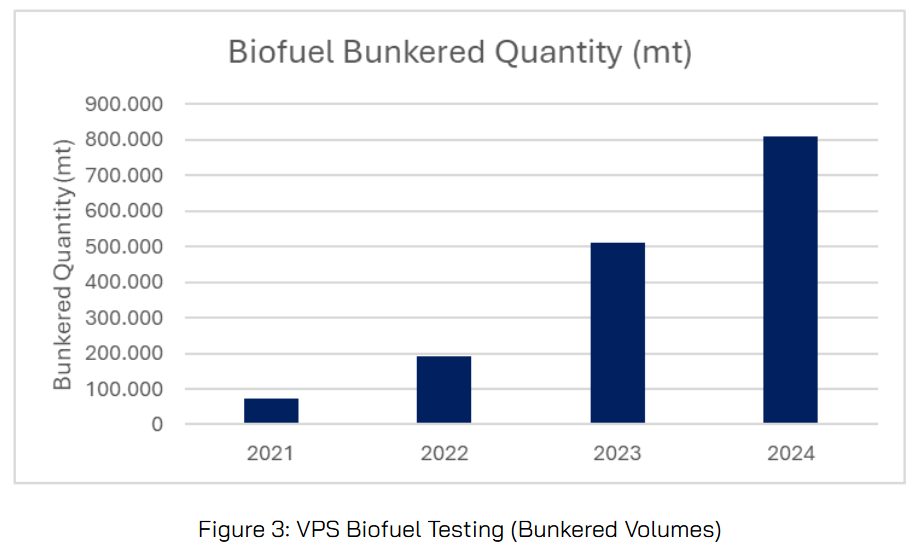
For over four years VPS have led the market in the understanding of marine biofuels and methanol. VPS laboratories have undertaken significant R&D work regarding innovative testing technologies and methods, to assist in improved fuel management and environmental compliance. Between 2021-2024 VPS tested samples equating to over 1.6million mt of delivered biofuels. This work has covered bio-components such as the most common FAME, plus HVO, Cashew Nut Shell Liquid (CNSL) and Tyre Pyrolysis Oil (TPO). Such experience and expertise are then passed on to VPS customers to enhance their understanding of such fuels and achieve the emissions reduction and efficiency improvements required.
Note: The full article by VPS can be read here.
Photo credit: VPS
Published: 8 April, 2025
Alternative Fuels
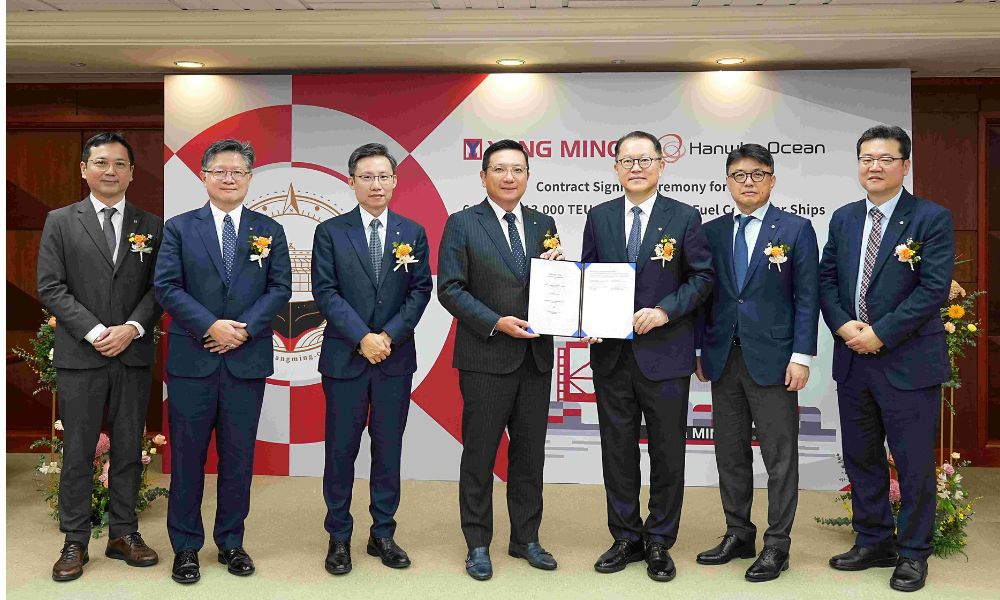
Yang Ming orders six LNG dual-fuel, ammonia-ready containerships from Hanwha Ocean
Each of the six new vessels will have a capacity of up to 13,650 TEU and feature LNG dual-fuel propulsion and Ammonia Fuel Ready specifications.
Alternative Fuels
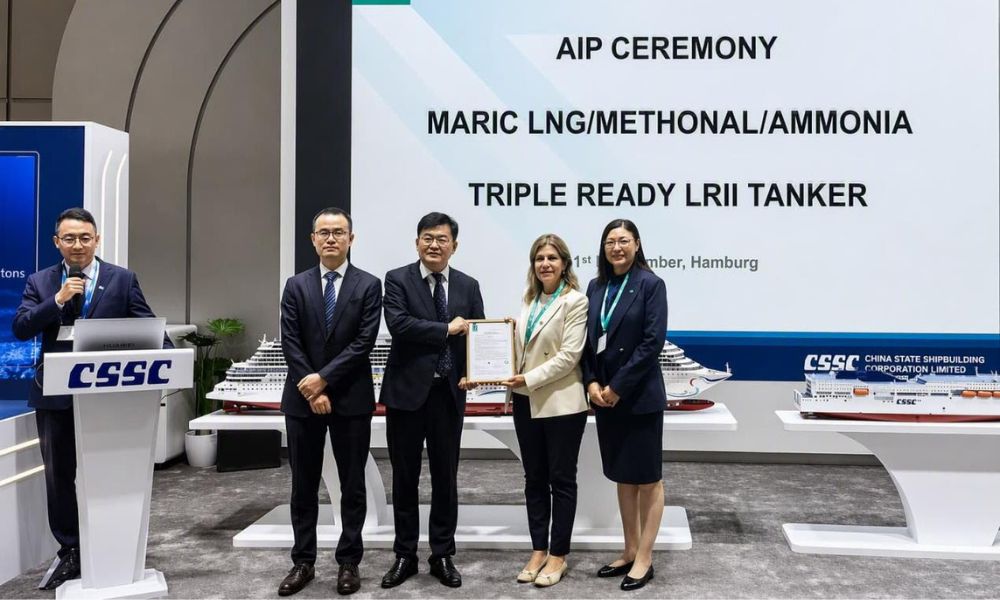
LR, China’s MARIC unveil tanker concept ready for three future bunker fuels
Both secured AiP for a new 114,000 DWT product and crude oil tanker designed to accommodate future conversion to LNG, methanol or ammonia.
Alternative Fuels
DNV: Alternative-fuelled vessel orders hit highest monthly level since October 2024
LNG-fuelled vessels accounted for the vast majority of August activity while the strong summer performance marked a significant acceleration in ordering activity after a relatively slow start to the year.
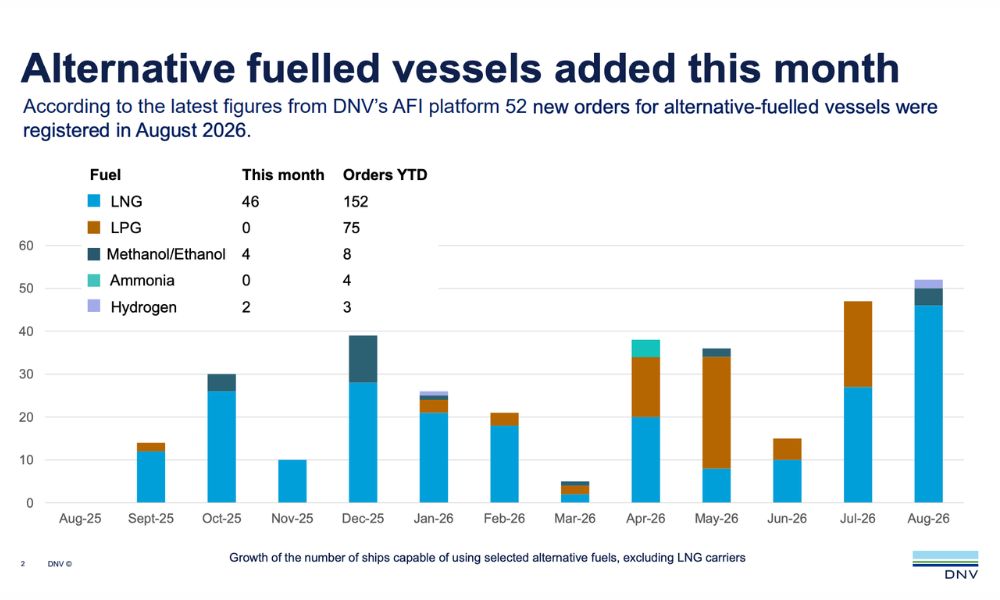
Latest data from classification society DNV’s Alternative Fuels Insight (AFI) platform alternative-fuelled vessel ordering was strong in August, with 52 new vessels added to the platform.
This is the highest monthly total since October 2024 and follows another active month in July, when 47 vessels were added to the database.
LNG-fuelled vessels accounted for the vast majority of August activity, with 46 orders recorded. The container segment led the way with 30 orders, while the car carrier segment contributed a further 12 LNG-fuelled vessels. In addition, four ethanol-fuelled bulk carriers and two hydrogen-powered bulk carriers were added during the month, as well as one LNG bunker vessel.
The strong summer performance marked a significant acceleration in ordering activity after a relatively slow start to the year. In total, 242 alternative-fuelled vessel orders have been placed in the first eight months of 2026, representing a 27% increase compared with the same period in 2025.
LNG remains the dominant fuel choice, accounting for 63% of all alternative-fuelled vessel orders registered so far this year. Container vessels represent the largest share of these LNG orders (59%), followed by car carriers (30%).
Jason Stefanatos, Global Decarbonization Director at DNV Maritime, said: “The past two months have been particularly strong for alternative-fuelled vessel ordering, with August recording the highest monthly total we’ve seen since October 2024. This has helped lift year-to-date orders to a level well above the same period last year.
“LNG remains the leading fuel choice, driven largely by activity in the container and car carrier segments. These sectors have been among the earliest adopters of alternative fuels, supported by predictable liner operations and increasing demand from cargo owners to reduce emissions across supply chains.
“For many owners, LNG offers a combination of emissions reductions, fuel availability and future flexibility while the longer-term fuel landscape continues to evolve.
“At the same time, the latest figures include orders for ethanol- and hydrogen-fuelled vessels, highlighting that owners continue to explore a range of decarbonization pathways. Different segments are making different fuel choices, but the overall level of activity demonstrates continued investment in lower-emission shipping.”
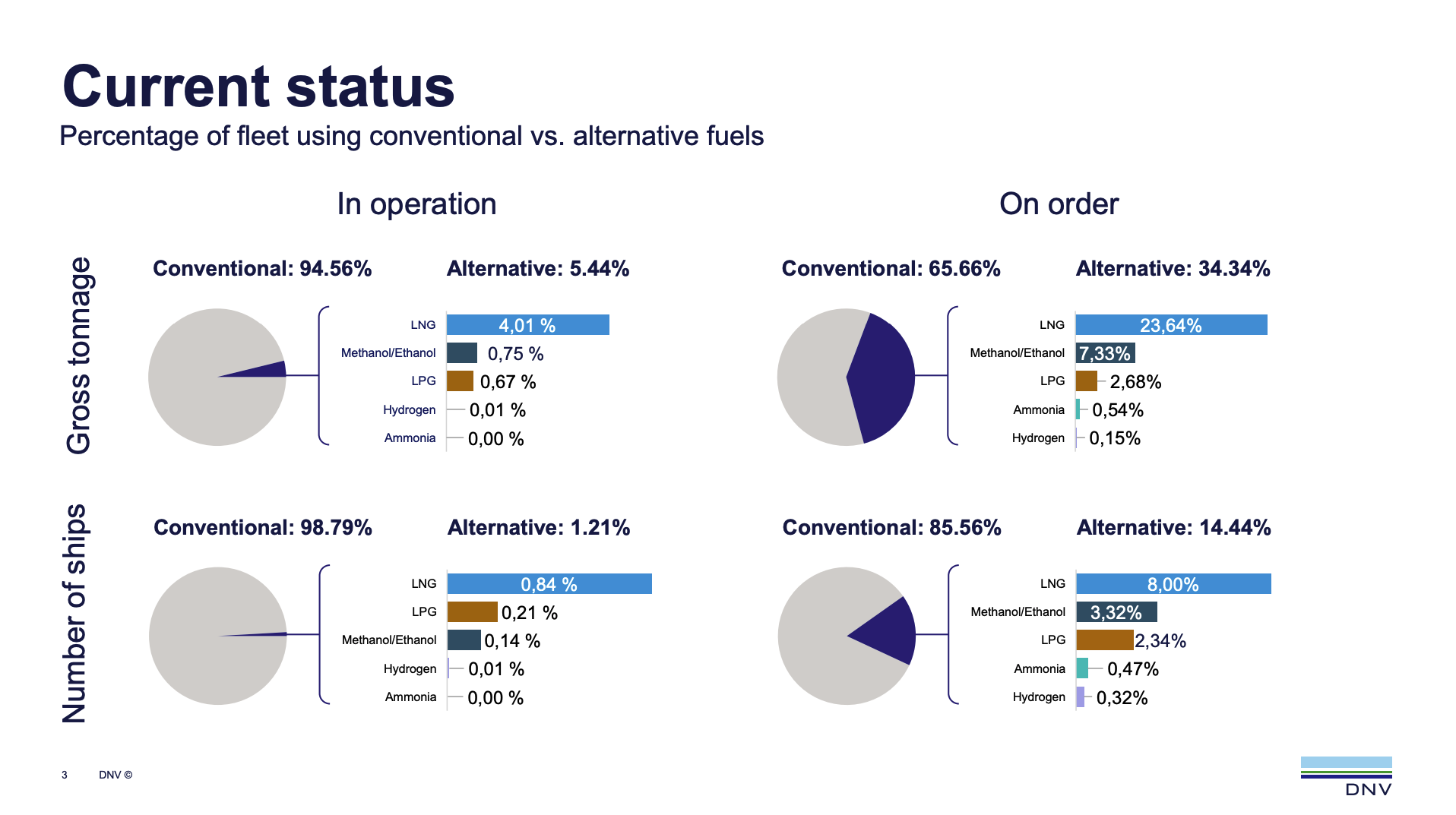
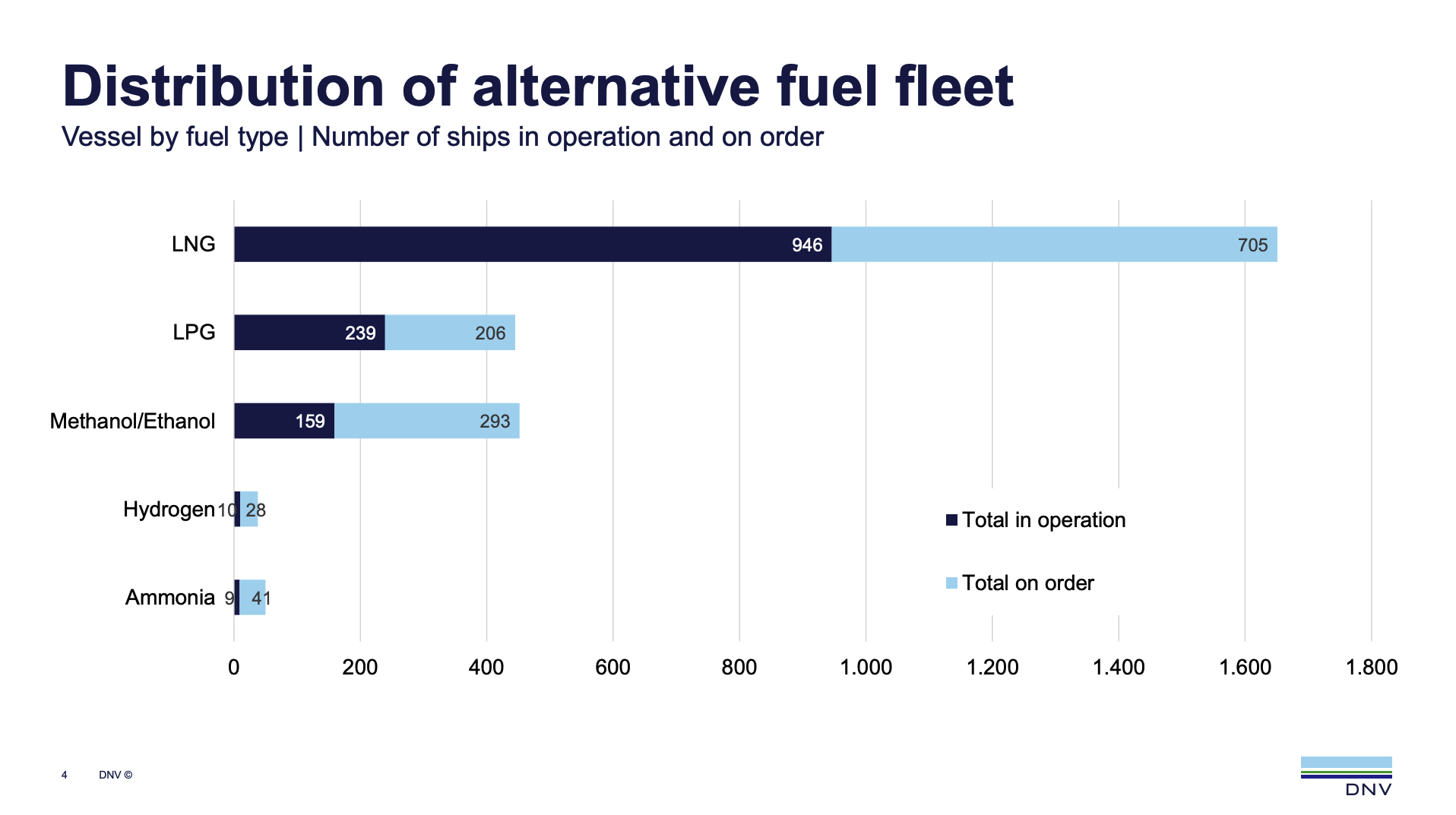
Photo credit: DNV
Published: 4 September, 2026

OUR INDUSTRY PARTNERS

Yang Ming orders six LNG dual-fuel, ammonia-ready containerships from Hanwha Ocean

LR, China’s MARIC unveil tanker concept ready for three future bunker fuels

DNV: Alternative-fuelled vessel orders hit highest monthly level since October 2024

TFG Marine advances global MFM rollout with two US Gulf bunker barges

GENA Solutions: Total renewable and low-carbon methanol project pipeline increases from 61.8 to 62.2 Mt by 2032

Baltic Exchange: Bunker Report (3 September 2026)

ENGINE: Americas Fuel Availability Outlook (3 September 2026)

Singapore-flagged tugboat “Kim Heng 3203” placed under Sheriff’s arrest

US targets five bunker companies in latest sanctions campaign against Iran

Singapore bunkering community supports Living Hope Evangelism’s 7th anniversary outreach for residents in need

China’s bunker market reshaped by tax rebates, trade flows and refining changes, says economist

Hengli Petrochemical’s ex-Singapore trading arm faces winding up application

Report: GCMD outlines practical approach to quantity assurance in marine biofuel supply chains

Singapore: Notices of intended dividend issued for Ocean Bunkering Services, Hin Leong Marine
-
 Vessel Arrest1 week ago
Singapore-flagged tugboat “Kim Heng 3203” placed under Sheriff’s arrest
-
 Sanctions1 week ago
US targets five bunker companies in latest sanctions campaign against Iran
-
 Events2 weeks ago
Singapore bunkering community supports Living Hope Evangelism’s 7th anniversary outreach for residents in need
-
 Interview1 week ago
China’s bunker market reshaped by tax rebates, trade flows and refining changes, says economist
-
 Winding up1 week ago
Hengli Petrochemical’s ex-Singapore trading arm faces winding up application
-
 Biofuel1 week ago
Report: GCMD outlines practical approach to quantity assurance in marine biofuel supply chains
-
 Winding up2 weeks ago
Singapore: Notices of intended dividend issued for Ocean Bunkering Services, Hin Leong Marine
-

 Bunker Claim3 days ago
Rajah & Tann: Bunker disputes are won in the first 48 hours