Connect with us

Bunker Fuel

Singapore Methanol, Global Energy to collaborate on bio-methanol bunker fuel

MoU includes both exploring feasibility of expanding green methanol storage and bunkering infrastructure in key global ports, including those in Europe.

Admin

Published

on

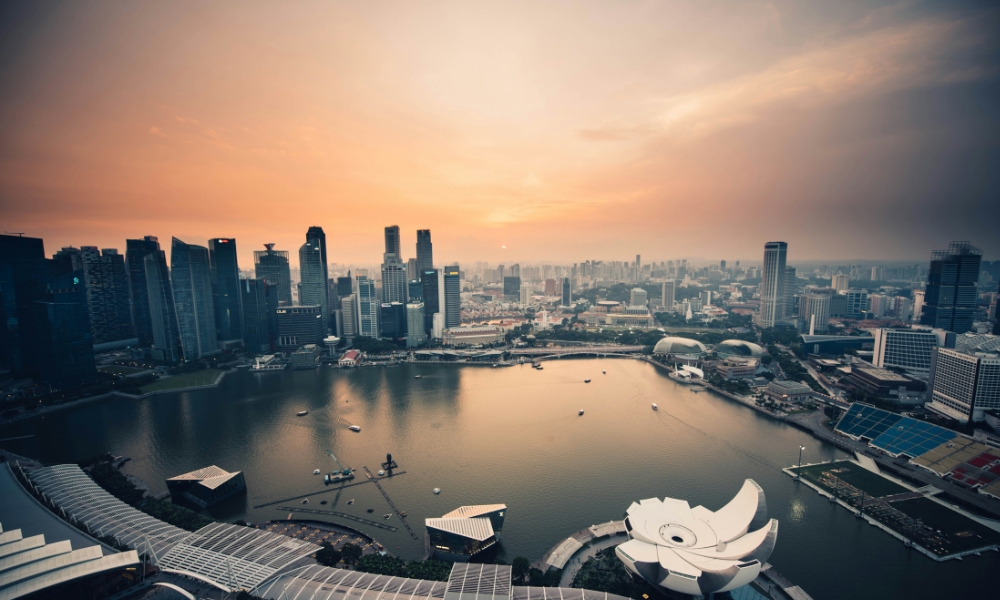
CHUTTERSNAP on Unsplash

Singapore Methanol and Global Energy Overseas, a Singapore subsidiary of Global Energy International Ltd, on Monday (4 November) announced the signing of a Memorandum of Understanding (MoU) to collaborate on green fuel solutions for the maritime sector. 

The collaboration aims to lay a strong foundation for bio-methanol as a commercially viable bunker fuel and establish Singapore as a leader in the global green fuel market.

The MoU marked a significant step forward in supporting sustainable maritime operations through bio-methanol production and compliance management under the FuelEU Maritime regulations, advancing both companies’ commitments to environmental responsibility and innovation.

Under the strategic MoU, Singapore Methanol and Global Energy will work jointly to explore the Marketing, distribution and storage of bio-methanol, a low-carbon alternative fuel derived from renewable biomass sources, targeted to reduce greenhouse gas emissions across the shipping industry. 

Additionally, the partnership will focus on managing FuelEU Maritime compliance surpluses, ensuring that shipowners and operators can meet and exceed regulatory standards cost-effectively.

Charles Shang, CEO of Singapore Methanol, said: “We are excited to partner with Global Energy in addressing the urgent need for sustainable marine fuels.”

“Our collaboration will harness bio-methanol potential to reduce carbon emissions while offering compliance solutions that meet evolving regulatory demands. This MoU represents a strategic alliance that we believe will reshape the future of green maritime fuel.”

Global Energy’s Group Managing Director, Mr. Loh Hong Leong, said: “We are proud to align with Singapore Methanol in this important endeavour.”

“By combining our expertise in bunkering and fuel management with Singapore Methanol’s bio-methanol innovations, we are poised to make significant contributions to the decarbonisation of the maritime industry.”

“This partnership reinforces our commitment to providing our clients with sustainable and forward-looking solutions.”

The MoU outlines multiple areas of collaboration, including:

  • Bio-Methanol Production and distribution: Singapore Methanol will lead efforts to develop bio-methanol production facilities in Indonesia, with Global Energy supporting distribution to meet the needs of the maritime industry.
  • FuelEU Maritime Compliance Management: Singapore Methanol will work alongside Global Energy to manage compliance surpluses, allowing ship operators to navigate the FuelEU Maritime regulations effectively.
  • Green Methanol Storage and Bunkering Expansion: Both companies will explore the feasibility of expanding green methanol storage and bunkering infrastructure in key global ports, including those in Europe, to facilitate wider adoption of sustainable marine fuels.
  • Alternative Marine Fuels Research: The partnership will focus on developing innovative fuel solutions that meet or exceed international environmental standards.

Note: Global Energy can be contacted at [email protected]


Photo credit: CHUTTERSNAP on Unsplash
Published: 5 November, 2024

Continue Reading

Alternative Fuels

Ports of Barcelona and Shanghai team up to develop green ports, alternative bunker fuels

Agreement officially establishes the ‘sister ports’ relationship between Shanghai and Barcelona and aims to boost cooperation in areas such as developing green ports and alternative fuels.

Admin

Published

on

By

Ports of Barcelona and Shanghai team up to develop green ports, alternative bunker fuels

The Port of Barcelona on Thursday (11 June) said it signed a new strategic cooperation agreement with the Shanghai Municipal Transportation Commission (SMTC) and Shanghai International Port Group (SIPG).

The agreement officially establishes the “sister ports” relationship between Shanghai and Barcelona and aims to boost cooperation in areas such as the digitalisation and security of port operations; developing green ports and alternative fuels; intermodality and fostering sustainable maritime corridors between the Far East and the Mediterranean. 

The agreement was signed by José Alberto Carbonell, president of the Port of Barcelona; Xiao Hui, general director of the SMTC, and Yang ZhiYong, vice president of SIPG, in the presence of Jaume Duch, Regional Minister for European Union and Foreign Action. 

The relationship between the Port of Barcelona and the Port of Shanghai has intensified in recent years. In late July 2025, a preliminary agreement was signed between both port authorities, which led to a technical visit in September 2025 by a delegation from Shanghai led by Wang Haijian, Vice President and Director of Operations of SIPG, to advance the development of the Green Shipping and Digital Corridor between both ports. 

“This new institutional visit and the signing of the new agreement consolidates the Port of Barcelona’s position as a Euro-Mediterranean logistics hub and strengthens its links with one of the main ports and economic centres in the world,” the port said. 


Photo credit: Port of Barcelona
Published: 12 June, 2026

Continue Reading

Biofuel

NYK Line subsidiary Kinkai Yusen to trial B24 bio bunker fuel on RoRo vessel

Kinkai Yusen says it will conduct a demonstration operation using biofuel refuelled at Hakata Port on 16 June on the RoRo vessel “Nanotsu”.

Admin

Published

on

By

NYK Line subsidiary Kinkai Yusen to trial B24 bio bunker fuel on RoRo vessel

NYK Line subsidiary Kinkai Yusen on Tuesday (9 June) said it will conduct a demonstration operation using biofuel refuelled at Hakata Port on 16 June on the RoRo vessel Nanotsu, which operates between Hakata Port and Tsuruga Port.

The company said it will be the first instance of a domestic RoRo vessel operating using biofuel at Hakata Port. 

The biofuel (B24) which will be used will comprise 24% biofuel and conventional marine fuel, and is expected to reduce greenhouse gas (GHG) emissions without requiring major modifications to existing ship equipment. 

“The procurement of biofuel will be carried out in cooperation with Idemitsu Kosan Co Ltd and Itochu Enex Co Ltd,” it said in a statement. 


Photo credit: MarineTraffic / Tetsuya
Published: 12 June, 2026

Continue Reading

Bunker Fuel

Argus Media: Bunker lead times grow since US–Iran war began

Longer lead times, between the placing of a bunker fuel order and the fuel being supplied, reflect concerns about potential supply disruptions and strategies to deal with price volatility, says Argus.

Admin

Published

on

By

resized argusmedia

Shipowners and traders have been booking spot bunker fuel supplies further in advance since the start of the Iran–US conflict, according to data collected by Argus.

10 June 2026

The longer lead times, between the placing of a bunker fuel order and the fuel being supplied, reflect concerns about potential supply disruptions and strategies to deal with price volatility.

Disruption to shipping through and around the strait of Hormuz has encouraged buyers to secure fuel as far as four to six weeks ahead rather than risk encountering shortages, market participants said. Argus’ bunker assessments are typically for deliveries with a maximum of 9-12 days and up to 14 days for certain African ports.

The shift reflects concerns about reduced availability, with around 20pc of global crude having previously transited the strait now missing and therefore restricting supply of bunker grades. Higher freight costs have also reduced the economic incentive for suppliers to import fuel, which further reduced availability.

Very-low-sulphur fuel oil (VLSFO) prices have strengthened sharply across major bunkering hubs since the start of the US-Iran war, reflecting tightening feedstock availability and growing supply concerns. Delivered VLSFO indications in Rotterdam have rose by around 45pc from 28 February to 31 May, prices in Panama increased by 49pc and in Singapore by 47pc.

The tightening market has been particularly evident in Fujairah, the world’s fourth-largest bunkering hub, where an acute supply shortage has left most suppliers without prompt VLSFO availability until mid-June. Market participants said disruptions to regional feedstock flows and the loss of supply from Kuwait’s al-Zour refinery sharply reduced local blending activity, pushing Fujairah VLSFO premiums to record highs of $500-700/t against front-month Singapore cargo values in early June.

The change in buying patterns has been happening worldwide. Delivery times for VLSFO in Singapore have extended to about 10-15 days forward in some cases, depending on supplies given tight blendstock availability, traders said this week. Typical delivery periods of about 7-10 days forward remain possible.

Singapore loadings for low-sulphur marine gasoil (LSMGO) have also slowed, with market participants expecting this to ease only in the second half of June. LSMGO supplies are tight because of delays in cargo arrivals from South Korea, and most current availability will go towards previously booked orders. The lead time for high-sulphur fuel oil (HSFO) has been steady at around 4-5 days, as supplies are ample in Singapore.

In Gibraltar, the average lead time in the three months before the war started was around five days. This is now 10 days. In Rotterdam the average booking period is up to 10 days from seven.

In South America, rising vessel traffic through the Panama Canal has increased congestion and lengthened waiting times. The tighter transit window has pushed bunker buyers in Balboa and Cristobal to secure fuel further in advance, with market participants reporting a shift away from prompt procurement toward longer lead-time bookings to ensure product availability and align deliveries with delayed canal crossings.

The average bunker fuel lead time in the Panama Canal increased to 14 days in March-May, from 10 days in the three months ending 28 February.

In Brazilian ports, longer lead times have also been driven by rising fuel oil export flows to Singapore, where demand for Brazilian supply has increased because of the disruption linked to the strait of Hormuz. The additional export pull has reduced feedstock availability for VLSFO blending in Brazil, tightening prompt supply at key ports like Santos and Paranagua.

Santos’ average bunker fuel lead times increased to 10 days in March-May, from eight days in the three months to 28 February. In Paranagua, average lead times rose to 13 days from 10 days over the same period.

By Gabriel Tassi Lara, Natália Coelho and Cassia Teo


Photo credit and source: Argus Media
Published: 12 May, 2026

Continue Reading

Trending