Connect with us

Biofuel

Glander and Cepsa partner on Mediterranean bio bunker fuel supply for cruises

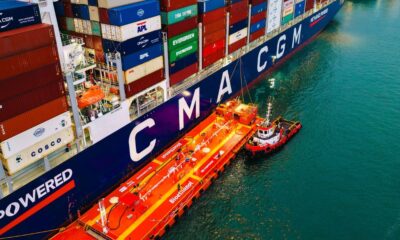
Glander International Bunkering and Cepsa are now jointly facilitating the supply of second-generation HVO to cruise line vessels in the Mediterranean.


Admin

Published

on

Glander and Cepsa partner on Mediterranean bio bunker fuel supply for cruises

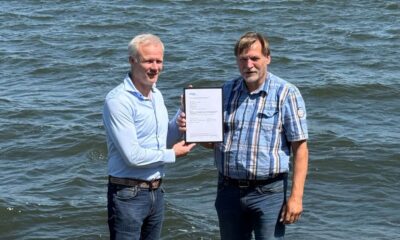
Bunker Holding on Monday (7 October) said its subsidiary Glander International Bunkering and Cepsa are now jointly facilitating the supply of second-generation HVO to cruise line vessels in the Mediterranean.

Cepsa has completed four deliveries of HVO via Glander International Bunkering to a cruise ship at the Port of Barcelona since late June of this year. 

The second-generation biofuel is made from ISCC EU certified raw materials and can reduce CO2 emissions by up to 90% compared to conventional fuels throughout their life cycle.

Samir Fernández, Director of Marine Fuel Solutions at Cepsa, said: “We are thrilled to partner with Glander International Bunkering in its decarbonisation journey with these second-generation biofuels for the cruise industry.”

“By supplying the wider cruise industry with HVO or biodiesel, we are supporting industry efforts towards more sustainable cruising and reinforcing the Port of Barcelona’s role as a leading hub in the energy transition.”

The combination of Cepsa’s capacity to supply biofuel to the cruise industry on a regular basis at the Spanish ports where it operates and Glander International Bunkering’s vast network of strategic marine customers looking for lower carbon fuel solutions provides a great example of how partnerships like this can enable and facilitate the decarbonisation of the shipping industry.

Valerie Ahrens, Senior Director of News Fuels and Carbon Markets at Bunker Holding, said: “Our partnership with Cepsa is a result of our diligent work to form alliances with strong suppliers of low-carbon fuels.”

“As of late, we have been putting concerted effort into developing strategic partnerships with a view to facilitating the decarbonisation of the shipping industry. We are especially seeing an increase in the interest in biofuels and, with around 30 of our offices now being ISCC-certified, we have expanded our biofuels sales and the availability of biofuels to over 120 ports worldwide.”

The demand for lower carbon fuels is on the rise for the shipping industry in general, brought on by IMO CII requirements, the inclusion of shipping in the EU ETS, and FuelEU Maritime entering into force in 2025. In addition, the Cruise Lines International Association (CLIA) is turning its attention to ensure that the sector has sufficient access to low carbon fuels in pursuing net zero carbon cruising by 2050.


Photo credit: Bunker Holding
Published: 8 October, 2024

Continue Reading

Biofuel

South Korea: S-Oil launches B30-VLSFO bio bunker fuel supply

Company says it has established an integrated operating system in the Ulsan region covering the entire value chain, from feedstock procurement and blending to supply.
Admin

Published

on

By

South Korea: S-Oil launches B30-VLSFO bio bunker fuel supply

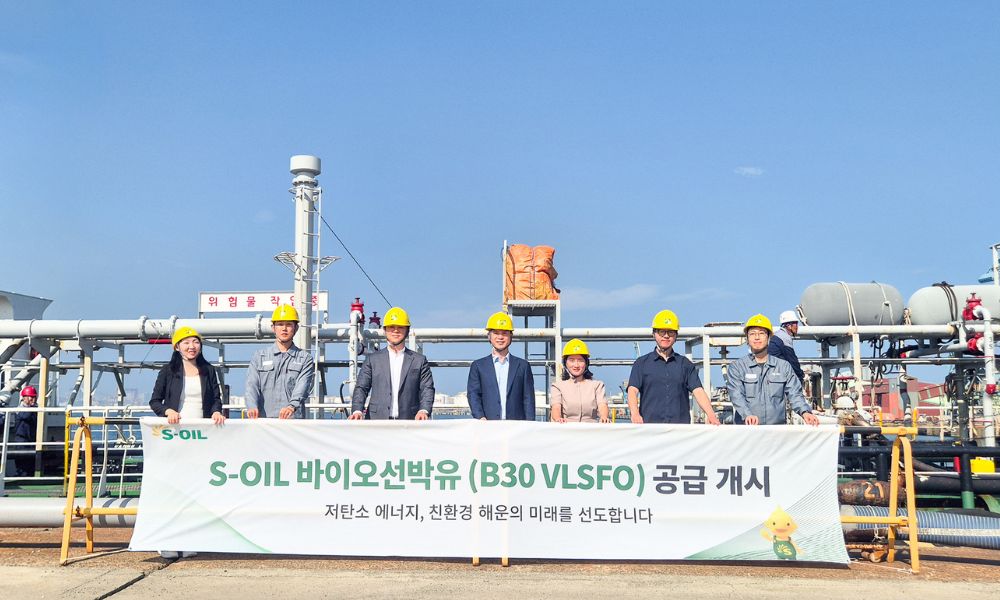
South Korean petroleum and refining company S-Oil on Wednesday (22 July) said it has started supplying B30 very low sulphur fuel oil (VLSFO), as the company seeks to support shipping’s decarbonisation efforts and growing demand for lower-carbon bunker fuels.

The company said its B30 VLSFO contains 30% sustainable biofuel blended with conventional VLSFO and can be used without requiring modifications to existing vessels, enabling shipowners to comply more readily with emissions regulations from the International Maritime Organization (IMO) and the European Union (EU).

S-Oil said it has established an integrated operating system in the Ulsan region covering the entire value chain, from feedstock procurement and blending to supply. The system combines VLSFO produced at its Onsan refinery with biofuel production facilities and storage infrastructure in the Ulsan region, allowing the entire process to be carried out within a single logistics hub.

According to the company, the integrated supply chain reduces transportation requirements during production while improving supply efficiency and reliability.

S-Oil also highlighted Ulsan Port as a strategic location for marine biofuel supply, noting the port has strong demand for bio-bunker fuels, particularly from car carriers, enabling prompt and stable deliveries to key customers.

An S-Oil official stated: “In the bio-marine fuel market, not only product quality but also securing a stable supply of raw materials and an efficient supply system are important competitive advantages.

“Based on our existing bunkering business capabilities and the excellent supply infrastructure in the Onsan area, we plan to supply stable and competitive low-carbon fuel.”


Photo credit: S-Oil
Published: 23 July, 2026

Continue Reading

Bunker Fuel

Antwerp-Bruges biofuel bunker sales drops 36% on year in Q2 2026, LNG down 13.4%

Biofuel recorded 26,833 mt in Q2 2026 with 41,939 mt recorded in the same period the year before while port data showed 76,513 mt of LNG being delivered in Q2 2026, down from 88,328 mt.
Admin

Published

on

By

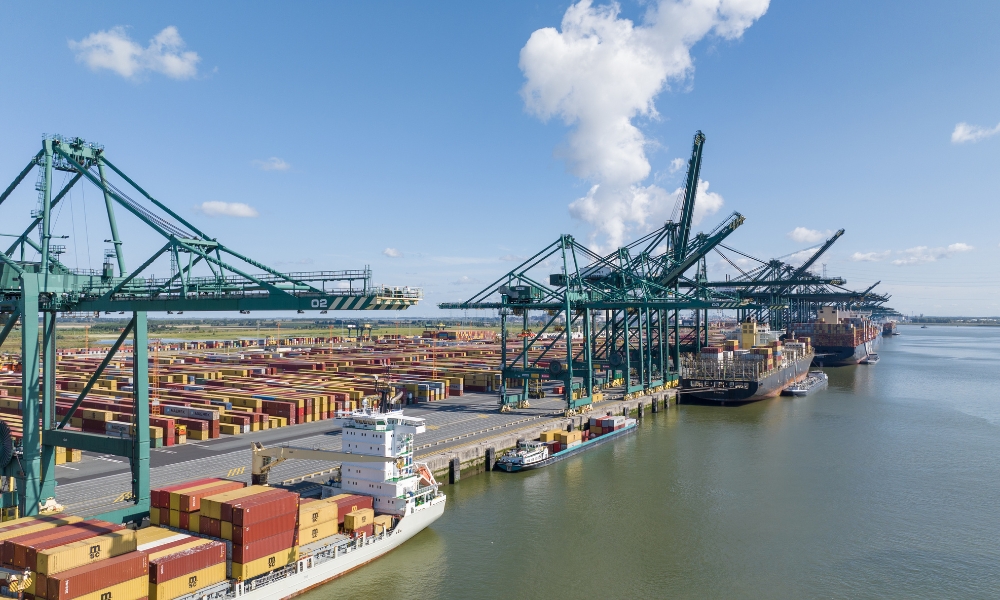
Port of Antwerp-Bruges, Deurganck Dock

The Port of Antwerp-Bruges recently published bunker fuel sales data for the second quarter (Q2) of 2026.

Total bunker sales at the port was 2.05 million metric tonnes (mt) in Q2 2026, compared to sales of 1.99 million mt (+3%) during the similar period in 2025.

Deliveries of ultra low sulphur fuel oil, very low sulphur fuel oil, high sulphur fuel oil and marine gas oil in Q2 2026 (against on year) recorded respectively 164,987 mt (+43.6%  from 114,917 mt), 537,926 mt (+12.8% from 476,746 mt), 659,182 mt (+11.6% from 590,544 mt) and 366,329 (-15.7% from 434,766 mt).

Biofuel recorded 26,833 mt in Q2 2026 with 41,939 mt (-36%) recorded in the same period the year before. 

Port data showed 76,513 mt of liquefied natural gas (LNG) being delivered as a marine fuel in Q2 2026, down by 13.4% from 88,328 mt in Q2 2025. Meanwhile, there has been no deliveries of methanol at the port for the year so far.

Related: Antwerp-Bruges biofuel bunker sales plunge 50.6% on year in Q1 2026, LNG soars 214%


Photo credit: Port of Antwerp-Bruges
Published: 23 July, 2026

Continue Reading

Bunker Fuel

Alkagesta highlights key insights of Malta bunkering market in 2026

Darren Lee Axisa discusses the key trends influencing Malta’s bunkering market and the factors that will determine Malta’s long-term competitiveness as a regional bunkering hub.
Admin

Published

on

By

Alkagesta highlights key insights of Malta bunkering market in 2026

In an article published on Alkagesta Market Insights, Darren Lee Axisa, Malta Country Manager of Alkagesta, on Monday (20 July) discussed the key trends influencing Malta’s bunkering market and the factors that will determine Malta’s long-term competitiveness as a regional bunkering hub: 

Malta’s bunkering and energy market is moving through a period of structural adjustment. The disruptions that defined the first half of 2026 have accelerated shifts in product demand, terminal strategy, and the competitive dynamics of one of the Mediterranean’s most strategically positioned bunkering hubs. For Alkagesta, whose storage footprint on the island approaches 300,000 cubic metres, the period has tested operational flexibility while reinforcing the value of diversified infrastructure access.

A Market Shifting in Two Directions

Malta’s broader economy has remained resilient — GDP growth reached 3.9% in Q1 2026 — but the bunkering market has undergone a significant product mix shift, the roots of which predate the current geopolitical disruption.

The Mediterranean Emission Control Area, which came into force on 1 May 2025, triggered an immediate and measurable realignment in fuel demand across the region. VPS data covering the first six months post-ECA implementation shows that across the top ten Mediterranean bunkering ports, VLSFO volumes fell 23%, MGO more than doubled, ULSFO quadrupled, and biofuels increased fivefold. In Valletta specifically, the shift was even more pronounced: VLSFO dropped 57% from 111,641 mt to 47,732 mt, while MGO volumes more than tripled from 33,299 mt to 103,445 mt, and ULSFO rose from 2,821 mt to 34,535 mt over the same period.

This structural rotation has been further accelerated by the broader regulatory environment. FuelEU Maritime and EU ETS requirements are pushing shipowners toward cleaner, verifiable fuel options at every port call — a direction Alkagesta had already positioned itself ahead of, having been among the first movers in the Mediterranean to support the transition to 0.1% sulphur fuel oil following the ECA’s introduction.

Layered on top of this regulatory shift has been a period of reduced terminal capacity affecting bunkering market availability across the island. Fuel oil volumes dropped roughly 35% year-on-year between January and May 2026, falling from approximately 382,000 mt in 2025 to 247,000 mt. DMA demand moved sharply in the opposite direction, rising from around 150,000 mt in January to April 2025 to 247,000 mt over the same period in 2026 — a trend consistent with both the ECA-driven product mix shift and the disruption to heavier fuel availability during the constrained period.

Note: The full article can be read here


Photo credit: Alkagesta
Published: 22 July, 2026

Continue Reading

Trending