Connect with us

EU ETS

Law firm WFW shares EU ETS and FuelEU compliance and exemptions checklists

Watson Farley & Williams’ Nick Walker and Valentina Keys present a guide for shipping companies to navigate through complexities of EU ETS and FuelEU Maritime regulation.

Admin

Published

on

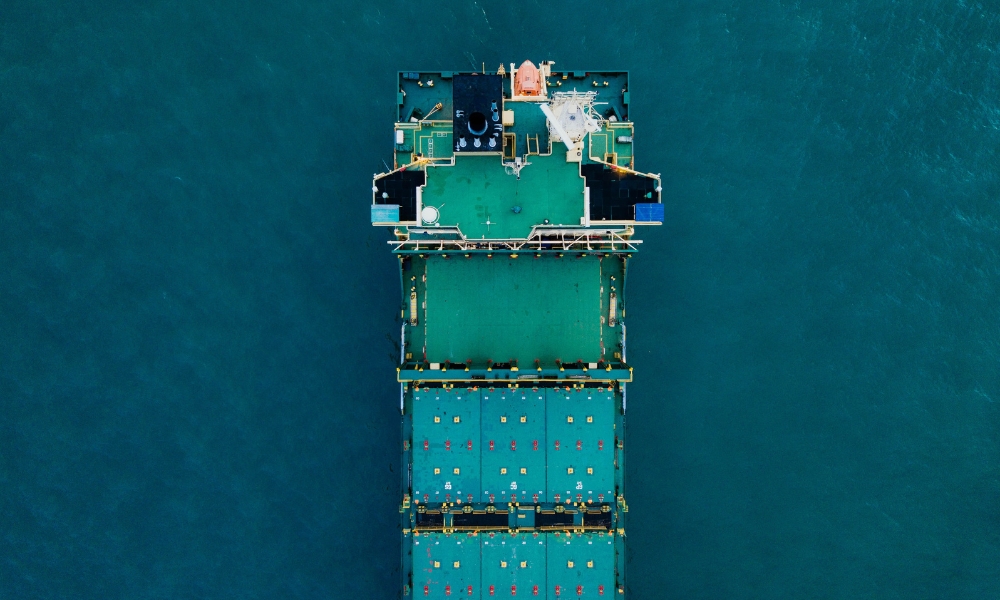
RESIZED CHUTTERSNAP on Unsplash

Watson Farley & Williams LLP London Partner Nick Walker and Counsel Valentina Keys on Monday (2 September) published an article to guide shipping companies on the European Emissions Trading Scheme and FuelEU Maritime regulation: 

Since 1 January 2024, shipping companies have been subject to the expanded European Emissions Trading Scheme (“EU ETS”), have had to monitor their emissions, open trading accounts (see below) and been tasked with formulating more efficient fuel and route compliance strategies in preparation for the submission of their first reports in March 2025. This briefing and the bespoke compliance and exemptions checklists we have prepared will help guide you through the complexities of the EU ETS and FuelEU Maritime Regulation (“FEMREG”).

EU ETS and MOHAs

Shipping companies will be required to surrender their EU ETS allowances for the first time on 30 September 2025. For an analysis of the commercial and legal implications of EU ETS for shipowners, managers, charterers and other maritime participants see here and here. Against this backdrop, little progress has been made with the opening of Maritime Operator Holding Accounts (“MOHAs”) with only 940 or so MOHAs having been opened by shipping companies thus far¹. 

We understand that registries in various member states are struggling to manage the large volumes of applications that have been made. The fact that the EU ETS has only been partially implemented in member states (only a handful have so far implemented the EU ETS Directive 2023/959) does not help and the lack of understanding amongst registry staff of the complexities of the maritime industry stands as perhaps the biggest hindrance to the timely and effective opening of MOHAs. 

With this in mind, WFW has both prepared bespoke clauses to be inserted into charterparties, ship management agreements and MOAs and launched its own EU ETS/FEMREG risk management agreement in order to fill in the gaps that the regulations simply do not address (e.g., the EU ETS costs clause and dispute resolution mechanisms).

First Fuel EU deadline

In the meantime, importantly, the first of many compliance deadlines has just passed pursuant to FEMREG. FEMREG poses an even greater challenge due to its technically complex and pernickety nature with shipping companies required to submit their Fuel EU Monitoring Plans by 31st August 2024 (see our insight here). The European Commission has now released the long awaited FuelEU Monitoring Plan Template to assist with the submission (see here).

FAQs

Whilst the European Commission (“EC”) has now published FAQS for both EU ETS and FEMREG, it is important to remember that these are guidelines only and not legally binding. Nor do they delve into the level of detail that many in the industry are seeking. With a view to shedding more light on the missing detail and particularly on the scope and mechanics of both EU ETS and FEMREG,  WFW has prepared a compliance toolkit consisting of a compliance deadlines checklist; and a table of exemptions that apply under both EU ETS and FEMREG (which you can download here), as well as bespoke EU ETS and FEMREG clauses and agreements. It is important for shipping companies and their investors to be alive to these deadlines as well as to the exemptions when assessing applicability and preparing their compliance strategies.

Exemptions

The list of potentially available exemptions is far from straightforward. Whilst some apply under both EU ETS and FEMREG, others may only be available under one or the other. WFW’s checklist table covers all the available exemptions and divides them into three categories: (1) vessel size and class; (2) voyage types; and (3) maritime activity and ports of call. It can be particularly daunting to work out what constitutes a “small island” exemption, or that of an “Outermost Region”.  Six exemptions are available under (1); ten exemptions are available under (2) and (3). You can view the table of exemptions by downloading our Compliance Toolkit here.

Key Compliance Deadlines

We have also prepared an EU ETS and FEMREG Compliance Deadlines Checklist to assist the industry with their internal planning and budgeting strategies. To access our EU ETS and FEMREG Compliance Deadlines Checklist, download our Compliance Toolkit here.

[1] Full list of MOHAs available here


Photo credit: CHUTTERSNAP from Unsplash
Published: 4 September, 2024

Continue Reading

EU ETS

DNV: Making emissions data verification manageable at scale

DNV’s article features its customers sharing how a proactive, digital approach to emissions data verification is helping them manage reporting more efficiently and at scale to ensure compliance under FuelEU Maritime.

Admin

Published

on

By

DNV flag

Classification society DNV recently published a Maritime Impact article featuring its customers sharing how a proactive, digital approach to emissions data verification is helping them manage reporting more efficiently and at scale to ensure compliance under FuelEU Maritime: 

The FuelEU Maritime regulation has been in force since 1 January 2025, and the due date for verification of the first year’s emissions data at the end of April is imminent.

FuelEU Maritime adds reporting complexity

FuelEU Maritime (FEUM) has brought the number of emissions reporting obligations for ships operating in European waters to four, along with IMO DCS as well as EU MRV and ETS. The UK’s own MRV and ETS reports and any pooling arrangements under FEUM add further complexity. “Customers are finding it challenging to meet the verification due date,” says Conrad Golebski, Global Sales Manager, MRV, DCS, and FuelEU Maritime at DNV. “But non-compliance results in costs, which can be quite high for vessels that do not meet the emission targets.”

Data quality issues are widely underestimated

Preparing the document of compliance for the regulatory authorities has been an annual exercise – and a very stressful one, emphasizes Golebski. The annual verification process is often challenging, as the extent of data quality issues tends to be underestimated and only becomes apparent after year-end submissions, leading to a growing number of correction requests during verification for shipowners.

“Rectifying these issues can be a complex and time‑consuming process, involving an intense communication exchange before verification can proceed.”

There are two types of error that compromise data quality, says Golebski. “Human data entry errors must be corrected one by one. Systematic errors will affect the data of the entire fleet, and detecting and correcting them as early as possible will make a big difference towards minimizing the rectification effort.”

Continuous emissions data submission enables early, high quality verification

 “Clients who choose to upload their ships’ emissions data to the OVD Admin continuously throughout the year instead of waiting until January can benefit from our quality checking algorithms and make the necessary corrections as they go,” Golebski points out. “This will make the actual verification step the following spring much more comfortable and avoid missing the submission deadline.”

From DNV’s data warehouse, the data can be distributed to the client-requested services, such as Fleet Status, Emissions Insight, the DCS-, MRV-, and FEUM-specific applications, or Emissions Connect. 

“It is this centralized digital concept that makes our system so convenient,” says Golebski. 

“We maintain and update our infrastructure constantly to account for client needs and improve user-friendliness.

Note: The full DNV article can be found here


Photo credit: DNV
Published: 25 May, 2026

Continue Reading

Emissions reporting

Veson taps Veracity by DNV for verified emissions reporting

Product integration connects Veson’s IMOS with the Veracity platform, enabling emissions figures confirmed by DNV to flow directly into IMOS.

Admin

Published

on

By

Veson taps Veracity by DNV for verified emissions reporting

Maritime data and freight management solutions provider Veson Nautical (Veson), on Monday (27 April) has announced a strategic partnership with independent industry cloud platform, Veracity by DNV, to bring verified emissions data into the heart of operational and commercial shipping workflows. 

The product integration connects Veson’s IMOS with the Veracity platform, enabling emissions figures confirmed by DNV to flow directly into IMOS. Within IMOS, these figures are clearly tagged as verified and integrated directly into voyage financials and P&L — reducing reliance on disconnected systems and manual re-entry.   

The integration addresses the growing need for maritime operators to incorporate compliance and automated data quality checks into daily voyage decisions, P&L tracking, and regulatory reporting. By embedding these inputs directly into live P&L calculations, shipping companies can improve the accuracy of voyage results, reach settlement faster, and reduce audit risk. 

“This collaboration between Veson and Veracity by DNV is an exciting development for us at Hafnia,” said Michael Rasmussen, General Manager, Pool Management at Hafnia. 

“We have historically spent significant time toggling between systems to reconcile emissions data. Having verified, accurate data in one place has the potential to streamline that workflow and make it easier for our teams to work with trusted figures in their day-to-day operations.”  

Looking ahead, the partnership will further expand into an end-to-end emissions reporting and verification workflow. Operational vessel data can be automatically transferred from IMOS to DNV’s Veracity platform, where it can be quality-assured in line with the Operational Vessel Data (OVD) standard and passed to DNV’s verification services in Emissions Connect. 

This will provide joint customers with a continuous data flow from data collection to verified emissions data, which can be used to meet evolving frameworks such as EU ETS, FuelEUMaritime, and additional commercial use cases.

“The industry is moving toward a model where verified data is central to both compliance and commercial performance,” said Sean Riley, President and Chief Operating Officer at Veson Nautical. “With DNV we are connecting those two worlds, bringing trusted emissions data directly into the workflows that drive day-to-day decisions and voyage P&L outcomes.” 

“Together with Veson, we are demonstrating how verified data can unlock new value in commercial operations,” said Mikkel Skou, Executive Director, Veracity by DNV. 

“This partnership is a strong example of our envisioned maritime data ecosystem in action; a collaboration that enables our common customers to use their data as a trusted foundation for better decisions, stronger collaboration, and more efficient operations.”  

The partnership builds on Veracity by DNV’s extensive data network, which has connectivity to more than 65,000 vessels worldwide through automated access to verified data. As part of Veson’s expanding Platform Partner Network, DNV extends that reach into the core system where maritime commerce is managed — giving shipping companies access to trusted data within a more connected ecosystem.


Photo credit: Veson Nautical
Published: 28 April, 2026

Continue Reading

Legal

APM 2026: HFW discusses legal matters on shipping’s compliance, decarbonisation and digitisation journey

Toby Stephens, Head of Shipping, Asia, HFW, speaks with Manifold Times prior to his session at the upcoming Asia Pacific Maritime 2026.

Admin

Published

on

By

APM 2026: HFW discusses legal matters on shipping’s compliance, decarbonisation and digitisation journey

Asia Pacific Maritime (APM) 2026 will take place between 25 – 27 March 2026 at Marina Bay Sands, Singapore. Toby Stephens, Head of Shipping, Asia, HFW, speaks with Manifold Times prior to his session: “Panel Discussion: Shipping Insurance in an Age of New Risk” on 27 March, 11.20am to 12.10pm.

MT: Green-fuel contracts and charterparties now involve new types of operational and safety risk. How should owners and charterers allocate responsibilities for issues like fuel quality, bunkering delays, or regulatory non-compliance?

The move towards green fuels has changed the risk landscape, so allocation of responsibility needs to be addressed more explicitly in charterparties. In terms of fuel quality, owners will usually retain responsibility for the vessel itself, ensuring that engines, fuel systems and safety arrangements are compatible with the nominated fuel, that crew are properly trained, and that reasonable onboard testing and monitoring is carried out during bunkering. Charterers, by contrast, are typically better placed to manage supply risk and should warrant that the fuel supplied meets the agreed contractual and regulatory specifications, with appropriate certification and traceability. Given the novelty and technical sensitivity of fuels such as methanol or ammonia, it is increasingly important for parties to agree on upfront procedures for sampling, testing and dispute resolution, so that any quality concerns can be addressed without unnecessary delay or operational disruption.

Similar principles apply to bunkering delays and regulatory non‑compliance – liability for delays will still largely follow the charterparty’s terms, but the risk is becoming more pronounced as uptake outpaces infrastructure. While around half of global newbuild tonnage is now alternative‑fuel capable,[1] there are still only relatively few ports worldwide with methanol bunkering available or planned, which makes availability‑driven delays a real commercial issue. On compliance, owners carry the operational burden of complying with evolving international and regional regimes such as the IGF Code, port state requirements and emissions reporting under regimes such as the EU ETS and FuelEU Maritime. Meanwhile, charterers should clearly define any emissions or sustainability criteria linked to the fuel they nominate. Ultimately, well‑drafted clauses that clearly allocate liability for delays, fines or penalties arising from fuel or regulatory issues are essential, as green fuels move from pilot projects into mainstream commercial use.

MT: As environmental claims and disputes increase, do you expect to see more litigation around emissions reporting, data accuracy, and ‘greenwashing’ in chartering or commercial arrangements?

In short, yes. As decarbonisation requirements tighten, we are likely to see a marked increase in disputes and regulatory scrutiny around emissions reporting, data accuracy and environmental claims in shipping contracts. Environmental representations are no longer peripheral – they are increasingly embedded in charterparties, voyage planning and financing arrangements, particularly through regimes such as the EU ETS and FuelEU Maritime. That creates obvious friction where parties try to optimise routes or reporting to reduce their regulatory exposure, or where owners and charterers take different views on responsibility for allowances, penalties or compliance failures. As regulators become more adept at identifying practices such as artificial port calls or other forms of regulatory avoidance, disputes are likely to arise over whether emissions have been reported correctly and who ultimately bears the financial consequences.

At the same time, the risk of litigation linked to greenwashing and inaccurate emissions claims is quickly growing. Courts and regulators are already showing a willingness to challenge misleading environmental statements across other sectors, and there is no reason to think shipping will be treated differently. By way of example, the Grantham Research Institute at the LSE identified 43 climate‑washing cases globally between 2016 and 2021, followed by a further 77 cases filed between 2021 and 2023, illustrating how rapidly enforcement is accelerating.[2] As charterparties increasingly include ESG‑linked clauses on emissions performance, fuel choice or efficiency targets, we can expect more private law disputes as well, particularly where data sources diverge or promised environmental outcomes are not achieved. The challenge for the industry will be that ESG‑related obligations are often difficult to define and even harder to quantify in loss terms, which makes careful drafting and allocation of risk more important than ever.

MT: Digitalisation is creating new contractual risks, particularly around cybersecurity and system failures. What should vessel operators consider when negotiating agreements with digital service providers?

Digitalisation is now so embedded in vessel operations that contracts with digital service providers need to be treated as safety‑critical. Service providers’ obligations should be clearly defined, including minimum security standards, patching and monitoring responsibilities, access controls, and incident notification requirements. Liability and indemnity provisions should expressly cover cyber incidents or system failures caused by the provider’s systems, rather than relying on generic exclusions. Where BIMCO’s Cyber Security Clause 2019 is incorporated, parties should be cautious about default liability allocations and ensure these are refined to reflect who actually controls and manages the relevant systems.

Beyond cybersecurity, operators should focus on resilience, compliance and control. Contracts should require adherence to recognised standards such as ISO 27001, NIST or the IMO cyber risk management guidelines, which help anchor liability and reduce uncertainty when failures occur. Clear incident response procedures are essential, including defined response times and cooperation obligations, as vague wording is often commercially unworkable during a live incident. Data ownership is another increasingly contentious area: operators should ensure they retain access to, and control over, operational and performance data, particularly on termination, to avoid being locked out of critical information needed for compliance or vessel management. Finally, where contracts interface with carriage obligations, operators should be mindful of potential conflicts with non‑delegable duties under regimes such as the Hague‑Visby Rules, and avoid including provisions that may ultimately prove to be unenforceable.

[1] Clarksons. OVER HALF OF VESSEL ORDERBOOK CAN USE ALTERNATIVE FUEL, SAYS CLARKSONS – Clean Shipping International

[2] Grantham Research Institute – Climate‑washing litigation. New figures show rise in ‘climate-washing’ litigation against companies – Grantham Research Institute on climate change and the environment


Photo credit: HFW
Published: 18 March, 2026

Continue Reading

Trending