
Connect with us
DNV Decarbonization Insight Series August 2026 - What maritime professionals should know about AI Training

Alternative Fuels

KPI OceanConnect: Market volatility reshapes case for alternative bunker fuels

Jesper Sørensen shares how changing market dynamics are reshaping the commercial case for alternative fuels and highlighting the value of fuel flexibility in an increasingly uncertain environment.

Admin

Published

on

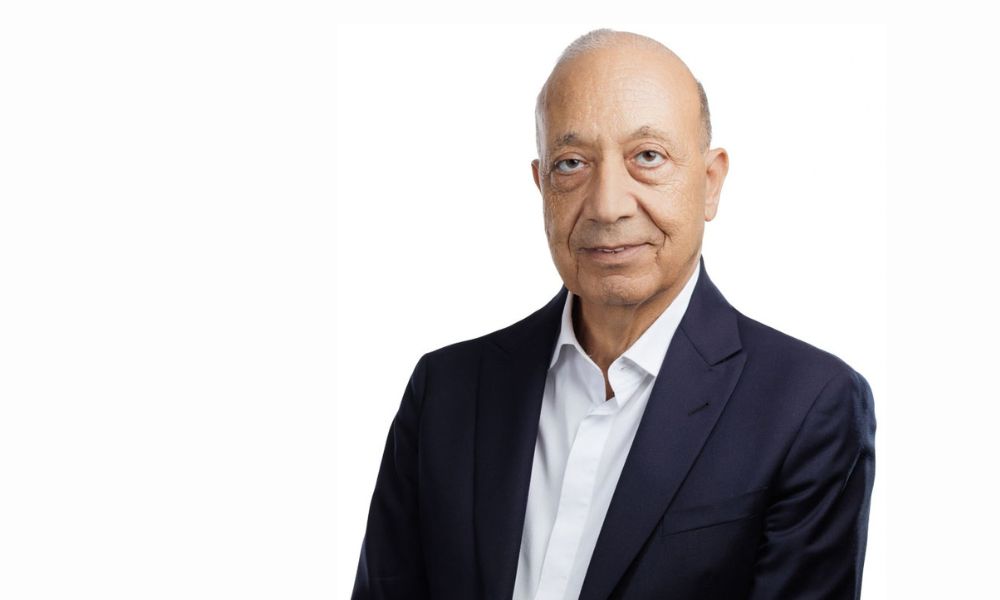
Jesper Sørensen, Global Head of Alternative Fuels and Carbon Markets at KPI OceanConnect

Recent market volatility, geopolitical disruption and tightening carbon regulations are challenging the perception that conventional fuels offer the safest path for shipowners. 

Jesper Sørensen, Global Head of Alternative Fuels and Carbon Markets of KPI OceanConnect, shared with Singapore-based bunkering publication Manifold Times how changing market dynamics are reshaping the commercial case for alternative fuels and highlighting the value of fuel flexibility in an increasingly uncertain environment:  

For years the case for conventional bunker fuels has rested, in part, on familiarity. Owners know how to procure it, use it and build voyage economics around it. Alternative fuels, by contrast, have required a leap of faith – underdeveloped supply chains, high costs and a siloed regulatory backdrop. It’s a familiar tension for many ship owners where the scales have consistently favoured conventional fuels. It was, after all, the safe, known pathway while the green transition matures at its own pace.

Recent market conditions, however, have shown that conventional fuels carry their own version of uncertainty, one that is easy to underestimate in quieter times. Since the Iran War began at the end of February, export terminals across Iraq, Oman, Bahrain and the UAE came under threat and were struck or evacuated within days of each other. The Strait of Hormuz, which carries around a fifth of global oil, has been effectively closed for over a month. Over this time, Brent crude – the global oil benchmark – has traded across a $46 range, between $73 and $119. ICE Gasoil front-month swung more than $400 per tonne in a fortnight. LSMGO briefly disappeared from the Singapore spot market. This is the broader market context every owner has been navigating. It is a difficult environment by any measure but is worth pausing on, because it also changes the conversation around alternative fuels.

Biofuel and methanol markets were also affected. But they moved within a materially narrower range and were largely decoupled from the specific geopolitical shocks driving conventional supply disruption. This meant that the spread between alternatives and conventional fuel narrowed considerably. When EU ETS and FuelEU Maritime compliance costs are also factored in, that spread reduced further still, to the point where alternatives have looked competitive on an all-in basis during this time. That is a different commercial conversation from the one the industry was having even six months ago.

Across the supply chain, the consistent feedback from suppliers, traders and charterers is that the window to lock in biofuel or methanol on terms more favourable than any point in the past eighteen months remains open. Disruption and uncertainty are likely to affect the conventional fuel market for many months after the conflict is resolved – indeed the longer disruption continues, the longer the post-conflict recovery will take – and yet most owners have not seized the biofuel opportunity open to them. 

LNG also warrants attention as the alternative fuel with the deepest fleet commitment. Disruption to Qatari export infrastructure is a significant setback, with a recovery timeline that will be measured in years rather than months. This equation is balanced however, by significant new US export capacity coming online in 2026 and 2027, which will help rebalance availability for European and Asian buyers. The harm done to LNG users highlights an issue that is less about LNG specifically and more broadly about resilience and independence from any single fuel source. Owners with flexibility across fuel types – LNG alongside biofuels, methanol and conventional – will be better equipped to absorb supply shocks wherever they arise.

New fuels are initially expensive, but as production scales, supply chains mature and regulation creates demand certainty prices can be expected to come down. We have watched this curve play out in solar power, in batteries and in biofuels for road transport. Marine alternative fuels are at an earlier stage of the same pathway, but the direction of travel is unambiguous. Today’s premiums reflect a market in its early stages of development, not the cost of a system at scale.

Carbon regulation in the maritime industry has advanced quickly, and while it faces fragmentation and disruption, it warrants attention. Under EU frameworks carbon compliance is no longer a future liability, but a direct cash cost to be settled annually, drawn from the same credit lines that fund bunker procurement and working capital. Managing that cost actively, through alternative fuel procurement during periods of narrow spreads, can have a direct impact on the carbon procurement bill. Active management will free up credit capacity and, in many cases, convert a compliance liability into a surplus that can be traded through FuelEU Maritime pooling. Finance teams need to appreciate this strong commercial argument for pursuing the energy transition now.

Carbon regulation by the International Maritime Organization determines prevailing and future conditions of global regulation, so the meaningful technical progress made at MEPC 84 has provided a clearer sense of where the international framework is heading. Technical work on fuel certification, GFI methodologies and reward mechanisms moved forward, and a broad majority of member states signalled support for the Net-Zero Framework as a foundation. But the Net-Zero Fund remains undefined, key elements of energy efficiency regulation have been delayed and further negotiation is inevitable. In the meantime, the EU’s regime is already in effect. Any owner with regular port calls in Europe is operating inside a binding compliance system today, whatever the longer-term international system looks like.

Looked at this holistically, current conditions remind us that certainty is an illusion. No single fuel can be taken for granted and global regulation that would bring simplicity and clarity for the industry is years away. The owners best positioned to navigate today’s environment are those building genuine flexibility into their fuel strategy, spreading exposure across technologies, supply sources and compliance pathways. The conditions to start doing that, or to go further than they already have, are as favourable now as they have ever been.


Photo credit: KPI OceanConnect
Published: 25 June, 2026
Continue Reading

LNG Bunkering

Shell expands LNG bunkering footprint in Spain with Valencia

As one of the region’s key maritime hubs, the company said Valencia expands the options available to shipowners seeking LNG supply along major shipping routes.

Admin

Published

on

By

Shell expands LNG bunkering footprint in Spain with Valencia

British oil giant Shell on Thursday (13 August) said Valencia has joined its growing network of bunkering locations, making LNG available as a marine fuel.

The successful completion of the first LNG bunkering operation in Valencia marked an important milestone for Spain and further strengthened Shell’s LNG supply capabilities across the Mediterranean. 

In a video shared by the company, bunkering vessel Alice Consulich was shown supplying an undisclosed volume of LNG to the container ship MSC Sabrina.

“As one of the region’s key maritime hubs, Valencia expands the options available to shipowners seeking LNG supply along major shipping routes,” Shell said in a social media post. 

Shell said the achievement reflected the strong collaboration across the maritime value chain, including MSC Mediterranean Shipping Company, the Port of Valencia and Fratelli Cosulich Group.

“We look forward to making more LNG bunker deliveries in Valencia and across the Mediterranean as LNG infrastructure and capabilities continue to expand,” the company said. 


Photo credit: Shell
Published: 14 August, 2026

Continue Reading

LNG Bunkering

Énestas and Power LNG join forces on Galveston bunkering

Énestas will provide capital, LNG transport and storage equipment, and downstream expertise to support Power LNG’s planned liquefaction and marine bunkering facility on Pelican Island.

Admin

Published

on

By

Stabilis Solutions enter 10-year LNG bunkering supply deal for Port of Galveston

Power LNG (Power LNG) and Mexico’s LNG infrastructure and downstream natural gas company Énestas on Wednesday (12 August) announced the execution of definitive agreements establishing a strategic partnership to accelerate the development of LNG infrastructure at the Port of Galveston.

Under the agreement, Énestas will provide capital, LNG transportation and storage equipment, and downstream operating expertise to support the development of the Harborside Terminal and Project Seawolf, Power LNG’s planned LNG liquefaction and marine bunkering facility on Pelican Island.

The partnership creates an immediate pathway to begin LNG distribution by truck while Project Seawolf is under development, supporting marine fueling, virtual pipeline customers, industrial users, and LNG exports throughout the Gulf Coast, Latin America, and the Caribbean.

“Our vision has always been to establish Galveston as the premier LNG hub for the Gulf Coast,” said Austin Terry, Founder and CEO of Power LNG. 

“Énestas brings years of operational experience, proven LNG infrastructure, and a talented team that understands how to deliver LNG safely and efficiently. Together, we can immediately begin serving customers while laying the foundation for one of the most strategic LNG bunkering facilities in North America.”

Project Seawolf will provide LNG for marine bunkering, truck loading, virtual pipeline distribution, and international exports. The facility is strategically located at the Port of Galveston, serving one of the fastest-growing cruise, cargo, and energy corridors in the United States.

For Énestas, the transaction represented an important milestone in the company’s international growth strategy.

“This partnership represents a natural evolution for Énestas as we expand our downstream LNG business into the United States,” said Caio Zapata, Chief Executive Officer of Énestas. 

“For more than a decade, Énestas has developed and operated LNG infrastructure throughout Mexico, helping customers transition to cleaner, more reliable energy. Partnering with Power LNG allows us to leverage that experience in one of the most attractive LNG markets in North America. We see tremendous opportunities in marine bunkering, virtual pipeline logistics, industrial LNG supply, and exports to Latin America and the Caribbean, and we are excited to build that future together.”

The companies expect the partnership to support near-term LNG truck loading operations while advancing the long-term development of Project Seawolf, which is designed to become a regional hub for LNG production, marine fueling, and distribution.

The collaboration also establishes a platform to pursue additional downstream LNG opportunities throughout the Gulf Coast, utilising Énestas’ operational expertise together with Power LNG’s project development capabilities.


Photo credit: Port of Galveston
Published: 14 August, 2026

Continue Reading

LNG Bunkering

Stabilis delivers more than 150,000 cbm of LNG bunker fuel at Galveston

Company says the advancement of its proposed Stabilis Galveston LNG Facility is a natural progression of its established LNG bunkering footprint in Galveston.

Admin

Published

on

By

Stabilis delivers more than 150,000 cbm of LNG bunker fuel at Galveston

Clean energy production solutions provider Stabilis Solutions (Stabilis) on Thursday (13 August) said it has completed 97 LNG bunkering operations and delivered more than 150,000 m³ of LNG to customers in the Port of Galveston.

“As the only physical supplier of LNG on the Gulf Coast to reach this milestone, we’ve earned a reputation as a trusted, proven operator — both with local Galveston stakeholders and with the world’s largest cruise operator,” the company said in a social media post.

“That trust is reflected in the 10-year LNG offtake agreement we executed in December 2025.”

The company said the advancement of its proposed Stabilis Galveston LNG Facility is a natural progression of its established LNG bunkering footprint in Galveston. 

“As a Houston-based company, we believe in the Texas economy and the future growth of the Port of Galveston,” it added.

“That belief is why we’ve invested heavily over the past four years in the planning, permitting, and engineering design work to develop the most advanced, derisked, shovel-ready small-scale LNG liquefaction project on the Gulf Coast.”

Manifold Times previously reported Stabilis stating that the proposed Stabilis Galveston LNG Facility is anticipated to be in production by the third quarter of 2028.

It will come complete with the delivery of the first new-build, dedicated Jones Act-compliant LNG bunker barge in the Galveston/Houston area.

This comes following Stabilis receiving a Letter of Recommendation from the US Coast Guard following their formal review of the proposed Stabilis Galveston LNG Facility and associated waterfront LNG loading, marine transportation, and LNG bunkering operations in the Port of Galveston.

Related: Stabilis Solutions targets Q3 2028 launch for Galveston LNG bunkering facility
Related: Stabilis Solutions terminates 10-year LNG supply deal, expects delay in Galveston project


Photo credit: Stabilis Solutions
Published: 14 August, 2026

Continue Reading

Trending