Connect with us

Biofuel

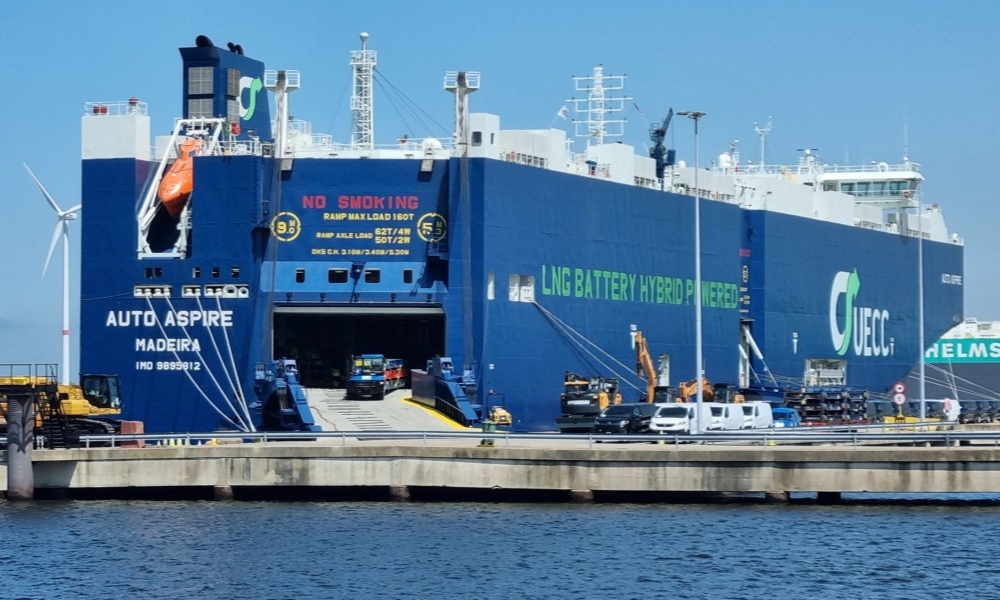
UECC reduces emissions in 2023 by more than doubling bio bunker fuel use

UECC boosted the use of ISCC-certified sustainable biofuel B100 on both owned and time-chartered ships to 14,000 mt last year, up from 6,500 mt in 2022.

Admin

Published

on

UECC

United European Car Carriers (UECC) recently announced its progress of using alternative bunker fuels and said it was on track to exceed its goal of a 45% emissions reduction by 2030 after more than doubling biofuel usage across its fleet last year.

UECC boosted the use of ISCC-certified sustainable biofuel B100 on both owned and time-chartered ships to 14,000 metric tonnes (mt) last year, up from 6,500 mt in 2022.

The company achieved a total tank-to-wake emissions reduction of over 60,000 tonnes across its 14-vessel fleet in 2023, of which it is estimated increased biofuel use accounted for 40,000 tonnes, with the remainder coming from LNG. This was a near-250% increase on the emissions cut of 24,200 tonnes achieved in 2022.

TheEuropean sustainable shortsea carrier said it has made significant strides in decarbonisation of its fleet of pure car and truck carriers (PCTCs) with the addition of five LNG-fuelled newbuilds and the increased rollout of biofuels in recent years – and this is now showing commercial payback for clients in the light of new green regulations, according to Energy and Sustainability Manager Daniel Gent.

“Consequently, we are well on the way to reach or exceed our 45% emissions reduction target by 2030. This clearly has a positive impact for those bio-supportive cargo owners in terms of reducing costs related to the EU Emissions Trading System (EU ETS),” Gent said.

“Furthermore, 85% of the vessels in our fleet achieved a C-rating last year with the IMO’s Carbon Intensity Indicator (CII) and this year we expect all our ships to achieve this rating or above.”

Gent also pointed out the UECC fleet is already in surplus in relation to the requirement for an average 14.5% reduction in GHG intensity by 2035 under the FuelEU Maritime regulation due to be implemented next year.

The environmental performance of UECC’s current fleet of nine owned and five time-chartered PCTCs has been enhanced through delivery over the past seven years of five eco-friendly newbuilds – a pair of dual-fuelled LNG vessels and trio of multi-fuel LNG battery hybrid units.

The use of LNG reduces emissions of CO2 by around 25%, SOx and particulate matter by 90% and NOx by 85%, while the latest battery hybrid newbuilds exceed the IMO target to reduce carbon intensity by at least 40% from 2008 levels by 2030.

UECC is now looking at sourcing alternative carbon-neutral fuels such as bio-LNG and e-LNG for these vessels to further improve their green performance, according to Gent.

UECC’s adoption of alternative fuels has expanded exponentially since the programme was launched in 2020 with piloting the use of biofuel on its vessel Autosky, bolstered by valuable support from owners of its time-chartered vessels, clients such as BMW, fuel suppliers like GoodFuels, industry partners, and parent companies NYK and Wallenius Lines.

“We are now in the fifth year of running our biofuels programme and it has gone from strength to strength. UECC has sought to take a leading role through early-stage analysis of new biofuels to evaluate their potential in terms of technical suitability, sustainability and commercial viability, both  to deliver the best solution for our customers and give the sector a blueprint for assessment and adoption of such fuels based on these three pillars,” Gent explained.

He added that, in terms of sustainability criteria, the company looks for biofuels with the biggest environmental impact, with a typical minimum 90% reduction in GHG intensity from well-to-wake compared with conventional marine fuels. 

UECC has steadily expanded the use of green fuels to cover 30% of its fleet in 2023, up from 18% in 2022, and is on track to achieve 50% coverage this year towards the goal of 80% by 2030, though Gent is confident of surpassing this figure.

He said being proactive in trialling new alternative fuels has also promoted engagement with fuel providers, which has led to UECC’s latest initiative together with biofuel supplier ACT Group as part of an industry collaboration to test the Cashew Nut Shell Liquid (CNSL)-based biofuel FS.100 that he believes has “great potential for sustainable shipping”.

“Increasing the pool of sustainable drop-in fuels offers a pathway for shipping to achieve rapid emissions cuts on existing vessels. Combining alternative fuels with energy efficiency measures such as hull cleaning and electrification with shore power can further accelerate decarbonisation,” Gent said.

“By progressively advancing the use of alternative fuels, we are reducing emissions exposure for our clients and securing regulatory compliance long into the future, while also promoting industry efforts to reach the net-zero goal,” he concluded.


Photo credit: United European Car Carriers
Published: 21 June, 2024

Continue Reading

Alternative Fuels

CMA CGM boxship completes first bio-LNG bunkering operation in Rotterdam

“CMA CGM NOTRE DAME” took on 11,125 cubic metres of bio-LNG in Rotterdam in a 12-hour operation.

Admin

Published

on

By

CMA CGM completes first bio-LNG bunkering operation in Rotterdam

French shipping giant CMA CGM on Friday (10 July) said one of its LNG-powered containerships completed its first bio-LNG bunkering operation in Rotterdam.

CMA CGM NOTRE DAME took on 11,125 cubic metres (m3) of bio-LNG – a renewable fuel that delivers a 67% reduction in greenhouse gas emissions over its full life cycle – produced in Europe from biomethane derived from agricultural and organic waste.

The operation was completed in 12 hours. 

“At CMA CGM, we have been powering our vessels with LNG for several years, and our LNG-powered containerships are already compatible with bio-LNG,” it said. 


Photo credit: CMA CGM
Published: 13 July, 2026

Continue Reading

Financial Result

KPI OceanConnect pre-tax earnings up 21% for FY2025/2026

Company delivered 13 million mt of marine fuel, increasing revenue to USD 6.2 billion and Earnings Before Tax increased by 21% to USD 10.9 million.

Admin

Published

on

By

KPI OceanConnect appoints Dorthe Bendtsen as interim CEO

Global provider of marine energy solutions KPI OceanConnect on Thursday (9 July) announced its financial results for the year 2025/2026. 

The company delivered 13 million metric tonnes (mt) of marine fuel, increasing revenue to USD 6.2 billion and Earnings Before Tax increased by 21% to USD 10.9 million. 

“The results reflect a year of strong operational performance, business expansion and continued investment in supporting the maritime industry’s energy transition amid heightened volatility,” it said. 

In January this year, the company completed the strategic integration of marine fuel company Baseblue into KPI OceanConnect. The move strengthens the company’s global footprint, aligns regional teams more closely and enhances its ability to deliver consistent service, and greater value to customers worldwide.

“By integrating Baseblue, investing in our people and expanding both our advisory and digital capabilities, we have further enhanced our ability to help customers navigate market volatility, regulatory change and the practical realities of the energy transition. The results for the year reflect the strength of our partnerships, the dedication of our teams and the trust our customers place in us every day,” said Dorthe Bendtsen, CEO of KPI OceanConnect.

In response to geopolitical and regulatory challenges over the past year, including the effective closure of the Strait of Hormuz, KPI OceanConnect continued to invest in the expertise, technology and capabilities required to support customers in developing fuel and compliance strategies aligned with their commercial and operational objectives. 

Through its Alternative Fuels & Carbon Markets team, the company expanded support for customers seeking guidance on biofuels, LNG, methanol, carbon compliance and FuelEU Maritime strategies. KPI OceanConnect also saw growing demand for EU Allowance (EUA) trading and FuelEU Pooling solutions, trading more than two million EUAs during the year and helping 250 shipowners and operators identify practical and commercially viable pathways to compliance.

The company continued to leverage the strength of the Bunker Holding Group’s global supply network, which today provides access to biofuel solutions in more than 250 ports worldwide. This extensive infrastructure enables customers to access lower-carbon fuel options where and when they need them, supporting both compliance and commercial objectives while helping prepare for the evolving regulatory landscape.

“The industry is operating in a period where energy, regulatory and geopolitical risks are increasingly interconnected,” said Dorthe Bendtsen. 

“Our role is to help customers navigate these complexities by providing market insight, compliance expertise and access to a broad range of fuel and risk management solutions.”

Related: Baseblue fully integrates into KPI OceanConnect


Photo credit: KPI OceanConnect
Published: 10 July, 2026

Continue Reading

Alternative Fuels

Evos and HyFive ink LOI to explore e-methanol storage in Port of Rotterdam

LOI follows Evos’ recently announced expansion project for methanol and ethanol storage in the port, which will give Evos capacity to handle the developing market in low-carbon marine fuels and bunkering.

Admin

Published

on

By

Evos Rotterdam starts construction on methanol and ethanol expansion project

Evos and HyFive on Wednesday (8 July) said they have signed a Letter of Intent (LOI) to explore the storage and handling of e-methanol in the Port of Rotterdam, which is expected to be produced by HyFive’s HyMet Musel project in northern Spain.

Under this non-binding agreement, Evos and HyFive will assess potential technical and commercial parameters, including logistics interfaces and operational requirements.

The LOI follows Evos’ recently announced expansion project for low-carbon methanol and ethanol storage in the port. The project includes the construction of five new storage tanks with a combined gross capacity of 67,500 cubic metres, a new pump station and a new jetty to be built by the Port of Rotterdam Authority. 

Once operational in early 2028, the expansion will give Evos Rotterdam greater capacity to handle methanol and ethanol for industrial customers, as well as for the developing market in cleaner, low-carbon marine fuels and bunkering.

HyFive’s HyMet Musel project on Spain’s Atlantic coast is planned with a production capacity of 100,000 tonnes per year, with start-up targeted from 2029. HyFive has signed a comprehensive term sheet for a significant portion of the initial production volumes and continues commercial discussions with potential offtakers, including shipping companies active in the ARA region.

Alberto Sanchez de Rojas, General Manager, HyFive, said: “We are pleased to sign this LOI with Evos to explore a potential supply route for e‑methanol from our HyMet Musel project. While this is an initial step, it is an important milestone in assessing downstream infrastructure options that could help meet growing demand for cleaner marine fuels in the ARA region.”

Christiaan Kop, Evos Rotterdam Managing Director, said: “We welcome the opportunity to explore, through this potential partnership with HyFive, how our Rotterdam terminal could support future e‑methanol flows into the ARA region. We see strong long‑term momentum behind low‑carbon fuels, and we continue to invest in infrastructure that can help our customers and partners navigate the energy transition.”

Related: Evos Rotterdam starts construction on methanol and ethanol expansion project


Photo credit: Evos Rotterdam
Published: 9 July, 2026

Continue Reading

Trending