Connect with us

Methanol

Singapore reaches new milestone with methanol bunkering op of “Stena Prosperous”

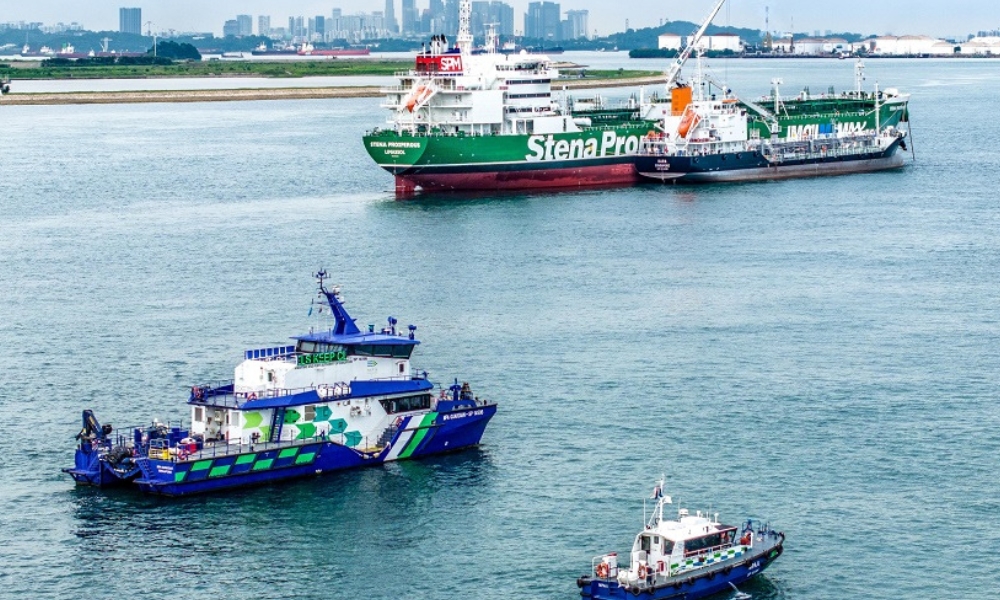
Blended methanol, comprising 20% ISCC-certified bio-methanol combined with conventional methanol, was supplied by MPA-licensed bunker supplier Global Energy Trading using bunker tanker “MT KARA”.

Admin

Published

on

Singapore reaches new milestone with methanol bunkering op of “Stena Prosperous”

The Maritime and Port Authority of Singapore (MPA) on Friday (24 May) said Singapore is one step closer to developing its full capability to deliver methanol bunkering at a commercial scale. 

Close to 1,340 metric tonnes (MT) of blended methanol was bunkered ship-to-ship on 24 May and there will be another operation for simultaneous methanol bunkering and cargo operations for a container vessel this week. These operations will also test the use of mass flow meters (MFM) and digital bunkering.  

The blended methanol, comprising 20% ISCC-certified  bio-methanol combined with conventional methanol, was supplied by Global Energy Trading Pte Ltd, a MPA-licensed bunker supplier, using MT KARA, a dedicated IMO type II chemical bunker tanker operated by Stellar Shipmanagement Services. 

The fuel was received by the newly christened 49,900 DWT IMO II MeMAX tanker, Stena Prosperous, commercially managed by Proman, a leading methanol producer. This operation, which was completed in 7 hours, follows from the world’s first ship-to-containership methanol bunkering conducted earlier in Singapore in July 2023 for the Laura Maersk during which 300 MT of bio-methanol was bunkered.

The blended methanol was supplied by Proman’s marketing arm, Valenz, and lifted at Vopak Penjuru Terminal, Singapore.

The blended methanol is reported by Proman to deliver CO2e saving of 31% on a tank-to-wake  basis compared to the same voyage operated on Very Low Sulphur Fuel Oil (VLSFO). The use of blended methanol provides a pathway fuel for ships to meet GHG emissions limits required by Fuel EU Maritime for ships trading in the European Union and European Economic Area. 

The lifecycle emissions accounting framework is currently being discussed at the International Maritime Organization. The Maritime and Port Authority of Singapore (MPA) expects the relevant metrics for maritime fuels, including well-to-wake, tank-to-wake, to be measurable, reportable and verifiable, and that these should be made available and updated as more information from these operations are reviewed.

The MPA-licensed bunker tanker MT Kara meets the requirements under the IMO’s International Bulk Chemical Code for the construction and equipping of ships carrying dangerous chemicals in bulk and complies with the Standards for Port Limit Bunker Tankers. 

The vessel is equipped with twin screw propulsion and a bow thruster for better manoeuvrability. Kara is also fitted with an onboard mass flow metering system, a flow boom capable of transferring bunkering hoses between vessels, and a vapour recovery line. In addition, for the safe handling of chemical cargoes such as methanol, the vessel is fitted with nitrogen bottles supplying nitrogen gas for the purging and blow through of the bunker hoses. 

Nitrogen, given its inert and stable properties, was used to fill up the remaining vapour space once the cargo is loaded, a process known as nitrogen padding, to reduce flammability risk. Finally, the vessel is equipped with Quick Connect Quick Disconnect (QCDC) and Dry Breakaway Couplings (DBC) for both liquid and vapour hose systems, to minimise leakages and enable the quick and simple disconnection of hoses in an emergency. 

MPA will study further enhancements for such tankers as part of its ongoing work to develop the methanol bunkering licensing framework and Port Limit Bunker Tanker requirements for methanol bunkering. The Technical Reference  for methanol bunkering, currently being developed, will also include the framework to govern the use of MFM and digital bunkering for methanol bunkering, taking into consideration the data gathered during this and the following operation. 

In preparation for the bunkering operation, the risk assessment, bunkering plan and checklists were jointly prepared by all the parties involved to ensure a common understanding of the safety measures and emergency protocols. Clear roles and responsibilities were also established for each agency to ensure that the operations, and emergency response, were coordinated. 

The Emergency Operations Centre (EOC) set up at MPA’s Port Operations Control Centre monitored the operation, supported by a drone equipped with a volatile organic compound detector and an infrared camera to detect methanol leaks into the atmosphere and methanol flames in the event of an accidental leak. The methanol plume model, employed during the first methanol bunkering operation in July 2023, was updated to support the planning and incident response for this operation. 

As part of the training and safety preparations for the bunkering, the crew from Kara attended the MPA-approved training course for the handling of methanol as a fuel, conducted by the Singapore Maritime Academy (SMA). 

The training course, one of the first in the Asia Pacific, was launched in April 2024 and covers the operational and safety aspects of methanol bunkering operations. The course curriculum was developed by SMA according to the standards and requirements set by MPA, taking onboard the lessons learnt and best practices from the first methanol bunkering operation conducted in Singapore in July 2023. 

This is part of the operationalisation of the Maritime Energy Training Facility Initiative announced at the 2024 Singapore Maritime Week. 

Mr Teo Eng Dih, Chief Executive, MPA, said: “We continue to learn and enhance MaritimeSG’s ecosystem capabilities from each bunkering operation involving new maritime fuels, in terms of developing new supply chains, enhancing infrastructure support such as terminal facilities and bunker tankers, meeting seafarer training needs, setting standards for bunkering and testing our emergency response plans.

“We thank Proman, Global Energy Group and Stellar Shipmanagement for the successful ship-to-ship bunkering of close to 1,340 MT of blended methanol. Doing so safely and efficiently is an important step towards our support to the international maritime community and complements MPA’s earlier call for expression of interest for proposals to supply methanol as a marine bunker fuel at scale in Singapore.”

David Cassidy, Chief Executive of Proman, said: “The bunkering of this 20/80 green/conventional methanol blend on Stena Prosperous represents a further step forward for methanol as a marine fuel.”

“Its cleaner burning properties, and lower greenhouse gas emissions, delivers immediate cleaner air benefits and underlines the value of using methanol blends as part of a pathway fuel strategy to a lower emission future, while helping the shipping industry to meet decarbonisation goals.”

“We were delighted to undertake this bunkering operation in Singapore after the ship’s official naming ceremony and would like to thank all parties involved for the successful collaboration.”

Munee Chow, Group Business Manager of Global Energy Group, said: “To all participating partners and personnel: Congratulations for achieving this milestone.  Being a Singapore bunker supplier of more than 30 years, this marks a memorial moment for Global Energy on our efforts towards decarbonisation.”

Kelvin Kang, General Manager, Stellar Shipmanagement, said: “With the successful execution of this large-scale methanol loading and bunkering supply operation, we have gained a deeper understanding of its operational characteristics. This valuable insight will enable us to further enhance the efficiency and safety of methanol handling in future operations.”

Stena Prosperous was officially named on 23 May at a christening ceremony held at the Marina Bay Cruise Centre, Singapore. On departing Singapore, the vessel will take its cargo to the United States of America.

Related: Methanol-fuelled tanker “Stena Prosperous” formally named in Singapore
Related: Proman Stena Bulk takes delivery of fourth methanol-fuelled tanker “Stena Prosperous”


Photo credit: Maritime and Port Authority of Singapore
Published: 27 May 2024

Continue Reading

Business

Hercules Tanker Management acquires five product and chemical tankers

Acquisitions form part of a broader and ongoing fleet development programme at Hercules; programme also includes investing in the construction of an 18,000 cbm LNG bunkering vessel at Hyundai Mipo.

Admin

Published

on

By

Hercules Tanker Management plans fleet expansion with new chemical bunker tankers

Hercules Tanker Management (HTM) on Monday (1 June) announced the acquisition of five product and chemical tankers as part of its continued fleet expansion.

HTM is the shipping venture launched by John A. Bassadone, founder and CEO of independent marine fuel supplier Peninsula.

The company acquired STI Madison (2014 LR2), STI Brooklyn (2015 MR2) and STI Black Hawk (2015 MR2) – acquired from Scorpio Tankers; and Nord Marvel (2020 MR2) and Nord Maverick (2020 MR2) – acquired from Norden.

 The acquisitions represent a combined investment of approximately USD 225 million, with all vessels secured on long-term commercial charters, reinforcing Hercules’ strategy of pairing asset ownership with contracted earnings visibility.

“The acquisitions have been completed against the backdrop of a firm tanker asset market, with second-hand values continuing to trade at historically elevated levels due to strong freight markets, constrained fleet growth and limited shipyard availability,” the company said. 

 All five vessels enter the Hercules fleet with long-term commercial employment already secured, consistent with the company’s strategy of combining asset-backed exposure to tanker markets, with downside protection through contracted earnings, and operational flexibility to serve the growing global cargo flows of its partners and affiliates.

The acquisitions form part of a broader and ongoing fleet development programme at Hercules. 

The company continues to progress its newbuilding programme with Jiangmen Hangtong Shipyard in China, where it has committed to a series of up to 10 ‘ultra-spec’ chemical tankers, designed with flexibility to supply conventional fuels, biofuels and methanol, alongside enhanced efficiency and emissions performance. 

In parallel, Hercules is also investing in next-generation energy infrastructure through the construction of an 18,000 cbm LNG bunkering vessel at Hyundai Mipo, scheduled for delivery in 2027.

Market benchmarks indicate vessels of this type are currently contracting at approximately USD 90–95 million per unit, underlining the strategic and capital commitment behind this segment.

John A. Bassadone, Founder and CEO of Hercules Tanker Management, said: “This is another step in building Hercules carefully and deliberately. We are not trying to grow for growth’s sake. Our focus is on acquiring the right assets, at the right time, with the right commercial backing.

“These vessels come with strong employment already in place, which provides stability, while still allowing us to participate in a market we believe has solid fundamentals over the medium term. We are fortunate to be in a position where global cargo flows can underpin our investments, and we remain mindful that discipline is critical in this cycle.

“Additionally, we are currently engaged in negotiations for newbuilds of all sizes including LR2s, MRs, and Handys, as well as additional ultra spec vessels.”

Related: Peninsula founder launches shipping firm Hercules Tanker Management
Related: Hercules Tanker Management plans fleet expansion with new chemical bunker tankers
Related: Hercules Tanker Management orders LNG bunkering vessel from Hyundai Mipo


Photo credit: Hercules Tanker Management
Published: 2 June, 2026

Continue Reading

Methanol

GENA Solutions: Total renewable and low-carbon methanol project pipeline rises from 61 to 61.6 Mt by 2031

Information shared by the Methanol Institute meant to assist the maritime industry in the adoption of methanol as a mainstream marine fuel heading into IMO 2030/2050.
Admin

Published

on

By

GENA Solutions: Total renewable and low-carbon methanol project pipeline rises from 61 to 61.6 Mt by 2031

The Methanol Institute recently shared with Manifold Times the renewable and low-carbon methanol project pipeline May 2026 release produced by GENA Solutions Oy.

Information from the release is meant to provide the bunkering publication’s readers with insight on renewable methanol availability, and to assist the maritime industry in the adoption of methanol as a mainstream marine fuel heading into IMO 2030/2050.

Key takeaways from GENA’s May 2026 Methanol release are as follows:

  • A biomethanol project in China signed an EPC contract in May. GENA estimates that more than 3 Mt of biomethanol and e-methanol capacity is currently under construction in China.
  • Six new projects were added to Project Navigator, while five frozen projects were excluded. The project pipeline increased by 0.6 Mt month on month.
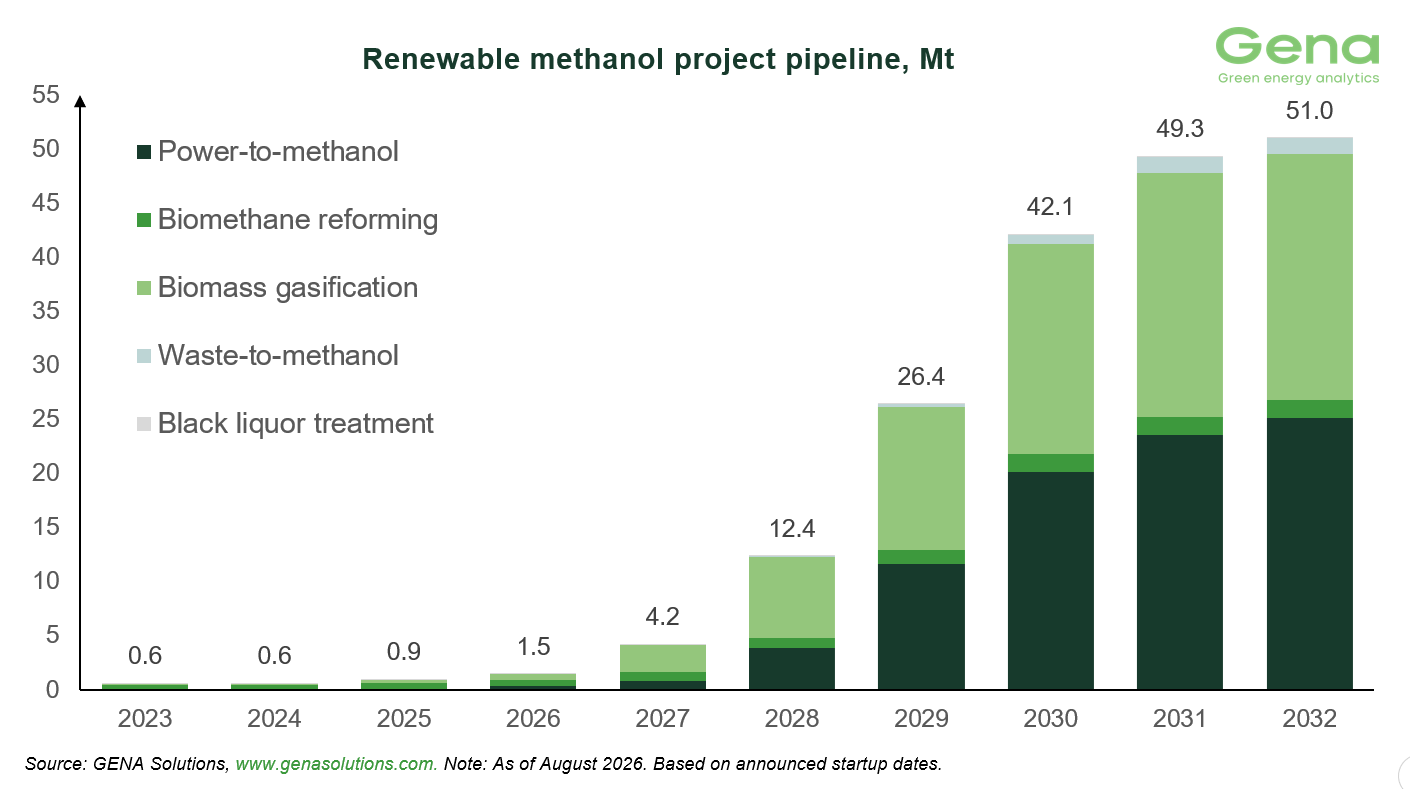
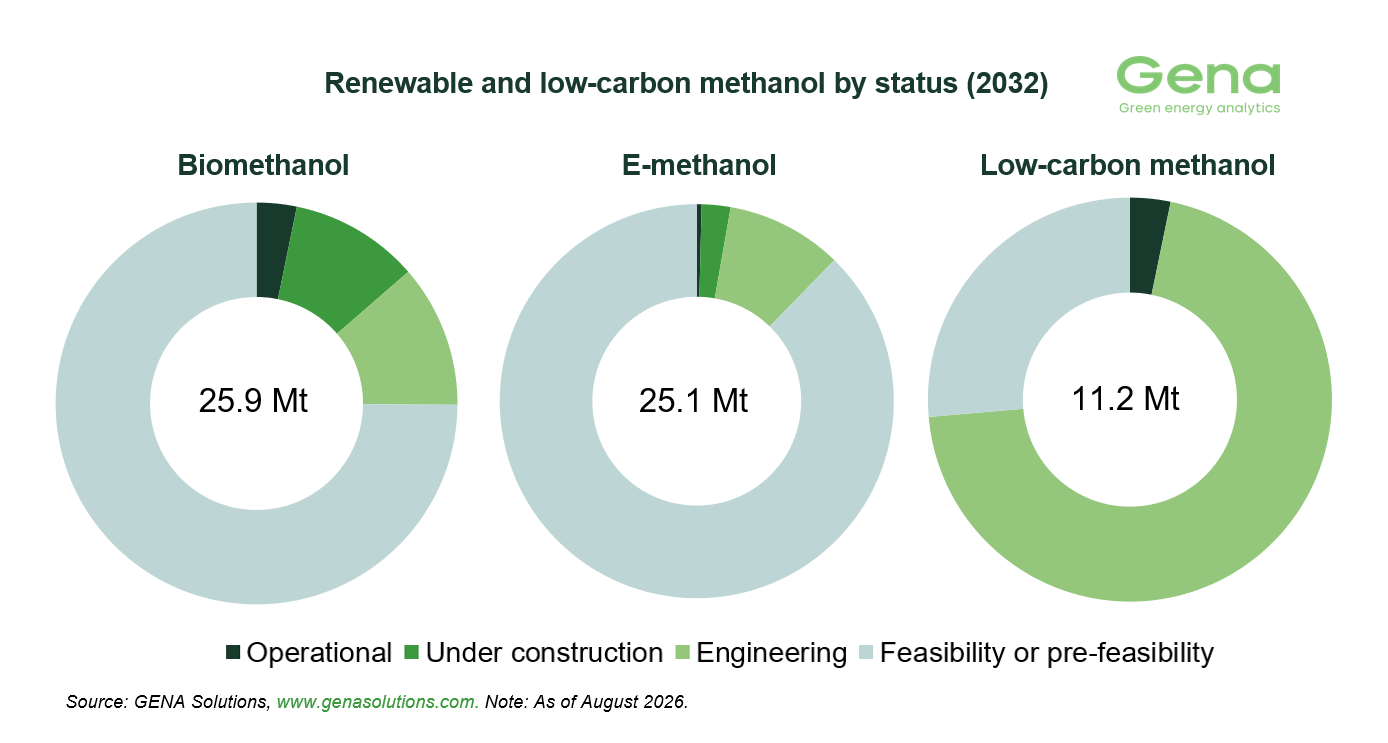
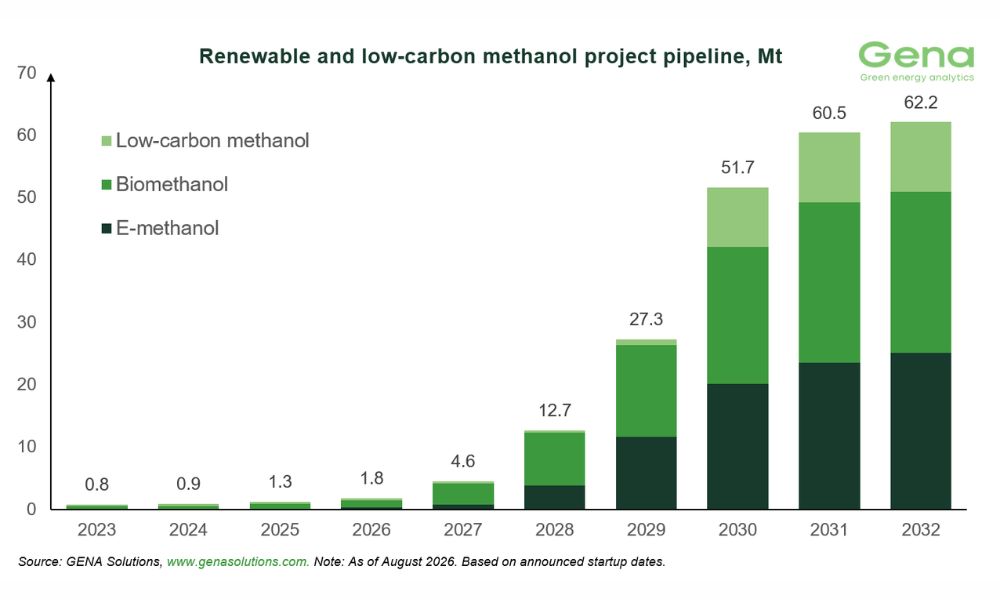
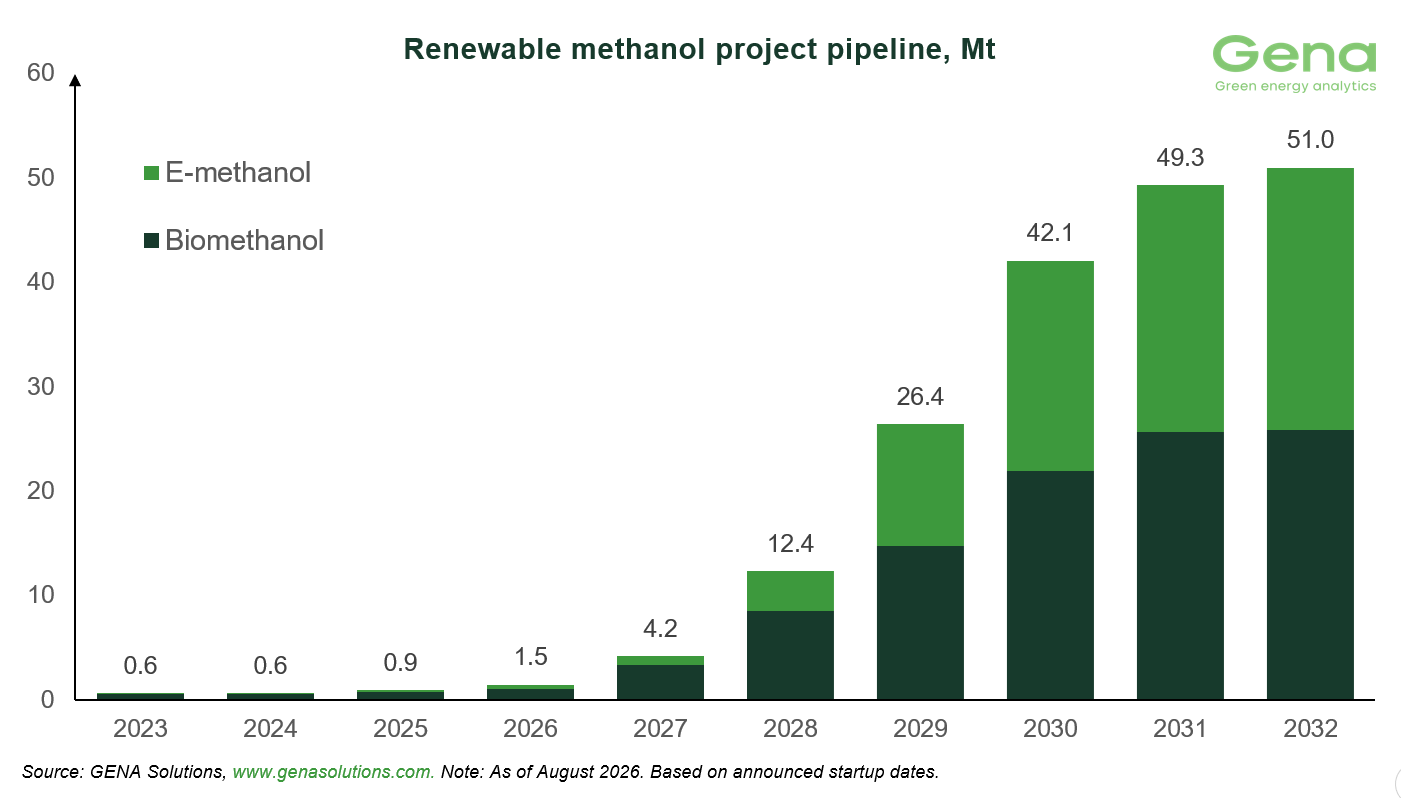
  • Project Navigator tracks 282 renewable and low-carbon methanol projects, representing 61.6 Mt of capacity by 2031, including 24.9 Mt of e-methanol, 25.6 Mt of biomethanol, and 11.2 Mt of low-carbon methanol.
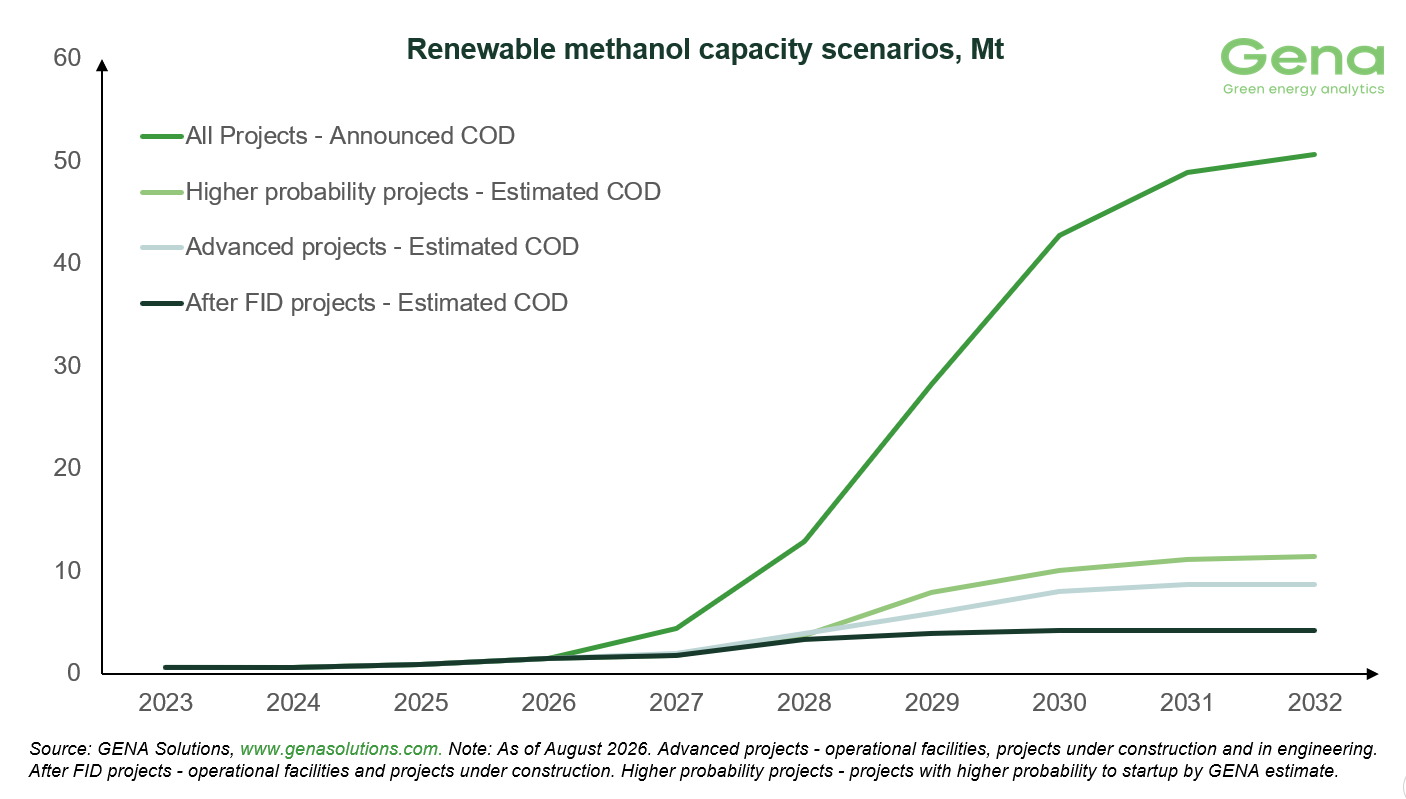
  • GENA estimates that renewable methanol capacity could grow from 0.9 Mt in 2025 to 1.5 Mt by the end of 2026, 2.2–2.4 Mt in 2027, and 5-12 Mt in 2030.
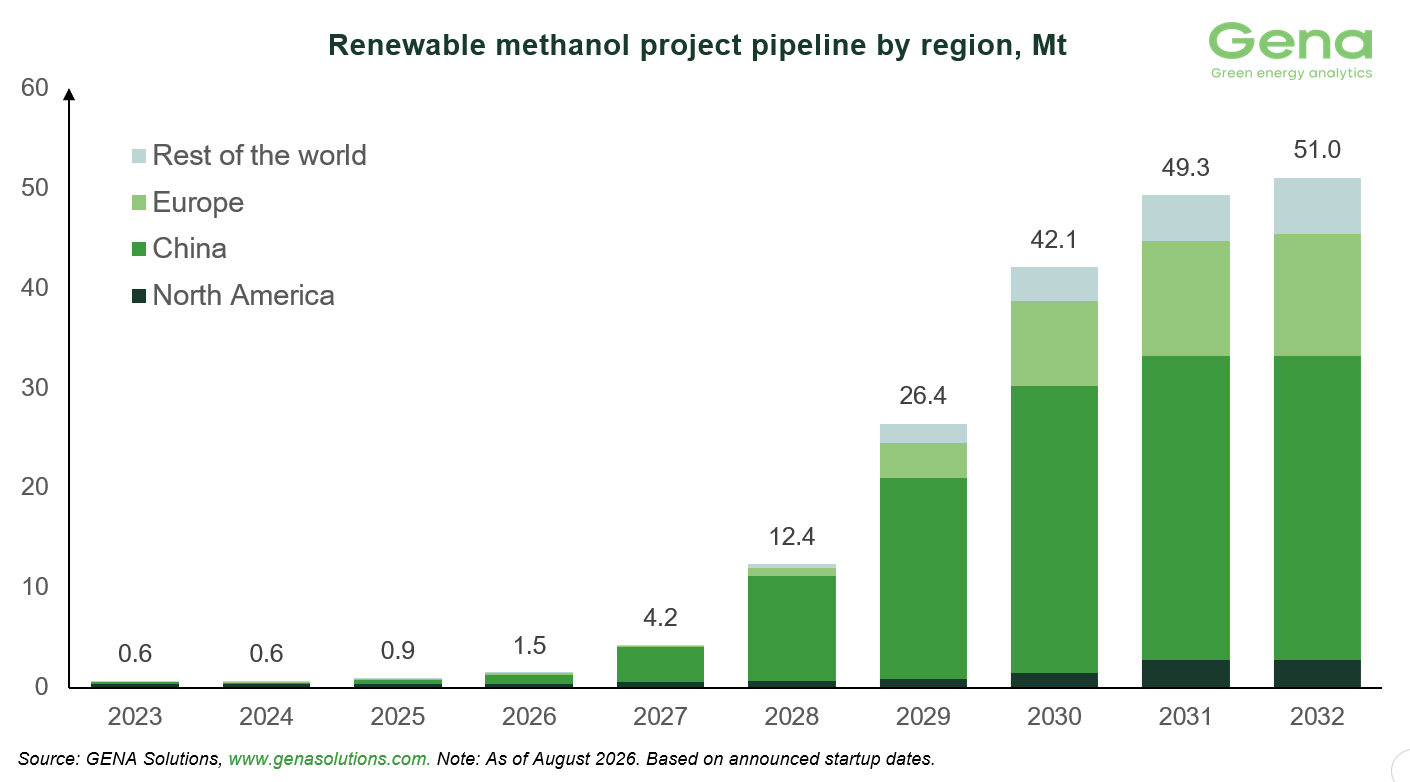
  • Europe accounts for more than 10 Mt of renewable and low-carbon methanol projects, about 79% of which use hydrogen as one of the feedstocks.
  • More than 31 Mt of projects are under development in China, with biomass gasification accounting for 61% of the pipeline.
  • North America accounts for more than 10 Mt of projects, mainly using CCS.

Note: The full article can be viewed here.
Renewable methanol 1

Renewable methanol by feedstock 9

Renewable methanol by region 8

Renewable methanol by status 1

Renewable methanol capacity scenarios 2


Photo credit: GENA Solutions
Published: 2 June, 2026

Continue Reading

Methanol

Maritime Blue calls for proposals on methanol bunker barge design

Maritime Blue, in collaboration with the Port of Seattle, Port of Tacoma, Northwest Seaport Alliance, and ABS, is seeking a naval architecture firm to develop design schematics for a methanol bunker barge.

Admin

Published

on

By

RESIZED Venti Views on Unsplash

Maritime Blue, in collaboration with the Port of Seattle, Port of Tacoma, Northwest Seaport Alliance, and American Bureau of Shipping (ABS), is seeking a qualified naval architecture firm to develop design schematics for a methanol bunker barge.

A Request for Proposals (RFP), issued on 11 May, invited companies to submit a proposal for the barge, which will be used as the supply ship in a ship-to-ship methanol bunkering exercise during a high level risk assessment workshop planned for September 2026. 

The design is intended for a desktop exercise to identify operational requirements and safety gaps for green methanol bunkering in the Seattle-Tacoma Gateway.

The bunker barge is expected to have a methanol capacity of approximately 30,000 bbls but contractors may propose alternative capacities with justification. 

The receiving ship for the workshop has not been selected yet, but is anticipated to be a cargo, container, cruise, or ro-ro ship.

Maritime Blue said the submission deadline for the proposals is 1 June at 3pm PDT.


Photo credit: Venti Views on Unsplash
Published: 29 May, 2026

Continue Reading

Trending