Connect with us

Business

Malaysia: Success of limitation action following oil spillage damages

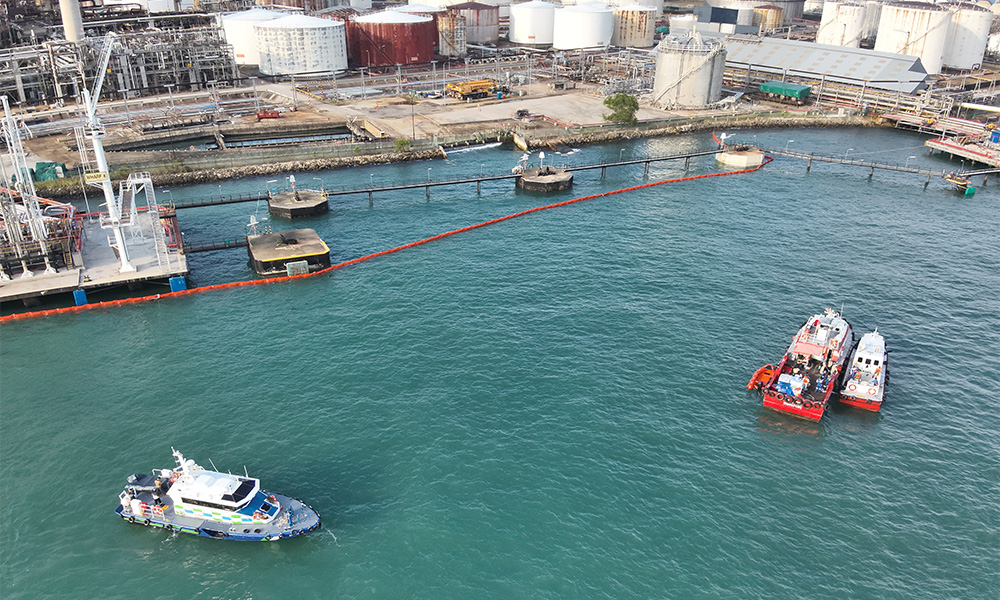
Owner of the vessel MT “Trident Star” brought a limitation action to limit its liability regarding pollution damage or loss in relation to a spillage of fuel oil carried on board the vessel in 2016.


Admin

Published

on

256

The following article was written by Rajasingam Gothandapan, who is a partner at law firm Shearn Delamore & Co, elaborating on a 2016 case where a plaintiff brought a limitation action to limit its liability regarding pollution damage or loss in relation to a fuel oil spillage incident, on the basis that the incident had occurred by no act of omission of the plaintiff: 

Facts

Plaintiff one was the owner of the vessel MT “Trident Star” (the vessel). On 24 August 2016, while the vessel was berthed at the terminal, a spillage of fuel oil carried on board the vessel as cargo occurred (the incident).(1)

On 7 November 2016, plaintiff one brought a limitation action pursuant to the Merchant Shipping (Liability and Compensation for Oil and Bunker Oil Pollution) Act (MSA) 1994(2) to limit its liability regarding pollution damage or loss in relation to the incident, in accordance with part I of the rst schedule to the MSA 1994, on the basis that the incident had occurred by no act or omission of plaintiff one.

On 17 February 2017, plaintiff one’s limitation action was allowed. On 21 March 2017, plaintiff one set up a limitation fund by depositing into court a security for the amount of 4,510,000 special drawing rights (or its Malaysian ringgit equivalent as at the date of constitution of the limitation fund) plus interest at the rate of 5% per annum from 24 August 2016 up to and including the date of the constitution of the limitation fund. The security was in the form of a letter of undertaking (LOU) dated 16 March 2017 issued by the insurer of the vessel, the Shipowners’ Mutual Protection and Indemnity Association (Luxembourg).

On 11 May 2017, the court further ordered for advertisements pertaining to the limitation fund be placed in two local newspapers. The advertisements provided that all persons claiming oil pollution damage or loss resulting from the incident should:

  • enter an appearance in this action;
  • file claims; or
  • take out a notice of application to set aside the limitation decree.

In response to the advertisements, within the time limit, 19 defendants entered the limitation action to claim for loss and damage from the plaintiffs arising from the incident. None of them disputed plaintiff one’s right to limit its liability.

In view of the possibility that plaintiff one’s liability to pay compensation could exceed the limitation fund,(3) plaintiff two (ie, the International Oil Pollution Compensation Fund 1992) was added to the action.

Subsequently, all the defendants’ claims were settled by plaintiff one on condential terms and all the defendants led their notices of discontinuance. No payment was made out from the limitation fund.

Plaintiff one’s application

Plaintiff one sought an order that the LOU be discharged and be returned by the registrar to plaintiff one’s solicitors for cancellation with liberty to apply. Plaintiff one also sought leave to discontinue the present action with no order as to costs. Plaintiff one submitted that the application herein required the invocation of the inherent jurisdiction of the court under order 92 rule 4 of the Rules Of Court 2012 as there was no provision for the discharge and release of the security that constituted the limitation fund.

Decision

The court held that the LOU should be discharged and returned to plaintiff one for cancellation, as they had settled all the claims made by the defendants without recourse to the LOU or the limitation fund. The time limit for bringing claims had also expired, as the advertisements had been published ve years previously and the time limit for making claims had expired 60 days after the publication of the advertisements. Thus, plaintiff one’s application was allowed and the action was discontinued.

For further information on this topic please contact Rajasingam Gothandapani at Shearn Delamore & Co by telephone (+60 3 2027 2911) or email ([email protected]). The Shearn Delamore & Co website can be accessed at www.shearndelamore.com.

Endnotes

(1) Rising Star Shipping Sdn Bhd & Anor v Pelabuhan Tanjung Pelepas Sdn Bhd & Ors [2022] MLJU 1299
(2) Section 6(2) read together with section 7(1).
(3) Pursuant to section 19 of the MSA 1994 and by way of a court order dated 21 September 2017. 

Editor’s Note: This article was originally edited by, and first published on www.lexology.com/commentary


Photo credit: Shearn Delamore & Co
Published: 10 February, 2023

Continue Reading

Winding up

Singapore: High Court to hear Norvic Shipping Asia winding up application on 31 July

Application for the winding up of Norvic Shipping Asia Pte Ltd was filed by Netherlands-registered Mur Shipping BV on 8 April, according to Government Gazette notice.

Admin

Published

on

By

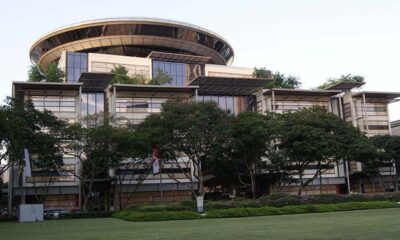
RESIZED singapore high court

An application for the winding up of Norvic Shipping Asia Pte Ltd was filed by Netherlands-registered Mur Shipping BV on 8 April, according to a Tuesday (21 July) notice on the Government Gazette.

It noted the winding up application is directed to be heard before the Judge sitting in the General Division of the High Court at 10am on 31 July.

Any creditor or contributory of the company desiring to support or oppose the making of an order on the winding up application may appear at the time of hearing by himself or his counsel for that purpose.

A copy of the winding up application will be furnished to any creditor or contributory of the company requiring the copy of the winding up application by the solicitors of the applicant’s, Oon & Bazul LLC, on payment of the regulated charge for the same.

The Applicant’s address is Hiridostraat 5, Gebouw Prismatrium, 1101CW Amsterdam, The Netherlands.

The Applicant’s solicitors are Oon & Bazul LLC of 103 Penang Rd, #04-04/05/06 Singapore 238467. 

Queries on the winding up application may be directed to the following email addresses: [email protected] and [email protected].


Photo credit: Manifold Times
Published: 22 July, 2026

Continue Reading

Methanol

World Fuel and partners complete first green methanol bunkering of car carrier in Shanghai

Operation involved the delivery of approximately 2,800 MT of green methanol to “Arctic Tern” via a ship-to-ship transfer using SIPG Energy’s dedicated methanol bunkering vessel “M/V Hai Gang Zhi Yuan”.

Admin

Published

on

By

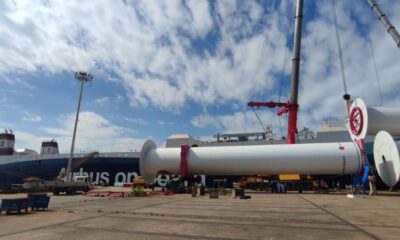
World Fuel and partners complete first green methanol bunkering of car carrier in Shanghai

Marine fuel provider World Fuel on Tuesday (21 July) said it successfully completed the first green methanol bunkering of M/V Arctic Tern, with EUKOR Car Carriers and SIPG Energy at the Port of Shanghai. 

Arctic Tern is the first vessel in the new Shaper Class series of car carriers. 

The operation involved the delivery of approximately 2,800 MT of green methanol to Arctic Tern via a ship-to-ship transfer using SIPG Energy’s dedicated methanol bunkering vessel M/V Hai Gang Zhi Yuan, the largest vessel of its kind in operation. 

The bunkering operation was carried out at Haitong Terminal, Waigaoqiao Port Area, Shanghai Port, with cargo handling operations conducted simultaneously during bunkering.

This marks EUKOR Car Carriers’ first green methanol operation and the first time Arctic Tern has bunkered methanol since its delivery on 9 July. The operation marked the first bunkering at Shanghai Port of green methanol produced locally in Shanghai for an international PCTC operator. 

It also demonstrated the city’s integrated green methanol value chain, spanning local production, storage and bunkering, and established a replicable “Shanghai Model” for green methanol supply.

World Fuel arranged the supply and delivery of the fuel on behalf of EUKOR Car Carriers, working with SIPG Energy as the physical supplier at the Port of Shanghai.

The green methanol supplied was produced from municipal solid waste, ISCC-EU certified, and had a carbon intensity value below 25 gCO₂e/MJ.

Arctic Tern is the first of fourteen Shaper Class vessels ordered by Wallenius Wilhelmsen. With a capacity of 9,300 car equivalent units and methanol dual-fuel capability, the vessel will be operated by EUKOR Car Carriers, jointly owned by Wallenius Wilhelmsen and Hyundai Motor Group. Following her first green methanol bunkering, Arctic Tern will continue her maiden voyage from Asia to Europe.

Xavier Leroi, COO Shipping Services at Wallenius Wilhelmsen and CEO of EUKOR Car Carriers, said: “Completing Arctic Tern’s first green methanol bunkering shortly after delivery is a significant milestone towards our decarbonisation ambition for both EUKOR Car Carriers and Wallenius Wilhelmsen. It demonstrates how investments in next-generation vessel technology and fuel flexibility are being translated into real-world operations. 

“This achievement reflects the strong collaboration between all parties involved. Together, we have shown how partnerships across the maritime value chain can help make lower-emission fuels available and operationally viable at scale.”

Mark Tamsitt, SVP Global Marine Sales at World Fuel, said, “The first bunkering event with a new fuel is a significant moment for any shipowner, and our role is to make it as seamless as possible. By connecting EUKOR Car Carriers with SIPG Energy’s proven green methanol capability at the Port of Shanghai, we were able to deliver on reliable supply, fuel quality, and safe processes. As more of our customers bring methanol dual-fuel tonnage into service, we are committed to being the partner that makes these kinds of operations routine.”

Mr. Zhang Da, General Manager of SIPG Energy, said, “Welcoming Arctic Tern to the Port of Shanghai for her first green methanol bunkering demonstrates the strength and maturity of our supply capability. Building on our well-established methanol ship-to-ship bunkering services for container vessels, we have already extended such services to pure car and truck carriers (PCTCs). This bunkering sets a new record for the largest single SIMOPs green methanol bunkering for PCTCs in China, marking another step in building Shanghai’s position as a global green energy hub for international shipping.”

This operation follows Wallenius Wilhelmsen’s announcement on 9 July that Arctic Tern would complete her first methanol bunkering shortly after delivery. The vessel entered service on routes between Asia and Europe immediately following handover from China Merchants Jinling Shipyard in Nanjing.


Photo credit: World Fuel
Published: 22 July, 2026

Continue Reading

Ammonia

HPA and MB Energy develop safety concept for STS ammonia bunkering

HPA says the Port of Hamburg will become “bunker ready” for ammonia, laying the groundwork for safe and reliable ammonia bunkering in the future.

Admin

Published

on

By

HPA and MB Energy develop safety concept for STS ammonia bunkering

The Hamburg Port Authority (HPA) and integrated energy company MB Energy on Tuesday (21 July) said they have completed a comprehensive risk analysis and developed a dedicated safety concept for ship-to-ship ammonia bunkering.

MB Energy said the analysis lays the groundwork for the safe introduction of ammonia as a future marine fuel.

“With our planned ammonia import terminal in Hamburg-Blumensand, MB Energy intends to provide the reliable land side supply infrastructure needed to support this transition across northern German ports,” it said in a social media post. 

Mabanaft Group was renamed to MB Energy last year and merged over 50 existing brands under one identity. 

Separately, HPA said the Port of Hamburg will become “bunker ready” for ammonia, laying the groundwork for safe and reliable ammonia bunkering in the future.

“The focus is in particular on container ships, cruise ships as well as RoRo and ConRo (Container/RoRo) ships,” it said. 

“We expect ammonia to establish itself as an alternative marine marine fuel in the coming years. With our preparatory work, we are already creating the conditions to welcome the first ammonia-powered ships in Hamburg and to bunker them safely.:

HPA added that the import terminal for ammonia planned by MB Energy from 2029 will make a decisive contribution to ensuring the reliable availability of ammonia as a bunker fuel in northern German ports in the long term. 

“The use of an ammonia bunker barge is considered a possible addition to the landside infrastructure to enable ship bunkering in the port and beyond in the future,” it said.

Related: Mabanaft Group renames as MB Energy, merging over 50 brands under one identity


Photo credit: Hamburg Port Authority
Published: 22 July, 2026

Continue Reading

Trending