Connect with us

Business

EU Fit for 55: Council of European Union reaches general approaches relating to emissions reductions

Council agreed to include maritime shipping emissions within the scope of the EU emissions trading system and introduced an opt-in for all fossil fuels.

Admin

Published

on

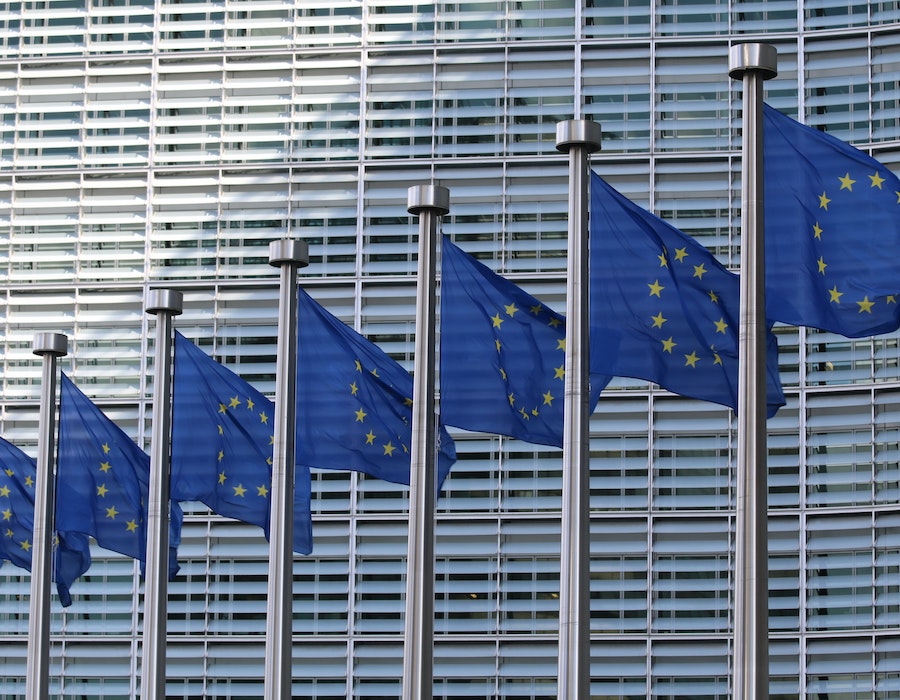
guillaume perigois 0NRkVddA2fw unsplash

The Council of the European Union on Wednesday (29 June) adopted its negotiating positions (general approaches) on important legislative proposals in the ‘Fit for 55’ package and is now ready to negotiate with the European Parliament on concluding the package. 

The member states adopted a common position on EU emissions trading system (EU ETS), effort-sharing between member states in non-ETS sectors (ESR), emissions and removals from land use, land-use change and forestry (LULUCF), the creation of a social climate fund (SCF) and new CO2 emission performance standards for cars and vans.

These agreements will pave the way for negotiations with the European Parliament.

Presented by the European Commission on 14 July 2021, the package will enable the European Union to reduce its net greenhouse gas emissions by at least 55% by 2030 compared to 1990 levels and to achieve climate neutrality in 2050.

“The achievement, led by the French Presidency, of an agreement between the member states on the ‘Fit for 55’ package is a crucial step in attaining our climate objectives within the main sectors of the economy,” said Agnès Pannier-Runacher, French Minister for the energy transition.

“The ecological and energy transition will require the contribution of all sectors and all member states, in a fair and inclusive manner. The Council is now ready to negotiate with the European Parliament on concluding the package, thereby placing the European Union more than ever in the vanguard of fighting climate change,” she said. 

EU emissions trading system

The EU Emissions Trading System (ETS) is a carbon market based on a system of cap-and-trade of emission allowances for energy-intensive industries and the power generation sector.

The Council agreed to keep the overall ambition of 61% of emissions reductions by 2030 in the sectors covered by the EU ETS, proposed the Commission.

The Council also agreed to a one-off reduction of the overall emissions ceiling by 117 million allowances (“re-basing”) and to the increase in the annual reduction rate of the cap by 4,2% per year (“linear reduction factor”).

The Council endorsed the proposal to strengthen the market stability reserve (MSR), by prolonging, beyond 2023, the increased annual intake rate of allowances (24 %) and setting a threshold of 400 million allowances above which those placed in the reserve were no longer valid.

The Council agreed to make the launch of the mechanism that activates the release of MSR quotas on the market, in case of excessive price rise, automatic and more reactive.

As regards sectors covered by the Carbon Border Adjustment Mechanism (CBAM), the Council endorsed the proposal to end free allowances for the sectors concerned by the CBAM progressively, over a ten-year period between 2026 and 2035. However, the Council accepted a slower reduction at the beginning and an accelerated rate of reduction at the end of this 10-year period. Support for the decarbonisation of these sectors will be possible through the Innovation Fund. The Council also asked the Commission to monitor the impact of the CBAM, including on carbon leakage at export, and to assess whether additional measures were needed.

As regards the Modernisation Fund, the Council maintained the increase in its volume through the auctioning of an additional 2.5 % of the ceiling, the increase in the share of priority investments to 80 % and the addition of new eligible sectors, as proposed by the Commission. The Council decided to extend the list of member states benefiting from the Modernisation Fund. Natural gas projects will in principle not be eligible for the Fund. However, the Council introduced a transitional measure allowing the beneficiaries of the Fund to continue financing natural gas projects under certain conditions.

The Council also strengthened certain provisions of the Innovation Fund, in particular as regards the capacity aimed at making participation in projects more effective and geographically balanced, while preserving the principle of excellence in project allocation. The Council agreed to pay particular attention to decarbonising the maritime sector under the Innovation Fund.

The Council improved the governance and transparency of both funds.

An additional transitional free allocation can be granted under certain conditions to the district heating sector in certain member states subject to certain conditions, in order to encourage the decarbonisation of that sector.

The Council agreed to include maritime shipping emissions within the scope of the EU ETS. The general approach accepts the Commission proposal on the gradual introduction of obligations for shipping companies to surrender allowances. As member states heavily dependent on maritime transport will naturally be the most affected, the Council agreed to redistribute 3.5 % of the ceiling of the auctioned allowances to those member states. In addition, the general approach takes into account geographical specificities and proposes transitional measures for small islands, winter navigation and journeys relating to public service obligations, and strengthens measures to combat the risk of carbon leakage in the maritime sector.

The general approach includes non-CO2 emissions in the MRV regulation from 2024 and introduces a review clause for their subsequent inclusion in the EU ETS.

The Council agreed to create a new, separate emissions trading system for the buildings and road transport sectors. The new system will apply to distributors that supply fuels for consumption in the buildings and road transport sectors. However, the start of the auctioning and surrender obligations will be delayed by one year compared to the Commission proposal (auctioning of allowances from 2027 onwards and surrender from 2028 onwards). The emissions reduction trajectory and the linear reduction factor set at 5.15 from 2024 and 5.43 from 2028 would remain as proposed by the Commission. The Council maintained the proposal to auction an additional 30% of the auction volume for the first year of the launch of the system, so that it runs smoothly (“frontloading”).

The Council introduced an opt-in for all fossil fuels. It introduced simplified monitoring, reporting and verification requirements for small fuel suppliers.

The Council added a temporary possibility for member states to exempt suppliers from the surrender of allowances until December 2030, if they are subject to a carbon tax at national level, the level of which is equivalent or higher than the auction price for allowances in the ETS for the buildings and transport sector.

The Council agreed to phase out free emission allowances for the aviation sector gradually by 2027 and align the proposal with the global Carbon Offsetting and Reduction Scheme for International Aviation (CORSIA). The EU ETS will apply for intra-European flights (including the United Kingdom and Switzerland), while CORSIA will apply to EU operators for extra-European flights to and from third countries participating in CORSIA. The Council agreed to set aside 20 million of the phased-out free allowances to compensate for the additional costs associated with the use of sustainable aviation fuels (SAFs). In addition, the Council agreement takes into account specific geographical circumstances and, in that context, proposes limited transitional derogations.

Note: The full statement by Council of the European Union can be viewed here


Photo credit: Guillaume Périgois on Unsplash
Published: 30 June, 2022

Continue Reading

Winding up

Singapore: High Court to hear Norvic Shipping Asia winding up application on 31 July

Application for the winding up of Norvic Shipping Asia Pte Ltd was filed by Netherlands-registered Mur Shipping BV on 8 April, according to Government Gazette notice.

Admin

Published

on

By

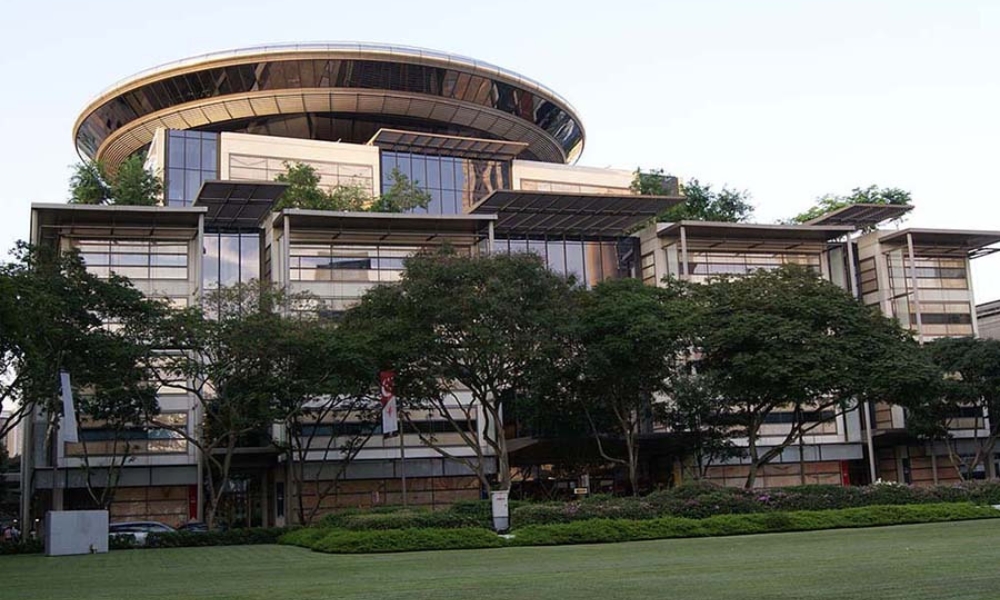
RESIZED singapore high court

An application for the winding up of Norvic Shipping Asia Pte Ltd was filed by Netherlands-registered Mur Shipping BV on 8 April, according to a Tuesday (21 July) notice on the Government Gazette.

It noted the winding up application is directed to be heard before the Judge sitting in the General Division of the High Court at 10am on 31 July.

Any creditor or contributory of the company desiring to support or oppose the making of an order on the winding up application may appear at the time of hearing by himself or his counsel for that purpose.

A copy of the winding up application will be furnished to any creditor or contributory of the company requiring the copy of the winding up application by the solicitors of the applicant’s, Oon & Bazul LLC, on payment of the regulated charge for the same.

The Applicant’s address is Hiridostraat 5, Gebouw Prismatrium, 1101CW Amsterdam, The Netherlands.

The Applicant’s solicitors are Oon & Bazul LLC of 103 Penang Rd, #04-04/05/06 Singapore 238467. 

Queries on the winding up application may be directed to the following email addresses: [email protected] and [email protected].


Photo credit: Manifold Times
Published: 22 July, 2026

Continue Reading

Methanol

World Fuel and partners complete first green methanol bunkering of car carrier in Shanghai

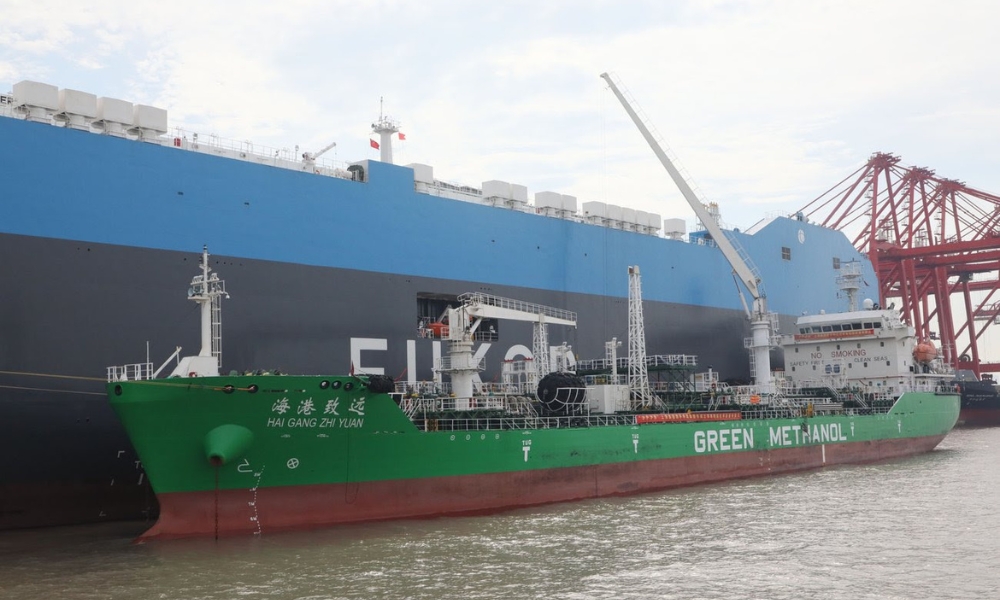
Operation involved the delivery of approximately 2,800 MT of green methanol to “Arctic Tern” via a ship-to-ship transfer using SIPG Energy’s dedicated methanol bunkering vessel “M/V Hai Gang Zhi Yuan”.

Admin

Published

on

By

World Fuel and partners complete first green methanol bunkering of car carrier in Shanghai

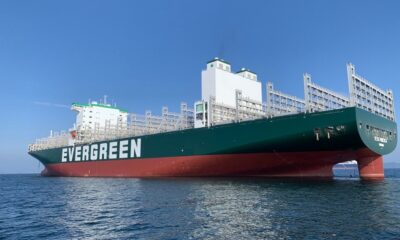
Marine fuel provider World Fuel on Tuesday (21 July) said it successfully completed the first green methanol bunkering of M/V Arctic Tern, with EUKOR Car Carriers and SIPG Energy at the Port of Shanghai. 

Arctic Tern is the first vessel in the new Shaper Class series of car carriers. 

The operation involved the delivery of approximately 2,800 MT of green methanol to Arctic Tern via a ship-to-ship transfer using SIPG Energy’s dedicated methanol bunkering vessel M/V Hai Gang Zhi Yuan, the largest vessel of its kind in operation. 

The bunkering operation was carried out at Haitong Terminal, Waigaoqiao Port Area, Shanghai Port, with cargo handling operations conducted simultaneously during bunkering.

This marks EUKOR Car Carriers’ first green methanol operation and the first time Arctic Tern has bunkered methanol since its delivery on 9 July. The operation marked the first bunkering at Shanghai Port of green methanol produced locally in Shanghai for an international PCTC operator. 

It also demonstrated the city’s integrated green methanol value chain, spanning local production, storage and bunkering, and established a replicable “Shanghai Model” for green methanol supply.

World Fuel arranged the supply and delivery of the fuel on behalf of EUKOR Car Carriers, working with SIPG Energy as the physical supplier at the Port of Shanghai.

The green methanol supplied was produced from municipal solid waste, ISCC-EU certified, and had a carbon intensity value below 25 gCO₂e/MJ.

Arctic Tern is the first of fourteen Shaper Class vessels ordered by Wallenius Wilhelmsen. With a capacity of 9,300 car equivalent units and methanol dual-fuel capability, the vessel will be operated by EUKOR Car Carriers, jointly owned by Wallenius Wilhelmsen and Hyundai Motor Group. Following her first green methanol bunkering, Arctic Tern will continue her maiden voyage from Asia to Europe.

Xavier Leroi, COO Shipping Services at Wallenius Wilhelmsen and CEO of EUKOR Car Carriers, said: “Completing Arctic Tern’s first green methanol bunkering shortly after delivery is a significant milestone towards our decarbonisation ambition for both EUKOR Car Carriers and Wallenius Wilhelmsen. It demonstrates how investments in next-generation vessel technology and fuel flexibility are being translated into real-world operations. 

“This achievement reflects the strong collaboration between all parties involved. Together, we have shown how partnerships across the maritime value chain can help make lower-emission fuels available and operationally viable at scale.”

Mark Tamsitt, SVP Global Marine Sales at World Fuel, said, “The first bunkering event with a new fuel is a significant moment for any shipowner, and our role is to make it as seamless as possible. By connecting EUKOR Car Carriers with SIPG Energy’s proven green methanol capability at the Port of Shanghai, we were able to deliver on reliable supply, fuel quality, and safe processes. As more of our customers bring methanol dual-fuel tonnage into service, we are committed to being the partner that makes these kinds of operations routine.”

Mr. Zhang Da, General Manager of SIPG Energy, said, “Welcoming Arctic Tern to the Port of Shanghai for her first green methanol bunkering demonstrates the strength and maturity of our supply capability. Building on our well-established methanol ship-to-ship bunkering services for container vessels, we have already extended such services to pure car and truck carriers (PCTCs). This bunkering sets a new record for the largest single SIMOPs green methanol bunkering for PCTCs in China, marking another step in building Shanghai’s position as a global green energy hub for international shipping.”

This operation follows Wallenius Wilhelmsen’s announcement on 9 July that Arctic Tern would complete her first methanol bunkering shortly after delivery. The vessel entered service on routes between Asia and Europe immediately following handover from China Merchants Jinling Shipyard in Nanjing.


Photo credit: World Fuel
Published: 22 July, 2026

Continue Reading

Ammonia

HPA and MB Energy develop safety concept for STS ammonia bunkering

HPA says the Port of Hamburg will become “bunker ready” for ammonia, laying the groundwork for safe and reliable ammonia bunkering in the future.

Admin

Published

on

By

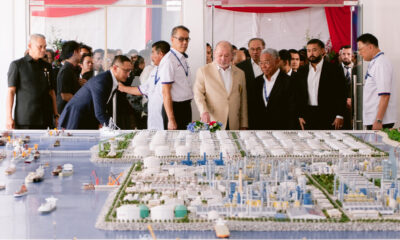
HPA and MB Energy develop safety concept for STS ammonia bunkering

The Hamburg Port Authority (HPA) and integrated energy company MB Energy on Tuesday (21 July) said they have completed a comprehensive risk analysis and developed a dedicated safety concept for ship-to-ship ammonia bunkering.

MB Energy said the analysis lays the groundwork for the safe introduction of ammonia as a future marine fuel.

“With our planned ammonia import terminal in Hamburg-Blumensand, MB Energy intends to provide the reliable land side supply infrastructure needed to support this transition across northern German ports,” it said in a social media post. 

Mabanaft Group was renamed to MB Energy last year and merged over 50 existing brands under one identity. 

Separately, HPA said the Port of Hamburg will become “bunker ready” for ammonia, laying the groundwork for safe and reliable ammonia bunkering in the future.

“The focus is in particular on container ships, cruise ships as well as RoRo and ConRo (Container/RoRo) ships,” it said. 

“We expect ammonia to establish itself as an alternative marine marine fuel in the coming years. With our preparatory work, we are already creating the conditions to welcome the first ammonia-powered ships in Hamburg and to bunker them safely.:

HPA added that the import terminal for ammonia planned by MB Energy from 2029 will make a decisive contribution to ensuring the reliable availability of ammonia as a bunker fuel in northern German ports in the long term. 

“The use of an ammonia bunker barge is considered a possible addition to the landside infrastructure to enable ship bunkering in the port and beyond in the future,” it said.

Related: Mabanaft Group renames as MB Energy, merging over 50 brands under one identity


Photo credit: Hamburg Port Authority
Published: 22 July, 2026

Continue Reading

Trending