Connect with us

Business

Dan-Bunkering trial: Court denies request sending case to European Court of Justice

‘The EU’s ban on supplies of jet fuel only applies if it has ended up with Syrians in Syria,’ argues Dan-Bunkering’s defence lawyer, Jacob Skude Rasmussen.

Admin

Published

on

Court

Disclaimer: An online translation service was used in the production of the current editorial piece, which Manifold Times had reproduction permission from Danish Radio (DR).

The case against Dan-Bunkering was heard in trial at the court in Odense on Thursday (25 November), according to DR.

Dan-Bunkering, a parent company of Bunker Holding and top director Keld Demant, were accused of supplying jet fuel for use in Syria in violation of EU sanctions.

Defence lawyers representing the duo on Wednesday (24 November) argued the trial court should seek assistance from the European Court of Justice in Luxembourg due to its complications. 

However, the presiding judge rejected the defence’s request.

Presiding judge Jens Lind said “the court does not find it necessary to ask the European Court of Justice to interpret the legal basis and make a decision in the case.”

Thereafter, the court continued its hearing session with presiding judge Jens Lind and two judges.

Disagreement over who the sanctions actually apply to

Overall, Dan-Bunkering believes deliveries of jet fuel for which they are accused do not fall within the EU’s sanctions.

According to the indictments, the jet fuel ended up in Russian fighter jets in Syria via intermediaries.

The EU’s ban on supplies of jet fuel only applies if it has ended up with Syrians in Syria,” said Dan-Bunkering’s defender, Jacob Skude Rasmussen.

Russia sent fighter jets to Syria in September 2015 and began heavy bombardments in support of Syrian President Bashar al-Assad. But in 2014, Russia was not mentioned in the EU ban against the supply of jet fuel for use in Syria, Dan-Bunkering’s defender explained in court.

Jacob Skude Rasmussen pointed out western countries such as Denmark and USA also sent fighter jets over Syria to bomb Islamist groups and no one in that connection has questioned where the jet fuel came from.

“The ban does not cover other countries’ use of jet fuel in Syria,” the defender concluded.

“It is very far-reaching if it is private companies that have to decide who is the good or the bad in Syria,” he adds.

Accusations: Russian forces are covered

Prosecutors, on the other hand, do not believe there is any doubt the EU ban includes the Russian forces that bombed in support of the Syrian regime.

“The ban is so broadly worded that others than Syrians must be covered,” said Senior Prosecutor Andreas Laursen in court

Article 7A of the EU Syria Regulation states: It is prohibited to sell, supply, transfer or export jet fuel and fuel additives, (…) directly or indirectly to persons, entities or bodies in Syria or for use in Syria.

The senior prosecutor pointed out that when Russia entered the war, it was on the side of Syrian President Bashar al-Assad.

“The purpose of the sanctions was to hit the Assad regime because the regime oppresses the population. Russia turned the war in Assad’s favor, we have heard expert witnesses explain. Thus, the purpose of the sanctions falls into place: to prevent the repression,” adds Andreas Laursen.

A question of chain responsibility

Defence lawyers argued, no matter who the ban included, Dan-Bunkering’s responsibility ended long before deliveries of jet fuel eventually reached Syria.

According to the indictment, from 2015 to 2017, the company supplied jet fuel to Russian ships that sailed it on to Syria – in some cases after the fuel had been transshipped to a new ship in the Mediterranean.

“Dan-Bunkering has only delivered jet fuel in European ports in Greece, Cyprus, Turkey and Malta,” said the company’s defender Jacob Skude Rasmussen on Wednesday.

EU’s sanctions make it forbidden to supply jet fuel both directly and indirectly to Syria.

“But we do not believe that the word ‘indirect’ means that there is a responsibility for what the next link in the chain does to the product,” the defender added.

Jacob Skude Rasmussen also believed, as a third point, Dan-Bunkering can only be judged by EU law if the company knew it was infringing the ban and not alone should have known.

Note: Earlier Manifold Times coverage regarding Bunker Holding/Dan-Bunkering’s alleged breaches of EU sanctions can be found below:

Related: Dan-Bunkering trial: Denmark also bombed Syria, confirms defence counsel
Related: Dan-Bunkering trial: Prosecutors question Bunker Holding CEO Keld Demant
Related: Dan-Bunkering trial: Prosecution examines revealing email to Group Directors
Related: Dan-Bunkering trial: Hearing resumes after accusation of impartiality
RelatedDan-Bunkering trial: Hearing temporarily suspended due to impartiality
Related: Prominent prosecutor to lead spectacular lawsuit against Dan-Bunkering
RelatedBunker Holding:  ‘No signs’ in alleged breach of EU sanctions post internal investigation
Related: Experts: Bunker Holding alleged jet fuel sale significant to outcome of Syrian War
Related: Bunker Holding ‘surprised’ at fuel sale charge; maintains ‘full confidence’ in Group CEO
Related: Danish prosecutor proposes jail sentence for Bunker Holding Group CEO over jet fuel sale
Related: Bunker Holding & Dan Bunkering allegedly charged over EU sanctions violations
Related: Dan Bunkering ‘surprised’ SØIK has pressed charges over alleged EU sanction violations
Related: Dan-Bunkering: Everything has been investigated – the case should be closed
Related: Name ban on parties involved with Dan-Bunkering Syrian jet fuel deal lifted
Related: Dan-Bunkering Middelfart office searched by commercial crimes police
Related: Firm linked to alleged Dan-Bunkering Syrian war activities under sanction
Related: Update: Dan-Bunkering Syria jet fuel supply ops allegedly longer than thought
Related: Dan-Bunkering faces preliminary charges by SOIK with violation of EU Syria sanctions
Related: Investigations on Dan-Bunkering over alleged Syrian jet fuel deal start
Related: Danske Bank casts doubts on Dan-Bunkering reason for Syria investigation
Related: Danske Bank reported Dan-Bunkering to police in EU sanctions case
Related: Bunker company acknowledges flawed statement in EU sanctions case
Related: Unioil Supply dragged into Dan-Bunkering sanctions allegations
Related: Dan-Bunkering has not violated EU’s sanctions against Syria, it insists
Related: Nordea highlights stance on compliance after Dan-Bunkering discovery
Related: Danish media alleges Dan-Bunkering jet fuel deliveries during Syria war


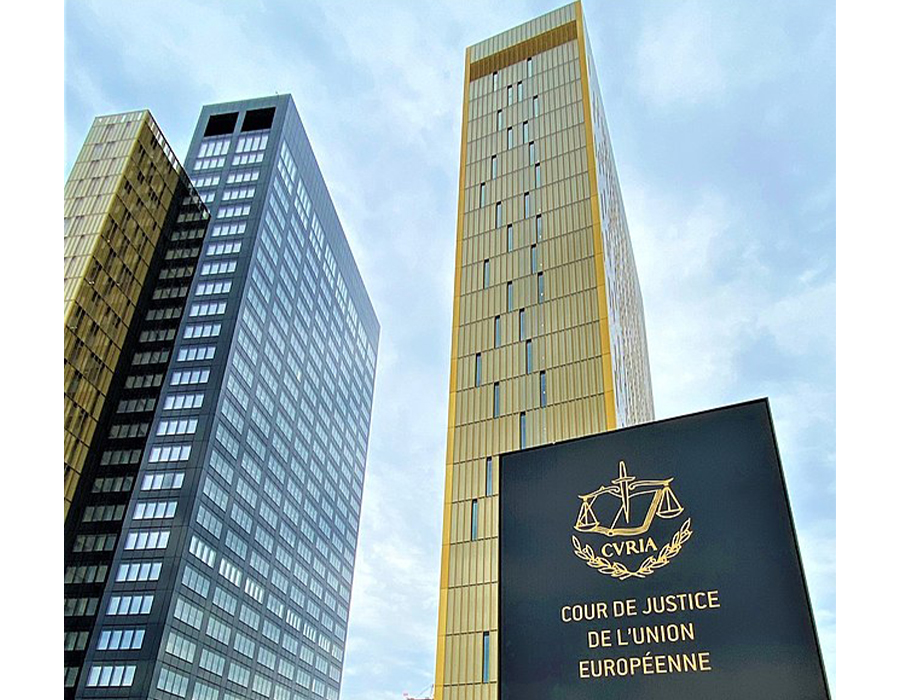
Photo credit: CC BY-SA 4.0 / Luxofluxo
Source: DR
Published: 29 November, 2021

Continue Reading

Mass Flowmeter

MFM-equipped CPN barge first listed under Hong Kong quality bunker scheme

Chimbusco Pan Nation’s bunker barge “Zhong Ran 23” has become the first vessel in Hong Kong listed on Marine Department’s official List of Quality Bunker Vessels, under a newly-launched scheme.

Admin

Published

on

By

MFM-equipped CPN barge first listed under Hong Kong quality bunker scheme

Hong Kong-based marine fuel supplier Chimbusco Pan Nation (CPN) on Tuesday (16 June) announced that its bunker barge Zhong Ran 23 has become the first vessel in Hong Kong listed on the Marine Department’s official List of Quality Bunker Vessels.

The list under the Quality Bunker Operator Scheme launched on 3 June.

“The Scheme is a voluntary initiative designed to raise the standard of bunkering accuracy, transparency, and service quality in Hong Kong,” CPN said in a social media post.

“To be listed, a bunker vessel must have its Mass Flow Meter (MFM) system independently certified under ISO 22192, the international benchmark for mass flow metering in bunkering operations.”

CPN added it has operated the MFM system across our fleet of fuel oil barges since 2015. 

Manifold Times previously reported Hong Kong’s Marine Department (MD) launching the Quality Bunker Operator Scheme to encourage bunker operators to install and use mass flow meter systems (MFM systems) on their bunker vessels.

MD said the scheme aims to enhance Hong Kong’s bunkering service quality and the competitiveness of Hong Kong ports, thereby further consolidating Hong Kong’s position as an international maritime centre and a major bunkering port.

Under the Scheme, bunker operators of traditional maritime fuel and biodiesel that install and use MFM systems on their bunker vessels, with the MFM systems inspected and certified by an accredited body in accordance with the International Organization for Standardization’s ISO 22192 Standard or equivalent requirements, can apply to the MD for inclusion in the scheme’s “List of Quality Bunker Vessels”, provided they meet the relevant technical and operational requirements. 

Related: Hong Kong backs MFM adoption with voluntary scheme to boost bunkering competitiveness


Photo credit: Chimbusco Pan Nation
Published: 17 June, 2026

Continue Reading

Financial Result

Bunker Holding exceeds FY2025/26 forecast despite geopolitical headwinds

Bunker Holding delivered a gross profit of USD 424 million and a profit before tax of USD 73 million, exceeding the Group’s expectations for the year.

Admin

Published

on

By

RESIZED bunker holding

Bunker Holding on Tuesday (16 June) said it delivered a strong performance in the financial year 2025/2026 despite continued uncertainty across global markets. 

The year was shaped by geopolitical developments, evolving trade flows, periods of heightened market volatility, and strong competition.

These conditions were further amplified by developments in the Middle East, which added complexity across global energy markets and shipping routes. 

In response, Bunker Holding focused on getting closer to customers and understanding the different challenges faced across shipping segments. This enabled faster decision-making, greater agility under pressure, and allowed the Group to respond effectively while continuing to support customers reliably.

Against this backdrop, Bunker Holding delivered a gross profit of USD 424 million and a profit before tax of USD 73 million, exceeding the Group’s expectations for the year. Equity increased to USD 342 million.

Revenue amounted to USD 13.1 billion, a decrease of 4% compared to the previous year. The decline primarily reflected lower average oil prices during the financial year, despite periods of heightened market volatility and stronger pricing towards the end of the period.

“This year, we have taken important steps to strengthen Bunker Holding for the future. We have simplified parts of the organisation, brought teams closer together, and made the changes needed to make us more focused and efficient. Our markets remained challenging and unpredictable, but I am pleased with both the result we have delivered and the progress we have made,” said Peder Møller, CEO of Bunker Holding.        

Looking ahead to 2026/27, Bunker Holding anticipates intense market competition alongside continued investments in low- and zero-carbon fuel projects and partnerships.

Changes to the Board of Directors

Bunker Holding said the company is strengthening its Board of Directors with the appointment of several new members and a new Chairman of the Board.

Nina Østergaard, CEO and co-owner of USTC, will assume the role of Chairman of the Board, while Henrik Andersen, Group President and CEO of Vestas Wind Systems A/S, will join as Vice Chairman. Tina Revsbech, CEO of Maersk Tankers, and Kenneth Steengaard, Chairman of the Board of Global Risk Management, will join the Board as new members.

At the same time, current Chairman Klaus Nyborg and Board member Peter Frederiksen will step down from the Board.

Nina Østergaard, incoming Chairman of the Board, said: “I am excited to take on the role as Chairman of Bunker Holding at an important time in the company’s development. Bunker Holding has a strong market position, a clear strategic direction, and significant opportunities ahead. I am also pleased to welcome Henrik Andersen, Tina Revsbech, and Kenneth Steengaard to the Board. They each bring valuable experience and perspectives, and I am particularly pleased that we have attracted such strong international profiles as Henrik and Tina, whose leadership experience from Vestas and Maersk Tankers will further strengthen the Board and support the company’s continued development.”

The addition of Kenneth Steengaard moves Bunker Holding closer to its sister-company Global Risk Management and adds important insight into risk management.

Bunker Holding founder and co-owner Torben Østergaard-Nielsen thanked the departing Board members for their contributions to the company.


Photo credit: Bunker Holding
Published: 17 June, 2026

Continue Reading

Business

Oilmar establishes Board of Directors amid international expansion

Three directors are Chief Executive Officer Yusif Mammadov, Chief Finance Officer Nain Shafi, and Legal, Credit and Compliance Head Taira Shikhiyeva.

Admin

Published

on

By

Oilmar formalises Board of Directors amid international expansion

UAE-based marine fuel and petroleum products trader Oilmar on Tuesday (16 June) announced the formal establishment of its Board of Directors, marking an important milestone in the company’s evolution.

The three directors are Chief Executive Officer Yusif Mammadov, Chief Finance Officer Nain Shafi, and Legal, Credit and Compliance Head Taira Shikhiyeva.

The formation of the Board was first communicated during Oilmar’s Q1 2026 Townhall as part of a wider governance enhancement initiative and has now been formally implemented.  

The Board has been established to provide strategic direction, oversee risk management and governance matters, and support the company’s continued growth across its global operations.

“At inception, the Board comprises three Directors with extensive international experience across the energy, maritime, shipping, and commodity trading sectors. Together, they bring a wealth of industry knowledge and strategic expertise to support the company’s continued growth and development,” the company said.

“The Board is expected to be further strengthened through the appointment of additional Executive and Non-Executive Directors as the company continues to expand its international footprint.”

As part of the enhanced governance framework, strategic direction, risk appetite, and key business objectives will be determined at Board level, while regional management teams will remain responsible for execution within their respective markets. This structure strengthens accountability, promotes effective decision-making, and supports the Company’s long-term growth and succession objectives.

CEO Yusif Mammadov, said: “The establishment of the Board marks the next stage in Oilmar’s development as a global energy and marine fuels business. It creates a governance framework that will support our future growth, strengthen oversight across the organisation, and ensure that our strategic decisions are guided by long-term value creation and responsible risk management.”


Photo credit: Oilmar
Published: 17 June, 2026

Continue Reading

Trending