Connect with us

Business

Clean Shipping Coalition: UN shipping agency climate talks again held back by handful of blockers

Science is clear: governments must urgently act to halve shipping emissions by 2030 to keep the 1.5° safe warming limit within reach.

Admin

Published

on

IMO other

The Clean Shipping Coalition on Friday (26 November) released a statement regarding the outcome of IMO’s MEPC 77 session:

  • Despite widespread support for keeping warming below 1.5 degrees and for ending ship climate emissions by 2050, IMO fails to agree new goal.
  • Russia, Saudi Arabia, UAE, China, and Argentina thwart 100+ country consensus in favour of aligning shipping with Paris Agreement goals.
  • A majority of countries favour a basket of mid-term measures to tackle emissions – including both a carbon levy and a fuel standard, with talks resuming in 2022.

The outcome of the climate talks at the UN’s shipping agency, the International Maritime Organization (IMO), is yet another blow to any efforts to start reducing greenhouse gas (GHG) emissions from ocean shipping, and to align the sector with the temperature goals of the Paris Agreement. 

Even though most of the 175 IMO member states have publicly supported the need for zero emissions of carbon neutral shipping by 2050 (compared to the current target of only halving emissions by 2050) there was not majority support at MEPC77 to adopt the Pacific Islands resolution along these lines – with Brazil, Russia, China, and others opposing the proposal and the EU27, Norway preferring instead to raise ambition only when the initial GHG Strategy is reviewed in two years’ time.

The proposal came only two weeks after the COP26 Climate Summit in Glasgow, which saw broad support for urgent decarbonisation of the sector. Science is clear: governments must urgently act to halve shipping emissions by 2030 to keep the 1.5° safe warming limit within reach.

We welcome the support of more countries for a “zero emissions” by 2050 goal, versus a smaller group of countries in favour of “net zero” by 2050 (MEPC 77/J/5/Rev.2, paragraph 7.4). This confirms the approach of the Initial Strategy, that false solutions like “carbon offsets” are not accepted at IMO, and that the goal is firmly in-sector decarbonisation.

John Maggs, Clean Shipping Coalition, said: “Ambition at the IMO has again been held hostage by a small group of countries hell bent on rendering the organisation impotent on the most pressing issue of our age. There was a clear and substantial majority in the room for greater climate ambition but Russia, Saudi Arabia and others ensured that the IMO again failed to move the dial on ship climate action. With every delay the scale of the task gets greater, and ship emissions must halve by 2030 if we are to save 1.5 degrees.”

Faig Abbasov, Transport & Environment, said: “When it comes to mandatory measures on green shipping fuels, the can has been kicked down the road to 2022 without any commitment to speed up their adoption. IMO negotiations are like a soap-opera. Whenever you think that the momentum for action is ripe, you then realise that there are still many seasons before a final decision is taken.”

Lucy Gilliam, Seas at Risk, said: “Those stopping action on climate at IMO are also stopping the organization from dealing with many other important environmental issues. The blockers have caused dangerous delays to almost every item on the agenda. After 2 years of deferrals, the urgent topic of plastic pollution from shipping was given barely an hour for discussion with every item deferred to the following year. The problem here is a systemic one.” 

Background information:

The IMO’s 77th Marine Protection Committee session (MEPC77) met virtually and in person on November 22-26 to discuss the revision of the current greenhouse gas target for 2050 to align with the Paris Agreement’s goals as well as mid-term measures to reduce emissions.

  • On revising the 2050 emissions target: IMO member states did not reach an agreement on revising the IMO’s current target and on committing to reducing shipping emissions to zero by 2050. They failed to show sufficient support for the proposed resolution for zero shipping emissions by 2050 put forward by the Marshall and Solomon Islands, despite the broad support for the target. The resolution would have gone through if EU countries had supported it. Further revision of the target will not take place until 2023.
  • Countries supporting the zero by 2050 target: EU27, Georgia, Norway, Republic of Korea, Bahamas and Kenya
  • Countries opposed to this: Brazil, China, Russia, Saudi Arabia, the United Arab Emirates, Venezuela, Paraguay, Nigeria, South Africa, Ecuador, Argentina, Chile, and Iran.
  • On mid-term measures to reduce emissions: IMO member states moved forward all proposals for mid-term measures to the ISWG-GHG 12 meeting in 2022. A clear preference was given to market-based measures, including a carbon levy, and to a fuel standard. 
  • Countries in favour of a carbon levy (in particular or as part of a basket of measures) and/or a fuel standard included: the EU27, Canada, Japan, Liberia and Pacific Islands countries
  • Countries opposing a carbon levy and/or a fuel standard included: Saudi Arabia, Brazil, Argentina, China, Chile, South Africa and Russia 

Key facts on shipping:

  • Around 90% of all traded goods are transported across oceans on cargo vessels, with a vast majority powered by fossil fuels such as heavy fuel oil.
  • The UN estimates that shipping currently accounts for 3% of all global greenhouse gas emissions. Scientists warn that by 2050  this could well represent up to 10% of all emissions.
  • The sector must halve its emissions before 2030 and emit absolute zero emissions by 2050 at the very latest to have a good chance of limiting global heating to 1.5 degrees.
  • The sector also produces up to 15% of the world’s manufactured sulfur oxide and nitrous oxide emissions, which disproportionately impact low income communities of color living near ports. 
  • As a result, shipping emissions are linked to an estimated 6.4 million global childhood asthma cases and 260,000 premature deaths annually. 

Related: INTERCARGO supports IMO’s MEPC 77 shipping decarbonisation goals by 2050
Related: INTERCARGO: Global challenges require global solutions to achieve zero-emission shipping by 2050
Related: Royal Belgian Shipowners’ Association: MEPC 77 needs to deliver concrete actions
Related: IBIA: ECGS guidelines and discharge policy on MEPC 77 agenda
Related: IBIA: MEPC 77 to discuss mandatory flashpoint on the BDN
Related: MEPC 77: Governments to decide on ICS USD 5 billion R&D fund to accelerate decarbonisation goals
Related: MEPC 77: IMO must rapidly cut emissions of black carbon from shipping, says Clean Arctic Alliance
Related: IMO schedules remote session of Marine Environment Protection Committee (MEPC 77)


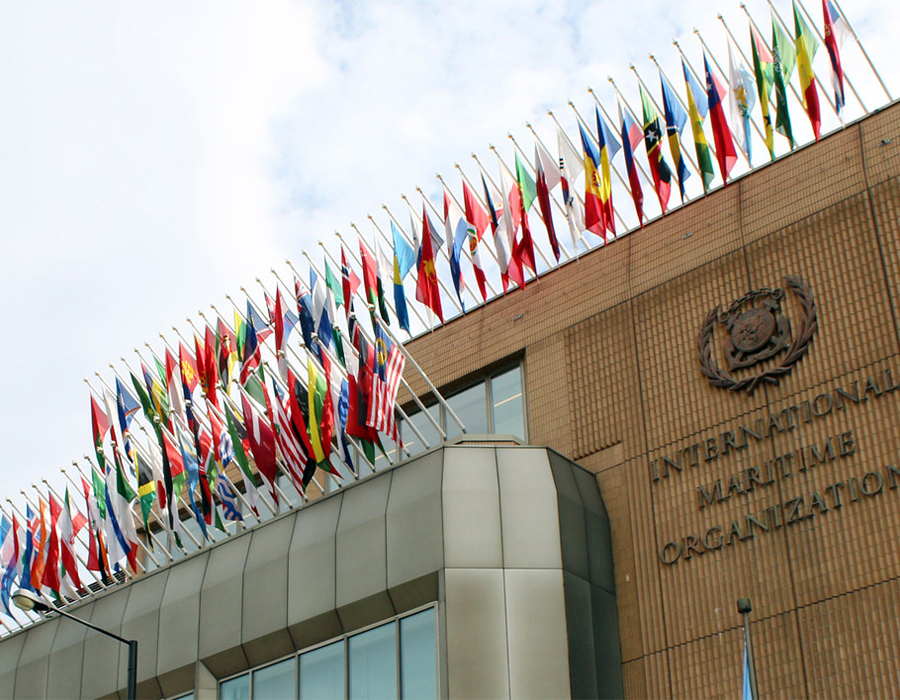
Photo credit: International Maritime Organization
Published: 29 November, 2021

Continue Reading

Mass Flowmeter

MFM-equipped CPN barge first listed under Hong Kong quality bunker scheme

Chimbusco Pan Nation’s bunker barge “Zhong Ran 23” has become the first vessel in Hong Kong listed on Marine Department’s official List of Quality Bunker Vessels, under a newly-launched scheme.

Admin

Published

on

By

MFM-equipped CPN barge first listed under Hong Kong quality bunker scheme

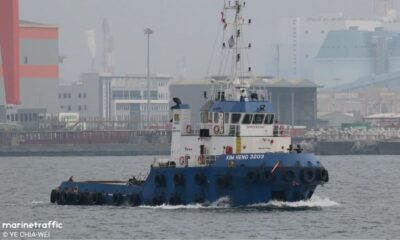
Hong Kong-based marine fuel supplier Chimbusco Pan Nation (CPN) on Tuesday (16 June) announced that its bunker barge Zhong Ran 23 has become the first vessel in Hong Kong listed on the Marine Department’s official List of Quality Bunker Vessels.

The list under the Quality Bunker Operator Scheme launched on 3 June.

“The Scheme is a voluntary initiative designed to raise the standard of bunkering accuracy, transparency, and service quality in Hong Kong,” CPN said in a social media post.

“To be listed, a bunker vessel must have its Mass Flow Meter (MFM) system independently certified under ISO 22192, the international benchmark for mass flow metering in bunkering operations.”

CPN added it has operated the MFM system across our fleet of fuel oil barges since 2015. 

Manifold Times previously reported Hong Kong’s Marine Department (MD) launching the Quality Bunker Operator Scheme to encourage bunker operators to install and use mass flow meter systems (MFM systems) on their bunker vessels.

MD said the scheme aims to enhance Hong Kong’s bunkering service quality and the competitiveness of Hong Kong ports, thereby further consolidating Hong Kong’s position as an international maritime centre and a major bunkering port.

Under the Scheme, bunker operators of traditional maritime fuel and biodiesel that install and use MFM systems on their bunker vessels, with the MFM systems inspected and certified by an accredited body in accordance with the International Organization for Standardization’s ISO 22192 Standard or equivalent requirements, can apply to the MD for inclusion in the scheme’s “List of Quality Bunker Vessels”, provided they meet the relevant technical and operational requirements. 

Related: Hong Kong backs MFM adoption with voluntary scheme to boost bunkering competitiveness


Photo credit: Chimbusco Pan Nation
Published: 17 June, 2026

Continue Reading

Financial Result

Bunker Holding exceeds FY2025/26 forecast despite geopolitical headwinds

Bunker Holding delivered a gross profit of USD 424 million and a profit before tax of USD 73 million, exceeding the Group’s expectations for the year.

Admin

Published

on

By

RESIZED bunker holding

Bunker Holding on Tuesday (16 June) said it delivered a strong performance in the financial year 2025/2026 despite continued uncertainty across global markets. 

The year was shaped by geopolitical developments, evolving trade flows, periods of heightened market volatility, and strong competition.

These conditions were further amplified by developments in the Middle East, which added complexity across global energy markets and shipping routes. 

In response, Bunker Holding focused on getting closer to customers and understanding the different challenges faced across shipping segments. This enabled faster decision-making, greater agility under pressure, and allowed the Group to respond effectively while continuing to support customers reliably.

Against this backdrop, Bunker Holding delivered a gross profit of USD 424 million and a profit before tax of USD 73 million, exceeding the Group’s expectations for the year. Equity increased to USD 342 million.

Revenue amounted to USD 13.1 billion, a decrease of 4% compared to the previous year. The decline primarily reflected lower average oil prices during the financial year, despite periods of heightened market volatility and stronger pricing towards the end of the period.

“This year, we have taken important steps to strengthen Bunker Holding for the future. We have simplified parts of the organisation, brought teams closer together, and made the changes needed to make us more focused and efficient. Our markets remained challenging and unpredictable, but I am pleased with both the result we have delivered and the progress we have made,” said Peder Møller, CEO of Bunker Holding.        

Looking ahead to 2026/27, Bunker Holding anticipates intense market competition alongside continued investments in low- and zero-carbon fuel projects and partnerships.

Changes to the Board of Directors

Bunker Holding said the company is strengthening its Board of Directors with the appointment of several new members and a new Chairman of the Board.

Nina Østergaard, CEO and co-owner of USTC, will assume the role of Chairman of the Board, while Henrik Andersen, Group President and CEO of Vestas Wind Systems A/S, will join as Vice Chairman. Tina Revsbech, CEO of Maersk Tankers, and Kenneth Steengaard, Chairman of the Board of Global Risk Management, will join the Board as new members.

At the same time, current Chairman Klaus Nyborg and Board member Peter Frederiksen will step down from the Board.

Nina Østergaard, incoming Chairman of the Board, said: “I am excited to take on the role as Chairman of Bunker Holding at an important time in the company’s development. Bunker Holding has a strong market position, a clear strategic direction, and significant opportunities ahead. I am also pleased to welcome Henrik Andersen, Tina Revsbech, and Kenneth Steengaard to the Board. They each bring valuable experience and perspectives, and I am particularly pleased that we have attracted such strong international profiles as Henrik and Tina, whose leadership experience from Vestas and Maersk Tankers will further strengthen the Board and support the company’s continued development.”

The addition of Kenneth Steengaard moves Bunker Holding closer to its sister-company Global Risk Management and adds important insight into risk management.

Bunker Holding founder and co-owner Torben Østergaard-Nielsen thanked the departing Board members for their contributions to the company.


Photo credit: Bunker Holding
Published: 17 June, 2026

Continue Reading

Business

Oilmar establishes Board of Directors amid international expansion

Three directors are Chief Executive Officer Yusif Mammadov, Chief Finance Officer Nain Shafi, and Legal, Credit and Compliance Head Taira Shikhiyeva.

Admin

Published

on

By

Oilmar formalises Board of Directors amid international expansion

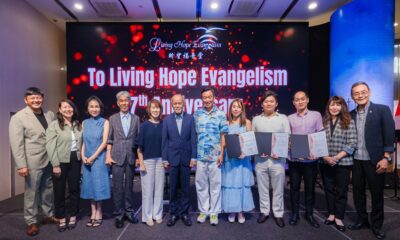
UAE-based marine fuel and petroleum products trader Oilmar on Tuesday (16 June) announced the formal establishment of its Board of Directors, marking an important milestone in the company’s evolution.

The three directors are Chief Executive Officer Yusif Mammadov, Chief Finance Officer Nain Shafi, and Legal, Credit and Compliance Head Taira Shikhiyeva.

The formation of the Board was first communicated during Oilmar’s Q1 2026 Townhall as part of a wider governance enhancement initiative and has now been formally implemented.  

The Board has been established to provide strategic direction, oversee risk management and governance matters, and support the company’s continued growth across its global operations.

“At inception, the Board comprises three Directors with extensive international experience across the energy, maritime, shipping, and commodity trading sectors. Together, they bring a wealth of industry knowledge and strategic expertise to support the company’s continued growth and development,” the company said.

“The Board is expected to be further strengthened through the appointment of additional Executive and Non-Executive Directors as the company continues to expand its international footprint.”

As part of the enhanced governance framework, strategic direction, risk appetite, and key business objectives will be determined at Board level, while regional management teams will remain responsible for execution within their respective markets. This structure strengthens accountability, promotes effective decision-making, and supports the Company’s long-term growth and succession objectives.

CEO Yusif Mammadov, said: “The establishment of the Board marks the next stage in Oilmar’s development as a global energy and marine fuels business. It creates a governance framework that will support our future growth, strengthen oversight across the organisation, and ensure that our strategic decisions are guided by long-term value creation and responsible risk management.”


Photo credit: Oilmar
Published: 17 June, 2026

Continue Reading

Trending