Connect with us

Business

P4G: Study sights Mexico as ‘well positioned’ for green bunker fuels production

Country has an abundance of renewable energy potential along with direct access to busy shipping routes, according to Ricardo Research study.

Admin

Published

on

Mexico

The P4G Getting to Zero Coalition Partnership on Wednesday (15 September) said Mexico is a well-placed country to build a valuable zero carbon shipping fuels sector, as it has an abundance of renewable energy potential along with direct access to busy shipping routes, according to a study headed by Ricardo Research. 

The production of green hydrogen-derived shipping fuels could help Mexico meet its decarbonisation targets by catalysing renewable energy generation supply chains, skills, and economies of scale, which support the wider adoption of new technologies, it states.

Well-placed countries like Mexico will only reap the benefits if governments and the shipping industry coordinate efforts for effective climate regulation to expedite the provision of fuels and infrastructure.

The study explores the economic and environmental potential for the implementation of zero carbon shipping fuels through the shipping sector of Mexico.

“Our study has found that Mexico’s access to busy shipping routes and abundant renewable energy potential puts it in a good position to help drive the zero carbon fuel market. Mexico can potentially supply both its domestic electrical demand as well as the production of zero carbon fuels to supply commercial vessels bunkering in its ports by use of renewable energy,” says Olivia Carpenter-Lomax, Future Energy Specialist and Project Head Ricardo.

The maritime shipping sector is on the threshold of a transition to zero emissions. Within the next decade, the shipping industry will start to replace traditional heavy bunker fuel with new zero carbon shipping fuels generated from renewable energy to meet its decarbonisation targets.

“The shift towards zero carbon shipping needs to accelerate within the next decade and effective regulation will also create opportunities for countries to catalyze and benefit from this necessary transition. By moving early, Mexico can become a central actor in supplying the global demand for green fuel and attract investment of 7-9 billion USD by 2030,” comments Panos Spiliotis, Global Climate Shipping Manager, Environmental Defense Fund.

“The study emphasizes the potential that Mexico has in the production of zero carbon shipping fuel. Shipping’s future demand for zero carbon fuels will allow for increasing export and can provide a constant long-term revenue stream, which is an attractive feature for investment and can help Mexico reach its emission targets as well as create new green jobs,” says Alfredo Gonzalez, Head of the 2030 Agenda at the Economy Secretariat.

The report finds that the geographical location, economic status and strong trading relations put Mexico in a favorable position to help drive the zero carbon fuel market and supply a growing global demand.

“Mexico’s access to busy trading routes has made it a major trading hub. This makes Mexico an advantageous location to establish a zero carbon shipping sector, as the many international vessels bunkering in Mexican ports need to be able to refuel along their journey,” states Ingrid Sidenvall Jegou, Project Director, Global Maritime Forum.

The abundance of renewable energy resources in Mexico means that shipping fuels can be derived from renewable electricity generation. The study reveals that several zero carbon fuels have the potential to be used to decarbonize maritime shipping.

“The study has identified hydrogen and ammonia as the most suitable options for large commercial vessels such as tankers, containers and bulk carriers, while small vessels such as port service vessels can be supplied through electrification. The renewable energy potential along with the advantageous locations of ports gives Mexico the opportunity to play a crucial role in driving the zero carbon shipping fuel transition,” says Dr. Santiago Suarez De La Fuente, Lecturer in Energy and Transport, UCL Energy Institute.

“From the study it becomes evident that Mexico may benefit in various ways from carrying a zero carbon shipping fuels sector. Apart from ensuring that the country reaches its wider decarbonization goals, locally deployed renewables can also create energy security and help catalyze the low carbon economy in Mexico by supporting decarbonisation of other sectors, creating a wide range of jobs,” states Pedro Gomez, Head of Shaping the Future of Mobility, Member of the Executive Committee, The World Economic Forum.

For shipping to address its climate problem, it is crucial that governments and the global shipping sector coordinate efforts to ensure the availability of green fuels and infrastructure, and standards should be to encourage the zero-emission transition of both vessels and ports. 

International vessels adopting zero carbon fuel bunkering must have the opportunity to refuel along their journey. By moving early, Mexico can set the trend for electro fuel adoption and position itself as an important hub along global zero carbon shipping routes.

“With the recent IPCC report, it is evident that urgent action is needed to bring down greenhouse gas emissions. The growing demand for zero emission shipping solutions provides opportunities for shipping nations like Mexico to take a leadership role in catalyzing change that can be replicated by countries. 

“The transition to zero emission shipping fuels is not only critical for the shipping industry but will also have decarbonization effects across other sectors including food loss and waste and green hydrogen. These are the kinds of cross-sectoral solutions P4G champions and that are needed to reach a net zero future for all,” comments Ian de Cruz, Global Director, P4G.

The report highlights the Ports of Manzanillo, Cozumel and Coatzacoalcos as great examples of how different types of ports in Mexico could capitalize on a zero carbon transition. Apart from meeting decarbonisation targets, the transition would diversify current port activities and create a hub for the production and export of zero carbon fuels.

This study is part of the P4G Getting to Zero Coalition Partnership, spotlighting the potential of regional hubs to pioneer zero-carbon shipping fuel development in Mexico, South Africa, and Indonesia.


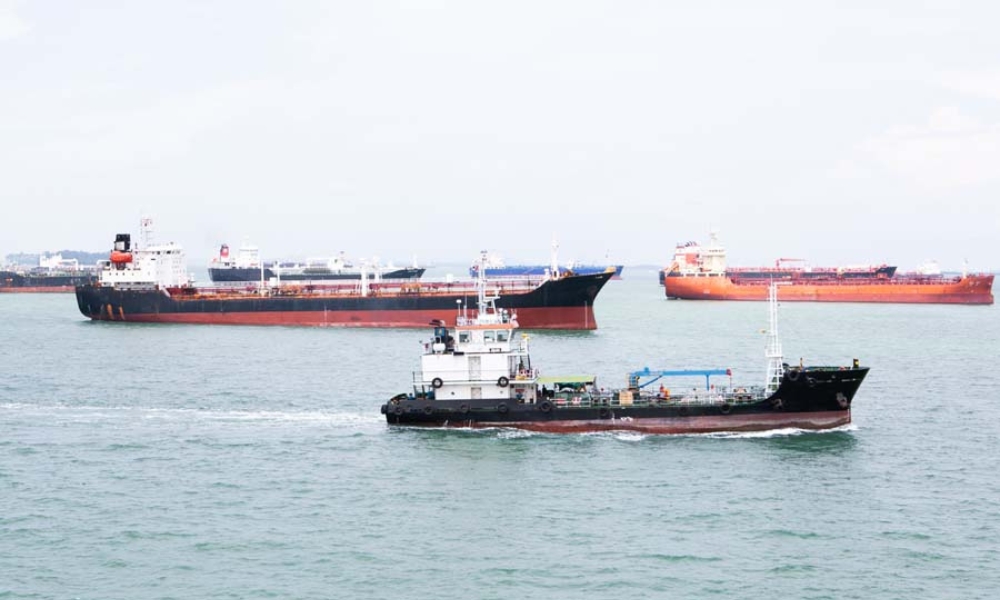
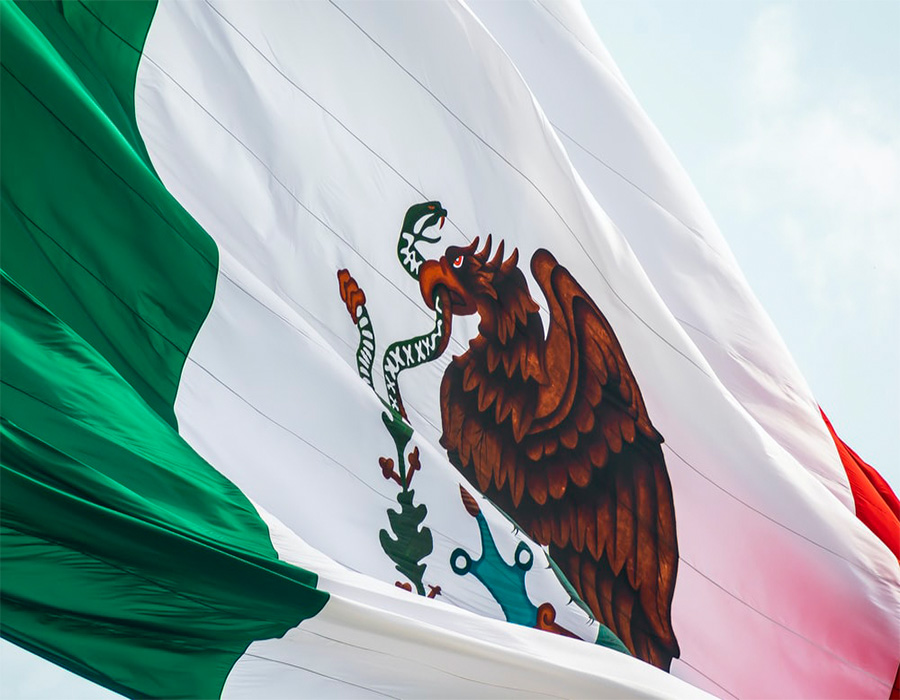
Photo credit: Jorge Aguilar from Unsplash
Published: 16 September, 2021

Continue Reading

Business

Singapore: Singamas Petroleum Trading welcomes newbuild “Pacific Wise” to bunkering fleet

The 6,948 dwt Yanmar-powered marine refuelling vessel has a carrying capacity of 6,603 mt and is capable of operation on B100 biofuel.

Admin

Published

on

By

Pacific Wise 1 MT

Singapore accredited bunker supplier Singamas Petroleum Trading Pte Ltd (Singamas) on 15 June welcomed its newly built Singapore-flagged bunker tanker Pacific Wise (SB2777C) to its bunkering fleet.

The Yanmar-powered marine refuelling vessel, which has a carrying capacity of 6,603 metric tonnes (mt), is capable of operation on B100 biofuel.

Pacific Wise joins Singamas’s current bunkering fleet comprising of Pacific Sincere, Pacific Honour, and Pacific Pride at Singapore port.

“The successful approval of Pacific Wise represents an important milestone in the sustainable growth of our company,” Eric Loke, Chief Operating Officer of Singamas, told Manifold Times.

“Their collective efforts have enabled Pacific Wise to enter commercial service successfully.

“As Pacific Wise commences operations, we remain committed to delivering safe, reliable and high-quality bunkering services while supporting Singapore’s position as the world’s leading bunkering hub.

“We look forward to serving our customers with the highest standards of safety, compliance, operational excellence and customer service.”

Pacific Wise 2 MT

Alex Ow Yong, BBM, Adviser to Singamas, highlighted the development further strengthens Singamas’ commitment to provide safe, reliable and efficient bunker delivery services while upholding the highest standards of safety, operational excellence and regulatory compliance for marine fuel deliveries at Singapore port.

“We extend our sincere appreciation to the Maritime and Port Authority of Singapore (MPA), China Classification Society (CCS), our shipyard, consultants, business partners and all stakeholders for their invaluable guidance, professionalism and strong support throughout the construction, classification, registration and approval process,” he stated.


Photo credit: Singamas Petroleum Trading
Published: 24 July 2026

Continue Reading

Business

Singapore-based law firm Helmsman names Lin Yan Yan as Chief Executive Officer

Lin joins with over 15 years of senior leadership experience across Asia, most recently as Vice President at ONE Championship, Asia’s largest global sports media property.

Admin

Published

on

By

Singapore-based law firm Helmsman names Lin Yan Yan as Chief Executive Officer

Singapore-based multi-disciplinary law firm Helmsman LLC on Friday (24 July) announced the appointment of Lin Yan Yan as Chief Executive Officer.

Lin’s appointment took effect in June 2026.

Lin joined the company from ONE Championship, Asia’s largest global sports media property, where she served as Vice President with cross-functional responsibility across corporate development, commercial, and corporate affairs.

At ONE Championship, she led global teams, drove market expansion, and spearheaded strategic initiatives including the global distribution of ONE’s media rights worldwide, the structuring and closing of commercial partnerships with leading media, brand and government organisations, the launch and scaling of new business lines, and fundraising across multiple financing rounds. She also led ONE’s Analytics & Insights function and oversaw the organisation’s China business.

Earlier in her career, Lin was a strategy consultant at L.E.K. Consulting before transitioning into principal investing roles at Mission Holdings, VisVires Capital Asia, and Volta Circle. She began her professional career as a litigation lawyer at Drew & Napier LLC.

Lin holds an MBA from INSEAD, an LLB (Hons) from the National University of Singapore, and has completed MIT’s Applied Data Science Program. She is admitted as an Advocate & Solicitor of the Supreme Court of Singapore and is fluent in Mandarin.

Ian Teo, Managing Director, Helmsman, said: “We are delighted to welcome Yan Yan to Helmsman as our Chief Executive Officer. Yan Yan joins Helmsman at an exciting stage of the firm’s growth. 

“Her record of building and running complex organisations across Asia, combined with her deep commercial and strategic instincts, makes her exceptionally well-placed to lead the firm through its next chapter. We look forward to the energy and vision she brings to this role.”


Photo credit: Helmsman
Published: 24 July, 2026

Continue Reading

LNG Bunkering

Stabilis Solutions targets Q3 2028 launch for Galveston LNG bunkering facility

Firm received a LOR from US Coast Guard following a review of a LNG Facility and associated waterfront LNG loading, marine transportation, and LNG bunkering operations in the Port of Galveston.

Admin

Published

on

By

Stabilis Solutions targets Q3 2028 launch for Galveston LNG bunkering facility

Clean energy production solutions provider Stabilis Solutions (Stabilis) on Friday (24 July) said the proposed Stabilis Galveston LNG Facility is anticipated to be in production by the third quarter of 2028. 

It will come complete with the delivery of the first new-build, dedicated Jones Act-compliant LNG bunker barge in the Galveston/Houston area.

“This is a significant regulatory and project milestone for Stabilis,” the company said. 

This comes following Stabilis receiving a Letter of Recommendation (LOR) from the US Coast Guard following their formal review of the proposed Stabilis Galveston LNG Facility and associated waterfront LNG loading, marine transportation, and LNG bunkering operations in the Port of Galveston.

“This critical endorsement of our project from the USCG Captain of the Port to the Port of Galveston and the Galveston Fire Marshal comes after a rigorous safety and security review process,” it said.

“This included a comprehensive evaluation of the potential risks, including navigation hazards, vessel traffic density impacts, emergency response capabilities, maritime security threats, and application of appropriate mitigation measures.” 

Manifold Times previously reported Stabilis terminating a previously announced 10-year agreement with a leading investment-grade global marine operator to supply LNG from the company’s proposed 350,000 gallon-per-day Galveston liquefaction facility.

As a result, the company expected delays to the anticipated final investment decision, project financing, and development timeline for the Galveston LNG facility. 

Related: Stabilis Solutions terminates 10-year LNG supply deal, expects delay in Galveston project


Photo credit: Stabilis Solutions
Published: 24 July, 2026

Continue Reading

Trending