Connect with us

Alternative Fuels

DNV: SG conference highlights South East Asia’s unique position in the energy transition

With South East Asia’s energy demand forecasted to grow by 50% by 2050, Singapore’s vibrant ecosystem to advance efforts on energy change plays a vital role.

Admin

Published

on

Screen Shot 2021 04 05 at 1.56.07 PM

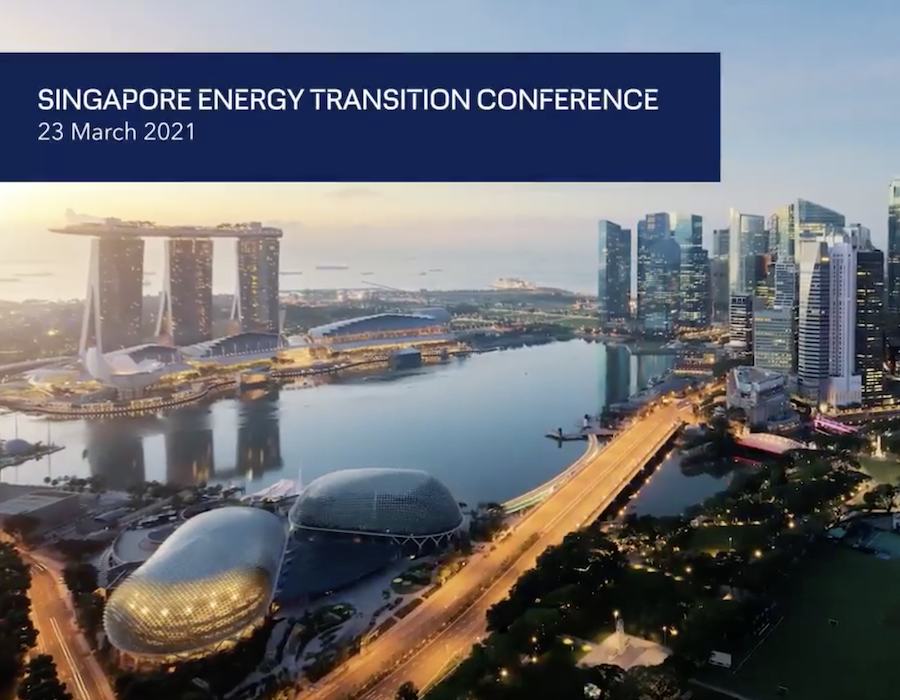
Classification Society DNV on Tuesday, 23 March held the Singapore Energy Transition Conference to launch its South East Asia findings for its Energy Transition Outlook report.

Joined by ten speakers across the industry, participants explored how Singapore and the broader South East Asian region is well positioned to help accelerate the energy transition.

DNV notes the energy transition is shifting national agendas and is cutting across all industries and markets. As a global hub for innovation, Singapore has built a vibrant ecosystem to advance today’s efforts on energy and climate change.

With South East Asia’s energy demand forecasted to grow by 50% by 2050, alternative energy sources need to be explored quickly to move on the decarbonization pathway, it said.

The key messages from the sessions included:

Transforming energy systems

First, the energy transition will bring large changes to South East Asia’s energy system in the next thirty years. Fossil fuels will continue to play a dominant role in the region’s energy supply, which will see gas continue to increase. Solar PV and wind will both record strong growth as a result of the massive rise in end user electrification and the electrification of vehicles and industry. Renewables development will also expand offshore.

Building momentum

Second, Singapore’s energy journey highlights how governments can play a key role in accelerating the energy transition towards more sustainable energy sources while maintaining energy security and affordability. The Singapore energy strategy rests on four pillars which are comprised of:

  1. Natural gas – While natural gas will remain as Singapore’s dominant fuel, the government is helping power generation companies improve the efficiency of their power plants.
  2. Solar energy – The Singapore government is ramping up solar energy production in the country by setting ambitious solar targets of 1.5 GWp by 2025, 2 gigawatt-peak (GWp) by 2030 and an energy storage target of 200 MW beyond 2025.
  3. Regional power grids – Singapore is exploring ways to tap on regional power grids to access cost-competitive renewable energy produced in other markets.
  4. Emerging low-carbon alternatives – Singapore is also looking into emerging low-carbon solutions through public-private partnerships that have the potential to help reduce Singapore’s carbon footprint. These technologies include carbon capture, utilization and storage (CCUS) technologies and hydrogen.

Considering the urgency of climate change, market forces alone will not always be sufficient to provide the pace needed in the transition. It is key that governments in the region invest in new technologies focusing on the further expansion of renewables, power grid expansion, decarbonization of existing assets and the integration of these systems to enable a cleaner and more sustainable transition.

Shifting mindsets

Third, on the role of the private sector, companies are increasingly taking an active stand in limiting their carbon emissions and are taking steps to decarbonize their supply chain. Companies have become more engaged and have been making an effort to better understand their carbon footprint.

However, a stronger response to the threats of climate change is required as the time window for action is very tight. The world needs to keep reducing its energy consumption by 8% every year if climate change is to be tackled.

In terms of power generation, solar, wind and energy storage systems should be scaled up while the consumption of fuels which have a very high carbon footprint such as coal should be scaled down.

Investments for grid upgrades are required in order to integrate and balance these energy systems in the overall energy mix.

But this technological shift must be accompanied by a cultural change. Company-wide mindset changes will be needed so that the staff gain a shared understanding of clean technologies and decarbonization and the benefits they provide. In addition, an upgrade of skill sets and the re-training of staff will also be required. Engineers will need to learn new tools to help them decarbonize their processes and systems.

With the current geopolitical power shift, South East Asia is poised to play a larger role in the global supply chain. By taking on this more prominent role, the sustainability standards by which Southeast Asian companies are measured against are raised. This forces them to improve their sustainability processes and align their practices with best in class global standards. Similarly, governments and regulators have announced plans committing to Net Zero goals. These frameworks include an industrial component which will mandate companies to conform to stricter emissions targets.

Enabling the energy transition with science and technology

Fourth, we need to embrace new technologies to advance the low-carbon transition.

Technology has been a major enabler and accelerator that has shaped the decarbonization agenda. A number of companies have been looking at technologies that are at the forefront of the energy transition. Developments in floating offshore wind, new PV panel technologies (lightweight PV, organic PV, bifacial cells), green and novel shipping technologies, and game changing CCUS and hydrogen technologies will transform the future of energy. Hydrogen applications for decarbonization, e-mobility, and fossil fuel replacement look particularly promising.

There is no silver bullet that can single-handedly solve the energy dilemma. The heightened demand for electrification will require a combination of solar, wind, hydro and gas power generation in the next decades.

A number of breakthrough technology work is also taking place in Singapore. DNV is closely involved in both the Centre of Excellence in Additive Manufacturing and the Centre of Excellence in Maritime Decarbonization and Autonomy. In both cases, DNV aims to combine Singapore-based competence with its business objective to help customers and society at large tackle major transformations.

In the maritime space, Singapore is an excellent hub for the design, innovation and certification of vessels. With the transition to decarbonization, Singapore can play a key role as a major world marine and offshore marine decarbonization centre.

While LNG will remain important as a transition fuel, ammonia, bioethanol and hydrogen as a building block for carbon-neutral fuels offer bright prospects for the future. Many hydrogen and ammonia developments are being pursued today but before these technologies can be made commercially viable, safety considerations will have to be addressed.

All these emerging technologies will advance the carbon neutrality of fuel sources which will also make available sustainable and affordable energy solutions.

Pushing ahead towards a sustainable future

Fifth, cross-sector collaboration and partnerships across the value chain are important enablers to accelerate the energy transition. By working together, the industry’s best ideas can come together. Partnering with like-minded companies can boost collaboration and will yield better outcomes than by working in isolation.

As decarbonization has become a shared imperative across industry players, partners can cooperate on R&D, the reduction of the levelized cost of electricity (LCOE) and the development and commercialization of new technologies.

To conclude, technology is facilitating the advancement of decarbonization practices. Harnessing these technologies through global cooperation, government policy innovations and a mindset change look set to change the energy landscape. But only with a coordinated response can industry take more meaningful action to reduce its carbon footprint and accelerate the energy transition.

A recording of the session is available to view here along with the event’s highlights.


Photo credit: DNV
Published: 5 April, 2021

Continue Reading

Methanol

World Fuel and partners complete first green methanol bunkering of car carrier in Shanghai

Operation involved the delivery of approximately 2,800 MT of green methanol to “Arctic Tern” via a ship-to-ship transfer using SIPG Energy’s dedicated methanol bunkering vessel “M/V Hai Gang Zhi Yuan”.

Admin

Published

on

By

World Fuel and partners complete first green methanol bunkering of car carrier in Shanghai

Marine fuel provider World Fuel on Tuesday (21 July) said it successfully completed the first green methanol bunkering of M/V Arctic Tern, with EUKOR Car Carriers and SIPG Energy at the Port of Shanghai. 

Arctic Tern is the first vessel in the new Shaper Class series of car carriers. 

The operation involved the delivery of approximately 2,800 MT of green methanol to Arctic Tern via a ship-to-ship transfer using SIPG Energy’s dedicated methanol bunkering vessel M/V Hai Gang Zhi Yuan, the largest vessel of its kind in operation. 

The bunkering operation was carried out at Haitong Terminal, Waigaoqiao Port Area, Shanghai Port, with cargo handling operations conducted simultaneously during bunkering.

This marks EUKOR Car Carriers’ first green methanol operation and the first time Arctic Tern has bunkered methanol since its delivery on 9 July. The operation marked the first bunkering at Shanghai Port of green methanol produced locally in Shanghai for an international PCTC operator. 

It also demonstrated the city’s integrated green methanol value chain, spanning local production, storage and bunkering, and established a replicable “Shanghai Model” for green methanol supply.

World Fuel arranged the supply and delivery of the fuel on behalf of EUKOR Car Carriers, working with SIPG Energy as the physical supplier at the Port of Shanghai.

The green methanol supplied was produced from municipal solid waste, ISCC-EU certified, and had a carbon intensity value below 25 gCO₂e/MJ.

Arctic Tern is the first of fourteen Shaper Class vessels ordered by Wallenius Wilhelmsen. With a capacity of 9,300 car equivalent units and methanol dual-fuel capability, the vessel will be operated by EUKOR Car Carriers, jointly owned by Wallenius Wilhelmsen and Hyundai Motor Group. Following her first green methanol bunkering, Arctic Tern will continue her maiden voyage from Asia to Europe.

Xavier Leroi, COO Shipping Services at Wallenius Wilhelmsen and CEO of EUKOR Car Carriers, said: “Completing Arctic Tern’s first green methanol bunkering shortly after delivery is a significant milestone towards our decarbonisation ambition for both EUKOR Car Carriers and Wallenius Wilhelmsen. It demonstrates how investments in next-generation vessel technology and fuel flexibility are being translated into real-world operations. 

“This achievement reflects the strong collaboration between all parties involved. Together, we have shown how partnerships across the maritime value chain can help make lower-emission fuels available and operationally viable at scale.”

Mark Tamsitt, SVP Global Marine Sales at World Fuel, said, “The first bunkering event with a new fuel is a significant moment for any shipowner, and our role is to make it as seamless as possible. By connecting EUKOR Car Carriers with SIPG Energy’s proven green methanol capability at the Port of Shanghai, we were able to deliver on reliable supply, fuel quality, and safe processes. As more of our customers bring methanol dual-fuel tonnage into service, we are committed to being the partner that makes these kinds of operations routine.”

Mr. Zhang Da, General Manager of SIPG Energy, said, “Welcoming Arctic Tern to the Port of Shanghai for her first green methanol bunkering demonstrates the strength and maturity of our supply capability. Building on our well-established methanol ship-to-ship bunkering services for container vessels, we have already extended such services to pure car and truck carriers (PCTCs). This bunkering sets a new record for the largest single SIMOPs green methanol bunkering for PCTCs in China, marking another step in building Shanghai’s position as a global green energy hub for international shipping.”

This operation follows Wallenius Wilhelmsen’s announcement on 9 July that Arctic Tern would complete her first methanol bunkering shortly after delivery. The vessel entered service on routes between Asia and Europe immediately following handover from China Merchants Jinling Shipyard in Nanjing.


Photo credit: World Fuel
Published: 22 July, 2026

Continue Reading

Ammonia

HPA and MB Energy develop safety concept for STS ammonia bunkering

HPA says the Port of Hamburg will become “bunker ready” for ammonia, laying the groundwork for safe and reliable ammonia bunkering in the future.

Admin

Published

on

By

HPA and MB Energy develop safety concept for STS ammonia bunkering

The Hamburg Port Authority (HPA) and integrated energy company MB Energy on Tuesday (21 July) said they have completed a comprehensive risk analysis and developed a dedicated safety concept for ship-to-ship ammonia bunkering.

MB Energy said the analysis lays the groundwork for the safe introduction of ammonia as a future marine fuel.

“With our planned ammonia import terminal in Hamburg-Blumensand, MB Energy intends to provide the reliable land side supply infrastructure needed to support this transition across northern German ports,” it said in a social media post. 

Mabanaft Group was renamed to MB Energy last year and merged over 50 existing brands under one identity. 

Separately, HPA said the Port of Hamburg will become “bunker ready” for ammonia, laying the groundwork for safe and reliable ammonia bunkering in the future.

“The focus is in particular on container ships, cruise ships as well as RoRo and ConRo (Container/RoRo) ships,” it said. 

“We expect ammonia to establish itself as an alternative marine marine fuel in the coming years. With our preparatory work, we are already creating the conditions to welcome the first ammonia-powered ships in Hamburg and to bunker them safely.:

HPA added that the import terminal for ammonia planned by MB Energy from 2029 will make a decisive contribution to ensuring the reliable availability of ammonia as a bunker fuel in northern German ports in the long term. 

“The use of an ammonia bunker barge is considered a possible addition to the landside infrastructure to enable ship bunkering in the port and beyond in the future,” it said.

Related: Mabanaft Group renames as MB Energy, merging over 50 brands under one identity


Photo credit: Hamburg Port Authority
Published: 22 July, 2026

Continue Reading

LNG Bunkering

PIL’s LNG dual-fuel boxship “Kota Elok” arrives in Singapore on maiden call

As the first of 13 new 13,000 TEU vessels joining its fleet, Kota Elok is equipped to operate on LNG and low-sulphur fuel oil that helps reduce our greenhouse gas emissions.

Admin

Published

on

By

PIL's LNG dual-fuel boxship “Kota Elok” arrives in Singapore on maiden call

Singapore-based Pacific International Lines Pte Ltd on Monday (20 July) said its first 13,000 TEU LNG dual-fuel container vessel, Kota Elok, recently made her maiden call to Singapore on 15 July.

As the first of 13 new 13,000 TEU vessels joining its fleet, Kota Elok is equipped to operate on liquefied natural gas (LNG) and low-sulphur fuel oil that helps reduce our greenhouse gas emissions. 

The vessel also incorporated energy-saving features and digital technologies to reduce fuel consumption and enhance operational performance, as well as a bow windshield to improve aerodynamics, contributing to improved fuel efficiency and lower emissions over the course of long-haul voyages.

“Following Singapore, Kota Elok will continue her voyage on our East Coast Service 1 (ES1) route to South America, calling at ports in Brazil, Uruguay, and Argentina before returning to Asia,” the company said in a social media post. 

Kota Elok also became PIL’s first vessel to receive Lloyd’s Register certification for compliance with the IACS UR E26 and UR E27 cyber security requirements.

Developed by the International Association of Classification Societies (IACS), UR E26 and UR E27 are mandatory cyber resilience requirements for newbuild vessels contracted from 1 July 2024. 


Photo credit: Pacific International Lines
Published: 21 July, 2026

Continue Reading

Trending