Connect with us

Bunker Fuel

ENGINE: Americas Bunker Fuel Availability Outlook (17 Sep 2026)

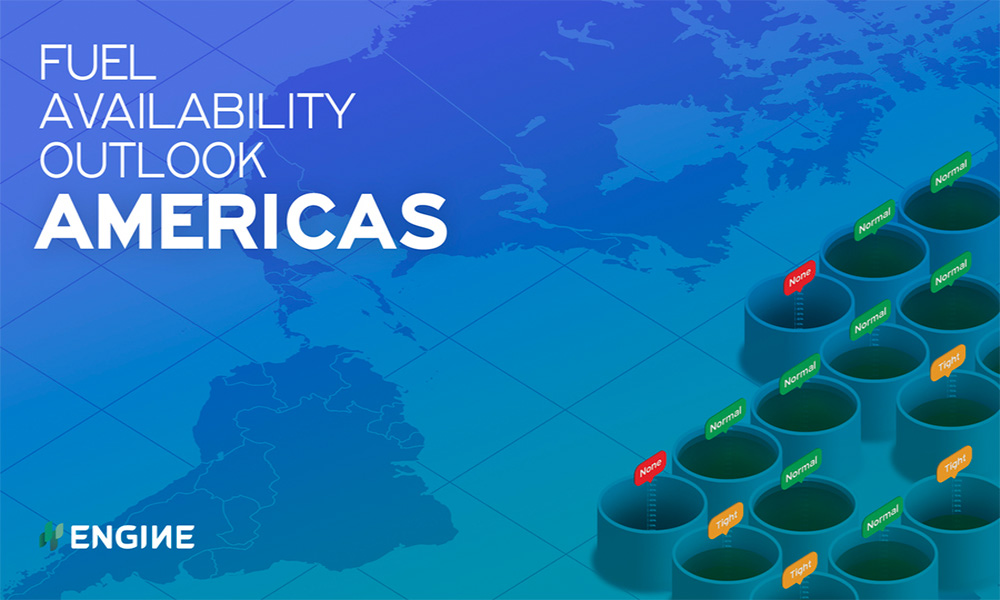
New York HSFO availability to tighten; Panama Canal transits face delays; supply tight in Rio de Janeiro and Rio Grande.

Admin

Published

on

RESIZED ENGINE Americas

The following article regarding bunker fuel availability in the Americas region has been provided by online marine fuel procurement platform ENGINE for post on Singapore bunkering publication Manifold Times:

  • New York HSFO availability to tighten
  • Panama Canal transits face delays
  • Supply tight in Rio de Janeiro and Rio Grande

North America

Bunker demand has been good in the US Gulf Coast port of Houston over the past week and prompt fuel availability is a bit tight across most suppliers, a trader tells ENGINE.

Lead times for HSFO and LSMGO are currently estimated to be between 5-7 days, while VLSFO requires between 5-6 days.

At the Galveston Offshore Lightering Area (GOLA), high winds gusts up to 24 knots are forecast in intervals between 17-19 September and could disrupt bunker operations, a source said.

Deliveries are done on a first-come, first-served basis, subject to weather conditions. Lead times for HSFO and VLSFO are between 3-7 days at the anchorage. LSMGO has been delivered by suppliers within 2-3 days over the past week.

On the East Coast, bunker demand at the port of New York has recorded neither highs nor lows this week.

Lead times for all three conventional fuel grades are between 5-8 days. HSFO availability at New York is expected to tighten over the week, a trader tells ENGINE.

Weather conditions have been calm in New York, with winds mostly below 10 knots and gusts peaking at around 18 knots on Sunday. No backlog or bunker barge readiness issues have been reported.

Bunker demand has picked up on the US West Coast compared with previous weeks, a trader said.

Availability is normal at the ports of Los Angeles and Long Beach, where all three conventional grades require lead times of 4-7 days.

In Canada’s Vancouver the market has seen healthy demand and availability is normal. HSFO and LSMGO require lead times between 4-6 days. VLSFO requires at least five days of lead time this week, a source said.

Latin America and the Caribbean

Transits through the Panama Canal are currently subject to waiting times of 3-4 days, a source said. Lower water levels at the canal have reduced the number of transit slots available in recent weeks.

Availability is normal at Balboa and Cristobal, where HSFO, VLSFO and LSMGO can all be delivered within 3-4 days by most suppliers.

Deliveries at Balboa are done on a first-come, first-served basis, with priority given to vessels holding confirmed transit schedules, a source said.

In Colombia, prompt fuel availability is good at Cartagena, Santa Marta and Barranquilla. VLSFO and LSMGO can all be delivered within 3-4 days, a trader said.

HSFO is also available at these Colombian ports, but supply is not regular, the trader added.

HSFO supply is tight in Callao and is offered with prior consultation. VLSFO and LSMGO are more readily available and 3-7 days of lead time is recommended, a trader said.

In Brazil, availability of VLSFO and LSMGO is decent at Santos, with both grades deliverable in 6-7 days, and the port remains congested. The earliest delivery date for both the grades is 23 September, a trader said.

Supply of both grades is very tight in Rio de Janeiro, Paranagua and Rio Grande, where they are offered with prior consultation and require 7-10 days of lead time.

Belem and Vila do Conde have good availability of VLSFO and LSMGO, with lead times of 3-7 days.

At Zona Comun, VLSFO and LSMGO availability has improved, with suppliers now able to deliver within 3-6 days, down from 5-7 days previously, a source said.

Wind gusts of up to 19 knots are forecast at the Argentinian anchorage on Thursday, before conditions are set to improve after that. Deliveries are done on a first-come, first-served basis.

By Gautamee Hazarika


Photo credit and source: ENGINE
Published: 18 September, 2026

Continue Reading

Newbuilding

Yang Ming names 15,500 TEU LNG dual-fuel container vessel “YM Weight”

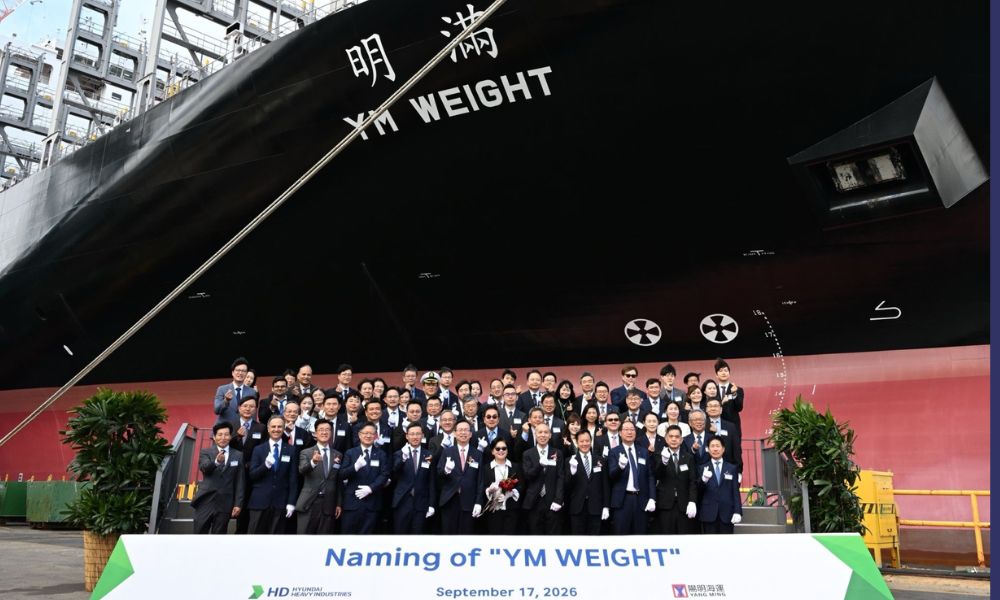
Yang Ming held a naming ceremony at the HD HHI shipyard in Ulsan, South Korea, for “YM Weight”, the fourth vessel in its series of five 15,500 TEU-class LNG dual-fuel container vessels built by HD HHI.
Admin

Published

on

By

Yang Ming names 15,500 TEU LNG dual-fuel container vessel “YM Weight”

Taiwanese shipping firm Yang Ming Marine Transport Corporation (Yang Ming) on Thursday (17 September) held a naming ceremony at the HD Hyundai Heavy Industries (HD HHI) shipyard in Ulsan, South Korea, for YM Weight, the fourth vessel in its series of five 15,500 TEU-class LNG dual-fuel container vessels built by HD HHI. 

Mrs. Chiu-Lien Lin, the spouse of Administrative Deputy Minister of Transportation and Communications Mr. Kuo-Shian Lin, was invited as the Godmother to officially name the vessel and perform the ceremonial cord-cutting, wishing the ship smooth sailing and full loading on all future voyages. 

This series of vessels built by HD HHI has a length overall (LOA) of 364.97 meters, a breadth of 51 meters, and a capacity of approximately 15,600 TEU. 

The vessels are equipped with high-pressure dual-fuel main engines that run on both LNG and low-sulphur fuel oil, along with integrated navigational information, equipment monitoring, broadband maritime satellite systems, and multiple energy-saving systems to enhance operational efficiency and navigational safety. 

YM Weight, the fourth vessel in the series, is jointly classed by CR and the American Bureau of Shipping (ABS), bringing international classification expertise and capabilities to safeguard the safety and technical compliance of next-generation LNG dual-fuel vessels. 

Furthermore, following proactive underwater noise measurements, the vessel has achieved two industry firsts by receiving the Underwater Noise (UWN) notation from ABS and the Underwater Radiated Noise (URN) notation from CR. The dual recognitions underscore Yang Ming’s commitment to mitigate operational impact on marine life and sustainable development. 

In addition to expanding its next-generation fleet and strengthening its core shipping business, Yang Ming has continued to strengthen professional training for seafarers operating alternative-fuel vessels. 

Yang Ming’s senior Captain Ming-Yeong Pan will serve as the delivery captain of ‘YM Weight’. Captain Pan is the first seafarer in Taiwan to receive the Advanced Training Certificate under the International Code of Safety for Ships Using Gases or Other Low-flashpoint Fuels (IGF Code), Certificate No. 0001, issued by the Maritime and Port Bureau, MOTC. 

To date, 148 Yang Ming officers have completed advanced IGF Code training and will progressively undertake onboard training aboard LNG-fueled vessels and practical alternative-fuel bunkering training. 


Photo credit: Yang Ming Marine Transport
Published: 18 September, 2026

Continue Reading

Incident

Peninsula: Missing Hercules Star crew member found dead after Dubai incident

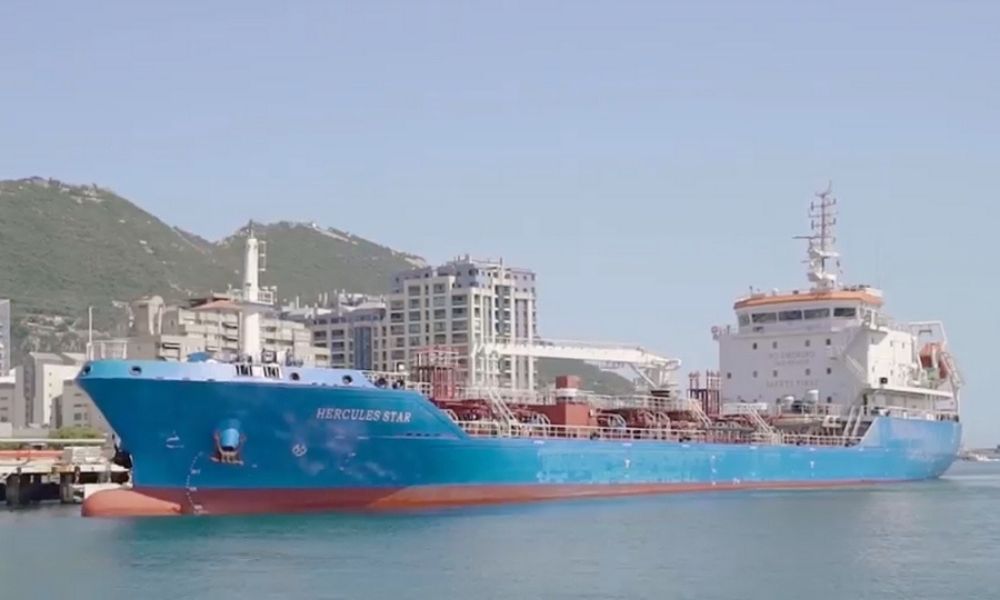
Firm confirmed crew member reported missing following last week’s incident involving bunker tanker “Hercules Star” off Dubai has been found dead.
Admin

Published

on

By

bunker tanker Hercules Star

Marine fuels supplier Peninsula on Thursday (17 September) confirmed that the crew member reported missing following last week’s incident involving bunker tanker Hercules Star off Dubai has been found dead.

The confirmation brings the death toll from the incident to two.

“Following the report of a loss of life during the incident involving the Hercules Star in the early hours of 9th September whilst at anchor off Dubai, we regret to announce that the missing crew member has been found deceased,” company said. 

“Their family have been informed, and we continue to offer our full support and our deepest condolences.”

“All members of the Hercules Star crew have now been repatriated and we continue to support them.”

According to a Reuters report last week, citing preliminary assessments by maritime security sources, the vessel may have been struck by a drone.

The report also said the UK Maritime Trade Operations (UKMTO) received a report of a vessel listing while at anchor about 24 nautical miles off the UAE’s Port Rashid, with the condition “possibly indicating water ingress following an attack from an unknown projectile”.

Related: Peninsula confirms one fatality, crew member missing from bunker tanker “Hercules Star”


Photo credit: Peninsula
Published: 18 September, 2026

Continue Reading

Ammonia

DNV: Existing ammonia shipping and safety expertise key to scaling new supply chains

As ammonia trade grows, decades of shipping and safety experience will be vital to scaling new supply chains , says Martin Cartwright, Global Business Director of Gas Carriers & FSRUs at DNV.

Admin

Published

on

By

DNV: Existing ammonia shipping and safety expertise key to scaling new supply chains

Martin Cartwright, Global Business Director of Gas Carriers & FSRUs at DNV highlighted that existing shipping experience in transporting ammonia as a cargo could provide a foundation for the development of larger-scale ammonia energy supply chains, but maintaining safety standards across new vessels, ports and terminals will be critical:

Few maritime sectors are watching the energy transition as closely as the gas carrier market. While decarbonization remains a powerful driver, recent geopolitical developments have also reinforced the importance of energy security and supply diversification. In that environment, ammonia is resurfacing as a means of transporting low-carbon energy between regions and connecting future production centres with energy-importing markets. 

Across East Asia, demand for blue and green ammonia is steadily taking shape as governments and industry seek pathways to decarbonization while seeking more diverse and resilient energy supplies. Countries such as Japan, South Korea, Singapore and Taiwan are exploring how ammonia, long established as a feedstock for fertilizer and other industrial products, can contribute to future energy needs, while producers in India, the Middle East, the USA and elsewhere are developing projects aimed at serving this demand. Similar policy and industrial drivers are emerging in Europe, although the dynamics differ between regions. The result is the gradual emergence of new trade routes and a global value chain built around ammonia production, transportation, and consumption, driving demand for the vessels needed to connect supply with demand.

India’s role in this story is becoming increasingly important. The country is progressing major green ammonia initiatives and positioning itself as a future export hub, supported by partnerships with prospective import markets in East Asia. Recent plans to develop green corridors supporting large-scale ammonia production for export to Japan and South Korea illustrate how rapidly these supply chains are evolving.

Of course, the development of this market has not been entirely straightforward.

Over the past year, several announced ammonia projects have been delayed, scaled back or cancelled altogether. Geopolitical uncertainty, changing economic conditions, and evolving policy frameworks have all influenced investment decisions. DNV analysis shows that projected ammonia production capacity has recently declined substantially compared with earlier expectations, reflecting a more cautious market outlook than many anticipated just a few years ago.

 Yet these developments should be viewed as a recalibration rather than a reversal. While some projects have been delayed or scaled back, governments continue to develop import strategies, infrastructure investment is advancing, and producers remain committed to serving future export markets. The long-term demand drivers remain intact.

 As production and demand centres become geographically separated, maritime transportation becomes essential to linking the two. DNV analysis suggests seaborne trade of ammonia as an energy carrier could reach around 120 million tonnes annually by 2050, approaching the scale of today’s LPG trade. If realized, this would create one of the most significant new maritime commodity trades in decades.

The timing and ultimate scale of that growth along with selecting the right vessel capacity remains challenging, but the direction of travel is increasingly clear. 

However, vessels are only one part of the equation.

As ammonia trade volumes grow, transportation capacity will need to be matched by investment throughout the value chain, including export terminals, import infrastructure, storage facilities and supporting logistics networks. The success of the ammonia market will depend on the industry’s ability to expand this ecosystem in step with growing demand.

The good news is that shipping is starting from a position of strength. Ammonia has been transported safely as a cargo for decades, supported by established regulations, operating procedures, and industry expertise.

Scaling volumes requires the application of existing knowledge and experience across a larger network of vessels, ports, terminals, and supply-chain partners. As new trade routes emerge between production hubs such as India and demand centres in East Asia, maintaining consistent safety standards and operational excellence will remain essential.

Safety will continue to be a central consideration as this market develops. Ammonia’s toxicity requires specialized handling procedures, appropriate vessel design, gas detection systems, crew competence and robust emergency-response arrangements. These measures are already well understood within the gas sector and provide a strong foundation for future growth. The priority now is ensuring that this expertise scales alongside the market itself.

Encouragingly, progress is already being made. Across Asia, the industry is moving beyond feasibility studies towards practical implementation. New vessel projects, bunkering trials, port developments and supply-chain partnerships are helping build the experience that will be required for larger-scale deployment in the future.

The growing demand for low-carbon ammonia in East Asia is helping establish entirely new energy trade flows, encouraging investment in production hubs such as India and creating demand for the ships and infrastructure needed to connect them.

The pace of development may vary, and setbacks are inevitable in any large-scale energy transition. But the broader trend remains clear. As ammonia increasingly assumes a role as a globally traded energy commodity, demand for ammonia transportation will continue to grow.

For the maritime industry, the opportunity is significant. The challenge now is ensuring that shipping capacity, terminals, storage infrastructure, and operational experience scale in step with growing demand.


Photo credit: DNV
Published: 18 September, 2026

Continue Reading

Trending