Connect with us

Environment

Ship emissions shown to alter behaviour of clouds in study by University of Manchester

‘Traditionally, ship fuel is one of the dirtiest forms of fossil fuels in use, but these results give an insight into what kind of a change the new regulations can have,’ states Dr Allan.

Admin

Published

on

Manchester

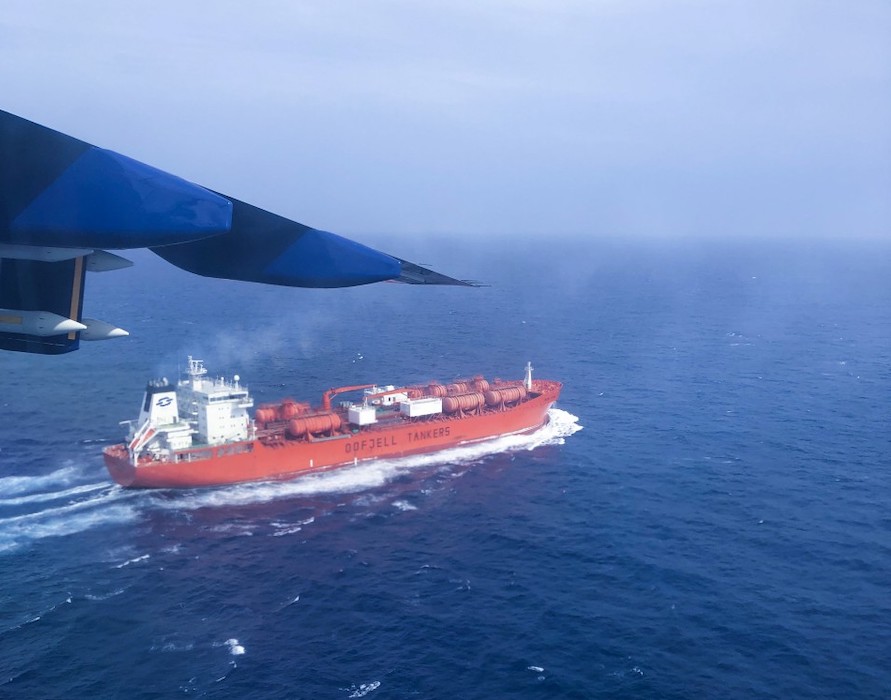
The University of Manchester on Monday (23 November) said its newly published research shows that some ships in the open ocean were emitting large amounts of sulphates from traces of sulphur in the fuel, with a strong potential to alter clouds’ behaviour and pollute coastal areas. 

When results were compared with ships measured in the English Channel (where emissions are controlled through regulation), the amounts of particulates were very significantly reduced compared to the open ocean, it said.

The main concerns are particulates, made of a mixture of soot and sulphates, which have long been known to alter the behaviour of clouds in the open ocean, creating lines of brighter clouds behind ships that can been seen from space (“ship tracks”), akin to the contrails often seen behind aeroplanes.

The brighter clouds are partly caused by exhaust plumes containing pollutants from burning fossil fuels to power the ships. Scientists and shipping organisations are now studying the impact of increased regulations on the environmental cost of global shipping.

Beginning in 2020, the International Maritime Organisation (IMO) has placed new controls on emissions of all ships around the globe and the UKRI-funded ACRUISE (Atmospheric Composition and Radiative forcing changes due to UN International Ship Emissions regulations) project is designed to study the change this has, both on emissions and its impact on the environment.

The project is a collaboration between a number of several UK institutions, also including the Plymouth Marine Laboratory (PML), National Centre for Atmospheric Science (NCAS) and the Universities of York, Leeds and Oxford and was designed to run in two phases, to deliver a ‘before and after’ picture.

“These results are quite remarkable. Traditionally, ship fuel has been one of the dirtiest forms of fossil fuels in use, but these results give an insight into what kind of a change the new regulations can have. It will be very interesting to see what differences we will find in the second phase of the experiment,” said Dr. James Allan a Reader in the Department of Earth and Environmental Sciences.

The results recently published by The University of Manchester in the journal Environmental Science and Technology represent the ‘before’ measurements of the particulates from ocean-going cargo ships. 

While work has been published previously on ship emissions, these have tended to be in laboratory test rigs, which may not represent ‘real’ emissions, or in territorial waters or ports, where controls are already established.

The Manchester scientists used the UK Facility for Airborne Atmospheric Measurement (FAAM) Bae-146 large research aircraft to fly directly through the exhaust plumes of cargo ships in the busy Atlantic shipping lanes off the Portuguese coast in 2019, before the new controls were enacted.

“It is a great experience to be on-board the FAAM research aircraft and performing this airborne measurement. The results from the ACRUISE project are crucial for the future policymaking and climate research,” said Chenjie Yu, author of this paper and PhD student at the university.

The ACRUISE project is currently ongoing, and in 2021, the team will return to repeat the measurements, to assess how much of an impact the new controls have made. These will be combined with satellite data and atmospheric models to determine how much of a change this has made to air quality and climate.


Photo credit: University of Manchester
Published: 25 November, 2020

Continue Reading

Emissions reporting

StormGeo and OceanScore link emissions data, compliance workflows

Cooperation combines StormGeo’s expertise in operational vessel and emissions data with OceanScore’s expertise in emissions compliance workflows across EU ETS, FuelEU Maritime and UK ETS requirements.

Admin

Published

on

By

StormGeo and OceanScore link emissions data, compliance workflows

Weather intelligence and decision support solutions provider StormGeo and Hamburg-based technology platform OceanScore on Wednesday (3 June) said they have deepened their ongoing cooperation through the signing of a collaboration agreement during Posidonia 2026 in Athens on 2 June.

The cooperation combines StormGeo’s expertise in operational vessel and emissions data with OceanScore’s expertise in emissions compliance workflows across EU ETS, FuelEU Maritime and upcoming UK ETS requirements.

Together, the companies aim to help shipping companies seamlessly navigate increasing regulatory complexity more efficiently — from emissions reporting and data validation to compliance exposure management, pooling and financial settlement.

As emissions regulation becomes an increasingly important part of commercial shipping operations, the need for reliable operational data and streamlined compliance processes continues to grow. The cooperation between StormGeo and OceanScore is designed to support shipping companies with more connected, transparent and actionable processes across operational and commercial teams.

“From the outside, companies like StormGeo and OceanScore may sometimes be perceived as competitors because both operate around emissions and compliance workflows,” said Albrecht Grell, Managing Director at OceanScore. 

“But in reality, the industry increasingly needs both perspectives working together: trusted operational emissions data on one side and commercial compliance execution on the other. Our cooperation reflects that shipping companies are no longer looking for isolated solutions — they need connected processes, automated across different systems and reliable decision-making throughout the full compliance chain.”

By connecting validated operational emissions data with commercial compliance management, the cooperation supports workflows across:

  • emissions reporting and validation 
  • compliance management across EU ETS, FuelEU Maritime and upcoming UK ETS requirements
  • exposure visibility and cost transparency
  • pooling, settlement and financial processes 

The cooperation also aims to improve commercial transparency and coordination across operational and commercial stakeholders.

“StormGeo plays a central role in helping shipping companies turn operational vessel and emissions data into trusted, decision-ready insights,” said Espen Martinsen, Chief Commercial Officer at StormGeo. 

“As emissions regulations become more complex, this data is essential for transparent and efficient compliance management. By working with OceanScore, we can help customers connect StormGeo’s validated operational data with commercial compliance processes, creating a more integrated and practical approach to emissions management.”

The signing ceremony took place at the StormGeo booth during Posidonia 2026 in Athens and was attended by representatives from both companies.

Both companies expect the cooperation to continue evolving alongside upcoming regulatory developments, including FuelEU Maritime, EU ETS, the upcoming UK ETS and future emissions-related frameworks affecting global shipping.


Photo credit: StormGeo
Published: 4 June, 2026

Continue Reading

Methanol

Seaspan and Hapag-Lloyd complete first of five methanol vessel retrofit

Following “Seaspan Yangtze”, the remaining vessels planned for retrofit under the methanol retrofit programme are “Seaspan Amazon”, “Seaspan Ganges”, “Seaspan Thames”, and “Seaspan Zambezi”.

Admin

Published

on

By

Seaspan and Hapag-Lloyd complete first of five methanol vessel retrofit

Seaspan Corporation (Seaspan) and Hapag-Lloyd on Wednesday (3 June) announced the successful completion of the first of the five vessel conversions under their methanol retrofit programme with the delivery of Seaspan Yangtze.

From the early SAVER (Seaspan Action for Vessel Energy Reduction) programme to today’s CleanBlue initiative, Seaspan has committed over USD 230 USD million across 86 vessels, executing more than 550 efficiency and retrofit projects.

Following Seaspan Yangtze, the remaining vessels planned for retrofit under the programme are Seaspan Amazon, Seaspan Ganges, Seaspan Thames, and Seaspan Zambezi. Each retrofit is expected to reduce well-to-wake CO₂e emissions by approximately 30,000 to 50,000 metric tonnes per vessel annually when operating on low-carbon methanol, while also extending vessel lifespan and enhancing fuel flexibility.

“Decarbonisation is not just about building the fleet of tomorrow, it is also about unlocking the full potential of the fleet we have today. Retrofitting and upgrades on existing fleets play a practical, immediate, and economical role in accelerating shipping’s decarbonization journey,” said Bing Chen, Chairman, President and CEO of Seaspan. 

“Project SAVER CleanBlue highlights Seaspan’s strong customer partnerships, deep technical expertise, and unique platform integrated with JV partners, such as WattSpan Maritime Technology, in executing complex and large-scale retrofit projects.”

“The successful conversion of the Seaspan Yangtze together with the planned retrofit of its four sister vessels is another important step on our ambitious path towards net-zero fleet operations by 2045,” said Silke Lehmköster, Managing Director, Fleet, Hapag-Lloyd. 

“Together with Seaspan, we are demonstrating that retrofitting existing vessels for low-carbon methanol can be a practical way to reduce emissions in shipping.”


Photo credit: Seaspan
Published: 4 June, 2026

Continue Reading

LNG Bunkering

MOL and Seaspan sign annual LNG bunkering deal for car carriers in Port of Vancouver

MOL says North America is one of the key trade lanes for car carriers, and with recent delivery of new LNG-fuelled vessels, securing a stable LNG fuel supply in the area has become increasingly important.

Admin

Published

on

By

MOL and Seaspan sign annual LNG bunkering deal for car carriers in Port of Vancouver

Mitsui O.S.K. Lines, Ltd. (MOL) on Thursday  (21 May) announced that MOL and Seaspan Energy have signed the first annual contract for LNG bunkering for car carriers at the Port of Vancouver, Canada. 

On 29 April, MOL completed the first LNG bunkering under this contract. Since completing the first LNG bunkering on the West Coast of North America on 1 March 2025 – the first by a Japanese shipping company – MOL has conducted several additional LNG bunkering operations in the region. 

North America is one of the key trade lanes for car carriers, and with the recent delivery of new LNG-fuelled vessels, securing a stable LNG fuel supply in the area has become increasingly important. This contract underscores the company’s commitment to establishing a stable and seamless regional LNG fuel procurement framework.

Seaspan expanded its LNG bunkering capabilities in 2026 from Vancouver to Long Beach, California, and continues to proactively support the growth of a clean marine supply chain.

Seaspan Energy President Harly Penner, said: “The relationship between Seaspan Energy and MOL is highly valued. MOL was the first car carrier operator to receive LNG bunkering services in the Port of Vancouver, and we are proud to continue supporting their operations in Vancouver through this annual LNG bunkering agreement. 

“This partnership reflects our shared commitment to advancing lower-emission marine transportation and supporting the industry’s transition toward net-zero GHG emissions.”

Marine Fuel GX Division General Manager Daisuke Fujihashi, said: “We are very pleased to further strengthen our partnership with Seaspan Energy through this contract for LNG fuel procurement. 

“Looking ahead, we will continue to deepen our collaboration with Seaspan Energy in the field of clean fuels, including bio LNG, and remain committed to offering our customers more pathways toward cleaner supply chains.”


Photo credit: MOL
Published: 22 May, 2026

Continue Reading

Trending