Connect with us

Environment

ICS report reveals scale of challenges to decarbonise shipping industry

The report also sets the scene for governments to back an industry proposal to form a global $5billion R&D fund to de-risk future investment, said ICS.

Admin

Published

on

Screen Shot 2020 11 11 at 3.35.32 PM

The International Chamber of Shipping (ICS) on Tuesday (10 November) said its new report laid bare the scale of the industry’s decarbonisation challenge.

The report also sets the scene for governments to back an industry proposal to form a global $5bn R&D fund to de-risk future investment, said ICS.

The report warns that a failure by governments to support the industry’s initiative to accelerate R&D risks trillions of dollars of investment being misallocated, making it impossible for the sector to decarbonise. 

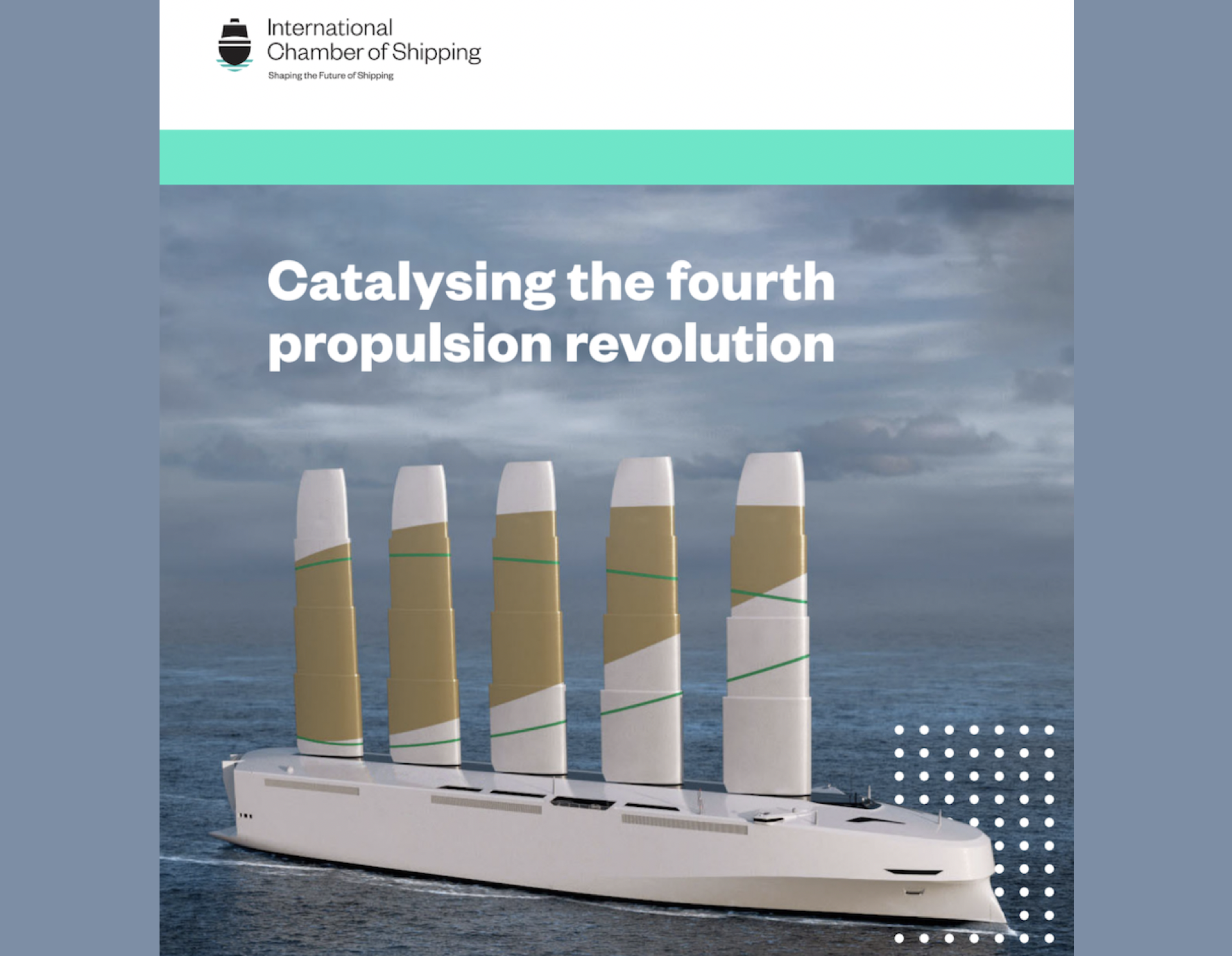
The report, ‘Catalysing the Fourth Propulsion Revolution’, looks at different options to help decarbonise shipping and achieve the greenhouse gas (GHG) reduction targets established by the industry’s global regulator, the UN International Maritime Organisation (IMO).

These include the use of Ammonia, Hydrogen, and Batteries to power the global fleet, added ICS.

However, the report finds that currently, zero carbon fuels are not available at the size and scale needed to drive decarbonization. While there are several promising potential zero-carbon fuels and technologies, the emissions reductions called for by the international community and industry require a huge amount of research and development before they can become viable.

This represents a ‘financial iceberg’ for the industry, as pressure to regulate emissions is currently moving faster than supply chains’ ability to keep pace. Without innovation and a massive scaling-up of research and development, there is a significant risk of stranded assets that will impact nation states, the finance community and the shipping industry.

International shipping currently has to use four million barrels of oil a day – 4% of global oil production, or equivalent to a third of the daily production of Saudi Arabia. The energy needed to power one large container ship across the ocean in a single day is the same needed to power 50,000 homes.

Shipowners are acutely aware of the need to decarbonise, something that can only be done with the development of a new generation of technologies and new zero-emission fuels. New fuels urgently need to be developed along with novel propulsion systems, upgraded vessels and an entirely new global refuelling network.

The report examines three alternative fuels in more detail:

  •   ‘Green’ Ammonia – one of the most promising low-emission fuels, with the IEA predicting that its use for shipping will reach 130m tonnes by 2070, twice as much as was used worldwide for fertiliser production in 2019. However, it is less energy dense that oil, meaning ships will consume up to five times as much fuel by volume. Ammonia production would have to rise by 440 million tonnes – more than treble current production – requiring 750 gigawatts of renewable energy. This means that shipping alone would consume 60% of the world’s current renewable energy production of 2,537 gigawatts.
  •   Hydrogen – emits no carbon but its current commercial production emits large amount of the GHG, negating its green credentials. However, research is underway to prevent this. Similar to ammonia, fuel density is poor, and a new bunkering system would also be required. Hydrogen use could reach 12 million tonnes in 2070, equivalent to 16% of 2019 global maritime bunker demand and 16% of today’s global hydrogen use.
  • Fuel Cells and Batteries – the battery challenge is just as great: a typical container vessel would require the power of 10,000 Tesla S85 batteries every single day meaning that it would require 70,000 batteries in order to sail for a week. Wind power could complement electric vessels, although the current view is that they will only be viable for short-distance trips, but this could change with increased R&D. 

To upscale these and other infant technologies into adoptable solutions, large levels of investment in R&D is required, said ICS. Operational improvements alone cannot achieve the 90% efficiency targets needed to reach the IMO 2050 goal of halving emissions compared to 2008.

Instead, commercially viable zero-carbon technologies must be available by 2030. Trillions of dollars of investment will rely on the success of such initiatives to identify the right zero-carbon technologies of tomorrow.

“A quantum leap in decarbonised technology similar to the switch from sail to steam over a century ago is required if shipping’s current CO2 reduction targets are to be achieved. However, we do not have the same luxury of time to transform,” said Guy Platten, ICS Secretary General.

“This report sheds some light on potential solutions that will have to be adopted if we are to steer the shipping industry away from fossil fuels. But the reality is that companies need a centralised fund that can catalyse an intense injection of R&D investment to turbocharge projects. Without it we are not going to achieve zero-emission shipping.

“The proposed R&D fund will lead to the introduction of zero-emission ships across the maritime sector by 2030 and beyond. We therefore urge the IMO to back the proposal, which will have such wide-ranging benefits for shipping, and the global transport sector more broadly.” 

“The scale of the financial challenge is as great as the technical challenge.  We need certainty and action to avoid the approaching financial iceberg as we set course for a zero-carbon future.”


Photo credit:  International Chamber of Shipping
Published: 11 November, 2020

Continue Reading

Emissions reporting

StormGeo and OceanScore link emissions data, compliance workflows

Cooperation combines StormGeo’s expertise in operational vessel and emissions data with OceanScore’s expertise in emissions compliance workflows across EU ETS, FuelEU Maritime and UK ETS requirements.

Admin

Published

on

By

StormGeo and OceanScore link emissions data, compliance workflows

Weather intelligence and decision support solutions provider StormGeo and Hamburg-based technology platform OceanScore on Wednesday (3 June) said they have deepened their ongoing cooperation through the signing of a collaboration agreement during Posidonia 2026 in Athens on 2 June.

The cooperation combines StormGeo’s expertise in operational vessel and emissions data with OceanScore’s expertise in emissions compliance workflows across EU ETS, FuelEU Maritime and upcoming UK ETS requirements.

Together, the companies aim to help shipping companies seamlessly navigate increasing regulatory complexity more efficiently — from emissions reporting and data validation to compliance exposure management, pooling and financial settlement.

As emissions regulation becomes an increasingly important part of commercial shipping operations, the need for reliable operational data and streamlined compliance processes continues to grow. The cooperation between StormGeo and OceanScore is designed to support shipping companies with more connected, transparent and actionable processes across operational and commercial teams.

“From the outside, companies like StormGeo and OceanScore may sometimes be perceived as competitors because both operate around emissions and compliance workflows,” said Albrecht Grell, Managing Director at OceanScore. 

“But in reality, the industry increasingly needs both perspectives working together: trusted operational emissions data on one side and commercial compliance execution on the other. Our cooperation reflects that shipping companies are no longer looking for isolated solutions — they need connected processes, automated across different systems and reliable decision-making throughout the full compliance chain.”

By connecting validated operational emissions data with commercial compliance management, the cooperation supports workflows across:

  • emissions reporting and validation 
  • compliance management across EU ETS, FuelEU Maritime and upcoming UK ETS requirements
  • exposure visibility and cost transparency
  • pooling, settlement and financial processes 

The cooperation also aims to improve commercial transparency and coordination across operational and commercial stakeholders.

“StormGeo plays a central role in helping shipping companies turn operational vessel and emissions data into trusted, decision-ready insights,” said Espen Martinsen, Chief Commercial Officer at StormGeo. 

“As emissions regulations become more complex, this data is essential for transparent and efficient compliance management. By working with OceanScore, we can help customers connect StormGeo’s validated operational data with commercial compliance processes, creating a more integrated and practical approach to emissions management.”

The signing ceremony took place at the StormGeo booth during Posidonia 2026 in Athens and was attended by representatives from both companies.

Both companies expect the cooperation to continue evolving alongside upcoming regulatory developments, including FuelEU Maritime, EU ETS, the upcoming UK ETS and future emissions-related frameworks affecting global shipping.


Photo credit: StormGeo
Published: 4 June, 2026

Continue Reading

Methanol

Seaspan and Hapag-Lloyd complete first of five methanol vessel retrofit

Following “Seaspan Yangtze”, the remaining vessels planned for retrofit under the methanol retrofit programme are “Seaspan Amazon”, “Seaspan Ganges”, “Seaspan Thames”, and “Seaspan Zambezi”.

Admin

Published

on

By

Seaspan and Hapag-Lloyd complete first of five methanol vessel retrofit

Seaspan Corporation (Seaspan) and Hapag-Lloyd on Wednesday (3 June) announced the successful completion of the first of the five vessel conversions under their methanol retrofit programme with the delivery of Seaspan Yangtze.

From the early SAVER (Seaspan Action for Vessel Energy Reduction) programme to today’s CleanBlue initiative, Seaspan has committed over USD 230 USD million across 86 vessels, executing more than 550 efficiency and retrofit projects.

Following Seaspan Yangtze, the remaining vessels planned for retrofit under the programme are Seaspan Amazon, Seaspan Ganges, Seaspan Thames, and Seaspan Zambezi. Each retrofit is expected to reduce well-to-wake CO₂e emissions by approximately 30,000 to 50,000 metric tonnes per vessel annually when operating on low-carbon methanol, while also extending vessel lifespan and enhancing fuel flexibility.

“Decarbonisation is not just about building the fleet of tomorrow, it is also about unlocking the full potential of the fleet we have today. Retrofitting and upgrades on existing fleets play a practical, immediate, and economical role in accelerating shipping’s decarbonization journey,” said Bing Chen, Chairman, President and CEO of Seaspan. 

“Project SAVER CleanBlue highlights Seaspan’s strong customer partnerships, deep technical expertise, and unique platform integrated with JV partners, such as WattSpan Maritime Technology, in executing complex and large-scale retrofit projects.”

“The successful conversion of the Seaspan Yangtze together with the planned retrofit of its four sister vessels is another important step on our ambitious path towards net-zero fleet operations by 2045,” said Silke Lehmköster, Managing Director, Fleet, Hapag-Lloyd. 

“Together with Seaspan, we are demonstrating that retrofitting existing vessels for low-carbon methanol can be a practical way to reduce emissions in shipping.”


Photo credit: Seaspan
Published: 4 June, 2026

Continue Reading

LNG Bunkering

MOL and Seaspan sign annual LNG bunkering deal for car carriers in Port of Vancouver

MOL says North America is one of the key trade lanes for car carriers, and with recent delivery of new LNG-fuelled vessels, securing a stable LNG fuel supply in the area has become increasingly important.

Admin

Published

on

By

MOL and Seaspan sign annual LNG bunkering deal for car carriers in Port of Vancouver

Mitsui O.S.K. Lines, Ltd. (MOL) on Thursday  (21 May) announced that MOL and Seaspan Energy have signed the first annual contract for LNG bunkering for car carriers at the Port of Vancouver, Canada. 

On 29 April, MOL completed the first LNG bunkering under this contract. Since completing the first LNG bunkering on the West Coast of North America on 1 March 2025 – the first by a Japanese shipping company – MOL has conducted several additional LNG bunkering operations in the region. 

North America is one of the key trade lanes for car carriers, and with the recent delivery of new LNG-fuelled vessels, securing a stable LNG fuel supply in the area has become increasingly important. This contract underscores the company’s commitment to establishing a stable and seamless regional LNG fuel procurement framework.

Seaspan expanded its LNG bunkering capabilities in 2026 from Vancouver to Long Beach, California, and continues to proactively support the growth of a clean marine supply chain.

Seaspan Energy President Harly Penner, said: “The relationship between Seaspan Energy and MOL is highly valued. MOL was the first car carrier operator to receive LNG bunkering services in the Port of Vancouver, and we are proud to continue supporting their operations in Vancouver through this annual LNG bunkering agreement. 

“This partnership reflects our shared commitment to advancing lower-emission marine transportation and supporting the industry’s transition toward net-zero GHG emissions.”

Marine Fuel GX Division General Manager Daisuke Fujihashi, said: “We are very pleased to further strengthen our partnership with Seaspan Energy through this contract for LNG fuel procurement. 

“Looking ahead, we will continue to deepen our collaboration with Seaspan Energy in the field of clean fuels, including bio LNG, and remain committed to offering our customers more pathways toward cleaner supply chains.”


Photo credit: MOL
Published: 22 May, 2026

Continue Reading

Trending