Connect with us

Alternative Fuels

Gard and DNV GL: Biodiesel as bunker fuel – new fuels, new challenges

NOx emissions from biofuel might be higher than fossil diesel oils and the industry has limited knowledge on handling biofuels as part of their fuel supply, it said.

Admin

Published

on

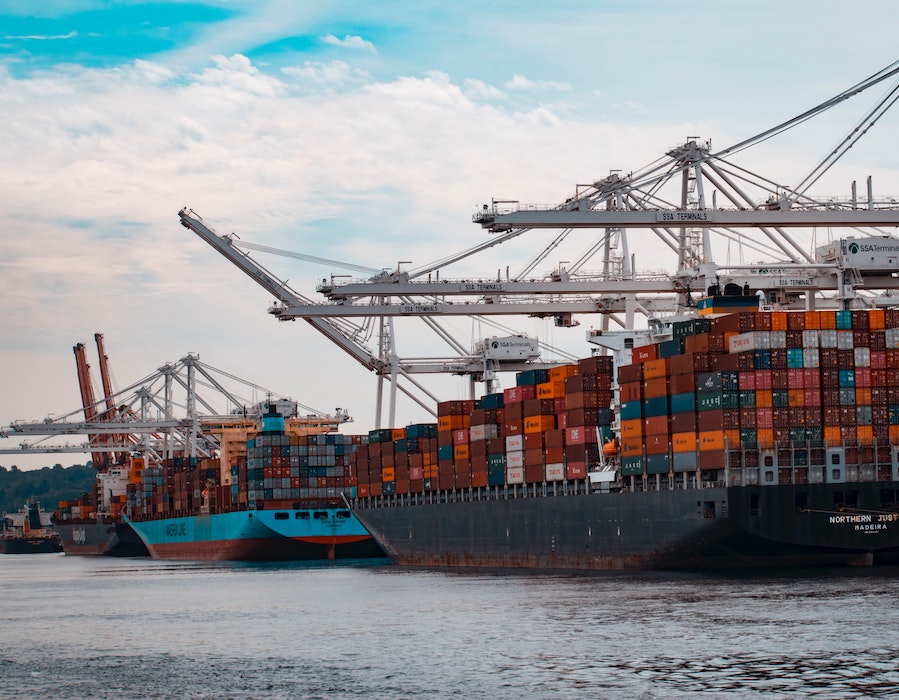
andy li CpsTAUPoScw unsplash

Norwegian maritime insurance company Gard on Thursday (22 October) published an article by DNV GL on the challenges, regulations and some solutions for using biodiesel in marine diesel engines as an option to reduce greenhouse gas emissions from ships:

Biofuels may not become the zero-carbon solution of choice in the shipping industry’s decarbonization process in the longer term, but could have a significant role to play to accelerate the process. In a recent article DNV GL summarizes the regulatory issues, safety and other operational issues faced by those using these new fuels or fuel blends.

One of numerous possible ways to comply with the IMO’s strategy on the reduction of greenhouse gas (GHG) emissions from ships is to use biofuels or biofuel blends. Biofuels have very low sulphur levels and low CO2 emissions, as such they are a technically viable solution in meeting some of the current and future emission requirements. However, their NOx emissions might be higher than with fossil diesel oils and another immediate challenge is that the shipping sector still have limited knowledge on handling and applying biofuels as part of their fuel supply.

DNV GL is an independent expert in risk management and quality assurance and a frequent collaborator with Gard in in loss prevention and sustainability projects. We are pleased to re-publish their recent information and advice with respect to the increasing use of biodiesel in bunkers.

Types of biofuel

  •   FAME (fatty acid methyl aster): FAME is produced from vegetable oils, animal fats or waste cooking oils by transesterification, where various oils (triglycerides) are converted to methyl esters. This is the most widely available type of biodiesel in the industry and is often blended with regular marine diesel. The marine fuel specification standard ISO 8217:2017 includes additional specifications (DF grades) for distillate marine fuels containing up to 7.0 volume % FAME. The FAME used for blending shall meet specification requirements of EN 14214 or ASTM D6751. FAME-diesel blends with up to 30% BTL content are also used in automotive applications and referred to as B20 or B30. (International standards: EN 14214, ASTM D6751, EN 590)
  •   BTL (biomass to liquid fuels): BTL is a synthetic fuel produced from biomass by means of thermo-chemical conversion. The end product can be fuels that are chemically different from conventional fuels such as gasoline or diesel but can also be used in diesel engines.  (International standards: EN 16709, EN 15940)
  •   HVO (hydrotreated vegetable oil): HVO or HDRD (hydrogenation-derived renewable diesel) is the product of fats or vegetable oils – alone or blended with petroleum – refined by a hydrotreating process known as fatty acidsto-hydrocarbon hydrotreatment. Diesel produced using this process is often called renewable diesel to differentiate it from FAME biodiesel. The overall production process is typically more costly than for FAME biodiesel, however HVO/HDRD is a drop-in fuel which can be directly introduced in distribution and refueling facilities as well as existing diesel engines without any further modification. (International standards: ASTM D 975)

Regulatory items on biofuels to be observed

MARPOL Annex VI Regulation 18, “Fuel Oil Availability and Qualities”, applies to using both fuels derived from petroleum refining and derived by methods other than petroleum refining, e.g. biodiesel. Note that in this context, synthetic fuels according to EN 15940 are not considered to fall under “fuels oils derived by methods other than petroleum refining.” These synthetic fuels include the subgroups such as Hydrotreated Vegetable Oil (HVO), Biomass to Liquid (BTL), Gas to Liquid (GTL and Coal to Liquid (CTL) which are different resources converted to fuels though chemical processes. 

In the case of biodiesel, the fuel shall, among others, not exceed the applicable sulphur content. Moreover, such fuels shall not cause an engine to exceed the applicable NOx emission limits. Meeting the sulphur limits is normally not a challenge for biofuels, however the NOx emissions might be higher than with fossil diesel oils, due to possibly high oxygen content.

To meet the requirements of MARPOL Annex VI, evidence must be made to confirm that the diesel engine complies with the  applicable NOx emission limits (which depend on the keel laying date of the vessel and the operational area) also when biofuels are used for combustion purposes. To demonstrate this, depending on the biofuel used, the evidence may be a challenge and it may require on-board emission testing where the results should be presented in g/kWh (not only concentrations in ppm). Due to the complexity of the required tests, DNV GL recommends performing the emission tests on stationary test beds and offers to assist ship operators with obtaining the required exemption from the flag administration.

DNV GL also advices that, as an alternative to the measurements, and in case it can be proven by either analysis or reference to a known international standard that the emission properties of the biofuel are equivalent to that of conventional diesel, this evidence might act as proof that the biofuel does not cause the engine to exceed the applicable NOx emission limits. 

If additional alterations, which are beyond the limits in the approved NOx Technical File, the engine(s) are required to optimize the combustion when using the biofuel, and the NOx Technical File needs to be formally amended. 

Technical challenges and solutions

Below is a summary of items to be observed for the use of biofuels and a few words on how to prevent damages on board:

  •   Microbial growth: Bacteria and mould may grow if condensed water accumulates in biodiesel fuel. Microbial growth leads to excessive formation of sludge, clogged filters and piping. Frequent draining of tanks and the application of biocide in the fuel may reduce or mitigate microbial growth.
  •   Oxygen degradation: Biodiesel can degrade over time, forming contaminants of polymers, and other insolubles. Deposits in piping and engines could form, compromising operational performance. In advanced stages, this could lead to increased fuel acidity, which could result in corrosion in the fuel system and accumulation of deposits in pumps and injectors. It is therefore recommended not to bunker the fuel for long-term storage before use, but to treat the fuel as fresh goods and to use it within a relatively short period of time. Adding antioxidants to the fuel at an early stage may improve the ability of a somewhat longer time of storage without degradation.
  •   Low temperature: Biodiesels in higher concentration usually have a higher cloud point than diesel (depending on feedstock), leading to poor flow properties and the clogging of filters at lower temperatures. It is therefore important to know the product’s cold flow properties and to keep the storage and transfer temperatures above the cloud point.
  •   Corrosion: This is most critical for biodiesel in higher concentration (B80-B100). Some types of hoses and gaskets could degrade, leading to loss of integrity and interaction with some metallic material such as copper, brass, lead, tin, zinc, etc. It could also result in an increased formation of deposits. Hence, it is important to verify that these components in the fuel system are endurable and can be used together with biofuel.
  •   Possible degeneration of rubber sealings, gaskets and hoses: It is important to verify that these components in the fuel system are endurable and can be used together with biofuel.
  •   Conversion: Biodiesel has shown to have a solvent property, so when switching from diesel to biofuel it is expected that deposits in the fuel system will be flushed, clogging fuel filters. It is recommended to flush the system and/or to monitor filters during this period.

We thank DNV GL for permitting us to share this information with our readers. The original version of this article, with more information about DNV GL’s service offering, can be found on the DNV GL website.


Source:
Gard
Photo credit: Andy Li on Unsplash
Published: 27 October, 2020

Continue Reading

Biofuel

South Korea: S-Oil launches B30-VLSFO bio bunker fuel supply

Company says it has established an integrated operating system in the Ulsan region covering the entire value chain, from feedstock procurement and blending to supply.

Admin

Published

on

By

South Korea: S-Oil launches B30-VLSFO bio bunker fuel supply

South Korean petroleum and refining company S-Oil on Wednesday (22 July) said it has started supplying B30 very low sulphur fuel oil (VLSFO), as the company seeks to support shipping’s decarbonisation efforts and growing demand for lower-carbon bunker fuels.

The company said its B30 VLSFO contains 30% sustainable biofuel blended with conventional VLSFO and can be used without requiring modifications to existing vessels, enabling shipowners to comply more readily with emissions regulations from the International Maritime Organization (IMO) and the European Union (EU).

S-Oil said it has established an integrated operating system in the Ulsan region covering the entire value chain, from feedstock procurement and blending to supply. The system combines VLSFO produced at its Onsan refinery with biofuel production facilities and storage infrastructure in the Ulsan region, allowing the entire process to be carried out within a single logistics hub.

According to the company, the integrated supply chain reduces transportation requirements during production while improving supply efficiency and reliability.

S-Oil also highlighted Ulsan Port as a strategic location for marine biofuel supply, noting the port has strong demand for bio-bunker fuels, particularly from car carriers, enabling prompt and stable deliveries to key customers.

An S-Oil official stated: “In the bio-marine fuel market, not only product quality but also securing a stable supply of raw materials and an efficient supply system are important competitive advantages.

“Based on our existing bunkering business capabilities and the excellent supply infrastructure in the Onsan area, we plan to supply stable and competitive low-carbon fuel.”


Photo credit: S-Oil
Published: 23 July, 2026

Continue Reading

Bunker Fuel

Antwerp-Bruges biofuel bunker sales drops 36% on year in Q2 2026, LNG down 13.4%

Biofuel recorded 26,833 mt in Q2 2026 with 41,939 mt recorded in the same period the year before while port data showed 76,513 mt of LNG being delivered in Q2 2026, down from 88,328 mt.

Admin

Published

on

By

Port of Antwerp-Bruges, Deurganck Dock

The Port of Antwerp-Bruges recently published bunker fuel sales data for the second quarter (Q2) of 2026.

Total bunker sales at the port was 2.05 million metric tonnes (mt) in Q2 2026, compared to sales of 1.99 million mt (+3%) during the similar period in 2025.

Deliveries of ultra low sulphur fuel oil, very low sulphur fuel oil, high sulphur fuel oil and marine gas oil in Q2 2026 (against on year) recorded respectively 164,987 mt (+43.6%  from 114,917 mt), 537,926 mt (+12.8% from 476,746 mt), 659,182 mt (+11.6% from 590,544 mt) and 366,329 (-15.7% from 434,766 mt).

Biofuel recorded 26,833 mt in Q2 2026 with 41,939 mt (-36%) recorded in the same period the year before. 

Port data showed 76,513 mt of liquefied natural gas (LNG) being delivered as a marine fuel in Q2 2026, down by 13.4% from 88,328 mt in Q2 2025. Meanwhile, there has been no deliveries of methanol at the port for the year so far.

Related: Antwerp-Bruges biofuel bunker sales plunge 50.6% on year in Q1 2026, LNG soars 214%


Photo credit: Port of Antwerp-Bruges
Published: 23 July, 2026

Continue Reading

Methanol

World Fuel and partners complete first green methanol bunkering of car carrier in Shanghai

Operation involved the delivery of approximately 2,800 MT of green methanol to “Arctic Tern” via a ship-to-ship transfer using SIPG Energy’s dedicated methanol bunkering vessel “M/V Hai Gang Zhi Yuan”.

Admin

Published

on

By

World Fuel and partners complete first green methanol bunkering of car carrier in Shanghai

Marine fuel provider World Fuel on Tuesday (21 July) said it successfully completed the first green methanol bunkering of M/V Arctic Tern, with EUKOR Car Carriers and SIPG Energy at the Port of Shanghai. 

Arctic Tern is the first vessel in the new Shaper Class series of car carriers. 

The operation involved the delivery of approximately 2,800 MT of green methanol to Arctic Tern via a ship-to-ship transfer using SIPG Energy’s dedicated methanol bunkering vessel M/V Hai Gang Zhi Yuan, the largest vessel of its kind in operation. 

The bunkering operation was carried out at Haitong Terminal, Waigaoqiao Port Area, Shanghai Port, with cargo handling operations conducted simultaneously during bunkering.

This marks EUKOR Car Carriers’ first green methanol operation and the first time Arctic Tern has bunkered methanol since its delivery on 9 July. The operation marked the first bunkering at Shanghai Port of green methanol produced locally in Shanghai for an international PCTC operator. 

It also demonstrated the city’s integrated green methanol value chain, spanning local production, storage and bunkering, and established a replicable “Shanghai Model” for green methanol supply.

World Fuel arranged the supply and delivery of the fuel on behalf of EUKOR Car Carriers, working with SIPG Energy as the physical supplier at the Port of Shanghai.

The green methanol supplied was produced from municipal solid waste, ISCC-EU certified, and had a carbon intensity value below 25 gCO₂e/MJ.

Arctic Tern is the first of fourteen Shaper Class vessels ordered by Wallenius Wilhelmsen. With a capacity of 9,300 car equivalent units and methanol dual-fuel capability, the vessel will be operated by EUKOR Car Carriers, jointly owned by Wallenius Wilhelmsen and Hyundai Motor Group. Following her first green methanol bunkering, Arctic Tern will continue her maiden voyage from Asia to Europe.

Xavier Leroi, COO Shipping Services at Wallenius Wilhelmsen and CEO of EUKOR Car Carriers, said: “Completing Arctic Tern’s first green methanol bunkering shortly after delivery is a significant milestone towards our decarbonisation ambition for both EUKOR Car Carriers and Wallenius Wilhelmsen. It demonstrates how investments in next-generation vessel technology and fuel flexibility are being translated into real-world operations. 

“This achievement reflects the strong collaboration between all parties involved. Together, we have shown how partnerships across the maritime value chain can help make lower-emission fuels available and operationally viable at scale.”

Mark Tamsitt, SVP Global Marine Sales at World Fuel, said, “The first bunkering event with a new fuel is a significant moment for any shipowner, and our role is to make it as seamless as possible. By connecting EUKOR Car Carriers with SIPG Energy’s proven green methanol capability at the Port of Shanghai, we were able to deliver on reliable supply, fuel quality, and safe processes. As more of our customers bring methanol dual-fuel tonnage into service, we are committed to being the partner that makes these kinds of operations routine.”

Mr. Zhang Da, General Manager of SIPG Energy, said, “Welcoming Arctic Tern to the Port of Shanghai for her first green methanol bunkering demonstrates the strength and maturity of our supply capability. Building on our well-established methanol ship-to-ship bunkering services for container vessels, we have already extended such services to pure car and truck carriers (PCTCs). This bunkering sets a new record for the largest single SIMOPs green methanol bunkering for PCTCs in China, marking another step in building Shanghai’s position as a global green energy hub for international shipping.”

This operation follows Wallenius Wilhelmsen’s announcement on 9 July that Arctic Tern would complete her first methanol bunkering shortly after delivery. The vessel entered service on routes between Asia and Europe immediately following handover from China Merchants Jinling Shipyard in Nanjing.


Photo credit: World Fuel
Published: 22 July, 2026

Continue Reading

Trending