Connect with us

Business

BIMCO: EU emission trading scheme will inhibit global CO2 reductions

‘By implementing a regional EU ETS, shipping risks getting hit by multiple emission trading systems making a global ETS difficult to achieve,’ states Secretary General.


Admin

Published

on

guillaume perigois 0NRkVddA2fw unsplash

BIMCO, on Thursday (1 October) published a summary on why including shipping into the EU ETS scheme would inhibit global GHG reductions from the point of view of shipowners, as well as nation states who are the EU’s trading partners; it was written Rasmus Nord Jørgensen. Communications Director at BIMCO.

“If the EU implements a regional ETS, shipping risks getting hit by multiple emission trading systems which will make a global ETS much more difficult to achieve,” says David Loosley, BIMCO Secretary General.

Instead, BIMCO urges the EU to work with the international community at the International Maritime Organization (IMO) to get a global market-based measure established, when the required technology is available, which would ensure the industry operates on a level playing field.

When the EU attempted to unilaterally enforce its ETS on airlines flying in or out of EU in 2012, it was met with stiff opposition from large countries, such as China, India and the U.S.; an EU-imposed regional ETS for shipping could lead to similar responses.

“Given the international political climate in 2020, I see it as much more likely today that the EU ETS will be met with retaliation from its international trading partners over such a move,” Loosley says.

No incentive to improve carbon emissions

According to an ECSA and ICS study on the implications of applying the EU ETS to international shipping from July 2020, the inclusion of regional flights has not led to emissions reductions for the aviation sector. In fact, emissions from flights covered by the EU ETS have risen by 26% since 2012.

In addition, a regional market-based measure fails to incentivise shipowners to invest in carbon-reducing technologies.

“When you build a ship, you don’t know how often it will call at EU ports during its 25-year lifetime. That makes it impossible to calculate when an investment in carbon-reducing technology will have paid off. The consequence is that a regional ETS will not change how ships are built – it will just be a tax that ultimately ends up with the consumers,” says Loosley.

Such a measure could also negatively affect the good faith between IMO member-states, decreasing the likelihood of a global measure which would have a much stronger effect.

“When there are viable technology solutions commercially available to reduce carbon emissions, BIMCO will fully consider market-based measures to drive the uptake of such technologies,” Loosley says. “In the meantime, BIMCO advocates for an International Maritime Research Fund to drive innovation, paid for by a mandatory contribution on fuel used by ships, into technology the industry needs to cut carbon emissions by 50% in 2050 and ultimately eliminate those emissions.”


Source: BIMCO
Photo credit:
Guillaume Périgois
Published: 2 October, 2020

Continue Reading

Biofuel

Petrochina International blends over 30,000 mt of marine biofuel since March

Company has been developing marine biofuel blending operations at China (Zhejiang) Pilot Free Trade Zone, leveraging storage and logistics facilities at its Aoshan base.
Admin

Published

on

By

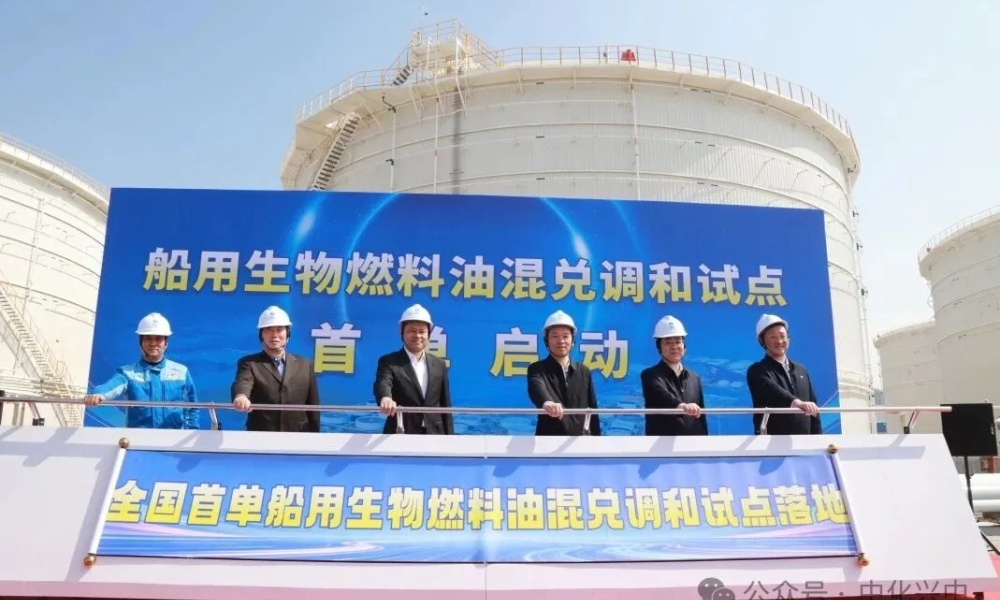
Zhoushan completes China’s first batch of marine biofuel blending under pilot programme

Petrochina International Co Ltd recently said it has blended more than 30,000 metric tonnes (mt) mt of biofuel since completing the country’s first biofuel marine fuel blending operation on 13 March.

The company said the milestone demonstrates its ability to conduct continuous and large-scale biofuel marine fuel blending operations.

The company has been developing marine biofuel blending operations at China (Zhejiang) Pilot Free Trade Zone, leveraging storage and logistics facilities at its Aoshan base.

Its latest product, B24 marine fuel containing 24% biofuel component, meets relevant International Maritime Organization (IMO) requirements and marine fuel standards, according to the company. It said the product can be supplied for bunkering vessels operating on international routes.

It has used its global trading network to secure feedstock supplies and support cost control and supply security for the blending operations, it added.

The company said the large-scale blending of its marine biofuel products marks a development in China’s marine biofuel blending market.

It plans to work with upstream and downstream businesses within its group to support the development of Zhoushan Port as a major bonded marine fuel bunkering hub and contribute to its parent group’s transition towards lower-carbon energy.

Manifold Times previously reported China (Zhejiang) Pilot Free Trade Zone launching the first pilot programme for marine biofuel blending in China with the completion of the first batch of B24-HSFO. 

The launch was marked with the blending of 2,000 mt of biodiesel and 6,300 mt of high sulphur fuel oil (HSFO) in storage tank F-02 of Sinochem-Xingzhong Oil Staging (Zhoushan), producing 8,300 mt of B24-HSFO. 

Manifold Times also reported the first cross-regional bonded bunkering operation of blended biofuel in East China was successfully completed at the Meishan Port Area of ​​Ningbo-Zhoushan Port. 

The B24-HSFO used in the bunkering operation was supplied by the Aoshan Petroleum Base in Zhoushan from the first pilot programme for marine biofuel blending in China. 

Related: Zhoushan completes China’s first batch of marine biofuel blending under pilot programme
Related: Ningbo wraps up East China’s first cross-regional biofuel blending and bunkering
Related: China debuts first marine biofuel blending pilot programme in Zhoushan
Related: China’s first batch of domestically blended marine biofuel delivered to Qingdao for bunkering


Photo credit: Sinochem-Xingzhong Oil Staging (Zhoushan)
Published: 21 September, 2026

Continue Reading

Winding up

Singapore: Final general meetings scheduled for Dromond Shipping, related firms

A member is entitled to attend the meetings and should notify the liquidators’ team office via email no later than 48 hours prior to the meeting.

Admin

Published

on

By

steve pb from Pixabay

The final general meetings of Dromond Shipping Pte Ltd  and related companies have been scheduled to take place on 19 October, according to the company’s liquidator on a notice posted on Friday (18 September) on the Government Gazette.

The other companies are Tidewater Emergency Response Services Pte Ltd, Tidewater Production Solutions Pte Ltd and Tidewater Salvage Pte Ltd. 

The final general meetings of the members of the companies will be held via electronic means on 19 October 2026 at 2.00 pm, 2.30 pm, 3.00 pm and 3.30 pm (Singapore time), respectively.

The meetings are being held for the purpose of having accounts laid before the members showing the manner in which the winding up of the respective companies has been conducted and how the property of the respective companies has been disposed of and to hear any explanation that may be given by the liquidators. 

The details of the liquidator is as follows:

Tan Kim Han
Joint and Several Liquidators
137 Amoy Street, #02-03, Far East Square
Singapore 049965

Note: A member is entitled to attend the above meeting and should notify the Liquidators’ team office via email to [email protected] or [email protected] no later than 48 hours prior to the meeting.


Photo credit: steve pb from Pixabay
Published: 21 September, 2026

Continue Reading

Ammonia

NYK wraps up first STS ammonia bunkering operation in Japan

Ammonia fuel was transferred from the ammonia carrier “Shoei Maru” via the STS method to an ammonia-fuelled medium gas carrier, scheduled for delivery in November 2026.
Admin

Published

on

By

NYK wraps up first STS ammonia bunkering operation in Japan

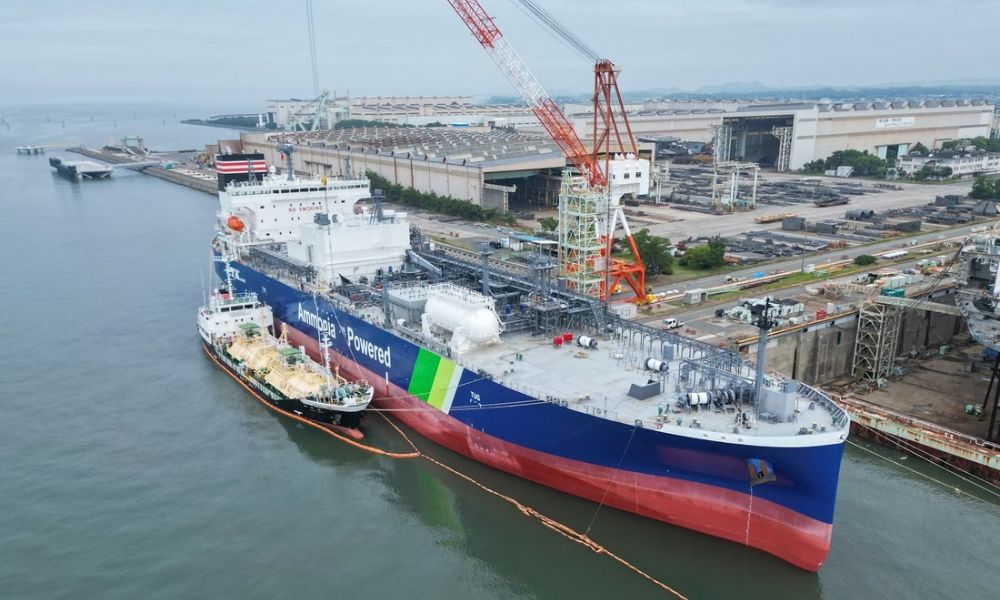
NYK Line, on Thursday (17 September) with Japan Marine United Corporation, Nihon Shipyard Co Ltd, Mitsubishi Gas Chemical Company, and Kokuka Sangyo Co Ltd, has completed the world’s first ship-to-ship (STS) ammonia bunkering operation to an ammonia-fuelled vessel. 

At a quay within Japan Marine United Corporation’s Ariake Shipyard, ammonia fuel was transferred from the ammonia carrier Shoei Maru via the STS method to an ammonia-fuelled medium gas carrier (AFMGC) scheduled for delivery in November 2026. 

The operation was conducted in preparation for sea trials of the AFMGC using fuel ammonia.

“This achievement represents an important initiative that has put into practice an operation essential for the future practical deployment of ammonia-fuelled vessels,” the company said. 

The bunkering operation was conducted following extensive discussions among the companies involved. Safe operating procedures and work processes were established prior to the operation, enabling the transfer to be completed safely. Through this initiative, we have accumulated practical insights regarding safe fuel supply operations.

This operation serves as a pioneering example of the fuel-supply framework that will be required for the widespread adoption of ammonia-fuelled vessels. 

The AFMGC is currently in the final stage of construction and is scheduled for delivery in November 2026. 

“The successful completion of this operation marks a significant milestone toward the broader commercial use of fuel ammonia and the practical deployment of ammonia-fuelled vessels. It also represents an important step forward in establishing an ammonia supply chain,” the company added. 


Photo credit: NYK
Published: 21 September, 2026

Continue Reading

Trending