
IMO 2020
Think-ING: Marine fuels & IMO 2020 – So much for all the hype
Compliance with the new fuel regulations has been quite strong, looking at Singapore ports, around 96% of ships entering the port in Q1 were using a compliant fuel.

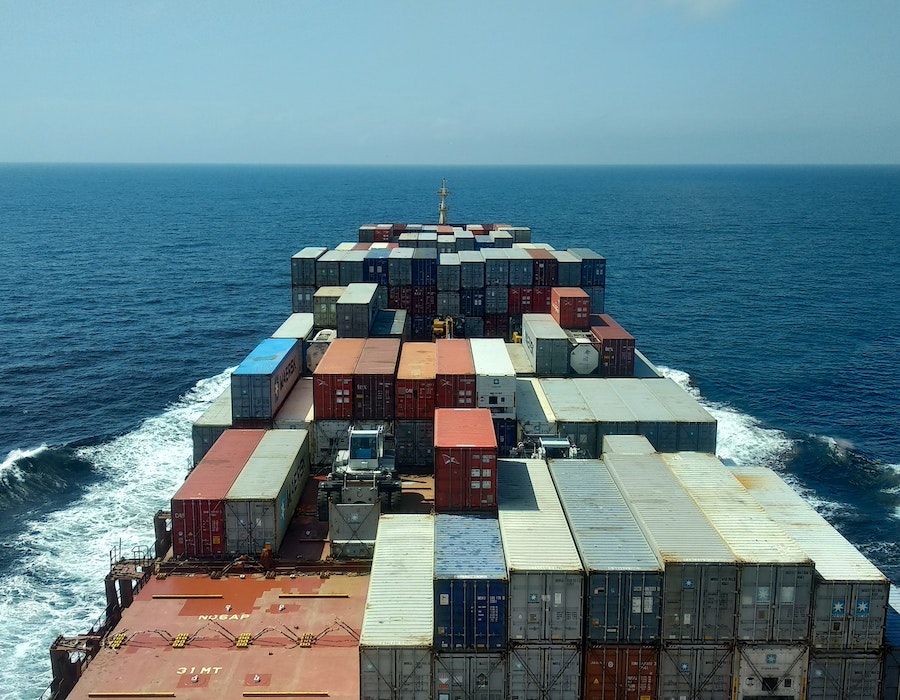
Think-ING, an online publication by Dutch multinational banking and financial services corporation ING on Tuesday (21 July) published an assessment on how the IMO2020 transition has impacted industry stakeholders, suggesting that the effects of Covid-19 have created a soft landing for the shipping industry; it was written by Warren Patterson, Head of Commodities Strategy.
We are now well into the IMO 2020 shipping regulations, and it is clear that all the hype leading up to implementation was exaggerated. Covid-19 has certainly softened the impact of the shipping industry’s move to a low sulphur compliant fuel
In this article:
- VLSFO the fuel of choice
- China plays a role in the VLSFO weakness
- Weaker road fuel demand adds to the pressure for VLSFO
- HSFO holding up
- What does this mean for scrubbers?
VLSFO the fuel of choice
As the shipping industry has moved further into 2020, and with the need to comply with new regulations to cap the sulphur content of fuel burned to 0.5% compared to 3.5% previously, it has become clearer that the fuel of choice for ship owners is very low sulphur fuel oil (VLSFO), rather than a marine gasoil. This is evident when looking at bunker fuel sales in Singapore, with VLSFO making up almost 70% of total fuel oil sales in the first six months of the year, this compares to around 11% when it comes to marine gasoil. Meanwhile, given the use of scrubbers on some vessels, high sulphur fuel oil (HSFO) sales made up around 18% of total sales.
In general, compliance with the new fuel regulations has been quite strong. Again, looking at Singapore ports, over the first quarter of this year, around 96% of ships entering the port were using a compliant fuel. Whilst those which were marginally over were likely due to residual HSFO in the tanks, rather than purposely using a non-compliant fuel.
Singapore bunker fuel sales (k tonnes)
 China plays a role in the VLSFO weakness
Despite the preference for VLSFO from the shipping industry, this has offered little support to VLSFO prices. While the flat price would have come under pressure anyway, given the weakness we have seen in oil prices, the fuel has been relatively weaker compared to other marine fuels, and in particular HSFO. The spread between VLSO and HSFO has narrowed significantly over the course of the year. Back at the end of last year the spot spread in NW Europe was trading as high as US$290/t, whilst so far this year it has traded briefly below US$45/t.
The initial weakness seen in VLSFO came after news that the Chinese government would waive a consumption tax, and provide a VAT rebate on fuel oil sales to bonded storage. This has seen refiners in the country increase VLSFO output as a result. According to government data, fuel oil output in the country over the first six months of the year totalled 17.48mt, up almost 53% year-on-year. On top of this, the government provided export quotas for VLSFO amounting to 10mt, with the potential for a further 5mt to be allocated later in the year.
These actions that we have seen from China do make it fairly clear that the country wants to reduce its dependence on fuel oil imports, as well as play a larger role in the global bunkering market, and this view is only strengthened with the Shanghai International Energy Exchange (INE) launching a VLSFO futures contract in June.
NW Europe VLSFO-HSFO spread (US$/t)
 Weaker road fuel demand adds to the pressure for VLSFO
Covid-19 has only added further pressure to VLSFO, with road transportation having been hit significantly as a result of country lockdowns. This has meant that vacuum gasoil (VGO) which would have gone towards gasoline production has been diverted to bunker blending, given the fall away in gasoline demand. This has helped to ensure enough VLSFO availability for the shipping industry. However, with gasoline demand now in recovery mode, this should mean that we start to see increasing amounts of VGO diverted back towards gasoline production as we move through the remainder of the year, which should offer some relative support to VLSFO. The risk to this view though, is if the resurgence in Covid-19 cases that we are currently seeing does lead to strict lockdowns once again, which could weigh on demand for road transportation fuels.
HSFO holding up
While VLSFO has come under pressure as a result of developments in China and Covid-19, HSFO has held up much better, with HSFO cracks strengthening over much of the year. In fact in NW Europe, the HSFO crack has traded back to pre-IMO 2020 levels, recently trading at one stage to less than a US$6/bbl discount.
From a supply point of view, it is clear that refiners would have reduced HSFO yields as much as possible in the lead up to the new sulphur regulations, in anticipation of demand falling off a cliff. In OECD countries, we ended last year with residual fuel oil yields at 4.7%, down from 6.1% a year earlier.
However on the demand side, whilst ships with scrubbers installed would ensure some demand for HSFO, the real supportive factor for the HSFO market has been increased buying from US refiners. In recent months, complex refiners in the US have increased the use of HSFO as a feedstock, with large discounts to crude back at the end of last year supporting this move, whilst more recently, strength in sour crude grades as a result of OPEC+ cuts will likely continue to support HSFO as a feedstock. Looking at EIA data, residuum imports into the US over the first four months of the year averaged 329Mbbls/d, compared to around 95Mbbls/d over the same period last year.
US residuum imports (Mbbls/d)
 What does this mean for scrubbers?
Clearly, the significant narrowing in the VLSFO/HSFO spread does mean that many ship owners who had planned to install scrubbers, which would allow them to continue burning HSFO, will likely reconsider this decision, or at least delay installations until the spread widens once again. The payback period for the investment has increased drastically as the spread has collapsed. The payback period at the start of the year would have been in the region of one to two years, however with the spread now not too far off from US$50/t, this has increased to four to six years. Clarkson’s has said that the industry could see as many as 700 retrofits of scrubbers delayed or cancelled altogether as a result of the narrow spread.
There are reports that owners have already started to cancel scrubber installations, as a result of the weaker spread. The uncertainty created by Covid-19 will not have helped. This has not only delayed installations but also raised worries over the impact it will have on trade in the months ahead.
Photo credit and source: Think-ING
Published: 22 July, 2020
Ammonia
AM Green plans to build green ammonia plant at Indian port
Initiative also includes development of green ammonia handling, storage and bunkering infrastructure, pilot bunkering operations, safety procedures and training programmes, says VOC Port Authority.

Port & Regulatory
Study: Major drop in ship sulphur emissions confirmed following IMO regulations
National Centre for Atmospheric Science study found that the average sulphur content in ship fuel dropped nearly tenfold in open ocean areas following IMO’s 2020 regulation.
Interview
IBIA Annual Convention 2025: ‘Exciting times’ for post IMO 2020 bunker suppliers, states Equatorial
Choong Sheen Mao, Chief Operating Officer, Equatorial, describes to Manifold Times the pre/post IMO 2020 challenges and evolution of bunker suppliers.


OUR INDUSTRY PARTNERS

Yang Ming orders six LNG dual-fuel, ammonia-ready containerships from Hanwha Ocean

LR, China’s MARIC unveil tanker concept ready for three future bunker fuels

DNV: Alternative-fuelled vessel orders hit highest monthly level since October 2024

TFG Marine advances global MFM rollout with two US Gulf bunker barges

GENA Solutions: Total renewable and low-carbon methanol project pipeline increases from 61.8 to 62.2 Mt by 2032

Baltic Exchange: Bunker Report (3 September 2026)

ENGINE: Americas Fuel Availability Outlook (3 September 2026)

Singapore-flagged tugboat “Kim Heng 3203” placed under Sheriff’s arrest

US targets five bunker companies in latest sanctions campaign against Iran

Singapore bunkering community supports Living Hope Evangelism’s 7th anniversary outreach for residents in need

China’s bunker market reshaped by tax rebates, trade flows and refining changes, says economist

Hengli Petrochemical’s ex-Singapore trading arm faces winding up application

Rajah & Tann: Bunker disputes are won in the first 48 hours

Report: GCMD outlines practical approach to quantity assurance in marine biofuel supply chains
-
 Vessel Arrest2 weeks ago
Singapore-flagged tugboat “Kim Heng 3203” placed under Sheriff’s arrest
-
 Sanctions2 weeks ago
US targets five bunker companies in latest sanctions campaign against Iran
-
 Events2 weeks ago
Singapore bunkering community supports Living Hope Evangelism’s 7th anniversary outreach for residents in need
-
 Interview1 week ago
China’s bunker market reshaped by tax rebates, trade flows and refining changes, says economist
-
 Winding up2 weeks ago
Hengli Petrochemical’s ex-Singapore trading arm faces winding up application
-
 Bunker Claim5 days ago
Rajah & Tann: Bunker disputes are won in the first 48 hours
-
 Biofuel2 weeks ago
Report: GCMD outlines practical approach to quantity assurance in marine biofuel supply chains
-

 Winding up1 week ago
Singapore: Notices of annual meeting issued for Vroon Shipping Asia and related firms