Connect with us

Legal

OFAC blocks “Shang Yuan Bao” over STS transfers with DPRK vessels

Taiwan and Hong Kong shipping companies added to blacklist over sanctioned activities performed in 2018.

Admin

Published

on

5d6c917d03ba7 1567396221

The U.S. Department of the Treasury’s Office of Foreign Assets Control (OFAC) on Friday (30 August) designated two individuals and three entities, and further identified one vessel as blocked property over illicit ship-to-ship (STS) transfers with North Korean vessels.

OFAC designated Taiwan-based individuals Huang Wang Ken and Chen Mei Hsiang and the Taiwan-based entities Jui Pang Shipping Co Ltd (Jui Pang) and Jui Zong Ship Management Co Ltd (Jui Zong), as well as Hong Kong-based entity Jui Cheng Shipping Company Limited (Jui Cheng), pursuant to Executive Order (E.O.) 13810 for having engaged in at least one significant importation from or exportation to North Korea of any goods, services, or technology.

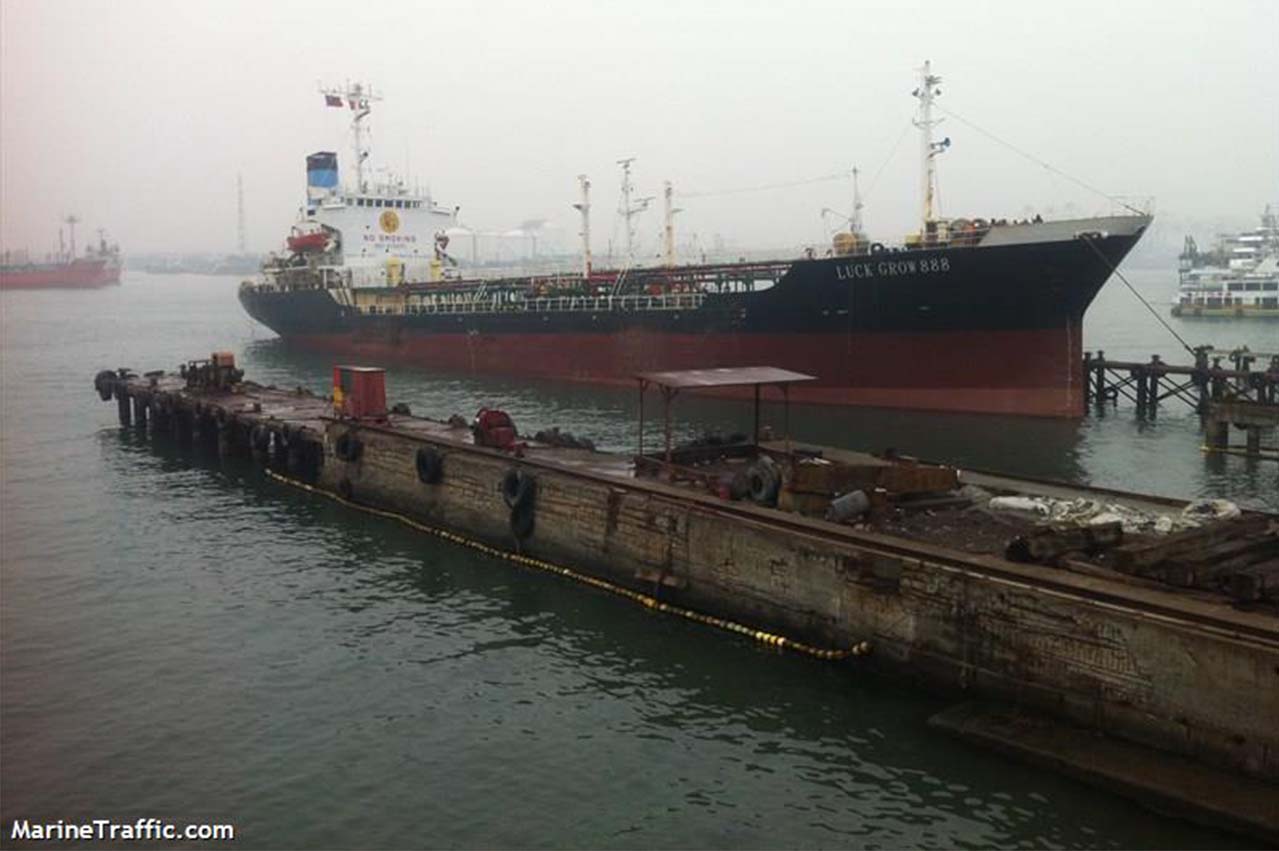
In addition, OFAC identified the vessel Shang Yuan Bao (IMO: 8126070) as blocked property in which Huang Wang Ken, Chen Mei Hsiang, Jui Pang, Jui Cheng, and Jui Zong all have an interest. 

In October 2018, the UN Security Council’s 1718 Committee included the Shang Yuan Bao in a port entry ban and designated it for deflagging in response to its involvement in illicit ship-to-ship transfers with DPRK-flagged vessels.

Shang Yuan Bao conducted at least two STS transfers with DPRK-flagged vessels, which both later offloaded their cargo in North Korea’s Nampo port in 2018, according to OFAC.

Between April and May 2018, Huang Wang Ken, the CEO and largest shareholder in Jui Pang, a Taiwan marine cargo handling company, worked with several other individuals to use the Panama-flagged vessel Shang Yuan Bao to transport 1.7 million liters of petroleum products to the UN- and U.S.-designated North Korea-flagged vessel Paek Ma through an STS transfer. 

Huang and his partners falsely reported that the petroleum products were destined for the Philippines. 

The Shang Yuan Bao, however, transported them beyond the territorial waters of any state to carry out the STS transfer to the Paek Ma, which was identified February 23, 2018 as property in which Paekma Shipping Co — an entity whose property and interests in property were blocked pursuant to E.O. 13810 also on February 23, 2018 — has an interest. 

In June 2018, the Shang Yuan Bao carried out an additional STS transfer of petroleum with another North Korea-flagged vessel, the Myong Ryu 1.

“OFAC assesses that the persons who owned and controlled the Shang Yuan Bao at the time of the petroleum transfers are ultimately responsible for the petroleum products that were illicitly transferred to the North Korean vessels and ultimately delivered to North Korean territory,” it states. 

“This includes Chen Mei Hsiang, who is a member of the board of directors of Jui Pang as well as the director and sole owner of Jui Zong.  Chen Mei Hsiang is also married to Huang Wang Ken.

“OFAC also designated Taiwan companies Jui Pang and Jui Zong, as well as Hong Kong company Jui Cheng, for engaging in a significant importation from or exportation to North Korea through their ownership and control of the Shang Yuan Bao when it engaged in these STS transfers.

“As a result of today’s action, all property and interests in property of these individuals and entities that are in the United States or in the possession or control of U.S. persons must be blocked and reported to OFAC. 

“OFAC’s regulations generally prohibit all dealings by U.S. persons or within the United States (including transactions transiting the United States) that involve any property or interests in property of blocked or designated persons.”

Earlier OFAC related alerts issued in 2019 are as follows:

Related: U.S. OFAC adds four shipping firms, nine oil tankers to sanctions list
RelatedOFAC identifies 35 vessels, two shipping firms for sanctioned activity
RelatedOFAC adds Singapore-registered “Sea Tanker II” to sanctions list
RelatedOFAC updates guidance on North Korea maritime sanctions
RelatedAlert: Viet Trust Shipping Corporation “Viet Tin 01” spotted at DPRK port
RelatedPrimPortBunker in alleged STS fuel transfer ops to DPRK vessels

Photo credit: MarineTraffic
Published: 2 September, 2019


Continue Reading

Legal

“Yangtze Harmony”: The practical effects of enforcing bunkers arbitral awards in Rem

Helmsman says Singapore High Court in The “Yangtze Harmony” [2026] SGHC 3 confirmed that the court can lift a ‘stay’ on in rem proceedings, which were put on hold in favor of arbitration.

Admin

Published

on

By

Helmsman expands legal services into IP and Technology, Media and Technology

In shipping law, in rem proceedings are unique as a claim may be brought against the ship itself as a separate legal entity rather than the owner personally. This is what allows a ship to be arrested and used as security for such a claim.

Earlier this year, the Singapore High Court in The “Yangtze Harmony” [2026] SGHC 3 clarified an unanswered question: whether the court can lift a “stay” on in rem proceedings – which had earlier been put on hold in favor of arbitration. The court has now confirmed that it can. This means that if a party wins an arbitration, it can return to court and enforce the award as a judgment against the ship or its judicial sale proceeds.

Multi-disciplinary law firm Helmsman LLC focuses on the significance of the “Yangtze Harmony” judgment in enforcing arbitral awards in rem proceedings:

Written by Arjun and Shakthi 1

MT: How are arbitration claims against ships usually enforced in Singapore?

In shipping disputes, it is common for a claimant to start court proceedings against a ship to arrest the ship as security, even though the dispute is to be decided by arbitration. These proceedings are then stayed, pending the arbitration’s conclusion, while the claim remains secured in the form of (a) the arrested ship, or (b) its sale proceeds, or (c) any alternate form of security (such as a bank guarantee or an insurer’s letter of undertaking).

Ordinarily, arbitration awards are enforceable only against the parties named in the award (i.e. in personam). If a shipowner fails to pay, the award holder must enforce the award against the shipowner. The significance of the Yangtze Harmony judgment is that it allows an award holder to enforce the award directly against the ship which it previously arrested. This is crucial for cases against one-ship companies where the ship (or its sale proceeds) may be the only meaningful asset for recovery.

MT: If a ship is sold, where do bunker claims rank in getting paid?

While the decision makes enforcement easier, it does not affect the priority in which sale proceeds are distributed. In Singapore, judicial sale proceeds generally satisfy claims in an order of priorities. Higher ranking claims such as dues, Sheriff costs and secured claims are paid first.

A claim for bunkers supplied for a ship’s operation or maintenance are typically considered a statutory lien claim, which ranks at the bottom of the priorities ladder. Bunker suppliers are only paid from whatever funds remain and they share this equally with other similar claimants. A bunker supplier may not know what other high ranking claims exist until after the vessel is arrested or sold. If those claims are substantial, there may be little or nothing left to satisfy bunker claims.

MT: Can bunker suppliers improve their chances of getting paid?

The court has the power to alter the order of priorities when it is equitable to do so, but it is rare and requires evidence of exceptional circumstances. Ordinarily, a claim for the price of unpaid bunkers would not meet this threshold.

While the Yangtze Harmony brings welcome clarity to allow enforcement of arbitral awards as in rem judgments, this does not guarantee recovery, given the risk of priorities. Bunker suppliers in particular should carefully assess the likelihood of being paid in the event of a judicial sale before taking steps such as arresting a ship.


Photo credit: Helmsman
Published: 17 June, 2026

Continue Reading

Incident

UK forces intercept suspected Russian shadow fleet tanker in English Channel

In the first UK-led operation of its kind, the vessel “SMYRTOS” was boarded by Royal Marine Commandos and law enforcement officers from the National Crime Agency.

Admin

Published

on

By

UK forces intercept suspected Russian shadow fleet tanker in English Channel

British Armed Forces on Sunday (14 June) boarded a sanctioned oil tanker, suspected of being part of the Russian shadow fleet, in the English Channel, according to the Ministry of Defence. 

In the first UK-led operation of its kind, the vessel SMYRTOS was boarded by Royal Marine Commandos and law enforcement officers from the National Crime Agency.

The UK’s Prime Minister agreed in March that British Armed Forces and law enforcement officers were able to board shadow fleet vessels, in accordance with international law.

The SMYRTOS will be provisionally moved to an anchorage off the South Coast of England and will be monitored for any environmental or safety concerns.

UK’s Prime Minister Keir Starmer, said: “This operation delivers yet another blow to Russia and reminds those fueling Putin’s war in Ukraine that they cannot hide.

“I want to pay tribute to all those involved, including our Armed Forces and law enforcement officers who keep this country safe 24 hours a day, 365 days a year.”

The operation builds on recent support provided by the UK to its allies to interdict shadow fleet vessels, which included RAF and Royal Navy capabilities supporting US and French operations. The operation was conducted in close coordination with the French.

The UK has sanctioned almost 600 Russian shadow fleet vessels to date.


Photo credit: Ministry of Defence
Published: 16 June, 2026

Continue Reading

Winding up

Singapore: Notice of intended dividend issued for Xihe Holdings

Creditors of the company will have to submit proof of debt to the liquidators of Xihe Holdings by 9 July at 5pm, according to Government Gazette notice.

Admin

Published

on

By

calculator steve pb from Pixabay

A notice to declare the intended dividend of Xihe Holdings Pte Ltd to its creditors has been posted on the Government Gazette on Thursday (11 June).

Name of Company : Xihe Holdings (Pte) Ltd (In Liquidation)
Unique Entity No. / Registration No.: 199002021M
Address of Registered Office : c/o Grant Thornton Singapore Private Limited, 8 Marina View, #40-04/05 Asia Square Tower 1, Singapore 018960
Court : High Court of Singapore
Number of Matter : HC/CWU 40/2022
Last Day for Receiving Proofs : 9 July 2026 at 5:00 pm by email to [email protected]
Name of Liquidators : Paresh Tribhovan Jotangia and Ho May Kee
Address : c/o Grant Thornton Singapore Private Limited, 8 Marina View, #40-04/05 Asia Square Tower 1, Singapore 018960


Photo credit: steve pb from Pixabay
Published: 15 June, 2026

Continue Reading

Trending