Connect with us

Environment

Opinion: Hong Kong and mainland shipping bureaus require ‘more coordination’

As environmental standards for shipping evolve, the Hong Kong government’s role should also, says Christine Loh.

Admin

Published

on

5cc2855f67e11 1556251999

The following Opinion Piece was written by former undersecretary for the environment and current adjunct professor at Hong Kong University of Science and Technology, Christine Loh, and first published on the South China Morning Post:

The maritime industry is a global business, with Hong Kong being not only a major port but also a shipping hub with a large presence of businesses serving this sector. Apart from shipowners and ship liners, there are also ship managers, terminal and barge operators, cruise ship companies, ferry service operators, charterers, ship brokers, seafarers, marine fuel suppliers and other service providers such as financiers and lawyers.

The International Maritime Organisation (IMO) regulates international shipping. Major issues for the industry include reducing pollutant emissions and decarbonisation. For example, the IMO requires shipping fuels to meet a global sulphur cap of 0.5 per cent by 2020; encourages ships to reduce nitrogen oxide; and for global shipping to reduce its carbon emissions by 50 per cent by 2050.

These mandates affect Hong Kong and the mainland.

Firstly, Hong Kong became the Asian leader in 2013 by adopting a new policy to require ocean-going vessels, such as container and cruise ships, to switch to a cleaner fuel while at berth. The law to require 0.5 per cent sulphur fuel came into effect in 2015.

Secondly, Hong Kong and mainland China cooperated to define new fuel switching regulations, and the mainland created three domestic emissions control zones for ships that became effective from 2019. Ships entering the waters of the zones in the Pearl River Delta, Yangtze Delta and Tianjin area have to switch to the 0.5 maximum sulphur fuel ahead of the IMO mandate.

These efforts have brought measurable and significant improvement to air pollution. However, with the IMO global sulphur cap coming into force soon, Hong Kong and the mainland must go further still if they wish to maintain their leadership positions in Asia. The respective authorities are considering requiring ships to switch to 0.1 per cent maximum sulphur fuel before 2020. The earlier the authorities can make the decision, the better, since other stakeholders, such as shipping companies and bunker suppliers, need to get ready.

Thirdly, in light of the vision for the “Greater Bay Area” plan for the region, to be a leader in green living, Hong Kong, Macau and Guangdong should cooperate on a much bigger plan for green ports and green harbours.

The technology is now available for electric and hybrid ferries. There are large numbers of ferries serving the bay area. The authorities could work with ferry operators on a scheme to replace old ferries with new ones. Setting a plan for reducing emissions from barges should work too.

As for ocean-going vessels, the shipping industry is introducing new engines to reduce nitrogen oxides, and some ports are giving incentives to such ships to help the industry make the necessary investments. The Greater Bay Area can be among the ports to consider this too.

Furthermore, ocean-going vessels, including cruise ships powered by LNG, are being built, including in China. In the next five years, the cruise business along the Chinese coast is expected to grow substantially. Hong Kong will need to be able to provide LNG bunkering facilities if it is to remain relevant as a forward-looking port. Singapore is ready in this pursuit  but Hong Kong is not.

Since the two local power suppliers in Hong Kong are jointly building an LNG-receiving facility to supply LNG for electricity generation, which is a part of Hong Kong’s plan to reduce carbon emissions, the facility can be designed to also provide LNG to ships. Indeed, it would make no sense for the government not to include this as part of the receiving facility.

Hong Kong’s disadvantage is there is no port authority which can mastermind a comprehensive, transformative plan that can dovetail with IMO and international trends, provide for new fuels bunkering, and plan for lowering pollutant emissions and the carbon footprint of ships and port activities. The consultative Port and Maritime Board does not appear to perform such a function.

The government has also not used its membership at the IMO to participate in the global debate on environmental improvement and decarbonisation. It is a great wasted opportunity that environmental officials do not attend the many IMO meetings where such matters are discussed. It is a common practice among other member jurisdictions for officials with different disciplines and responsibilities to attend such meetings at the appropriate times.

The Transport and Housing Bureau and Environment Bureau have bifurcated responsibilities in shipping, port regulation, fuel and energy policy, pollution control and climate change. They would serve Hong Kong and the bay area well by working out a new approach that suits the new era. The mainland is also a member of the IMO, and China as a major shipping and shipbuilding nation has a clear interest in playing a role in the decarbonisation and transformation of the global maritime industry.

The Hong Kong-based shipping sector is interested in seeing the two bureaus cooperate rather than remain in their ineffective silos. The secretary for transport and housing visited Denmark and Norway recently and have seen for himself cleaner ferries and vessels operating. Hopefully, the two bureaus can put forward a strong local – as well as bay area-wide – policy to realise an ambitious plan for green ports and harbours.

Source: South China Morning Post
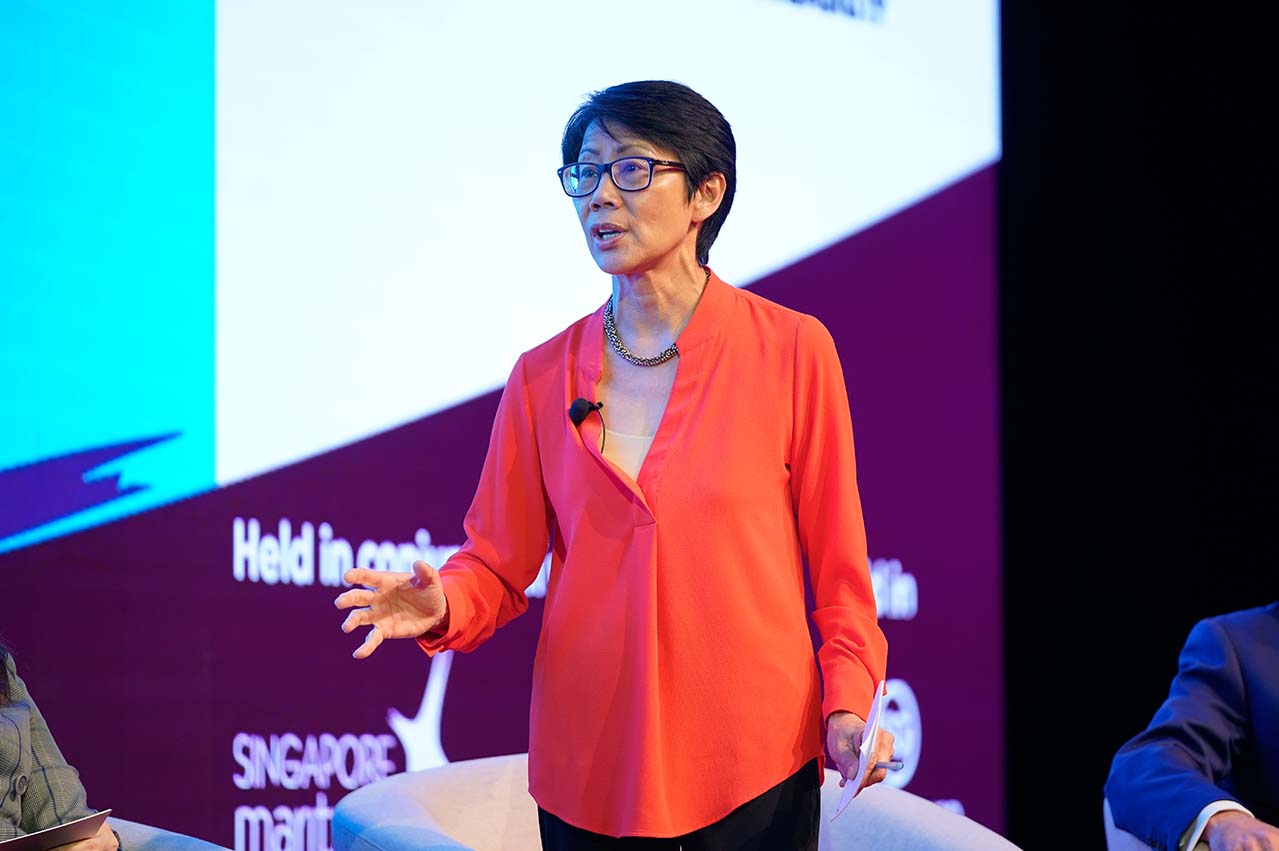
Photo credit: Sea Asia 2019

Published: 25 April, 2019
 

Continue Reading

Emissions reporting

StormGeo and OceanScore link emissions data, compliance workflows

Cooperation combines StormGeo’s expertise in operational vessel and emissions data with OceanScore’s expertise in emissions compliance workflows across EU ETS, FuelEU Maritime and UK ETS requirements.

Admin

Published

on

By

StormGeo and OceanScore link emissions data, compliance workflows

Weather intelligence and decision support solutions provider StormGeo and Hamburg-based technology platform OceanScore on Wednesday (3 June) said they have deepened their ongoing cooperation through the signing of a collaboration agreement during Posidonia 2026 in Athens on 2 June.

The cooperation combines StormGeo’s expertise in operational vessel and emissions data with OceanScore’s expertise in emissions compliance workflows across EU ETS, FuelEU Maritime and upcoming UK ETS requirements.

Together, the companies aim to help shipping companies seamlessly navigate increasing regulatory complexity more efficiently — from emissions reporting and data validation to compliance exposure management, pooling and financial settlement.

As emissions regulation becomes an increasingly important part of commercial shipping operations, the need for reliable operational data and streamlined compliance processes continues to grow. The cooperation between StormGeo and OceanScore is designed to support shipping companies with more connected, transparent and actionable processes across operational and commercial teams.

“From the outside, companies like StormGeo and OceanScore may sometimes be perceived as competitors because both operate around emissions and compliance workflows,” said Albrecht Grell, Managing Director at OceanScore. 

“But in reality, the industry increasingly needs both perspectives working together: trusted operational emissions data on one side and commercial compliance execution on the other. Our cooperation reflects that shipping companies are no longer looking for isolated solutions — they need connected processes, automated across different systems and reliable decision-making throughout the full compliance chain.”

By connecting validated operational emissions data with commercial compliance management, the cooperation supports workflows across:

  • emissions reporting and validation 
  • compliance management across EU ETS, FuelEU Maritime and upcoming UK ETS requirements
  • exposure visibility and cost transparency
  • pooling, settlement and financial processes 

The cooperation also aims to improve commercial transparency and coordination across operational and commercial stakeholders.

“StormGeo plays a central role in helping shipping companies turn operational vessel and emissions data into trusted, decision-ready insights,” said Espen Martinsen, Chief Commercial Officer at StormGeo. 

“As emissions regulations become more complex, this data is essential for transparent and efficient compliance management. By working with OceanScore, we can help customers connect StormGeo’s validated operational data with commercial compliance processes, creating a more integrated and practical approach to emissions management.”

The signing ceremony took place at the StormGeo booth during Posidonia 2026 in Athens and was attended by representatives from both companies.

Both companies expect the cooperation to continue evolving alongside upcoming regulatory developments, including FuelEU Maritime, EU ETS, the upcoming UK ETS and future emissions-related frameworks affecting global shipping.


Photo credit: StormGeo
Published: 4 June, 2026

Continue Reading

Methanol

Seaspan and Hapag-Lloyd complete first of five methanol vessel retrofit

Following “Seaspan Yangtze”, the remaining vessels planned for retrofit under the methanol retrofit programme are “Seaspan Amazon”, “Seaspan Ganges”, “Seaspan Thames”, and “Seaspan Zambezi”.

Admin

Published

on

By

Seaspan and Hapag-Lloyd complete first of five methanol vessel retrofit

Seaspan Corporation (Seaspan) and Hapag-Lloyd on Wednesday (3 June) announced the successful completion of the first of the five vessel conversions under their methanol retrofit programme with the delivery of Seaspan Yangtze.

From the early SAVER (Seaspan Action for Vessel Energy Reduction) programme to today’s CleanBlue initiative, Seaspan has committed over USD 230 USD million across 86 vessels, executing more than 550 efficiency and retrofit projects.

Following Seaspan Yangtze, the remaining vessels planned for retrofit under the programme are Seaspan Amazon, Seaspan Ganges, Seaspan Thames, and Seaspan Zambezi. Each retrofit is expected to reduce well-to-wake CO₂e emissions by approximately 30,000 to 50,000 metric tonnes per vessel annually when operating on low-carbon methanol, while also extending vessel lifespan and enhancing fuel flexibility.

“Decarbonisation is not just about building the fleet of tomorrow, it is also about unlocking the full potential of the fleet we have today. Retrofitting and upgrades on existing fleets play a practical, immediate, and economical role in accelerating shipping’s decarbonization journey,” said Bing Chen, Chairman, President and CEO of Seaspan. 

“Project SAVER CleanBlue highlights Seaspan’s strong customer partnerships, deep technical expertise, and unique platform integrated with JV partners, such as WattSpan Maritime Technology, in executing complex and large-scale retrofit projects.”

“The successful conversion of the Seaspan Yangtze together with the planned retrofit of its four sister vessels is another important step on our ambitious path towards net-zero fleet operations by 2045,” said Silke Lehmköster, Managing Director, Fleet, Hapag-Lloyd. 

“Together with Seaspan, we are demonstrating that retrofitting existing vessels for low-carbon methanol can be a practical way to reduce emissions in shipping.”


Photo credit: Seaspan
Published: 4 June, 2026

Continue Reading

LNG Bunkering

MOL and Seaspan sign annual LNG bunkering deal for car carriers in Port of Vancouver

MOL says North America is one of the key trade lanes for car carriers, and with recent delivery of new LNG-fuelled vessels, securing a stable LNG fuel supply in the area has become increasingly important.

Admin

Published

on

By

MOL and Seaspan sign annual LNG bunkering deal for car carriers in Port of Vancouver

Mitsui O.S.K. Lines, Ltd. (MOL) on Thursday  (21 May) announced that MOL and Seaspan Energy have signed the first annual contract for LNG bunkering for car carriers at the Port of Vancouver, Canada. 

On 29 April, MOL completed the first LNG bunkering under this contract. Since completing the first LNG bunkering on the West Coast of North America on 1 March 2025 – the first by a Japanese shipping company – MOL has conducted several additional LNG bunkering operations in the region. 

North America is one of the key trade lanes for car carriers, and with the recent delivery of new LNG-fuelled vessels, securing a stable LNG fuel supply in the area has become increasingly important. This contract underscores the company’s commitment to establishing a stable and seamless regional LNG fuel procurement framework.

Seaspan expanded its LNG bunkering capabilities in 2026 from Vancouver to Long Beach, California, and continues to proactively support the growth of a clean marine supply chain.

Seaspan Energy President Harly Penner, said: “The relationship between Seaspan Energy and MOL is highly valued. MOL was the first car carrier operator to receive LNG bunkering services in the Port of Vancouver, and we are proud to continue supporting their operations in Vancouver through this annual LNG bunkering agreement. 

“This partnership reflects our shared commitment to advancing lower-emission marine transportation and supporting the industry’s transition toward net-zero GHG emissions.”

Marine Fuel GX Division General Manager Daisuke Fujihashi, said: “We are very pleased to further strengthen our partnership with Seaspan Energy through this contract for LNG fuel procurement. 

“Looking ahead, we will continue to deepen our collaboration with Seaspan Energy in the field of clean fuels, including bio LNG, and remain committed to offering our customers more pathways toward cleaner supply chains.”


Photo credit: MOL
Published: 22 May, 2026

Continue Reading

Trending