Connect with us

Alternative Fuels

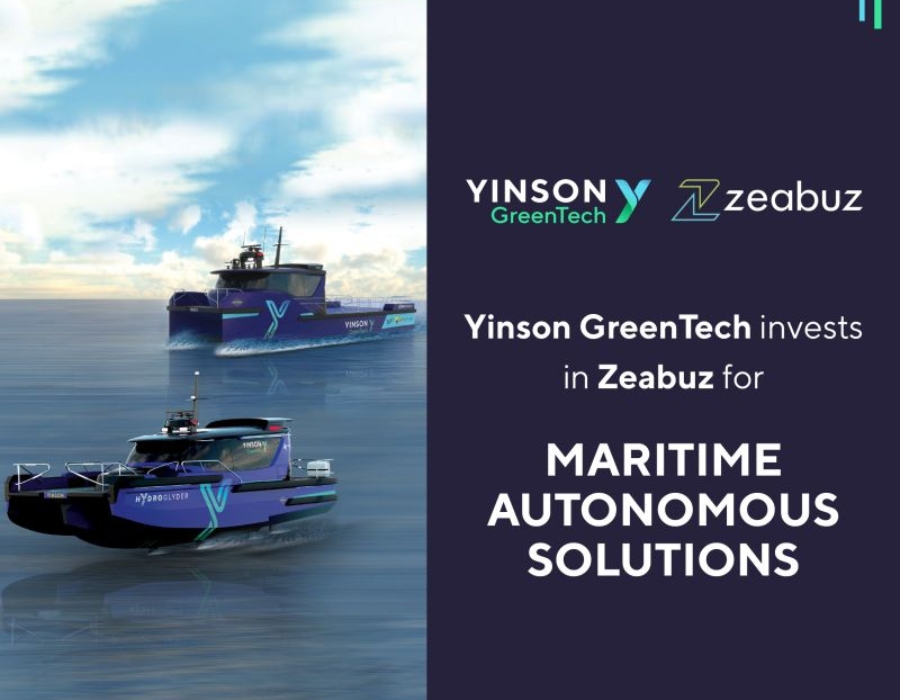
Yinson Green Technologies invests in Zeabuz for development of electric vessels

YGT plans to incorporate Zeabuz’s autonomous solutions in its electric vessels and utilise these
technologies to boost the safety and efficiency levels of the vessels.

Admin

Published

on

30 1

Singapore-based Yinson Green Technologies Pte. Ltd. (YGT), through its subsidiary Yinson Venture Capital Pte. Ltd., on Monday (20 February) announced its strategic investment in Zeabuz AS (Zeabuz), a Norwegian startup specialising in autonomous solutions for the maritime industry.

The investment provides the foundation for YGT to work closely with Zeabuz in the development of autonomous solutions for YGT’s future fleet of electric vessels.

Chief Executive Officer of YGT Eirik Barclay, said: “We recognise the enormous potential of autonomous vessels and see Zeabuz as being well placed to become a leader in this segment. Following this investment, we look forward to collaborating closely with Zeabuz to bring highly innovative autonomous vessel solutions to the Singapore market.”

YGT plans to incorporate Zeabuz’s solutions in its electric vessels and utilise these technologies to boost the safety and efficiency levels of the vessels while reducing the manning required during passenger and cargo transportation.

Zeabuz Chief Executive Officer & Co-founder Erik Dyrkoren, said, “We are pleased with YGT onboarding as a partner with Zeabuz to realise waterborne mobility of the future. Our technology enables our customers to offer safer and more efficient operations while enabling entirely new mobility concepts such as urban waterborne mobility with reduced crew.”

Zeabuz was founded in 2019 as a spin-off from the Norwegian University of Science and Technology’s progressive research centre for autonomous marine operations and systems. The company has developed a proprietary autonomy platform that is scalable, certifiable, and suitable for both new designs and retrofit of existing vessels. Their business model is to provide autonomy-as-a-service to operators of smaller vessel.


Photo credit: Yinson Green Technologies
Published: 21 February, 2023
Continue Reading

LNG Bunkering

Stabilis Solutions targets Q3 2028 launch for Galveston LNG bunkering facility

Firm received a LOR from US Coast Guard following a review of a LNG Facility and associated waterfront LNG loading, marine transportation, and LNG bunkering operations in the Port of Galveston.

Admin

Published

on

By

Stabilis Solutions targets Q3 2028 launch for Galveston LNG bunkering facility

Clean energy production solutions provider Stabilis Solutions (Stabilis) on Friday (24 July) said the proposed Stabilis Galveston LNG Facility is anticipated to be in production by the third quarter of 2028. 

It will come complete with the delivery of the first new-build, dedicated Jones Act-compliant LNG bunker barge in the Galveston/Houston area.

“This is a significant regulatory and project milestone for Stabilis,” the company said. 

This comes following Stabilis receiving a Letter of Recommendation (LOR) from the US Coast Guard following their formal review of the proposed Stabilis Galveston LNG Facility and associated waterfront LNG loading, marine transportation, and LNG bunkering operations in the Port of Galveston.

“This critical endorsement of our project from the USCG Captain of the Port to the Port of Galveston and the Galveston Fire Marshal comes after a rigorous safety and security review process,” it said.

“This included a comprehensive evaluation of the potential risks, including navigation hazards, vessel traffic density impacts, emergency response capabilities, maritime security threats, and application of appropriate mitigation measures.” 

Manifold Times previously reported Stabilis terminating a previously announced 10-year agreement with a leading investment-grade global marine operator to supply LNG from the company’s proposed 350,000 gallon-per-day Galveston liquefaction facility.

As a result, the company expected delays to the anticipated final investment decision, project financing, and development timeline for the Galveston LNG facility. 

Related: Stabilis Solutions terminates 10-year LNG supply deal, expects delay in Galveston project


Photo credit: Stabilis Solutions
Published: 24 July, 2026

Continue Reading

Wind-assisted

Fairfield Maritime Japan, Neste ink charter deal for WAPS-equipped MR tanker duo

Vessels will utilise low-sulphur fuels and will be capable of being retrofitted to operate on methanol at some point in the future.

Admin

Published

on

By

RESIZED scott graham

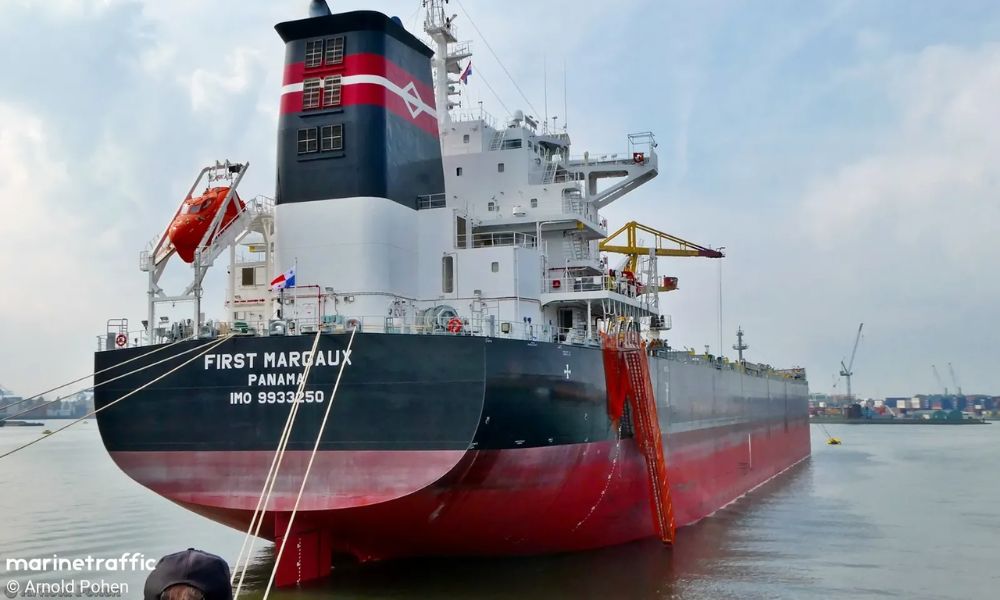
Fairfield Maritime Japan (FMJ) on Wednesday (22 July) said it has signed a long-term charter contract with Neste for two vessels. 

The agreement enables FMJ to fund and manage the construction of two Ice Class 1A medium range (MR) oil and chemical tankers for Neste’s transports to and from its refinery in Porvoo, Finland. Neste is a producer of renewable diesel and sustainable aviation fuel (SAF), also refining a wide range of oil products in Porvoo. 

Fairfield Maritime Japan Ltd. is a portfolio company of Fairfield-Maxwell Ltd., a family office for the Sugahara family headquartered in New York City.

The two new ships will each have the capacity to ship 50,000 deadweight tons (DWT) and will be built by HD Hyundai Co., Ltd. of South Korea and delivered in the first and second quarters of 2029.

As Ice Class 1A certified ships, the two new vessels will be capable of navigating in ice conditions with the support of icebreakers, adhering to the Finnish Swedish Ice Class Rules.

These rules encompass the specific requirements for vessels navigating the Baltic Sea during the winter season. The highly ice-resistant ships will be able to approach and depart Porvoo in the winter months, contributing to operational continuity for Neste’s Porvoo facility.

The vessels will utilise low-sulphur fuels and will be capable of being retrofitted to operate on methanol at some point in the future. 

The vessels will be ready for the future with the possibility to connect to shore power when that is available. In addition, the ships will be equipped with wind-assisted propulsion systems (WAPS) to supplement the ships’ main engines. These technologies will reduce fuel consumption, emissions and operating costs.

“We’re pleased to partner with Fairfield Maritime Japan and Fairfield-Maxwell. With these new state-of-the-art vessels, we are continuing our efforts to deliver safe and efficient sea transport to and from our Porvoo refinery,” said Sander Wilgenhof, Head of Chartering, Neste.

“We are proud to be Neste’s long-term partner,” said Ryuichi Osonoe, President, Fairfield Maritime Japan. 

“We believe that our knowledge and expertise will significantly assist Neste in its sea transportation. We are looking forward to seeing these two new ships cross the sea to safely export out of Neste’s Porvoo refinery.”

“Fairfield has been a partner of choice for world-class shippers for nearly 70 years,” said Byron Sugahara, chairman of the board of Fairfield-Maxwell. 

“This agreement with Neste is  confirmation that our family’s legacy in the shipping industry remains strong and provides a solid foundation for continued growth and success.”


Photo credit: Scott Graham
Published: 24 July, 2026

Continue Reading

Nuclear

Long Beach becomes first US port to partner with MARAD on nuclear-powered shipping

It became the first Port in the nation to sign a Memorandum of Cooperation with MARAD to advance work on development of SMR technology to power commercial vessels, ports and other maritime assets.

Admin

Published

on

By

Long Beach becomes first US port to partner with MARAD on nuclear shipping

The Port of Long Beach on Wednesday (22 July) said it became the first Port in the nation to sign a Memorandum of Cooperation with the US Department of Transportation’s Maritime Administration (MARAD) to advance work on development of small modular reactor (SMR) technology to power commercial vessels, ports and other maritime assets.

The agreement represents a significant milestone, making Long Beach the first US seaport to formalise a partnership with MARAD to establish nuclear-powered vessels for commercial service.

“This first-of-its-kind partnership with MARAD allows us to leverage strong federal leadership and private sector innovation to catalyse SMR technology as we safely and securely support the next generation of shipping,” said Port of Long Beach CEO Dr. Noel Hacegaba. 

“We’re building the Port of the Future in Long Beach, where we’ve led in global trade by moving USD 300 billion in cargo annually to support 2.7 million American jobs, and we will continue our tradition of leadership as we partner to advance nuclear energy in maritime and beyond.”

“Under President Trump’s and Secretary Duffy’s leadership, MARAD is taking decisive action to revitalise US shipbuilding and secure our national energy dominance,” said Maritime Administrator Stephen M. Carmel.

“This milestone agreement with the Port of Long Beach brings cutting-edge Small Modular Reactor technology into active testing. It ensures our maritime supply chains stay operational under any contingency while training the next generation of high-skilled American mariners.”

The agreement builds on momentum from MARAD’s Request for Information on 7 May, issued in the Federal Register, seeking industry input on the development of a US-built, scalable and commercially viable SMR for the nation’s marine transportation system. 

It also complements the Port’s new lease agreement with BlueCore Energy Inc., which allows the company to assemble, test and store maritime power modules, adding private-sector expertise to this the partnership with an American energy and technology company on the forefront of SMR development.

Demand for reliable electricity sources is forecast to grow substantially as the Port pursues a goal to double container volume by 2050. Under the agreement, the Port and MARAD will collaborate with the U.S. Coast Guard, the Department of Energy and the Nuclear Regulatory Commission to help define the operational protocols, safety standards and inspection processes needed to support the safe arrival and servicing of SMR-powered vessels at US ports, as well as to develop and share other best practices. 


Photo credit: Port of Long Beach
Published: 24 July, 2026

Continue Reading

Trending