Connect with us

Technology

Wärtsilä points out ‘weakest link’ in online bunker transactions

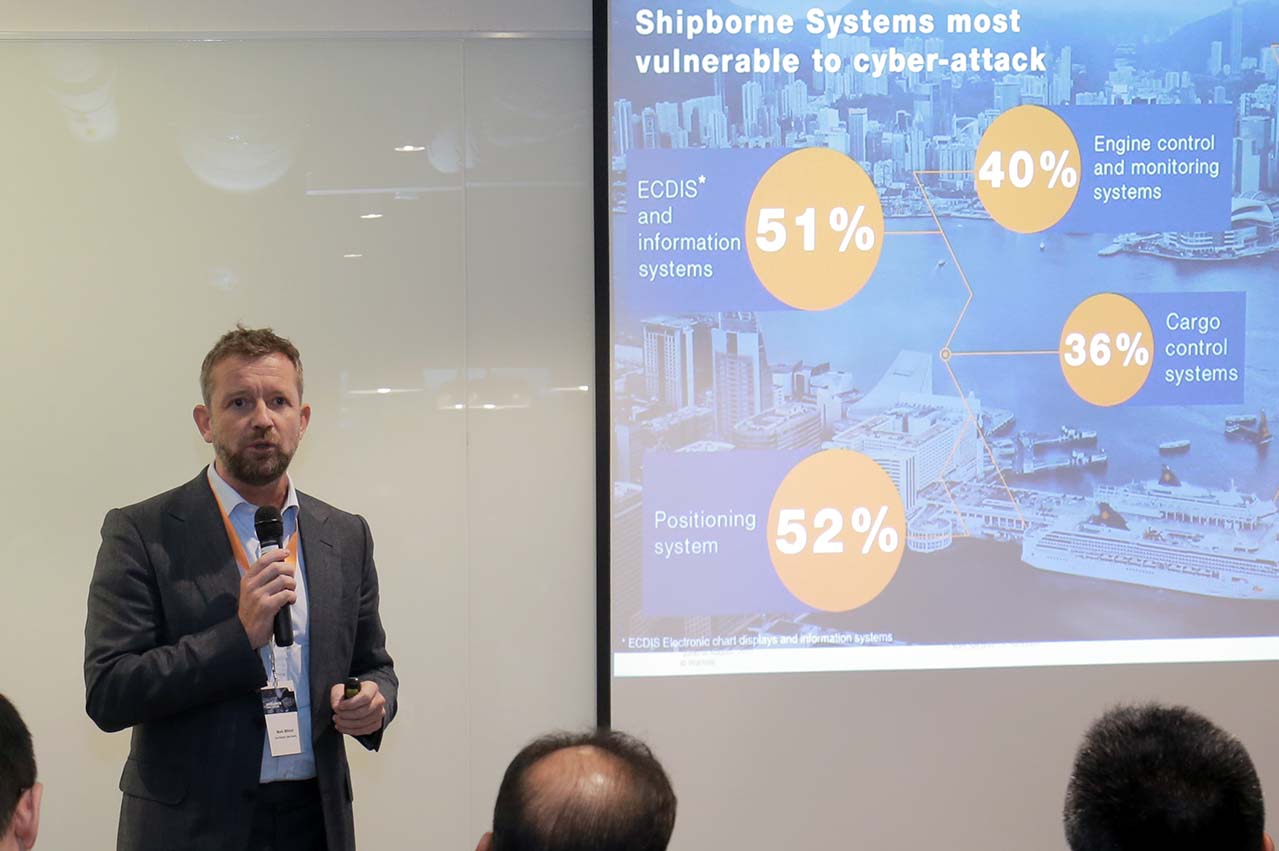
Mark Milford, VP of Cyber Security at Wärtsilä, offers Manifold Times readers some pointers on managing fake invoices and other types of cyber threats.

Admin

Published

on

5bd00adf169cd 1540360927

The bunkering industry experiences exactly the same cyber security vulnerabilities as other parts of the maritime industry and its exposure includes employees’ cyber hygiene, operational technology and financial transactions, says the VP of Cyber Security at Wärtsilä.

“It’s a business risk and people within the bunker industry have to know the threats they are facing and mitigate measures; the only way to do that is to have better understanding of the threat,” Mark Milford tells Manifold Times.

“Unless the equipment is up to date with the latest software or there are processes in place to prevent unauthorised access, anything that is connected either remotely or through physical means can have data accessed, altered or is vulnerable to cyber-attacks.”

Phishing, a fraudulent attempt at obtaining sensitive information by disguising as a trustworthy entity in an electronic communication, is especially common in the bunkering industry, states Milford.

He uses the example of a 2014 bunkering scam which cost World Fuel Services (WFS) approximately USD $18 million in damages where, in short, a scammer sent messages to WFS with payment information belonging to the criminal.

“The people aspect is particularly important in avoiding being a victim of cybercrime,” says Milford adding “educating people has the biggest affect across the board in terms of cyber resilience.” 

“The cybercriminal will always go after easiest options for generating revenue for themselves and in most cases that is actually the person who is operating the system; for example, in a phishing campaign with a fake invoice.

“The solution will be to educate the staff about cyber hygiene so they are aware of the threat likely to face them. This includes people involved in bunkering and people working in finance.” 

Meanwhile, Milford questions the reliability of cyberattack figures within the maritime industry.

“Nobody knows whether or not there were 2,000+ attacks last year in the bunkering industry because nobody wants to disclose them. The bunkering sector is especially reticent because you are not just dealing with reputation risk but also environmental impact as well if the operational technology is compromised,” he says.

“So only by understating what the threat is can you put in place mitigation measures.”

Milford was speaking to Manifold Times on the side lines of the launch of the International Maritime Cyber Centre of Excellence (IMCCE) at Singapore. The IMCCE consists of a Maritime Cyber Emergency Response Team (MCERT) and a cyber-academy.

The IMCCE is the world’s first industry solution for the marine industry, founded by Wärtsilä together with its strategic partner in cyber security, Templar Executives. 

“So in terms of understanding the threat we are partnering with Templar Executives to produce the first ever maritime threat integration facility,” notes Milford.

“Templar Executives are specialists working with government and has vast knowledge in maritime sector because they are responsible for drafting the BIMCO cyber security guidelines as well as working with International Maritime Organisation (IMO) departments.

“So, with vast maritime experience Wärtsilä has and their experience in the cyber sector we hope to be able to offer a holistic threat picture for all of our customers – this includes bunkering.”

Photo credit: Wärtsilä
Published: 24 October, 2018


Continue Reading

Emissions reporting

StormGeo and OceanScore link emissions data, compliance workflows

Cooperation combines StormGeo’s expertise in operational vessel and emissions data with OceanScore’s expertise in emissions compliance workflows across EU ETS, FuelEU Maritime and UK ETS requirements.

Admin

Published

on

By

StormGeo and OceanScore link emissions data, compliance workflows

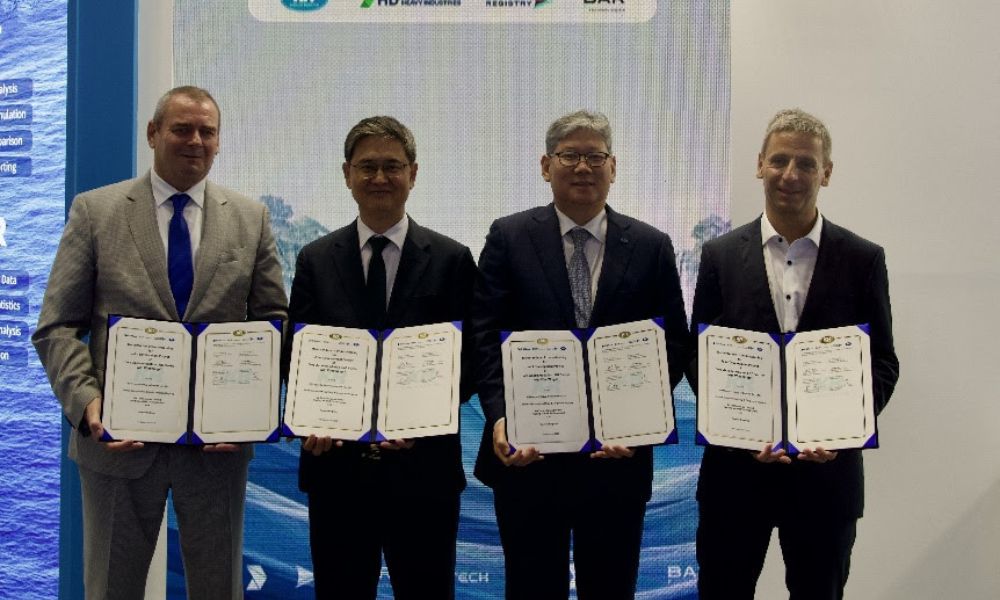
Weather intelligence and decision support solutions provider StormGeo and Hamburg-based technology platform OceanScore on Wednesday (3 June) said they have deepened their ongoing cooperation through the signing of a collaboration agreement during Posidonia 2026 in Athens on 2 June.

The cooperation combines StormGeo’s expertise in operational vessel and emissions data with OceanScore’s expertise in emissions compliance workflows across EU ETS, FuelEU Maritime and upcoming UK ETS requirements.

Together, the companies aim to help shipping companies seamlessly navigate increasing regulatory complexity more efficiently — from emissions reporting and data validation to compliance exposure management, pooling and financial settlement.

As emissions regulation becomes an increasingly important part of commercial shipping operations, the need for reliable operational data and streamlined compliance processes continues to grow. The cooperation between StormGeo and OceanScore is designed to support shipping companies with more connected, transparent and actionable processes across operational and commercial teams.

“From the outside, companies like StormGeo and OceanScore may sometimes be perceived as competitors because both operate around emissions and compliance workflows,” said Albrecht Grell, Managing Director at OceanScore. 

“But in reality, the industry increasingly needs both perspectives working together: trusted operational emissions data on one side and commercial compliance execution on the other. Our cooperation reflects that shipping companies are no longer looking for isolated solutions — they need connected processes, automated across different systems and reliable decision-making throughout the full compliance chain.”

By connecting validated operational emissions data with commercial compliance management, the cooperation supports workflows across:

  • emissions reporting and validation 
  • compliance management across EU ETS, FuelEU Maritime and upcoming UK ETS requirements
  • exposure visibility and cost transparency
  • pooling, settlement and financial processes 

The cooperation also aims to improve commercial transparency and coordination across operational and commercial stakeholders.

“StormGeo plays a central role in helping shipping companies turn operational vessel and emissions data into trusted, decision-ready insights,” said Espen Martinsen, Chief Commercial Officer at StormGeo. 

“As emissions regulations become more complex, this data is essential for transparent and efficient compliance management. By working with OceanScore, we can help customers connect StormGeo’s validated operational data with commercial compliance processes, creating a more integrated and practical approach to emissions management.”

The signing ceremony took place at the StormGeo booth during Posidonia 2026 in Athens and was attended by representatives from both companies.

Both companies expect the cooperation to continue evolving alongside upcoming regulatory developments, including FuelEU Maritime, EU ETS, the upcoming UK ETS and future emissions-related frameworks affecting global shipping.


Photo credit: StormGeo
Published: 4 June, 2026

Continue Reading

Methanol

Seaspan and Hapag-Lloyd complete first of five methanol vessel retrofit

Following “Seaspan Yangtze”, the remaining vessels planned for retrofit under the methanol retrofit programme are “Seaspan Amazon”, “Seaspan Ganges”, “Seaspan Thames”, and “Seaspan Zambezi”.

Admin

Published

on

By

Seaspan and Hapag-Lloyd complete first of five methanol vessel retrofit

Seaspan Corporation (Seaspan) and Hapag-Lloyd on Wednesday (3 June) announced the successful completion of the first of the five vessel conversions under their methanol retrofit programme with the delivery of Seaspan Yangtze.

From the early SAVER (Seaspan Action for Vessel Energy Reduction) programme to today’s CleanBlue initiative, Seaspan has committed over USD 230 USD million across 86 vessels, executing more than 550 efficiency and retrofit projects.

Following Seaspan Yangtze, the remaining vessels planned for retrofit under the programme are Seaspan Amazon, Seaspan Ganges, Seaspan Thames, and Seaspan Zambezi. Each retrofit is expected to reduce well-to-wake CO₂e emissions by approximately 30,000 to 50,000 metric tonnes per vessel annually when operating on low-carbon methanol, while also extending vessel lifespan and enhancing fuel flexibility.

“Decarbonisation is not just about building the fleet of tomorrow, it is also about unlocking the full potential of the fleet we have today. Retrofitting and upgrades on existing fleets play a practical, immediate, and economical role in accelerating shipping’s decarbonization journey,” said Bing Chen, Chairman, President and CEO of Seaspan. 

“Project SAVER CleanBlue highlights Seaspan’s strong customer partnerships, deep technical expertise, and unique platform integrated with JV partners, such as WattSpan Maritime Technology, in executing complex and large-scale retrofit projects.”

“The successful conversion of the Seaspan Yangtze together with the planned retrofit of its four sister vessels is another important step on our ambitious path towards net-zero fleet operations by 2045,” said Silke Lehmköster, Managing Director, Fleet, Hapag-Lloyd. 

“Together with Seaspan, we are demonstrating that retrofitting existing vessels for low-carbon methanol can be a practical way to reduce emissions in shipping.”


Photo credit: Seaspan
Published: 4 June, 2026

Continue Reading

Technology

StormGeo integrates Alfa Laval sensor data with Voyage Intelligence platform

Enhancing voyage efficiency is seen as the primary use case for sensor data in the short term, with the initial focus mainly on marine fuel consumption, according to StormGeo’s VP Shipping Petter Andersen.

Admin

Published

on

By

StormGeo launches new premium advisory offering with emission compliance reporting

Weather intelligence and decision support solutions provider StormGeo on Monday (1 June) said the company is expanding its Voyage Intelligence platform by integrating sensor data from shipboard energy consumers to deliver real-time insights for enhanced technical performance under a partnership with its parent Alfa Laval.

The joint project marked a significant advance in digitalisation of shipboard equipment through automated collection of engine and hull data and integration into a wider digital ecosystem to give a clearer overview and better understanding of vessel performance.

StormGeo and Alfa Laval are combining their resources to provide hardware installation, data collection and analysis, performance advice and client support as part of a unique, all-inclusive delivery from a single company.  

StormGeo’s VP Shipping Petter Andersen, said: “The goal is to provide a comprehensive, integrated solution for shipping companies to simplify data collection and harvest more value by using actionable insights from sensor data to enable faster and better-informed voyage decision-making.”

Enhanced data-driven insight into vessel performance represents an enabler for operational efficiencies and fuel savings to boost sustainability through more effective decisions, with AI-driven analytics seen as a tool to support rather than replace human judgment to maintain the focus on safety as top priority.

“Ship operators need actionable insights, not just data. Continuous real-time monitoring helps transform sensor and performance data into smarter operational decisions,” Andersen said.

Alfa Laval, a supplier of ship equipment and specialist in real-time monitoring, is taking advantage of recent advances in onboard connectivity to apply its expertise in sensor data collection to shipping through the tie-up with StormGeo, a global provider of weather intelligence and smart digital solutions for voyage optimization.

Enhancing voyage efficiency is seen as the primary use case for sensor data in the short term, with the initial focus mainly on fuel consumption, according to Andersen.

Real-time data increases visibility of hull and main/auxiliary engine performance to inform proactive efficiency measures such as hull cleaning or engine tuning, while also providing a basis for long-term analysis and benchmarking at both individual ship and fleet level.

“The innovative element of this integration is that we are assimilating equipment sensor data with an array of datasets covering weather, route optimization, voyage planning and navigation, emissions reporting, and bunker planning and procurement accessible via a unified user interface. This gives a more holistic overview for operational decisions,” according to Andersen.

StormGeo is the sole contracting party for the integrated solution, while accessing resources and technology from Alfa Laval’s global network. The company now sees the opportunity for future application of sensor data to a wide range of operational, safety, commercial and environmental use cases in maritime, in partnership with third-party data providers.

In particular, Andersen highlighted the potential for automation of noon reporting based on streaming of fuel consumption data to replace time-consuming manual processes – such as email and fax – for meeting SOLAS and other reporting requirements. A further possible application is condition-based monitoring of equipment for proactive maintenance.

This is part of Alfa Laval’s broader strategy to expand sensor data collection across multiple ship systems to realize an Internet of Things (IoT) onboard as part of its cloud-based ALIoT platform, in line with the trend towards increased connectivity in shipping and smarter vessel operations.

Alfa Laval’s Head of Vessel Operations, Jesper Boman, said: “There’s a lot of potential to further digitalize, giving operators real-time insights that help them make better decisions, reduce risk, improve reliability, and avoid unnecessary costs.

“At the same time, implementing and using digital tools needs to be done with robust cybersecurity measures in place. Aligned with the international standards, to keep our maritime assets safe.”


Photo credit: StormGeo
Published: 2 June, 2026

Continue Reading

Trending