
Business
Two 3,500 tonne oil spill response barges completed in Singapore for WCMRC
Western Canada Marine Response Corporation will receive delivery of barges in October, with arrival in Canada by the end of 2022, says Robert Allan Ltd.

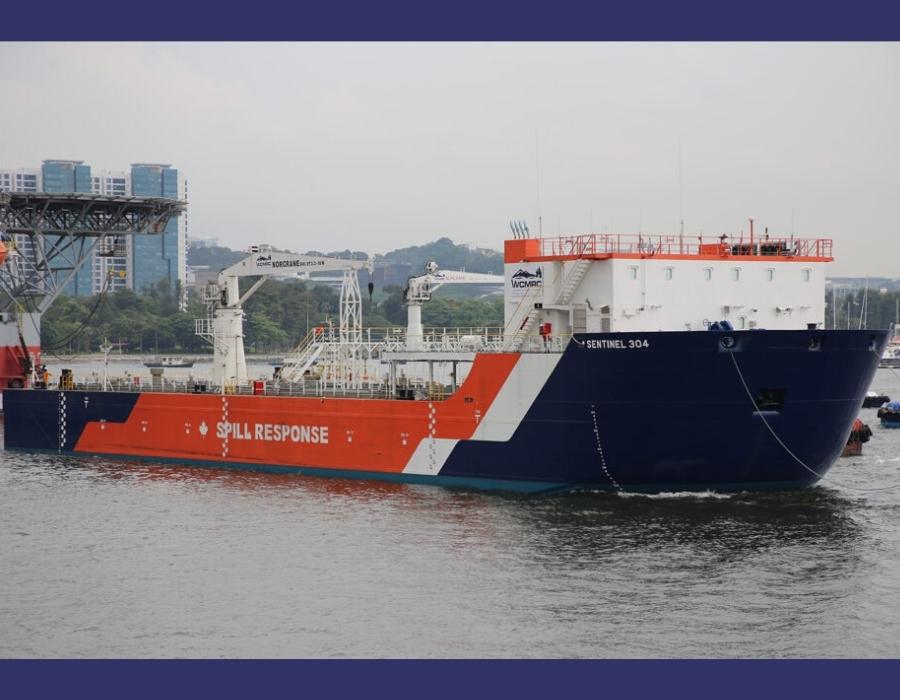
Robert Allan Ltd., an independent, privately-owned firm of consulting naval architects and marine engineers, on Wednesday (26 October) said two 3,500 tonne oil spill response barges – Sentinel 303 and Sentinel 304 – were recently completed at ASL Shipyard in Singapore.
Western Canada Marine Response Corporation (WCMRC), the Transport Canada-certified marine spill response organisation for Canada’s West Coast, will receive delivery of the barges in October, with arrival in Canada by the end of 2022.
The response barges will join WCMRC’s fleet of pollution response vessels stationed along the south coast of British Columbia. These new additions represent a significant enhancement to the pollution response capabilities already in place and will benefit the entire local maritime industry.
Key particulars of the response barges are:
- Length, overall: 76.0 m
- Beam, moulded: 20.0 m
- Depth, least moulded: 6.4 m
- Maximum draft (navigational): 4.6 m
- Gross Tonnage: 2822
The response barges were constructed to ABS rules with the following notation:
- A1 OIL SPILL RECOVERY BARGE (OSR-S2), UWILD, UNRESTRICTED SERVICE
Tank capacities of the response barges are:
- Recovered oil: 3,785 m3
- Fuel oil: 125 m3
- Potable water: 150 m3
- Sewage tank: 100 m3
- Grey water: 100 m3
Accommodations are outfitted to high, MLC compliant standards for a crew of up to 20 personnel. The ten double crew cabins are located on the accommodation deck with, the galley, mess/lounge, and office/control room located on the fo’c’sle deck.

The electrical plant comprises four (4) identical Caterpillar C4.4 diesel gensets each with a power output of 118 ekW.
The aft deck is the main working deck and contains all the oil spill response equipment. The spill containment systems consist of four unsheltered booms stored in containers with hydraulic reels, Current Buster No. 4 and Current Buster No. 6 stored in a single container with hydraulic reels, and four containers of general-purpose boom. There is ample storage for absorbents, mission-specific containers, general equipment, decontamination gear, dry storage, and a containerized workspace.
Two small vessel docks are stored onboard and can be deployed on port and starboard sides to allow other response vessel crews to embark/disembark to/from the response barges and facilitates the transfer of recovered oil from the response vessels to the response barge. A Desmi Terminator skimmer and hose reel allows the response barges to recover oil floating on the surface. Two mini storage barges are stowed on deck and can be deployed in the field to aid in the response.
A Norcrane fixed-boom crane with a SWL of 9 tonnes at 19 metres is fitted aft to handle the above-mentioned oil spill response gear and hoses.
Photo credit: Robert Allan Ltd.
Published: 1 November, 2022
Legal
Shell Singapore charged over Pulau Bukom oil leaks, reporting delays
Shell faces four charges under Singapore’s Prevention of Pollution of the Sea Act over two 2024 oil discharge incidents at its Pulau Bukom facility.
Incident
MPA probes Singapore Strait collision involving fishing vessel, bulk carrier
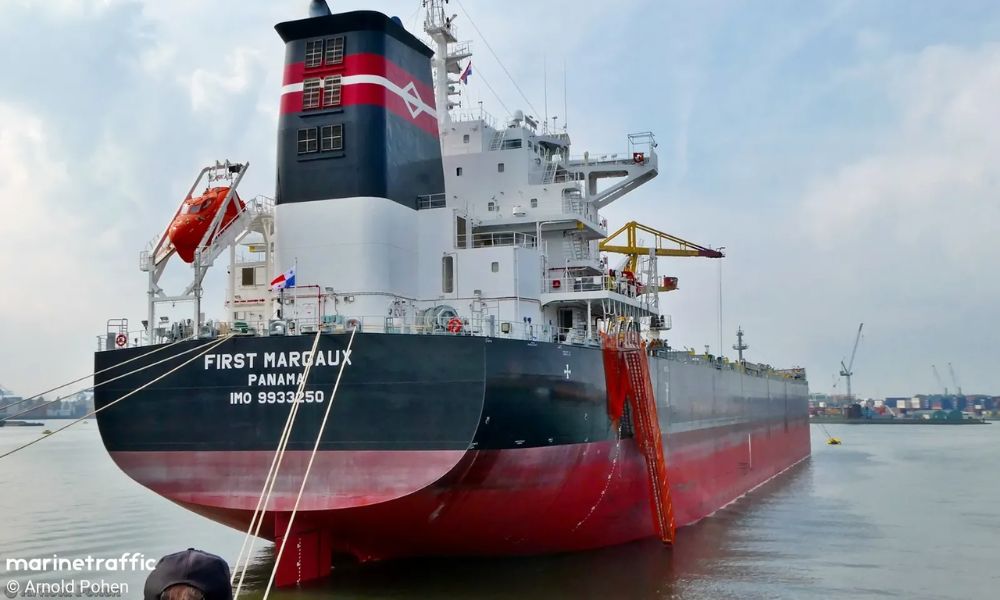
MPA says there were no reported injuries among the crew of either vessel in the incident involving China-registered fishing vessel “Lu Qing Yuan Yu” and Panama-registered bulk carrier “First Margaux” .
Mass Flowmeter
TFG Marine deploys first MFM-equipped bunker barge in Jamaica
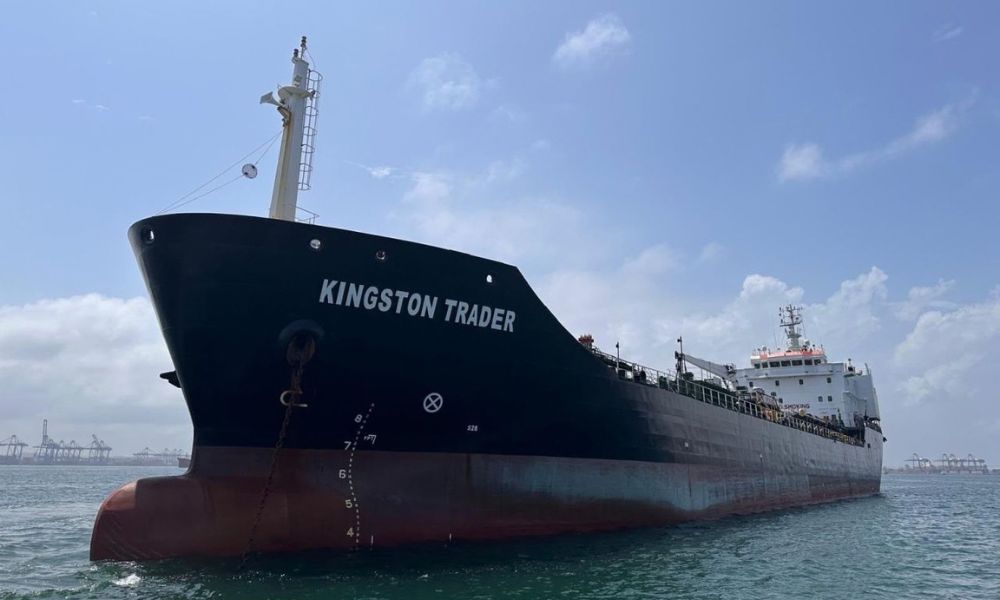
Bunker barge “Kingston Trader” is currently on its way to Jamaica following the successful installation of a Coriolis mass flow meter (MFM) system, certified to ISO 22192.

OUR INDUSTRY PARTNERS

Shell Singapore charged over Pulau Bukom oil leaks, reporting delays

MPA probes Singapore Strait collision involving fishing vessel, bulk carrier

TFG Marine deploys first MFM-equipped bunker barge in Jamaica

Seascale Energy names Gaetan Perret co-CEO as Olivier Josse prepares to retire

DNV: New research shows how regulation could reshape shipping

Stena Line orders two new hybrid ferries for Sweden – Denmark route

ENGINE: Americas Bunker Fuel Availability Outlook (24 Sep 2026)

Singapore: Marine fuel testing firm CCIC Singapore faces winding up application

High Court of Singapore issues winding up order against Hengli Petrochemical International

APPEC 2026: Digitalisation in bunkering not merely a ‘paper-to-screen’ swap, states panellists

APPEC 2026: Panellists navigate maritime decarbonisation and alternative marine fuel strategies

LDA’s methanol-powered “Spirit of Toulouse” gets Norsepower rotor sail in Shanghai

Goldwind green methanol facility completes trial production, ships first 500 mt

Singapore: Bunker fuel sales down by 4% on year in August 2026
-
 Winding up2 weeks ago
Singapore: Marine fuel testing firm CCIC Singapore faces winding up application
-
 Winding up2 weeks ago
High Court of Singapore issues winding up order against Hengli Petrochemical International
-
 Technology2 weeks ago
APPEC 2026: Digitalisation in bunkering not merely a ‘paper-to-screen’ swap, states panellists
-
 Alternative Fuels2 weeks ago
APPEC 2026: Panellists navigate maritime decarbonisation and alternative marine fuel strategies
-
 Wind-assisted2 weeks ago
LDA’s methanol-powered “Spirit of Toulouse” gets Norsepower rotor sail in Shanghai
-
 Methanol2 weeks ago
Goldwind green methanol facility completes trial production, ships first 500 mt
-
 Alternative Fuels2 weeks ago
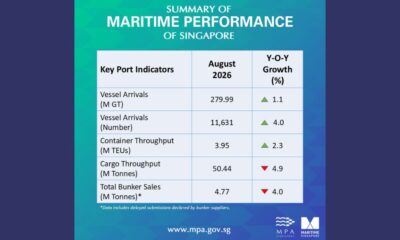
Singapore: Bunker fuel sales down by 4% on year in August 2026
-
 Bunker Fuel2 weeks ago
APPEC 2026: Equatorial and Kuwait Petroleum Corporation discuss Middle East bunker market dynamics