Connect with us

Alternative Fuels

Hitachi Zosen Marine Engine orders Mitsubishi Shipbuilding ammonia fuel handling system

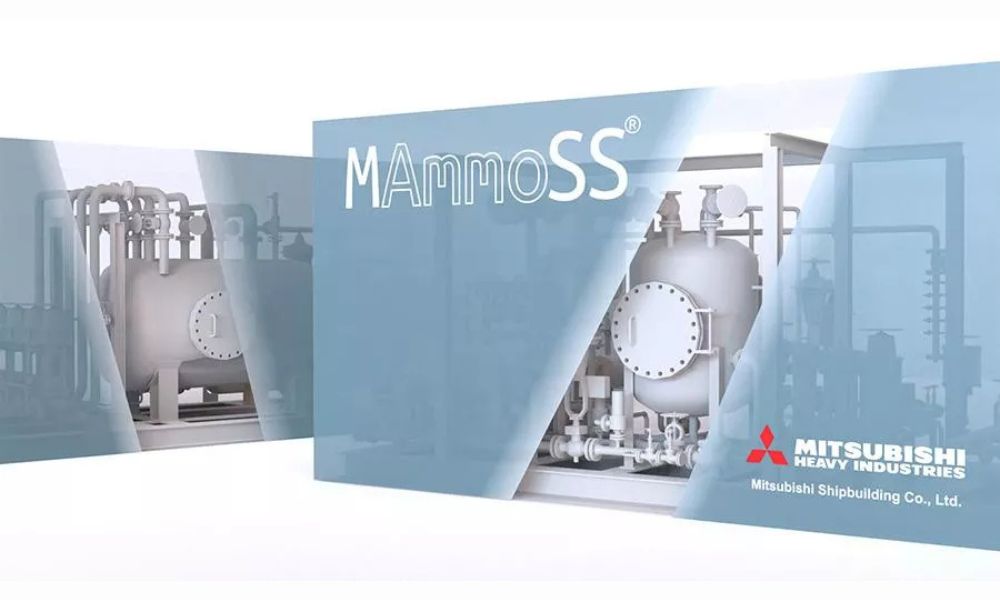
MAmmoSS® will be designed and optimised to be compatible with the ammonia marine engines of Everllence SE and WinGD and will be used for shop tests of both engines after delivery to HZME’s facility.

Admin

Published

on

Hitachi Zosen Marine Engine orders Mitsubishi Shipbuilding ammonia fuel handling system

Mitsubishi Shipbuilding Co., Ltd., a part of Mitsubishi Heavy Industries (MHI) Group, on Friday (26 June) said it has received an order from Hitachi Zosen Marine Engine (HZME) for its MAmmoSS® ammonia fuel handling system.

HZME is a dual licensee of Everllence SE and WinGD, major licensors of marine engines. MAmmoSS® will be designed and optimized to be compatible with the ammonia marine engines of these two licensors, and after delivery to HZME’s facility, will be used for shop tests of both engines.

The company said decarbonisation in global shipping is a critical issue, and ammonia, which does not emit CO2 when burned, is attracting attention as a next-generation marine fuel that will significantly contribute to reducing GHG emissions in the shipping industry. 

“However, as ammonia is a toxic fluid, safe handling technology onboard ships is essential and is expected to drive demand for MAmmoSS®,” it said. 

Going forward, Mitsubishi Shipbuilding said it will continue to provide safe and reliable products for ammonia-fuelled vessels to support the expected market expansion.


Photo credit: Mitsubishi Shipbuilding
Published: 30 June, 2026
Continue Reading

LNG Bunkering

2026 ESG Report: Singapore-based EPS completes 530 LNG bunkering operations

EPS said from the start of recorded data to 31 Dec 2025, the company completed a total of 530 LNG bunkering operations with over 2.4 million m3 of LNG bunkered.

Admin

Published

on

By

2026 ESG Report: Singapore-based EPS completes 530 LNG bunkering operations

Singapore-headquartered shipping firm Eastern Pacific Shipping (EPS) on Monday (29 June) said from the start of recorded data to 31 Dec 2025, the company completed a total of 530 LNG bunkering operations with over 2.4 million cubic meters (m3) of LNG bunkered. 

In its 2026 ESG Report, the company said it continued advancing practical decarbonisation through its dual-fuel fleet expansion, alternative fuels, wind-assisted propulsion, and digital optimisation initiatives, alongside strengthened emissions reporting and third-party assurance.

With over 170 vessels designed to operate on alternative fuels, EPS said its fleet is among the largest dual-fuel fleets in the industry. In 2025, 25% of the fuel consumed by EPS fleet were alternative marine fuels, including LNG, LPG, ethane, and biofuels. 

In 2025, EPS also expanded its use of B100 biodiesel, a renewable fuel derived from sustainably sourced biomass such as used cooking oil, food waste, and agricultural residues, which offers increasing global availability and compatibility with existing marine engines while delivering substantial Well-to-Wake (WtW) emission reductions relative to conventional fossil fuels under certified supply chains. 

In 2025 alone, 94% of the biofuel the company  purchased were B100 grade. Cumulatively, from the start of recorded data to 31 Dec 2025, EPS has completed 61 biofuel bunkering operations with over 33,000 mt of biofuel.

The use of alternative fuels has lowered its emission by 464,610 mt of CO2e relative to conventional marine fuels, and it is equivalent to 9% of its entire Scope 1 emission.

The company added that its investments in wind-assisted propulsion systems, alternative fuels, digital optimisation and operational efficiency reinforced its long-term decarbonisation strategy. 

Since 2018, EPS has invested significantly in maritime decarbonisation, committing at scale to LNG as a transition fuel while progressively deploying a broad range of sustainable solutions across both legacy vessels and newbuild programmes, including ammonia-fuelled vessel orders.

As at the end of 2025, EPS had invested approximately USD 2.6 billion across 15 green projects, with over 51% of the fleet designed to operate on alternative fuels such as LNG, LPG, ethane and ammonia.


Photo credit: Eastern Pacific Shipping
Published: 30 June, 2026

Continue Reading

Port & Regulatory

US lawmakers reintroduce bill to develop clean shipping technology and infrastructure

Legislation would create a USD 1 billion per year programme to develop the next generation of clean shipping technology and infrastructure such as zero-emission ships and cleaner marine fuels.

Admin

Published

on

By

RESIZED william william on Unsplash

US Representatives Nanette Barragán and Troy A. Carter, Sr., along with Senator Chris Van Hollen, on Friday (26 June) reintroduced the Next Generation Shipping Act. 

The legislation would create a USD 1 billion per year programme through the Department of Transportation’s Maritime Administration (MARAD) to develop the next generation of clean shipping technology and infrastructure. 

The lawmakers said the bill would help to address harmful pollution that comes from the shipping industry, a major but often unrecognised source of greenhouse gas emissions and port pollution. 

Through the development and usage of new technologies— such as zero-emission ships, cleaner marine fuels, and better port equipment— the programme seeks to protect the health of port and coastal communities, and help the US reduce its climate pollution.

They added that the bill would also help the United States keep up with other countries in Europe and Asia that are already investing heavily in clean shipping technology. The bill would ensure that the U.S. leads in the future of shipping, rather than rely on technology from other countries.

“Shipping plays a vital role in our economy, and at the Ports of Los Angeles and Long Beach, but it should not come at the expense of the health of our families,” said Rep. Barragán. 

“The Next Generation Shipping Act is about investing in cleaner technologies, supporting American jobs, making sure the United States leads in the future of maritime innovation, all while making sure we do so in a way that preserves public health. By acting now, we can protect our communities, strengthen our economy, and build a more sustainable shipping industry for generations to come.”

“The Next Generation Shipping Act is forward-thinking legislation that will help revitalise the U.S. maritime industry and boost our economic competitiveness. As the federal government looks to expand commercial shipbuilding capacity, the U.S. must invest in cleaner ships and technologies to compete globally,” said Antonio Santos, Federal Climate Policy Director, Pacific Environment. 

“The bill provides much-needed funding to position the US to be a leader in the development of next-generation vessel technologies and sustainable maritime fuels, while creating good-paying jobs and supporting workforce training. We thank Representative Barragán, Representative Carter, and Senator Van Hollen for introducing this important legislation and call on Congress to pass this bill to spur the market for building the advanced ships of the future.”


Photo credit: william william on Unsplash
Published: 30 June, 2026

Continue Reading

Alternative Fuels

ENGINE on Fuel Switch Snapshot: B100 premiums narrow for Singapore-EU voyages

Rotterdam B100 over $100/mt costlier than HSFO; Rotterdam LBM discounts to LSMGO widen; B100 premium over LSMGO drops to $39/mt in Singapore.

Admin

Published

on

By

ENGINE on Fuel Switch Snapshot: B100 premiums narrow for Singapore-EU voyages

Once a week, bunker intelligence platform ENGINE will publish a snapshot of alternative and conventional bunker fuel prices in the world’s two biggest bunkering hubs. The following is the latest snapshot:

  • Rotterdam B100 over $100/mt costlier than HSFO
  • Rotterdam LBM discounts to LSMGO widen
  • B100 premium over LSMGO drops to $39/mt in Singapore

Rotterdam B100’s premium over HSFO has widened by a further $35/mt to $103/mt over the past week.

On the other hand, its discounts to VLSFO and LSMGO have widened by $8/mt and $25/mt to $26/mt and $266/mt, respectively.

Singapore’s B100 has dropped slightly relative to conventional fuels. Its premiums over HSFO, VLSFO and LSMGO have narrowed by $16-25/mt over the past week to $39-408/mt.

ENGINE on Fuel Switch Snapshot: B100 premiums narrow for Singapore-EU voyages

LNG premiums over liquefied biomethane (LBM) in Rotterdam have widened by $15/mt to $440-447/mt.

Rotterdam’s LBM discounts to LSMGO have widened by $56-58/mt to $595-796/mt, depending on the engine type.

Liquid fuels

Rotterdam’s HSFO price has fallen by $41/mt over the past week. Its VLSFO has edged up by $2/mt, while its LSMGO price has increased by $19/mt.

The port’s B100 has edged down by $7/mt. Dutch ZRE A ticket prices have remained unchanged for a third consecutive week amid a “lack of reported trades,” Prima Markets has noted.

Singapore’s conventional fuel prices have declined by $36-45/mt over the past week, while its B100 benchmark has fallen by a larger $61/mt

The port’s monthly B100 sales doubled from 6,500 mt in April to 13,000 mt in May, according to preliminary data from the Maritime and Port Authority of Singapore.

Liquid gases

Rotterdam’s LNG prices have declined by $23-24/mt in the past week, driven largely by a 7% decline in LNG bunker premiums, which dropped from $134/mt to $125/mt. The front-month Dutch TTF Natural Gas contract has fallen by 2%, adding further downward pressure to LNG bunker prices.

Rotterdam’s LBM prices have fallen by $37-39/mt.

Singapore’s LNG prices have edged up by $8-9/mt. Resurging tensions in the Middle East, a Qatari gas facility explosion and rising LNG demand in Asia have added upward pressure on the prices.

LNG sales in Singapore jumped from 42,000 mt in April to a record 70,000 mt in May.

By Konica Bhatt


Photo credit and source: ENGINE
Published: 30 June, 2026

Continue Reading

Trending