Connect with us

Safety

Trafigura assesses security risks of voyages after tanker was hit by missile in Gulf of Eden

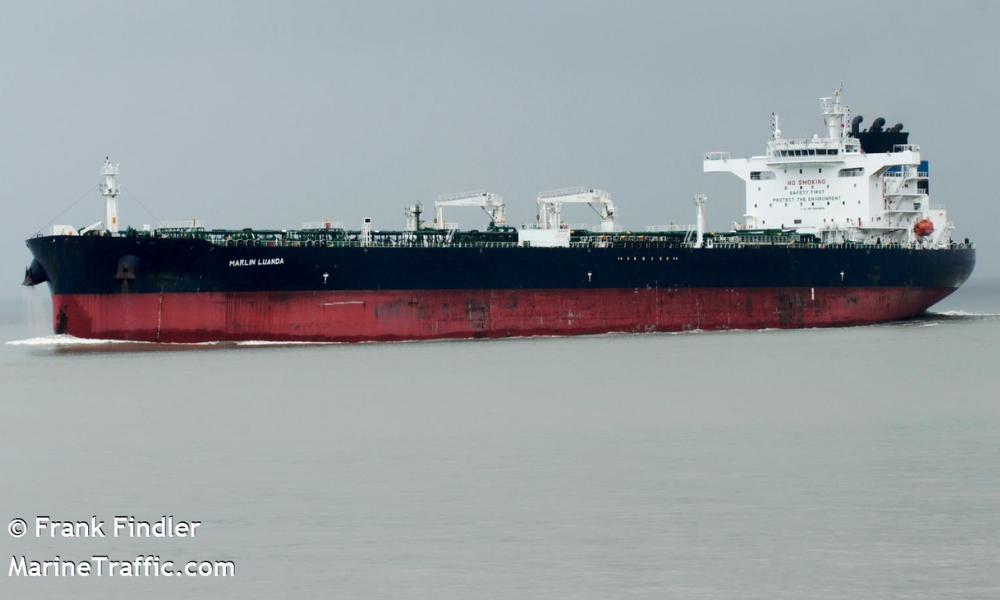
Firm was assessing the security risks involved in any voyage after tanker “Marlin Luanda”, operated on behalf of Trafigura, was struck by a missile in the Gulf of Aden after transiting the Red Sea on 26 January.

Admin

Published

on

MarineTraffic / Frank Findler

Commodity trading firm Trafigura Pte Ltd on Saturday (27 January) said it was assessing the security risks involved in any voyage after the Marlin Luanda, a petroleum products tanker vessel operated on behalf of Trafigura, was struck by a missile in the Gulf of Aden after transiting the Red Sea on 26 January. 

Firefighting equipment on board were deployed to suppress and control the fire caused in one cargo tank on the starboard side and Trafigura later confirmed no injuries or casualties have been reported in respect of the incident on board the Marlin Luanda.

“We are pleased to confirm that all crew on board the Marlin Luanda are safe and the fire in the cargo tank has been fully extinguished. The vessel is now sailing towards a safe harbour. The crew continues to monitor the vessel and cargo closely,” it said in its latest update.

“No further vessels operating on behalf of Trafigura are currently transiting the Gulf of Aden and we continue to assess carefully the risks involved in any voyage, including in respect of security and safety of the crew, together with shipowners and customers.”

Yemen’s Houthi rebel group reportedly started attacking commercial ships in the southern Red Sea and the Bab al-Mandeb Strait between Yemen and Africa on 19 November 2023.

Several shipping companies, including MSC, Maersk, Hapag-Lloyd, Wan Hai Lines, Ocean Network Express (ONE), HMM, Evergreen and Yang Ming, have rerouted their vessels via the longer Cape of Good Hope route to avoid these attacks.

Glander International Bunkering said some 35,000 vessels that sail through the region annually could be affected as the wave of attacks on merchant ships continue in the Red Sea.

“With the disruption of key trade route linking Europe and North America with Asia through the Suez Canal, exporters and shippers are increasingly looking to find alternative ocean transportation routes,” it said.

Under an extended threat, ship- and freight forwarders face disruption and freight cost rises. Moving goods around Africa can add as much as 30 days to a voyage.

“As a result, we are seeing an increase in bunker demand in East/West Africa and the Arabian Gulf. This is primarily in Durban, Port Louis, Canary Islands, Salalah, and Fujairah,” the firm added. 

Related: ENGINE: War-risk premium soars to 0.75-1% as the Red Sea attacks enter third month|
Related: Glander sees bunker demand spike in East/West Africa, Arabian Gulf due to Red Sea crisis
Related: Argus Media: US-led naval coalition tells shipping to avoid Red Sea
Related: IMO Secretary-General condemns attacks against international shipping in Red Sea


Photo credit: MarineTraffic / Frank Findler
Published: 29 January, 2024

Continue Reading

Bunker Fuel Quality

VPS on lifeboat fuel quality: A safety of life at sea critical risk

Neil Chapman and Steve Bee said regular fuel testing, correct fuel selection, and proactive fuel management are essential to ensure lifeboats are ready when they’re needed most.

Admin

Published

on

By

RESIZED VPS logo

Neil Chapman, Managing Director of Americas, and Steve Bee, Group Marketing and Strategic Projects Director of marine fuels testing company VPS, on Monday (13 July) said regular fuel testing, correct fuel selection, and proactive fuel management are essential to ensure lifeboats are ready when they’re needed most: 

Performance when its most critical

In an emergency, a lifeboat engine is not simply a mechanical asset, it is a life-saving system. If the fuel in that system is of poor quality due to degradation, contamination, or simply unsuitable for the operating environment, then the result may be failure to launch, manoeuvre, or sustain operation, when human lives depend on it. Fuel failures in lifeboats onboard Cruise Liners are high-consequence life-safety risk as the engine may be the only power source available during an emergency. It is a key SOLAS (Safety of Life at Sea) requirement that lifeboats should hold sufficient fuel to enable them to run at 6 knots for no less than 25 hours.

The primary consequence of a lifeboat failure is not the commercial  loss, but the potential failure of a safety-critical system during an abandon-ship scenario. Financial, legal and reputational consequences will undoubtedly follow but the immediate risk is to life.

Now with the inclusion of Biofuels and FAME in the marine fuel mix and assuming the same fuel used in the main engines may be used in the emergency systems, how do you verify the operability of the lifeboats in times of crisis?

Fuel grade DMX within the ISO8217 specification is specifically intended for use within emergency equipment. However, since this is not a mandatory requirement, marine gas oil (MGO grade DMA) used for other purposes on board, is often used to fill up lifeboat fuel tanks. This could lead to hazardous outcomes as the DMA grade fuel might not be suitable for its intended use. DMA fuel whilst acceptable for general machinery use, will unlikely provide the same assurance of low-temperature operability, ignition quality, storage reliability, or starting reliability required for emergency craft. The quality of the fuel in the lifeboat tanks may also deteriorate during storage. Hence it is essential to test and ensure that the quality of the fuel being taken into the tanks is ’fit for purpose’ and monitored at regular intervals. DMX fuel should be chosen due to its ability to operate at a lower temperature, superior ignition quality and  improved starting capabilities. However, this fuel only accounts for approximately 1-2% of the global supply, compared to the regular DMA grade.

Failure Modes in Emergency Operations

SOLAS compliance should not be viewed only in terms of carrying the required quality of fuel. The fuel must also remain fit-for-purpose regarding stability, cleanliness and be capable of supporting reliable engine operation throughout the vessel’s operation. Lifeboat failures are rarely a singular dramatic event, rather a chain of events. These are typically caused by degraded fuel, filter blockages or storage issues.  Incorrect handling and storage can result in the ingress of water, which with modern fuels, can promote the growth of filter blocking bacteria rendering the engine inoperable.  So rather than the issue being no fuel, it is more likely to be an issue of fuel that is of poor quality. As lifeboat engines may sit idle for long periods it potentially allows the fuel to degrade, if the correct due care and attention is not paid to this key piece of emergency equipment.

The handling and storage of fuel, coupled with the observance of quality operating procedures can lessen the risk of these failures, but are unlikely to eliminate them completely. However, the failure to follow established procedures can result in issues that are likely to cause catastrophic financial and reputational damage to the cruise line operator.

The most common failure modes in emergency lifeboats can be categorised as follows:

  • Fuel Starvation
  • Contamination
  • Degraded Fuel
  • Blocked Filter/Injectors

Contamination in the engine due to the presence of water, as previously mentioned, can be catastrophic as this can induce corrosion and oxidation, along with promoting microbial growth which results in filter blocking and fuel starvation to the engine.

If an engine fails to start, or runs poorly under load, due to fuel related issues this would likely cause a secondary emergency, compounding the reason the lifeboat was required in the first instance.

The danger with degraded fuel is that the risk is often hidden. A lifeboat may appear available, inspected and compliant, whilst he fuel inside its tank is steadily losing the properties required for reliable emergency operation.

IMO guidelines indicate that inspectors and regulators are increasingly looking at emergency systems for fuel compliance, highlighting its importance in the operation of a vessel.

Seasonal & Regional Fuel Requirements

Often overlooked are the cold flow properties of diesel and biofuels.  While hydrocarbon-based diesel has very good (low temperature) cold flow properties, this is not the case for biofuels, so lifeboats fuelled in the Caribbean for the summer season may be completely inoperable if the vessels are transferred to the Northeast or higher location, for a winter period.

Root Cause Failure Mechanisms

The failure to follow the appropriate standards which result in engine failure can be categorised as follows:

image 45

The Effect of Biofuels on Marine Fuel Quality

In a study recently completed by a major shipping line, blends of biofuels were tested for a wide range of parameters.  The findings were:

Biological growth appeared within the first month, increasing rapidly with exposure to light.

Within 3 months oxidative corrosion started to occur requiring regular monitoring.

46 CFR § 169.837 states:

“(2) The fuel tanks of motor propelled lifeboats have been emptied, and fuel changed once every twelve months.”

Yet the evidence shows fuel stability effectively starts to deteriorate within the first month and can be unusable by month 3.

Prevention Strategy

Fuel testing should be viewed as part of the vessel’s safety assurance programme. It provides evidence that the lifeboat fuel remains fit-for-purpose, not only on the day it was supplied, but throughout storage and across changing operational conditions. A strong housekeeping policy requires a multi-pronged approach to ensure operability in times of crisis; such steps include:

  • Housekeeping – ensuring the fuel system remains closed when not in use to eliminate the ingress of water.
  • Operation – frequently run the engines so that fuel and lubricants are cycled through the units.
  • Testing program – likely to be cheaper and more efficient than changing out the fuel. A well-developed fuel testing program can eliminate the need to change the fuel.
  • Documentation – by recording all the actions taken to protect the emergency systems historic data can be tracked.

Advanced Testing Programs

Due to the importance of these emergency assets several different tests should be considered to ensure the suitability of the fuel.  Testing should include:

  • Cold-Flow properties using Pour Point, Cold Filter plugging Point, Cloud Point
  • Water content for moisture
  • BYF for Microbial testing
  • Acid Number for corrosion tendencies
  • FAME for biofuels content
  • Sulphur for MARPOL Annex VI compliance
  • Visual Appearance
  • Viscosity for flow properties
  • Density
  • Flash Point for SOLAS compliance
  • Cetane Index

Conclusion

It is possible to avoid engine failures, but this can only be achieved with a well-documented and well-followed operating procedure.  Regular fuel sampling and testing along with general good housekeeping techniques will ensure these units are ready go when they are most needed. Once they are seen as an active safety-critical asset rather than a dormant emergency component the value in this process will be realized.

Lifeboat fuel quality is not a housekeeping detail, it is a Safety of Life at Sea issue. Emergency craft must be capable of starting manoeuvring and operating for the required duration whenever called upon. Sub-standard, degraded, contaminated, or unsuitable fuel can compromise that capability and turn an emergency response into a secondary emergency. Regular testing, correct fuel choice, controlled storage and documented fuel management provide the evidence and assurance that lifeboats remain ready when lives depend on them.


Photo credit: VPS
Published: 14 July, 2026

Continue Reading

Safety

IMO Secretary-General condemns new attacks on vessels in Strait of Hormuz

Arsenio Dominguez urged flag states, shipowners, operators and authorities to avoid exposing seafarers to unnecessary danger by transiting the Strait while the safety and security of crews cannot be assured.

Admin

Published

on

By

SMW 2024: Maritime industry on track to adopt mid-term decarbonisation measures, says IMO chief

International Maritime Organization (IMO) Secretary-General Arsenio Dominguez on Wednesday (8 July) issued a statement, calling for maximum restraint and de-escalation in the Strait of Hormuz following new attacks on ships transiting the area. 

According to reports, at least three vessels transiting the strait have been attacked in recent days.  

“I regret that once again I am compelled to speak out following attacks on commercial ships and innocent seafarers, due to geopolitical circumstances beyond their control,” he said. 

“I condemn the attacks over the past two days against several ships transiting the Strait of Hormuz.

“These reckless attacks have again placed innocent seafarers in grave danger. No seafarer should have to risk their life simply for doing their job.”

He urged flag states, shipowners, operators and all relevant authorities to avoid exposing seafarers to unnecessary danger by transiting the Strait while the safety and security of crews cannot be assured. 

“The situation in the region remains volatile. These attacks further intensify the fear, uncertainty and psychological strain already being endured by the nearly 6,000 seafarers who remain stranded on board vessels unable to depart the Persian Gulf safely,” Dominguez added. 

“I call on all States concerned to exercise maximum restraint, de-escalate the situation without delay, and facilitate the safe departure of the ships still trapped in the Gulf since the crisis began.

“The safety of seafarers must remain our foremost priority.”

According to IMO’s website, a total of 136 vessels and 2,900 seafarers have been evacuated through the Strait of Hormuz before IMO paused its evacuation plan on 25 June. 


Photo credit: International Maritime Organization
Published: 9 July, 2026

Continue Reading

Hydrogen

DNV launches new recommended practice for use of hydrogen as bunker fuel

New RP outlines the competence requirements for crew, inspectors, and technical personnel to support the proper handling of hydrogen systems on board ships.

Admin

Published

on

By

DNV study for EMSA backs design-based safety approach for hydrogen‑fuelled ships

Classification society DNV on Wednesday (20 May) said it has released a new recommended practice (RP) for hydrogen as ship fuel, outlining the competence requirements for crew, inspectors, and technical personnel to support the proper handling of hydrogen systems on board ships.

Hydrogen is gaining traction as a marine fuel, with seven vessels currently in operation and another 30 in the orderbook. However, several safety barriers like hydrogen leakage, low ignition energy, and management of high‑pressure or cryogenic storage, still limit its uptake. But with proper training and a strong safety culture, and with ship designs engineered to limit risk as much as possible, its use can be managed more safely and efficiently.

The DNV-RP-0703 “Competence related to use of hydrogen as fuel” addresses hydrogen’s specific risk profile by defining structured competence requirements. The RP can also be used as a basis for operational procedures and emergency preparedness planning. It builds on DNV’s existing competence framework for low‑GHG fuel, following RPs and Standards for LNG, ammonia, and methanol.

Cristina Saenz de Santa Maria, CEO Maritime at DNV, said: “Hydrogen represents one of several possible pathways in maritime decarbonization. The development of efficient safety regulations and guidelines is fundamental for hydrogen to evolve from large-scale demonstration to commercial use. 

“To get there it is essential that the industry develops competence levels among seafarers in parallel with technical solutions so that they can operate hydrogen‑fuelled vessels with confidence.”

DNV’s RP is designed to supplement existing regulatory frameworks such as the STCW Convention and ISM Code by providing hydrogen‑specific competence guidance for organizations considering using hydrogen as a marine fuel. 

It is also intended for use by shipowners and operators for onboard familiarization and competence management, by maritime academies and training institutions to develop curricula and courses, and by third parties as a reference for certification or verification of learning programs and competence assessments.

Kirsten Birgitte Strømsnes, Business Development Leader in DNV, said: “The use of hydrogen as a ship fuel requires that crew and shore-based personnel are trained on its specific hazards, and that organizations reflect these risks in their management systems and competence frameworks. It also means ensuring safer ship designs and implementing the necessary technical barriers.

“We have developed this recommended practice using DNV’s established methodology for competence standards, with input from industry partners and with reference to international regulations. As industry experience with hydrogen-fuelled vessels grows, this RP is intended to evolve in line with emerging best practices into a competence standard.” 

DNV has collaborated with industry partners Samskip, eCap Marine, Naval Dynamics, Chart Industries, LH2 Shipping, Torghatten, Shell, Everllence, and GreenH in developing the recommended practice. 

Note: More information on DNV’s new RP can be found here


Photo credit: DNV
Published: 21 May, 2026

Continue Reading

Trending