Connect with us

Business

Sinopec ups VLSFO production to capture Chinese bonded bunker market share

Offers its refineries incentive of 150 yuan ($23.35) per tonne of VLSFO to encourage production due to domestic diesel oversupply leaving local refineries idle.

Admin

Published

on

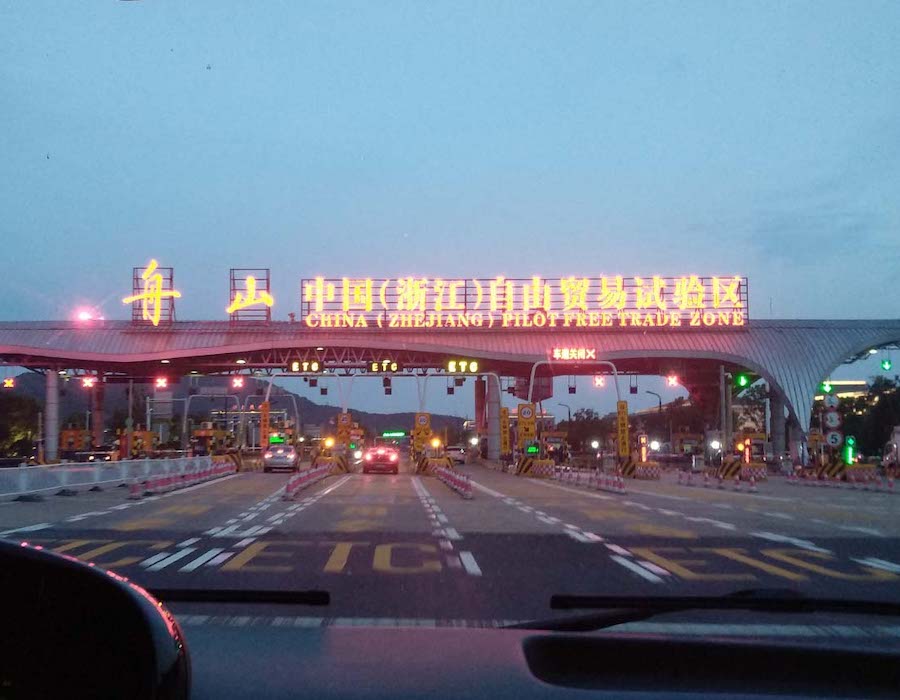
Zhejiang Free Trade Zone Manifold Times

China Petroleum & Chemical Corporation (Sinopec) has started a programme to encourage local subsidiary refineries to boost very low sulphur fuel oil (VLSFO) production, according to Reuters.

It noted Sinopec offering its refineries a reward of 150 yuan ($23.35) for every tonne of VLSFO produced.

The development is seen as an effort to capture increased market share of the local marine fuels market, and a coping mechanism to help prevent local refineries from being idle due to diesel oversupply.

“With the massive diesel surplus in the domestic market, Sinopec does not need to process that much diesel itself so why not make use of the processing capacity to boost marine fuel?” said a senior source, as quoted by Reuters.

Though the duration of the bonus scheme is unclear, the move has resulted in Zhoushan’s VLSO bunker fuels prices being offered at a discount to that of similar product lifted from Singapore port.


Photo credit: Manifold Times
Published: 14 May, 2021

Continue Reading

Alternative Fuels

Shipfinex: The green fleet transition has a financing problem

Capt. Vikas Pandey, Founder & CEO, Shipfinex argues green shipping progress is uneven: major carriers can finance alternative-fuel vessels, while smaller owners face capital constraints.

Admin

Published

on

By

Shipfinex: The green fleet transition has a financing problem

By Capt. Vikas Pandey, Founder & CEO, Shipfinex

The numbers on alternative-fuel orders look encouraging. Seventy-two percent of newbuild capacity ordered in the first ten months of 2025 was for alternative-fuel vessels, with LNG dual-fuel accounting for 60% of that figure. More than 1,369 LNG dual-fuel vessels are now in operation or on order globally. By most measures, the transition appears to be happening.

Look at who is actually placing those orders. MSC. Hapag-Lloyd. CMA CGM. Carriers with balance sheets large enough to absorb the cost premium of alternative-fuel newbuilds and relationships with Chinese leasing companies that extend leverage ratios unavailable to most of the industry. The Strait of Hormuz disruption this March accelerated that activity further: LNG tanker charter rates spiked above $200,000 per day and carriers with deep pockets moved to lock in fuel flexibility. Meanwhile, for vessels under 6,000 TEU, orders for conventionally fuelled tonnage rose to 28% of capacity ordered in 2025, up from 19% the year before. That is not a story of broad commitment to green fuels. It is a story about who has access to capital.

An alternative-fuel newbuild costs materially more than a conventional equivalent. Methanol-ready designs, ammonia-ready structures, LNG dual-fuel systems, each carries a cost premium above the base vessel price. For an independent shipowner financing through a traditional bank, that gap is increasingly difficult to bridge. Top-40 bank lending to shipping fell from $454.9 billion in 2011 to $284.3 billion by end-2023. The Chinese leasing companies that absorbed part of that contraction are structurally oriented toward Chinese-built vessels under long-term contracts with tier-one counterparties. Independent bulk owners, mid-tier tanker operators, feeder container companies: they are working with a materially shrunken pool of willing lenders at precisely the moment they are being asked to upgrade their fleets.

This bifurcation deserves more attention from the marine fuels industry than it currently receives. Bunkering infrastructure investment follows demand signals. Alternative-fuel bunkering at secondary ports, methanol at regional hubs, LNG outside the major transhipment centres, requires a broader fleet base of alternative-fuel vessels to justify the investment. If green fuel adoption stays concentrated among a handful of majors rather than spreading across the independent owner fleet, the economics of scaling bunkering supply infrastructure outside the primary corridors remain thin.

Capital market structure and marine fuel adoption are connected, and pretending otherwise slows both. Digital instruments representing economic exposure to vessel-owning Special Purpose Vehicles, structured within regulated frameworks like VARA in Dubai, can extend the base of capital available to shipowners below the tier-one threshold. That capital base does not replace bank lending. It reaches operators that bank lending currently does not.

The Hormuz disruption reminded the industry that fuel supply chains carry geopolitical risk. The financing gap raises a quieter but equally structural point: the demand side of the green fuel equation depends on shipowners being able to afford the vessels that create that demand. Alternative-fuel bunkering infrastructure will scale when the fleet ordering those vessels does. Right now, that fleet is smaller than the order book numbers suggest.

About the Author

Vikas Pandey is a Master Mariner with decades at sea across various vessel categories. He is Founder and CEO of Shipfinex FZCO, a maritime asset tokenization platform operating under VARA In-Principle Approval (IPA/26/01/002) in Dubai and registered as a Virtual Asset Service Provider in Poland.

Disclaimer: This article is for informational purposes only and does not constitute financial advice or a solicitation to buy or sell any financial instrument or virtual asset. Maritime Asset Tokens are virtual assets; values may decline materially below purchase price. VARA In-Principle Approval does not constitute a final licence.

Linkedin: https://ae.linkedin.com/in/capt-vikaspandey
Website: https://www.shipfinex.com/


Photo credit: Shipfinex
Published: 4 June, 2026

Continue Reading

Business

Hong Kong-based bunker trading firm E-Marine expands ops with new Shanghai branch office

The HONG KONG E-MARINE SHANGHAI BRANCH will assist E-Marine’s head office in handling bunker trading operations and increase overall bonded bunker trading volumes at China.

Admin

Published

on

By

E Marine Shanghai office front

Hong Kong-based marine fuel and lubricant trading company Hongkong E-Marine Supply Service Corporation Limited (E-Marine) on April 15 launched a branch office in Shanghai, learned Manifold Times.

The company HONG KONG E-MARINE SHANGHAI BRANCH will assist the head office in handling bunker trading operations and increase overall bonded bunker trading volumes at China, Managing Director Darcy Wang told the bunkering publication.

“The Shanghai office serves as our China business support and coordination centre. It enables us to stay close to our customers, suppliers and business partners, while also providing access to a deep pool of industry talent,” he shared.

This development is in line the target to significantly increase our annual bonded bunkering portfolio in China to 1 million metric tonnes (mt) by 2030.

“As we continue to expand our presence in China, we welcome capable and motivated individuals who share our long-term vision to join our Shanghai office.”

E-Marine’s new Shanghai office address is as follows:

Shanghai Xuhui District
Chang Ning Road No.889
Shanghai Yang Guang Bin Jiang Center
Unit 22-13

Candidates interested in growing together with E-Marine are invited to send their CV or profile to [email protected].

E Marine Shanghai office tea cups

Related: E-Marine raising China bonded bunker trading portfolio to 1 million mt by 2030, seeks talents
RelatedHong Kong-based bunker trading firm E-Marine obtains ISCC EU certification
RelatedHong Kong-based bunker trading firm E-Marine introduces Global Sales & Procurement Manager
RelatedHong Kong-based bunker trading firm E-Marine expands operations with Singapore branch
RelatedBunker and lube trading firm Hongkong E-Marine Supply Service to open Singapore branch by June


Photo credit: Manifold Times
Published: 4 June 2026

Continue Reading

Biofuel

BHP and GCMD trial multi-feedstock B100 bio bunker fuel on bulk carrier

Bio-blend in the BHP and GCMD pilot is being used on a BHP-chartered bulk carrier “Berge Lyngor”, which was bunkered in Singapore in early May.

Admin

Published

on

By

BHP and GCMD trial multi-feedstock B100 bio bunker fuel on bulk carrier

BHP and the Global Centre for Maritime Decarbonisation (GCMD) on Wednesday (3 June) said they have blended biofuels from two distinct feedstocks—used cooking oil and waste animal fats —and introduced the lower-emissions marine fuel into a BHP-chartered bulk carrier as part of a pilot project.

The bio-blend in the BHP and GCMD pilot is being used on a BHP-chartered bulk carrier Berge Lyngor, owned and operated by Berge Bulk, transporting BHP iron ore from Western Australia to China. When run on bio-blend, the vessel has the potential to reduce well-to-wake greenhouse gas emissions by approximately 79 per cent per voyage compared to sailing on very low sulphur fuel oil (VLSFO).

The vessel bunkered in Singapore in early May with a B100 bio-blend comprising 50 percent tallow-derived biodiesel, sourced and supplied by HAMR Energy, and 50 per cent used cooking oil (UCOME) supplied by Mitsui & Co Energy Trading Singapore (METS).

Mitsui also blended the fuel and Dan-Bunkering coordinated and executed the bunkering operation, which was performed by Global Energy’s barge MT Maple.

The BHP and GCMD pilot will assess how biofuels from multiple feedstocks can be blended, handled, and introduced under real-world operating conditions using existing used cooking oil bunkering infrastructure.

At the same time, insights from this pilot will help identify solutions to challenges related to fuel quality, handling, traceability, and onboard vessel performance.

Biofuels for global shipping today rely heavily on used cooking oil – a feedstock whose availability is approaching its projected limits. Biofuel from waste animal fats presents a promising option to expand the supply of lower-emissions marine fuels.

The outcomes of the pilot are expected to shed light on the practical steps to integrate biofuel blends from different feedstocks into existing supply chains. The diversity of biofuels will provide shipowners and operators with greater flexibility to optimise fuel procurement based on cost, availability, and lifecycle emissions performance.

Biofuels derived from different feedstocks can exhibit varying properties that may impact operations, including potential corrosion from oxidation, fuel system clogging caused by wax formation, which this pilot aims to assess.

The pilot will trace and verify the biofuel blend’s integrity aimed at bolstering confidence in emissions reductions reporting. The pilot will also provide insights into how robust tracing can support future marine fuel supply chains where biofuels from multiple feedstocks with varying lifecycle greenhouse gas emissions footprints are blended together.

This project is co-funded by the Maritime and Port Authority of Singapore under the Maritime Innovation and Technology Fund (MINT).


Photo credit: Global Centre for Maritime Decarbonisation
Published: 3 June, 2026

Continue Reading

Trending