Connect with us

Business

R3: Combating Fraud and the Role of Blockchain in Bunkering

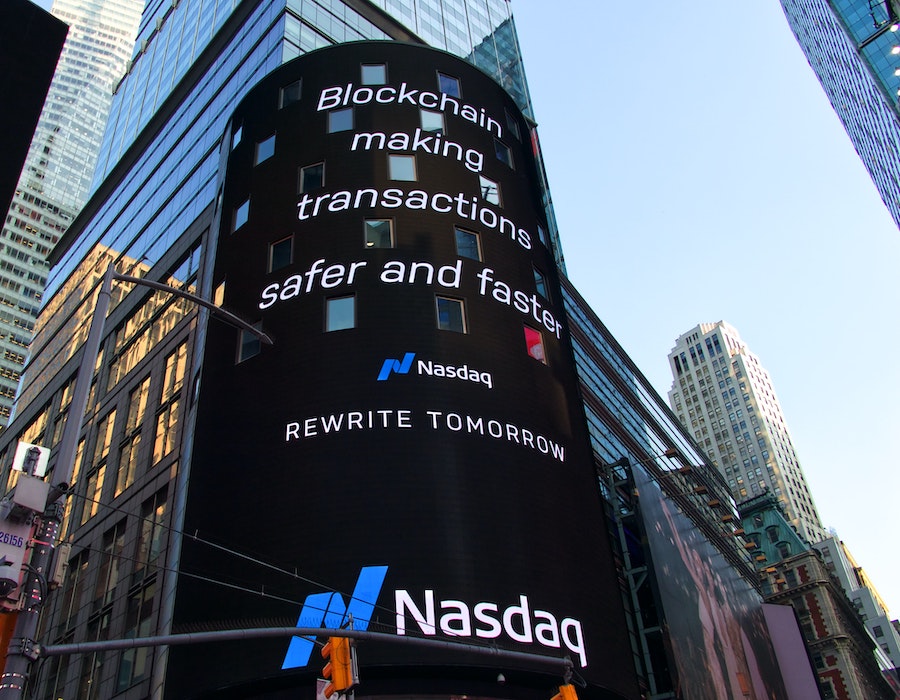
The potential of blockchain to streamline the documentation process, encrypt and store data reduces the ability of any actor to falsify documentation to zero, it said.

Admin

Published

on

pascal bernardon zt0HWquGXlQ unsplash

Enterprise software firm pioneering digital industry transformation, R3 published an article regarding the relevance of blockchain in reducing the occurrence of fraud and money laundering in the bunkering industry in light of the Hin Leong scandal; it was written by Henry Roxas, Head of Trade Finance at R3 and shared exclusively with Manifold Times:

The phrase “money laundering” often conjures up images of illicit cash-only dealings, the black market, questionable investment infrastructures, and inefficient Know-Your-Customer (KYC) processes. It is always a problem which is happening in another industry or another part of society. However, money laundering is taking place in the bunkering industry—and it is big business.

In fact, “Trade-Based Money Laundering” (TBML), the use of trade finance to obscure the illegal movement of funds through misrepresentations of the price, quality or quantity of goods’, is a growing global concern. With financial hubs like Singapore and Hong Kong playing a pivotal role in facilitating international trade flows, they have also become a centre of economic crime in the form of TBML with reports showing that Asian countries account for five out of the top ten nations with the largest average value gaps in the form of misinvoicing, demonstrating the scale of the risks of TBML faced by the region’s economies. While compliance officers face mounting pressure to bring rampant TBML under control, new technologies are presenting innovative means of creating a financial system which is secure, transparent, and compliant.

Fragility of the Trade Financing System

The rise of TBML has been in large part due to regulators and the financial services providers’ inability to effectively tackle the issue, particularly when compared to other areas of financial fraud which have been increasingly ineffective as banks apply greater emphasis to KYC and AML procedures in their day-to-day operations. Despite the trillions of dollars poured into combating fraud in the past decades, the complex financial transactions which take place during TBML prove effective in obscuring the source of “dirty money”. The efficacy of TBML is highlighted by the fact that existing monitoring software is incapable of recognising most instances of fraud—with 95% of flagged transactions proving to be false positives.
Weaknesses which are exploited to launder money are the result of limited visibility and standardisation across the value chain within the bunkering industry which makes it easy for illicit actors to embezzle funds through the misrepresentation of assets, forged documents, and double financing. One need only think of the much-publicised Hin Leong Trading scandal for a characteristic example of nefarious actors obtaining financing for cargoes which did not exist.
This lack of transparency and visibility is made worse by the inherent complexity of international trade. The countless middlemen involved in any given transaction serve to add layers of complexity and provide new stages to the value chain where fraud can occur. Usually paper-based documents necessary for ensuring the validity of cargoes change hands between innumerable importers, importer banks, exporters, exporter banks, freight forwarders, insurers, inspectors, couriers, and public officials. As banks are forced to operate solely on the documents they receive from the buyer/seller, they have limited capacity to establish the veracity of the documents provided—that is, whether they are over-priced or forged, etc.—making fraud especially difficult to detect in instances of collusion between multiple parties within the value chain.

Blockchain and TBML

In an ecosystem involving countless transactions across networks of immense scale, all of which are plagued by documentary fragmentation, it is plain to see how TBML remains such an effective means of committing fraud. A systemic problem, what we require to strengthen the trade financing sector is an end-to-end solution which facilitates greater transparency, secure data sharing, and more effective monitoring. Enter blockchain.

The potential of blockchain to streamline the documentation process within the bunkering sector alone has profound implications for TBML efforts. However, more than this, blockchain also facilitates effective data sharing between parties, solving issues of transparency and visibility across the value chain. With blockchain, this can all be done in a far less costly and paper-intensive way than current TBML methodologies which offer few alternatives and maintain high barriers to entry to the industry.

By encrypting data and storing it immutably—blockchain eradicates the need for man-hours to consolidate and reconcile data; it also reduces the ability of any actor to falsify documentation to zero. The technology is also able to scale and process millions of transactions, and already enjoys significant uptake amongst leading financial service providers—for example, the Spunta Project in Italy which optimises interbank data transfers and settlements has been adopted by over 100 Italian banks (91% of the nation’s banks) and the number of processed transactions is expected to exceed 350 million by the end of 2020. Meanwhile, here in Asia, DBS and Standard Chartered are working on a digital Trade Finance Registry (TFR) to enable participating financial institutions to tap into a secure database of trade transactions financed across banks in Singapore. These deployments of blockchain could have a radically game-changing effect on the bunkering industry, increasing clarity and visibility across the value chain.

In addition, blockchain has the potential to be paired with other technologies like IoT devices, to address issues throughout the trade process. For example, IoT can be used to monitor the bunkering process and generate bunker delivery notes that are stored on the blockchain and shared with authorised parties, bringing greater security to traditional ways of working and providing banks with a solution that allows them to monitor the entire physical supply chain from terminals to the buyer’s vessel.

Looking Ahead

If blockchain provides so many answers to the issues facing the bunkering industry, why then have we been slow to adopt the technology? Because replacing legacy systems can prove to be a laborious and costly effort, despite the long term benefits it brings. Without external factors creating urgency to replace old ways of doing things, many companies will put off adoption or fail to see the many benefits of embracing emerging technologies and new ways of working proactively.

As regulators and financial service providers continue to focus on TBML in efforts to crack down on widespread, and incredibly costly fraud, however—we can expect to see novel solutions and innovative technologies increasingly incorporated into their considerations. What may have previously been viewed as too costly or dramatic an overhaul of existing systems may prove the path of least resistance for the bunker industry and trade finance sector going forward—as more traditional AML processes have thoroughly failed to have an impact on illicit trade flows.

From where we stand today, it looks like blockchain may be the most promising response.

Photo credit and source: Pascal Bernardon on Unsplash
Published: 23 December, 2020

Continue Reading

Alternative Fuels

J-ENG completes land-based testing of hydrogen-fuelled marine engine

Engine will be installed on a 17,500 DWT multipurpose vessel to be built by Onomichi Dockyard for MOL and MOL Drybulk, with onboard demonstration testing scheduled to begin in April 2028.

Admin

Published

on

By

12 2

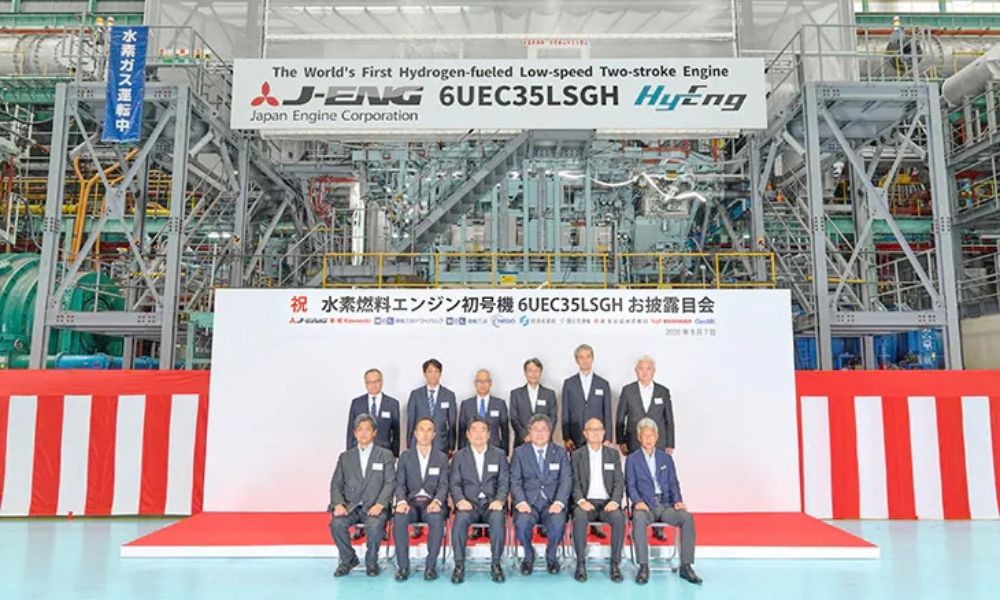
Japan Engine Corporation (J-ENG) on Friday (18 September) said it has completed land-based testing of the world’s first hydrogen-fuelled engine for large commercial vessels, the 6UEC35LSGH.

During factory testing, the engine achieved a hydrogen co-firing rate of at least 95%, reducing GHG emissions by more than 95% compared with conventional heavy-fuel-oil engines.

By adopting a high-pressure direct injection system, which injects fuel directly into the cylinder at high pressure, J-ENG said the engine achieves stable hydrogen combustion. 

Safety measures were also implemented, including a robust structure to prevent hydrogen leakage and double-walled piping for hydrogen supply lines. 

“Approval testing was conducted in the presence of ClassNK and was completed successfully,” the company said. 

The engine will be installed on a 17,500 DWT multipurpose vessel to be built by Onomichi Dockyard for Mitsui O.S.K. Lines and MOL Drybulk.

Hydrogen fuel will be supplied to the engine through a marine hydrogen fuel system, consisting of marine hydrogen fuel tanks and a fuel supply system, developed and manufactured by Kawasaki Heavy Industries.

In addition, Nippon Kaiji Kyokai (ClassNK) will conduct safety assessments throughout each stage of the engine’s development and the vessel’s design, construction and operation.

The vessel will then undergo sea trials before onboard demonstration testing begins in April 2028. 

Kawasaki will also develop and manufacture bunkering equipment for supplying liquefied hydrogen to vessels. 

“The demonstration will further evaluate the engine’s durability and performance under actual operating conditions,” J-ENG added.


Photo credit: J-ENG
Published: 22 September, 2026

Continue Reading

Business

Trafigura launches Volare Shipping with six VLCCs, eight newbuilds on order

Volare Shipping has announced a contemplated Private Placement to raise approximately USD500 million, with a proposed listing on Euronext Growth Oslo under the ticker “VLCC”.

Admin

Published

on

By

Trafigura launches Volare Shipping with six VLCCs, eight newbuilds on order

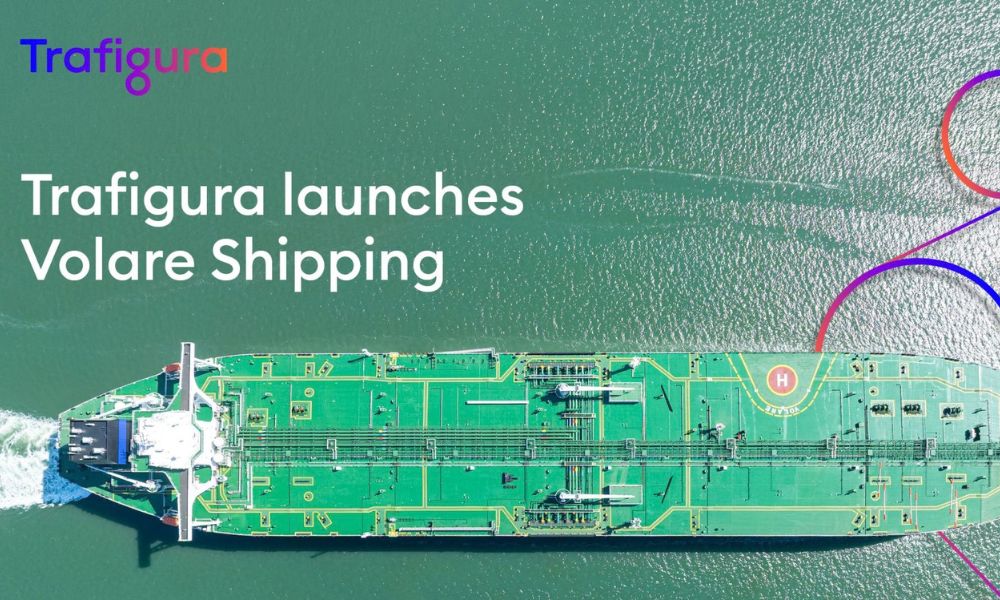
Trafigura on Monday (21 September) announced it has established a new, dedicated group company, Volare Shipping Ltd, to own, operate and scale a modern fleet of oil tankers. 

Volare Shipping’s fleet, initially comprised of six Very Large Crude Carriers (VLCCs) on the water and eight newbuild vessels on order, will be commercially managed by Trafigura’s global shipping business.

In connection with the company’s launch, Volare Shipping has disclosed a contemplated Private Placement to raise approximately USD 500 million and a subsequent proposed listing of the company’s shares on Euronext Growth Oslo. Following the proposed listing, Trafigura will be the majority-owner of Volare Shipping.

Subject to, among other things, Euronext Oslo Børs’ approval of the company’s listing application, and a successful completion of the Private Placement, the company’s shares are expected to commence trading on Euronext Growth Oslo on or about 5 October 2026, under the ticker “VLCC”.

Trafigura currently manages approximately 500 vessels across multiple segments, including around 250 oil tankers.

Volare Shipping currently operates six VLCCs and has eight newbuild vessels on order, delivering progressively between 2026 and 2028.

Andrea Olivi, Global Head of Shipping at Trafigura and Chair of the Board of Directors of Volare Shipping, said: “Trafigura’s growing footprint in the VLCC segment has revealed a clear opportunity to invest further in modern tonnage, alongside outside investors. Long-term fundamentals in crude oil transportation remain supportive, and a dedicated, listed company gives Volare Shipping investors direct exposure to the sector. 

“Oslo is home to one of the world’s leading stock exchanges for shipping companies. Access to this market will provide Volare Shipping with a strong platform for growth, and we look forward to scaling this new platform alongside other shareholders.”

Alexandre Duff, Chief Executive Officer of Volare Shipping, said: “Volare Shipping combines one of the youngest and most technically-advanced VLCC fleets in the market with access to Trafigura’s global trading, chartering and analytics platform. 

“Once the remaining newbuild vessels are delivered, we will own 14 modern VLCCs. The contemplated private placement will fully fund our current newbuilding programme, while our proven operational expertise positions Volare Shipping to deliver attractive long-term value for all shareholders.”

The newbuild vessels are larger than standard tankers and can carry greater cargo volumes. They are also fitted with additional internal tank coating and heating systems, enabling them to transport a wider range of cargo types. All vessels comply with international environmental and regulatory standards and have ammonia-ready dual-fuel capability.


Photo credit: Trafigura
Published: 22 September, 2026

Continue Reading

FuelEU

GTT Marine partners with BetterSea on FuelEU trading, pooling integration

Integration will enable GTT Marine customers and platform users to execute FuelEU trading and pooling end-to-end, directly from the Vesper Insights platform.

Admin

Published

on

By

GTT Marine partners BetterSea to integrate FuelEU trading, pooling into Vesper Insights

BetterSea, provider of a FuelEU compliance platform and marketplace, and GTT Marine, a business unit of the GTT Group, on Monday (21 September) announced a white-label integration partnership to accelerate FuelEU Maritime compliance for shipping companies.

Under the partnership, GTT Marine will integrate BetterSea’s platform into its own Vesper Insights platform offering, enabling GTT Marine customers and platform users to execute FuelEU trading and pooling end-to-end, directly from the Vesper Insights platform. 

Through this white-label integration, customers will gain access to BetterSea’s full FuelEU infrastructure, including marketplace access, simulation tools, pooling and post-trade workflows, as well as streamlined Thetis reporting capabilities, all within the Vesper Insights environment. 

This creates a uniquely aligned offering for customers seeking a single, trusted route to FuelEU compliance and execution.

As FuelEU Maritime moves into operational reality, shipping companies need more than visibility into compliance exposure. They need the ability to assess options, execute transactions, and complete workflows reliably and at scale. 

The BetterSea-GTT Marine partnership addresses that need by combining BetterSea’s execution-ready FuelEU platform with GTT Marine’s strong position in vessel performance and maritime innovation.

Through the BetterSea-GTT Marine partnership, customers will gain:

  • access to FuelEU trading and pooling execution directly within GTT Marine Vesper Insights platform
  • access to BetterSea’s FuelEU marketplace
  • simulation tools to compare compliance pathways across different regulations and evaluate cost exposure
  • pooling and post-trade workflows supported by standardized legal and financial structures
  • pool tracking and Thetis reporting capabilities to support the full FuelEU execution process
  • fully streamlined and connected route to end-to-end FuelEU compliance

Maximilian Schroer, Co-CEO, BetterSea, said: “This partnership with GTT Marine marks an important step in our mission to make FuelEU compliance and pooling easier to access and execute, while underlining BetterSea’s position as the market leading FuelEU marketplace. 

“By embedding our platform into GTT Marine Vesper Insights offering, we are giving customers a seamless and efficient path from compliance understanding to full trading and pooling execution, all within an environment they already know and use.”

Christian Treu, VP Revenue, GTT Marine, said: “At GTT Marine, we are committed to equipping our customers with practical and high-value solutions for the decarbonisation transition. 

“Through this partnership with BetterSea, we can offer our users direct access to a complete FuelEU execution framework, from simulation to trading, pooling, and reporting, directly via our platform.” 


Photo credit: GTT Marine
Published: 22 September, 2026

Continue Reading

Trending