Connect with us

Business

Port of Galveston highlights LNG bunkering and major green environmental programs

LNG bunkering operations would be based on Pelican Island and will target supply of ships calling on the ports of Galveston, Houston and Texas City.

Admin

Published

on

Port of Galveston

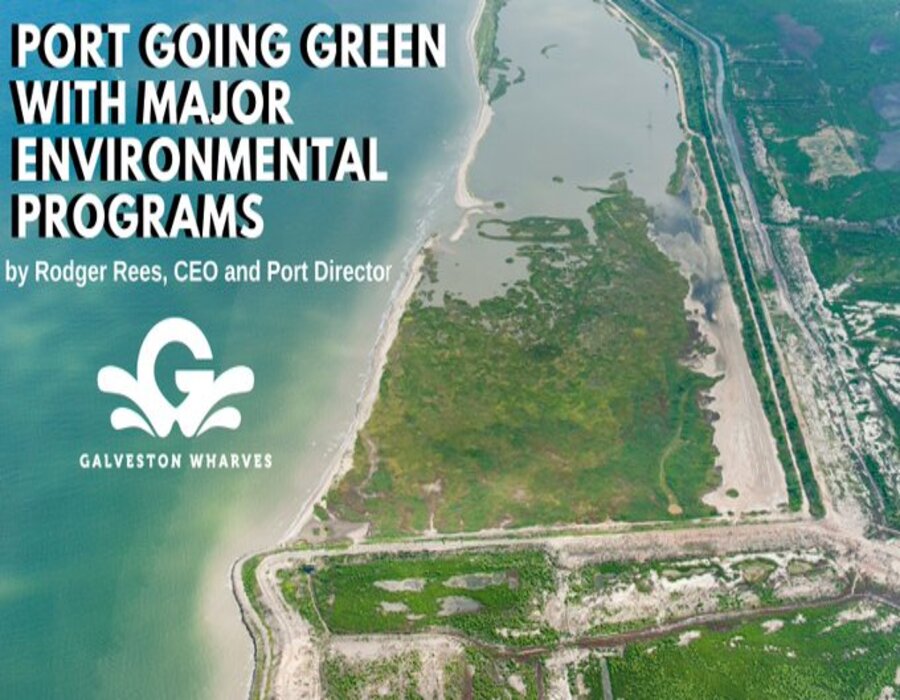
Rodger Rees, Director and Chief Executive Officer of Galveston Port, on Thursday (22 July) posted the port’s plan to go green with major environmental programs:

PORT GOING GREEN WITH MAJOR ENVIRONMENTAL PROGRAMS

From improving air quality to reducing waste, Galveston Wharves is identifying impactful ways to make long-term changes to improve the environment. Guided by Green Marine, a voluntary environmental program for North America’s maritime industry, the port staff is researching, planning and implementing a number of environmental programs.

The Green Marine environmental certification program addresses key environmental issues through 12 performance indicators that include greenhouse gases, air emissions, spill prevention, waste management, environmental leadership, and community impacts – some applicable to shipping activities, others to landside operations.

Galveston Wharves was certified in June, making it only the second Texas port participating in the program. Joining Green Marine helps the port identify and implement best practices, manage our environmental initiatives, measure our progress, and strive for continuous improvement.  Here are just a few of the programs that we are working on.

Renewable Energy

According to the U.S. Environmental Protection Agency, local governments can dramatically reduce their carbon footprints by purchasing electricity from clean, renewable sources. The port has set out a plan to fully transition within 5 years to electricity providers who use sustainable power sources.  

Shore Power

When docked, ships are typically powered by diesel auxiliary engines, which produce air emissions. Shore power, which allows ships to plug in to the local electricity grid and turn off those engines, is a cleaner alternative. While it brings environmental benefits, shore power involves significant infrastructure investments and other costs.   

The port is partnering with Texas A&M University at Galveston on an extensive cost-benefit study that includes the port’s costs to install shore power infrastructure, estimated demand over the next 5-10 years and financing opportunities.

Separate from the study, we are partnering with Royal Caribbean International (RCI) to determine the feasibility of providing shore power to RCI ships at the new cruise terminal being built and set to open in 2022 at Pier 10.

Green Building

Speaking of the new cruise terminal, RCI has designed the $110 million, 150,000-square-foot building to meet LEED (Leadership in Energy and Environmental) certification standards. To be LEED certified, the building must meet a global set of health, efficiency and sustainability standards.

Built by RCI and owned by the port, the terminal would be among just a handful of LEED-certified projects in Galveston.

LNG Fuel Bunkering

As the international maritime industry transitions from heavy diesel fuel to clean-burning natural gas, the port has the opportunity to be the location for the area’s first LNG fuel production and bunkering provider. The operation would be based on Pelican Island and supply ships calling on the ports of Galveston, Houston and Texas City.   

Reducing Waste

The port has already implemented a number of waste reduction initiatives, including recycling programs and buying sustainable paper products. We have also implemented an environmental policy that gives preference to buying products made of recycled materials and considers vendor environmental practices in its selection process.

The port is also looking at adding alternative fuel vehicles to its fleet and installing electric vehicle charging stations in our cruise parking lots. Some of these environmental programs, like recycling, are relatively easy and inexpensive to implement. Others will cost millions of dollars. Planning, research and seeking grants to help with funding are important first steps in our long-term environmental commitment.

Rodger Rees is port director and chief executive officer for the Port of Galveston.


Photo credit: Port of Galveston
Published: 27 July, 2021


Continue Reading

Incident

MPA: 25 crew rescued after abandoning “MSC HERMES III” east of Vietnam

MRCC Singapore coordinated the rescue after receiving a distress alert at about 8.45am as the vessel was within Singapore’s Maritime Search and Rescue Region.
Admin

Published

on

By

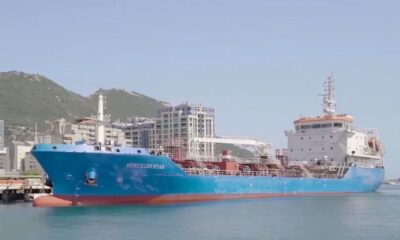
RESIZED bunker tanker singapore

The Maritime and Port Authority of Singapore (MPA) on Tuesday (22 September) said all 25 crew members from the Liberia-registered container vessel MSC HERMES III were rescued on 22 September 2026. 

The Maritime Rescue Coordination Centre (MRCC) Singapore coordinated the rescue after receiving a distress alert at about 8.45am (Singapore Time). 

“The vessel was within Singapore’s Maritime Search and Rescue Region (MSRR), about 300km east of Vietnam,” MPA said in a statement. 

MRCC Singapore immediately issued a broadcast requesting vessels in the vicinity to render assistance. Three vessels responded, and MSC RUBY recovered all 25 crew members after they had abandoned MSC HERMES III in a lifeboat. 

“All 25 crew members are safe, with no injuries reported,” MPA said. 

“MRCC Singapore is coordinating with the Vietnamese MRCC on arrangements for the rescued crew members to return safely to shore.”


Photo credit: Manifold Times
Published: 23 September, 2026

Continue Reading

Alternative Fuels

GCMD, Equinor to combine expertise on alternative bunker fuels, decarbonisation solutions

Equinor brings extensive experience to partnership as a vessel charterer and marine fuel supplier, including chartering dual-fuel LNG and methanol tankers, testing biofuels and supplying methanol.
Admin

Published

on

By

GCMD, Equinor to combine expertise on alternative bunker fuels, decarbonisation solutions

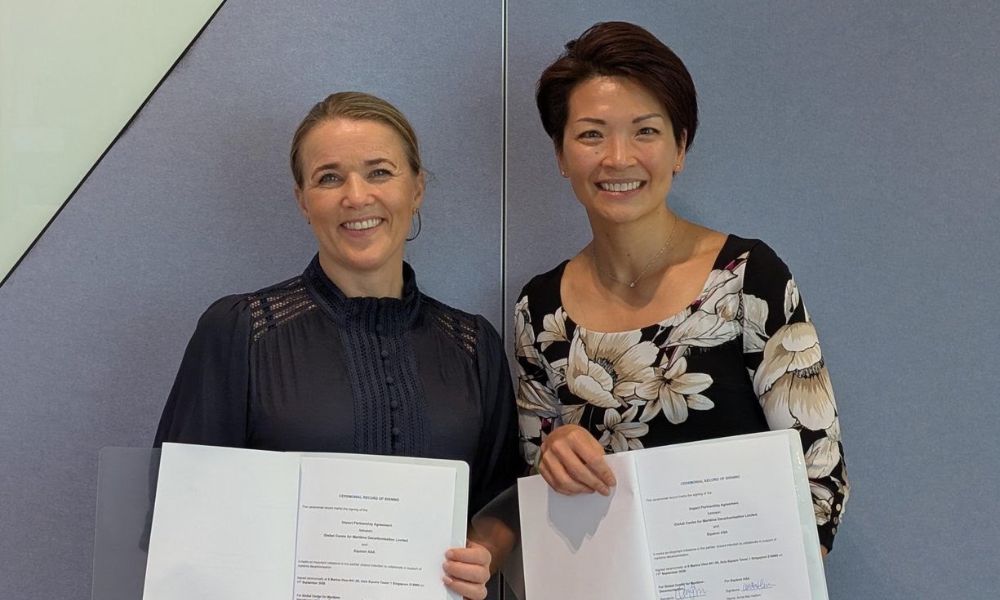
The Global Centre for Maritime Decarbonisation (GCMD) and Equinor on Tuesday (22 September) announced a five-year Impact partnership.

The partnership brings together GCMD’s capabilities in conducting real-world maritime pilots with Equinor’s experience as a charterer, energy provider and developer of low-carbon solutions.

Together, the organisations will leverage their complementary expertise to help address technical and operational gaps in scaling alternative marine fuels and supporting the development and uptake of other maritime decarbonisation solutions.

GCMD’s work on alternative fuels, including biofuels, ammonia and methanol, focuses on two critical aspects of deployment: operational safety and robust monitoring, reporting and verification (MRV). Its pilots and studies are generating operational data to support safe bunkering and handling of these fuels. 

At the same time, its assurance work seeks to strengthen confidence in quantity, quality and GHG emissions abatement.

“Equinor brings extensive experience as a vessel charterer and marine fuel supplier. This includes chartering dual-fuel LNG, LPG and methanol tankers, testing and using biofuels and supplying methanol to the maritime sector,” GCMD said.

Equinor is also piloting the use and supply of ammonia as a marine fuel, contributing to the development of associated safety, regulatory and bunkering arrangements.

Combining these perspectives can help address practical barriers to alternative fuels deployment while strengthening assurance across emerging marine fuel value chains.

Beyond alternative fuels, GCMD is working to accelerate the adoption of solutions that can reduce emissions from the existing fleet, including energy efficiency technologies (EETs) and onboard carbon capture and storage (OCCS).

GCMD’s work on EETs includes quantifying real-world fuel savings from technologies such as wind-assisted propulsion systems and developing financing mechanisms to scale their adoption. In OCCS, Project CAPTURED demonstrated an end-to-end value chain for onboard captured and liquefied CO₂, generating evidence that contributed to the recognition of captured CO2 under the EU ETS and in-principle support at the IMO for recognising carbon mineralisation as permanent storage.

Equinor brings decades of experience in offshore CO₂ storage, including its role in the development and operation of Northern Lights, the world’s first cross-border CO2 transport and storage facility, where liquefied CO₂ is transported by ship to an onshore receiving terminal before it is sent by pipeline for permanent geological storage beneath the North Sea.

Through the partnership, GCMD and Equinor will explore opportunities to combine their respective capabilities and experience to support the deployment and scaling of maritime decarbonisation solutions.


Photo credit: Global Centre for Maritime Decarbonisation
Published: 23 September, 2026

Continue Reading

Decarbonisation

Wah Kwong NatPower, AREL partner on maritime electrification in Hong Kong

Collaboration will examine opportunities to deploy shore power facilities, vessel charging infrastructure and battery energy storage solutions, alongside the development of electric vessels.
Admin

Published

on

By

Wah Kwong NatPower, AREL partner on maritime electrification in Hong Kong

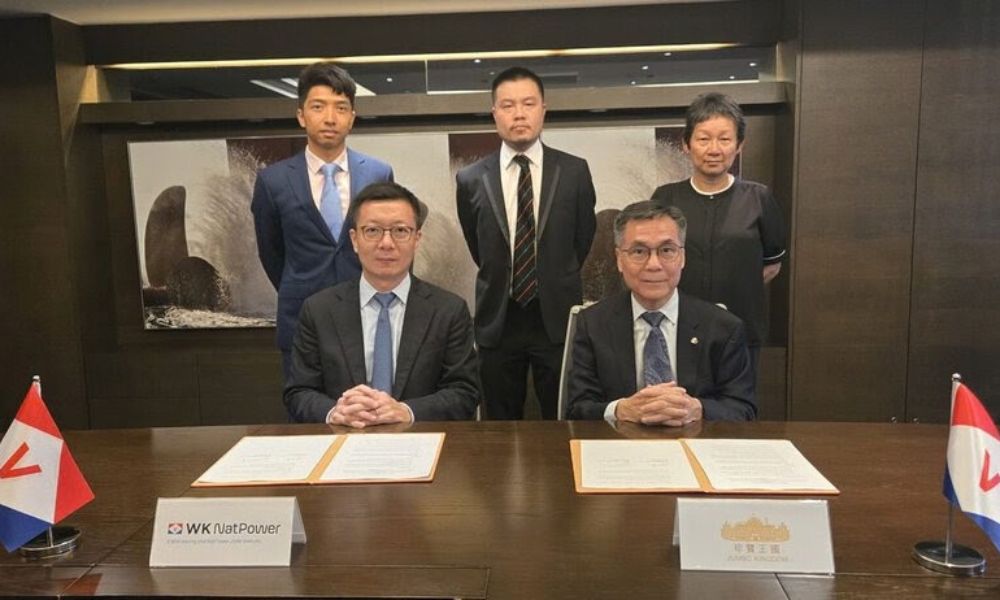
Wah Kwong NatPower (WK NatPower) on Tuesday (22 September) said it has signed a Memorandum of Understanding (MoU) with Aberdeen Restaurant Enterprises Limited (AREL) to explore the electrification of piers, vessels and supporting energy infrastructure in the Aberdeen area of Hong Kong.

Against the backdrop of the HKSAR Government’s latest policy direction to advance green shipping, smart port development and shore power infrastructure, WK NatPower and AREL will explore the development of an integrated marine electrification ecosystem in the Aberdeen and Shum Wan areas. 

The collaboration will examine opportunities to deploy shore power facilities, vessel charging infrastructure and battery energy storage solutions, alongside the development of electric vessels for future transport and tourism services.

The initiative supports Hong Kong to become a leading hub for sustainable maritime innovation while contributing to the revitalisation of one of the city’s most iconic waterfront communities. As an initial phase of the collaboration, the two parties will explore the opportunity for the construction of a series of electric vessels and transport vessels. 

The initiative will also examine the potential deployment of the ApliAber® electric vessel fleet as a new benchmark for sustainable waterfront mobility and hospitality experiences in Hong Kong.

Vincent Ni, General Manager of WK NatPower, said: “This MoU marks an important step in supporting Hong Kong’s marine energy transition. Aberdeen has long been an iconic part of Hong Kong’s maritime heritage, and we are delighted to explore opportunities to develop integrated shore power and vessel electrification solutions that can support a cleaner and more sustainable future for the harbour.”

Wong Tai Yu, Director of AREL, said: “Through this collaboration, we look forward to exploring practical ways to introduce cleaner energy, electric vessels and sustainable waterfront experiences, while supporting the revitalization of Jumbo Kingdom® for future generations.”


Photo credit: Wah Kwong NatPower
Published: 23 September, 2026

Continue Reading

Trending