Connect with us

Technology

Opinion: Technology to save fuel and improve environmental performance

UBM (Seatrade), co-organiser of Sea Asia 2019, contributes an opinion piece to Manifold Times.

Admin

Published

on

5b7a509d25d90 1534742685

By Marcus Hand, Global editor of Seatrade Maritime News

As regulations on Greenhouse Gas (GHG) emissions loom for shipping, simply using less fuel will be one way to help meet environmental targets, and also potentially save cost from more expensive low sulphur fuels.

At the same time, the International Maritime Organization (IMO) has also set the 0.5% Global Sulphur Cap regulation for marine fuels from 1 January 2020, as well as to cut CO2 emissions from shipping by 50% by 2040 from the level they were at in 2007. The impending regulations are considered ambitious when the growth in the fleet and world trade is factored into the equation.

While there has been a rush this year by owners to retrofit seawater scrubbers on existing ships, or install them on newly-built vessels (also known as newbuildings), the reality is that come 1 January 2020, the majority of shipowners will comply with the regulation by burning low sulphur fuel oil, which is expected to cost $300 per tonne more in the region than using high sulphur heavy fuel oil.

However, a newbuilding can also be designed with many energy saving devices as integral parts of the vessel. There is a wide variety of technologies and simple maintenance that can be applied to existing vessels to significantly reduce fuel consumption, as well as simultaneously improving environmental performance and lowering operational cost.

Some of these technologies and methods are explained below.

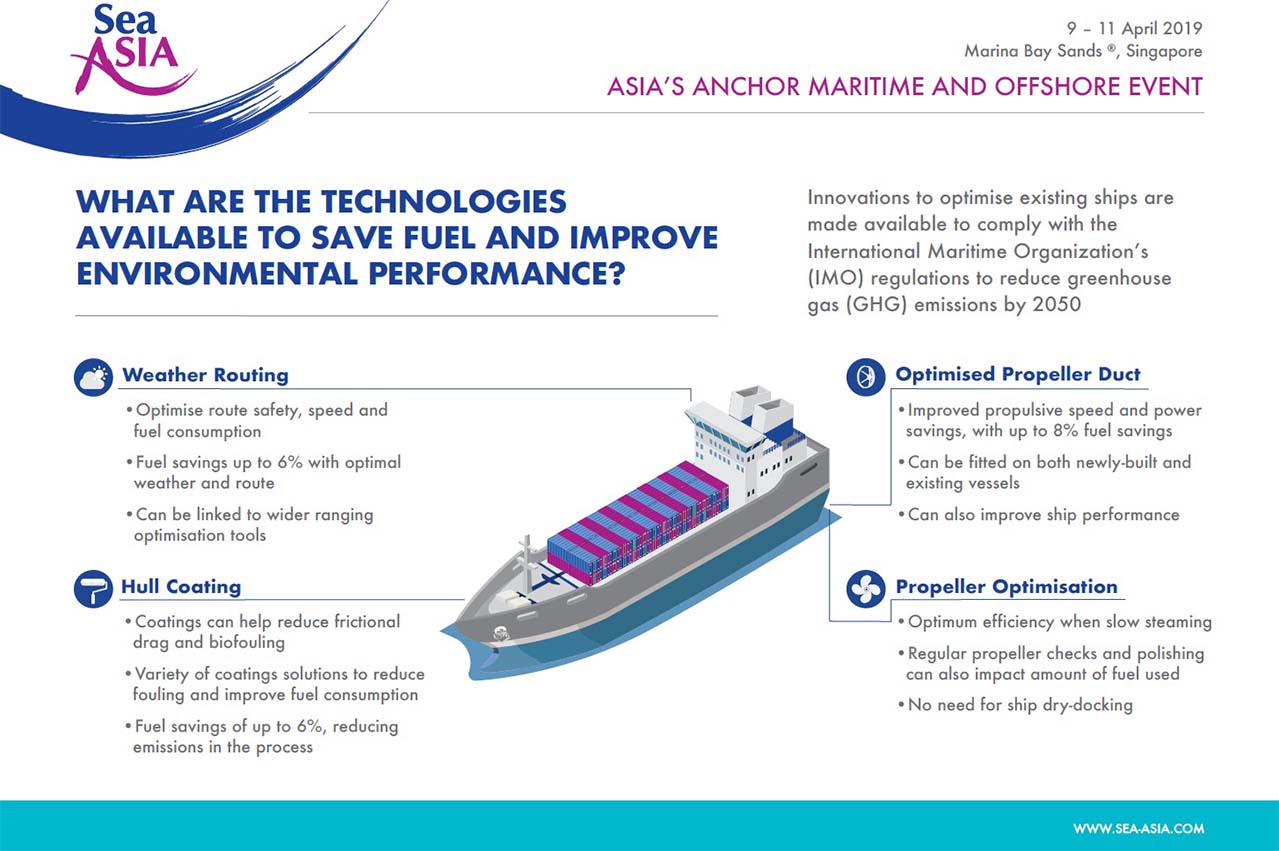
Hull Coatings

Coatings is one area where shipowners can consider to reduce drag, as well as the build-up of marine organisms on the hull (biofouling), which increases the frictional resistance. The worse the fouling, the more power will be required to keep the ship sailing at the given speed, and this could mean higher fuel consumption, increased production of greenhouse gases and other emissions.

There is a variety of coatings solutions in the market that claim to both significantly reduce fouling and also improve fuel consumption as a result. Hempel's anti-fouling coating, Hempaguard, launched in 2013 and applied to over 1,000 different vessel types is proven to deliver fuel savings of up to 6%, according to the company[1]. At the same time, Subsea Industries claims that its biocide-free coatings can reduce fuel consumption by up to 8%.[2]

Propeller Optimisation

The propeller on the vessel is another area where owners can consider to increase efficiency and reduce fuel consumption. To lower operating costs through fuel savings, it is common for ships to sail at less than its maximum speed – a practice known as slow steaming.

For slow steaming to effectively reduce fuel consumption, the propeller needs to be optimised for such speeds for the best results to be produced. Underwater repair specialist Hydrex cited one of its projects on a 229-metre bulker in Bremenhaven as an example, in which a five-bladed propeller was modified to achieve optimum efficiency at lower speeds.[3]

Disciplined maintenance, such as checking the propeller for dents and damage, and regularly polishing it, can also immediately impact the amount of fuel used by the vessel. In a more simple method, adding a cone fin to the propeller helps to reduce energy loss in the slipstream with up to 5% in fuel savings.[4]

Optimised Propeller Duct

Fitting a propeller duct, which consists of two strong fixed elements mounted on the vessel, can also improve ship performance. Positioning a duct with an integrated fin system in front of the propeller can enable significant power savings, or allow a vessel to travel faster at a given speed. It can be fitted on both newbuildings and older vessels.

Manufacturer Becker Marine Systems claims that its Becker Mewis Duct will allow for energy savings of 3% to 8%[5], depending on the specifications of different vessels.

Weather Routing

The weather can have a major impact on a ship’s fuel consumption. With today’s advances in satellite communications, there are now more affordable broadband solutions at sea. This means that there is now much more accurate weather routing information available to ships to better plan their voyage.

The use of weather routing software on ships will not only avoid bad weather that can potentially damage the vessel, but can also reduce fuel consumption by as much as 5% to 6% by plying the optimal route which factors in the weather and its impact on the voyage.[6]

Weather routing software can be linked into or be part of much wider-ranging optimisation tools. Web-based and cloud-based optimisation solutions can help monitor engine performance, provide predictive maintenance tools, as well as adjust the vessel's trim to improve performance.[7]

With such a wide variety of innovative systems available, owners today have plenty of options for improving the performance of their vessels, which can also result in fuel savings and thus, an improved environmental performance.
 

[5] BECKER MEWIS DUCT®. Becker Marine Systems.
[6] Navtor, WNI to work towards AI routing service. Seatrade Maritime News, April 2018.

Sea Asia 2019 is co-organised by UBM (Seatrade) and the Singapore Maritime Foundation, and will take place in Singapore at the Marina Bay Sands® from 9-11 April 2019.

Photo credit: Sea Asia 2019
Published: 20 August 2018


Continue Reading

Alternative Fuels

GCMD, BCG: Engine choices today to shape shipping’s fuel pathways through 2050

New fuels could reach around 60% of fleet energy consumption under a sufficiently strong carbon price signal, modelled at USD 700/tCO2e by 2050.
Admin

Published

on

By

GCMD, BCG: Engine choices today to shape shipping’s fuel pathways through 2050

With vessels operating for 25 to 30 years and only around 4% of the fleet renewed annually, newbuild decisions made over the coming decade will establish much of the engine capacity available in 2050, Global Centre for Maritime Decarbonisation said on Thursday (17 September). 

Yet having the capacity to consume a new fuel does not guarantee its uptake. Dual-fuel engines allow shipowners to switch between conventional fuels and the selected new fuel as economics and regulations evolve; continued fuel competitiveness is therefore critical to what vessels ultimately consume.

These are among the findings of Navigating the maritime fuel transition: How fuel economics, regulations, and fleet decisions shape the future bunkering landscape, based on a model jointly developed by the GCMD and Boston Consulting Group (BCG).

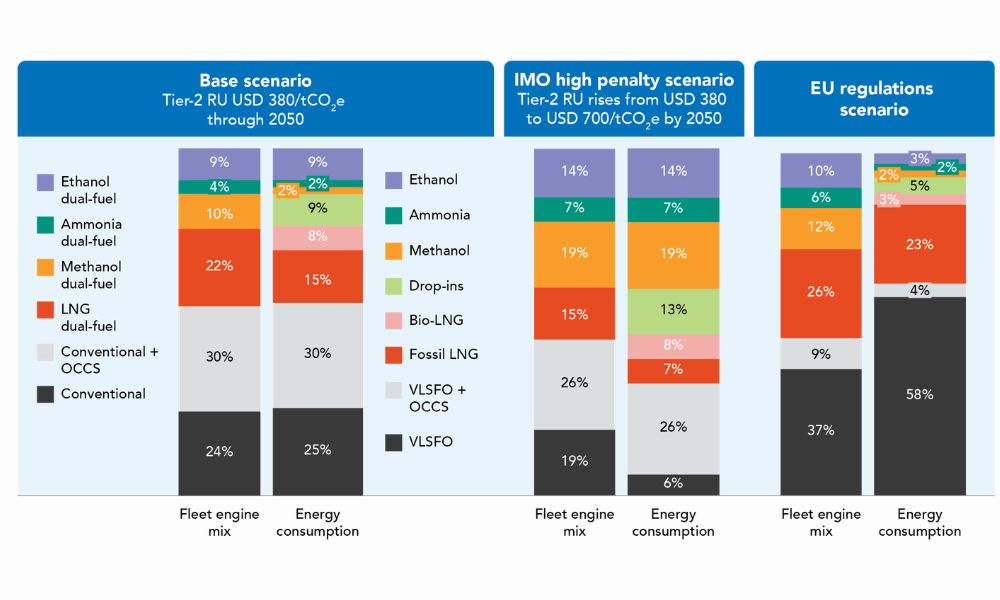
The model illustrates this dynamic in its base scenario. With the Tier-2 penalty under the IMO Net-Zero Framework held at USD 380/tCO2e through 2050, methanol dual-fuel engines account for around 10% of fleet engine capacity in 2050, but methanol represents just 2% of fleet energy consumption. With conventional fuels remaining more economical under this regulatory regime, methanol dual-fuel vessels continue to operate on fuels cheaper than methanol (Figure 1).

A global carbon price of USD 700/tCO2e materially changes the transition

The base scenario demonstrates how fuel economics can limit uptake even when vessels have the capacity to use new fuels. This picture changes if the IMO Tier-2 penalty rises to USD 700/tCO2e by 2050, at which point new fuels, including dropins, reach approximately 61% of fleet energy consumption (Figure 1).

By contrast, EU regulations alone will not drive a marked global shift, as they cover only around 20% of international shipping’s energy demand.

Overall cost of using e-methanol and e-ammonia is near parity

While a stronger global carbon price can accelerate the shift towards new fuels, the model does not point to a clear cost winner between e-methanol and e-ammonia.

E-ammonia’s production cost advantage is largely offset by higher logistics costs arising from its toxicity, including specialised crew training, larger exclusion zones, and more complex bunkering. As a result, the overall cost (Figure 2) of using e-ammonia and e-methanol is near parity through to 2050.
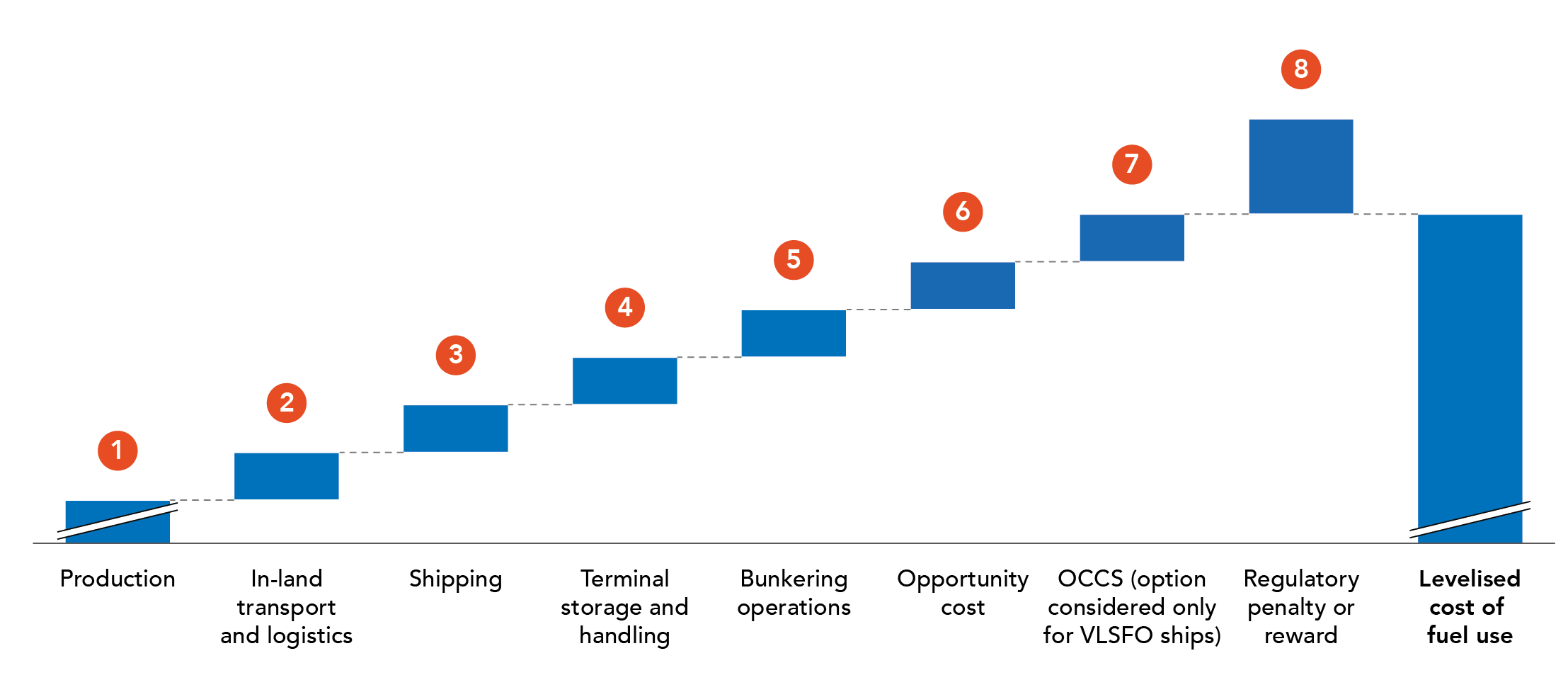
Fig 2 Constituents of levelised cost of fuel use

Professor Lynn Loo, CEO of GCMD, said: “Many vessels ordered over the coming decade will still be operating in 2050. Shipowners are therefore making long-lived engine choices before the relative economics of future fuels are clear. 

“Our modelling puts into perspective just how difficult closing the cost gap between new and conventional fuels will be. The carbon price required to close this gap is substantial. And achieving it will be particularly challenging in today’s geopolitical environment. Understanding the signposts that could change these economics will be critical to the decisions the industry makes today.”

Anand Veeraraghavan, Managing Director & Senior Partner at BCG, said: “The maritime fuel transition is being shaped as much by policy and cost uncertainty as by technology readiness. 

“Rather than offer a single prediction, our approach with GCMD maps how sensitive each fuel pathway’s competitive position is to a handful of critical variables — policy scenarios, key cost drivers, and potential restrictions. Our hope is that this gives shipowners, fuel suppliers, port operators, and infrastructure investors a practical tool to stress-test their own fuel strategies as conditions change.”


Photo credit: Global Centre for Maritime Decarbonisation
Published: 18 September, 2026

Continue Reading

Wind-assisted

KR, HD Hyundai, BAR Technologies and LISCR team up on wind-assisted LNG carrier

All four signed a MoU, aimed to assess the technical feasibility and safety of applying wind-assisted propulsion technology to LNG carriers.
Admin

Published

on

By

KR, HD Hyundai, BAR Technologies and LISCR team up on wind-assisted LNG carrier

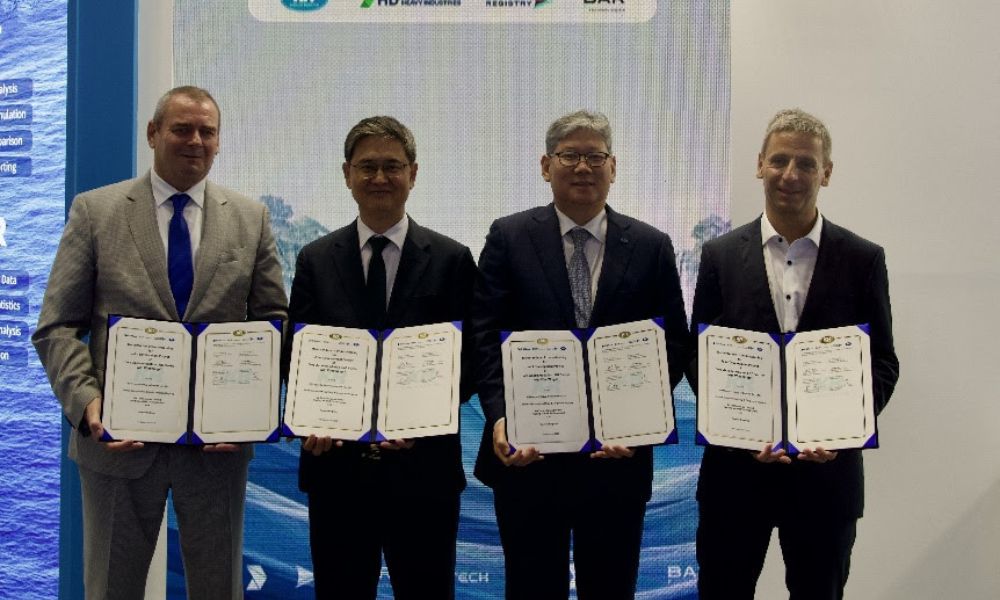
Classification society Korean Register (KR) on Tuesday (15 September) said it has signed a Memorandum of Understanding (MoU) with HD Hyundai Heavy Industries (HHI), UK-based wind propulsion technology company BAR Technologies, and the Liberian International Ship & Corporate Registry (LISCR) to jointly develop a 174K LNG carrier equipped with the WindWings® wind-assisted propulsion system.

The agreement was signed on 15 September at Gastech 2026 in Bangkok and aims to assess the technical feasibility and safety of applying wind-assisted propulsion technology to LNG carriers as the global shipping industry accelerates its transition toward decarbonisation.

The project will focus on a 174K LNG carrier developed by HHI featuring a forward accommodation arrangement. 

By positioning the crew accommodation block toward the bow, the design provides additional space on the upper deck, creating an opportunity to integrate BAR Technologies’ WindWings® system. 

WindWings® uses large, rigid wing sails installed on a vessel to harness wind as supplementary propulsion. By reducing reliance on the vessel’s main propulsion system, the technology can lower fuel consumption and greenhouse gas emissions while improving overall energy efficiency.

Under the collaboration, HHI will lead the vessel’s basic design and design review, while BAR Technologies will provide technical data covering the arrangement and specifications of WindWings®, structural strength, operational concepts and expected fuel savings.

KR, together with LISCR, will assess the safety and technical suitability of the design against applicable rules and international requirements. Based on the outcome of the assessment, KR will also consider granting Approval in Principle (AIP), supporting the application and future commercialization of wind-assisted propulsion technology on LNG carriers.

Hong-ryul Ryu, Senior Executive Vice President and CTO of HHI, said: “Through this project, we aim to integrate wind-assisted propulsion technology into our forward accommodation LNG carrier design, further enhancing the competitiveness of next-generation, low-emission LNG carriers.”

John Cooper, CEO of BAR Technologies, said: “We already have WindWings® deployed across 10 bulkers and tankers, with 23 WindWings® collectively saving approximately 100 tonnes of CO₂ per day. We look forward to extending the application of WindWings® to next-generation gas carriers, establishing a robust foundation for safe commercialisation, and providing shipowners with a genuinely attractive environmental solution.”

Yongsok Lee, Chairman and CEO of KR, said: “Through this joint development project, KR will assess the safety and technical suitability of applying wind-assisted propulsion to this LNG carrier design against applicable rules and international requirements, with a view to granting Approval in Principle.”

Alfonso Castillero, CEO of the Liberian International Ship & Corporate Registry, added: “By assessing wind-assisted propulsion for LNG carriers from an early design stage, the partners can help translate the decarbonization challenge into practical opportunities for improved efficiency, future-ready ship designs and competitive advantage, without compromising safety or quality.”


Photo credit: Korean Register
Published: 16 September, 2026

Continue Reading

Hydrogen

Chart Industries to supply liquid hydrogen fuel systems for Samskip boxships

Project will bring together advanced storage technology, fuel conditioning systems, bunkering interfaces, and safety solutions to support reliable vessel operations.
Admin

Published

on

By

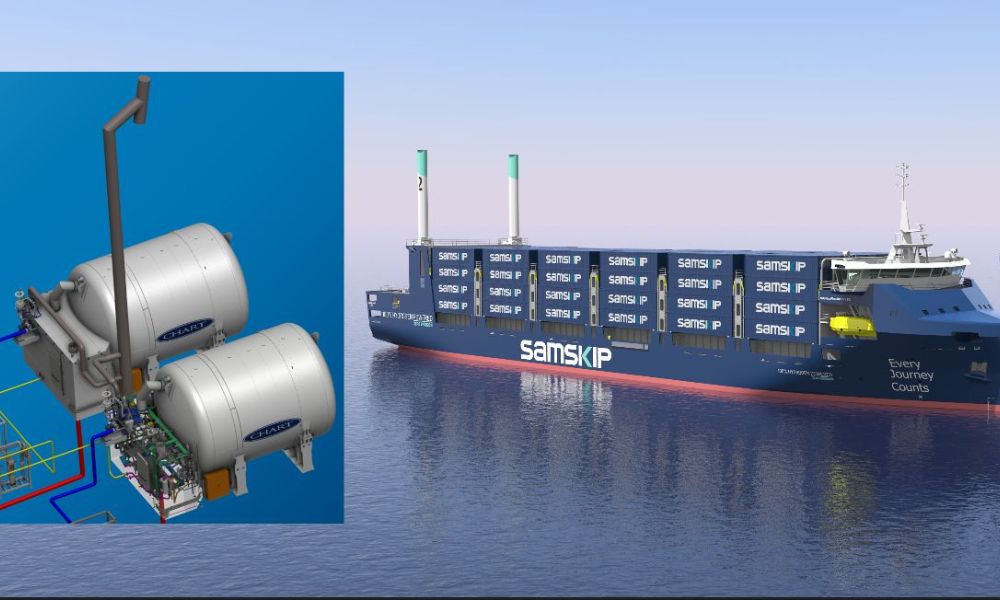
Chart Industries to supply liquid hydrogen fuel systems for Samskip boxships

US cryogenic equipment company Chart Industries recently said the company will supply the liquid hydrogen fuel systems for Samskip’s SeaShuttle 1 and 2, the world’s first hydrogen-powered container vessels.

The company said the project will demonstrate how liquid hydrogen can enable zero-emission operations for commercial shipping, bringing together advanced storage technology, fuel conditioning systems, bunkering interfaces, and safety solutions to support reliable vessel operations. 

“Most importantly, these are not demonstration concepts. They are commercial vessels designed to operate on the Rotterdam-Oslo corridor, showcasing how hydrogen is moving from possibility to practice,” it said in a social media post. 

“We’re proud to support Samskip and our project partners as we help advance the future of sustainable maritime transport.”


Photo credit: Chart Industries
Published: 16 September, 2026

Continue Reading

Trending