China Merchants Bank Co., Ltd. (CMB), the Singapore branch of a bank incorporated in the People’s Republic of China, continues to build its case over a USD 9.2 million (exact: USD 9,239,459.80) bunker-related claim against Singapore-based Sinfeng Marine Services Pte. Ltd. (Sinfeng), according to a statement of claim dated March 2026 reviewed by Manifold Times.
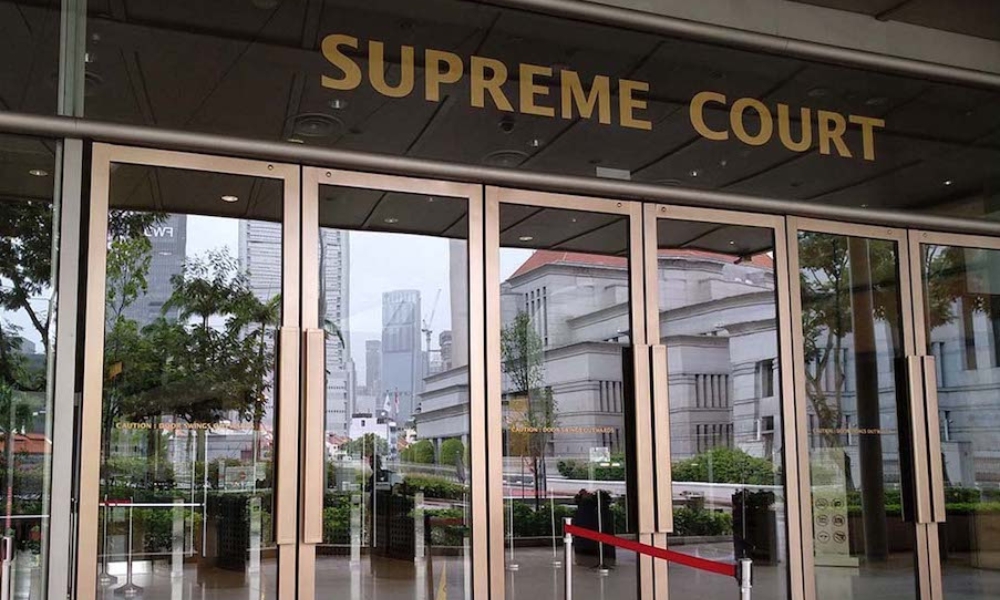
After successfully obtaining ‘pre-action discovery’ of additional documents in 2021, CMB in 2024 started a legal suit against Sinfeng over allegations of deceit and misrepresentation, according to documents obtained from the Supreme Court.
CMB’s claim against Sinfeng stems from trade financing facilities extended to defunct Singapore bunker supplier Coastal Oil Singapore Pte Ltd (COS), which entered liquidation on 13 December 2018 after allegedly owing a total of USD 380 million to at least 10 financial institutions.
BACKGROUND
On 16 June 2017, CMB granted COS an uncommitted Export Invoicing Facility of USD 10 million (the Facility) to provide trade financing for COS’s export invoices relating to fuel oil and oil products sold to Sinfeng and/or its related company, Cosco Petroleum Pte Ltd.
On 29 October 2018, CMB received a drawdown notice from COS requesting use of the Facility to support the sale of 25,000 metric tonnes (+/- 5%) of Fuel Oil 380 CST or 500 CST, said to have been made between COS and Sinfeng on or about 26 September 2018 under contract TGS/1809-034.
The receiving vessels identified for the bunkering operation, allegedly conducted from 30 to 31 October 2018 at OPL Malaysia, were the KAZIMAH III, GREEK WARRIOR, GLORIC, WEDYAN and SKOPELOS.
CONTRACT TGS/1809-34 MISSING, BUT LATER FOUND
Following COS’s liquidation, CMB notified COS on 14 December 2018 the USD 10 million Facility had been cancelled and terminated with immediate effect, and demanded immediate repayment of all sums due, owing or payable under the Facility.
On the same day, representatives of the bank visited Sinfeng’s office, where they were told that contract reference number TGS/1809-34 between COS and Sinfeng could not be located.
However, on 16 January 2019, CMB’s lawyers learned from a Sinfeng representative that the Defendant had entered into a sale contract with COS on or around 26 September 2018 under the same reference number, TGS/1809-34, but on different contractual terms.
The Sinfeng representative further stated that the company had paid COS in full for the supplies allegedly made under TGS/1809-34 and that the bunkering operation had been duly performed.
ALLEGED BUNKERING OPERATIONS DID NOT TAKE PLACE
Contrary to Sinfeng’s assertion bunkering operations took place from 30 to 31 October 2018 at OPL Malaysia, records from a maritime database providing vessel-tracking information indicated otherwise:
- The KAZIMAH III was in the Middle East on or around 30 to 31 October 2018 and not in Malaysia.
- The GREEK WARRIOR was reported to have been broken up on or about 9 June 2013 and hence was no longer in existence.
- The GLORIC was reported to have been broken up on or about 1 October 1984 and hence was no longer in existence.
- The WEDYAN was in India on or around 30 to 31 October 2018 and not in Malaysia.
- There were two vessels named SKOPELOS but neither of them was in Malaysia on or around 30 to 31 October 2018. One of them was transiting from India to Nigeria and another was transiting from the United States of America to Venezuela.
REQUEST FOR ‘PRE-ACTION DISCOVERY’ OF DOCUMENTS
Following earlier legal proceedings initiated on 4 October 2019, 29 June 2020, and 9 October 2020 seeking pre-action discovery against Sinfeng, the court ultimately ordered Sinfeng on 11 January 2021 to provide additional documents to CMB.
CMB investigators initially sought documents including email correspondence, invoices, bunker delivery notes and purchase nominations that would show the bunker supply purportedly took place via the receiving vessels on or around 30 to 31 October 2018 at OPL Malaysia, but were unable to do so because the bunkering operations allegedly did not occur.
According to court documents, additional disclosures showed the following:
The documents disclosed by the Defendant also reflected that the purported CIA Contract had not been negotiated or entered into or made on or around 26 September 2018 (or at all) and the Defendant had not executed the Acknowledgment of Notice on or around 30 September 2018.
Instead, the documents disclosed showed that COS had only sent an incomplete copy of the purported CIA Contract dated 26 September 2018 (without Annexure 1 and/or Schedule 1 thereto) to the Defendant on or around 26 October 2018 (i.e. one working day prior to the 29 Oct 2018 Meeting), and the Defendant did not execute the same.
COS had also only sent the Acknowledgment of Notice to the Defendant on or around 26 October 2018, and had done so without providing the Defendant with the Notice of Assignment.
CONSPIRACY AND/OR TORTFEASOR SHIP BY COMMON DESIGN
CMB further alleged Sinfeng and COS conspired to carry out trading loops to induce the bank to extend funds to COS and permit drawdowns under the USD 10 million Facility.
Amongst other allegations, CMB claims: “The Defendant assisted in such deceit and/or fraudulent misrepresentation by COS when it signed and returned the Acknowledgment of Notice and/or by its conduct at the 29 Oct 2018 Meeting where it counter-signed a copy of the same.”
Accordingly, on 14 December 2018, the bank set off USD 99,046.98 from COS’s account held with CMB. On 7 January 2019, the bank filed a proof of debt with the liquidators for USD 9,872,705.86, plus interest. On or around 8 August 2024, the bank received SGD 819,653.24 (approximately USD 597,850.65) from distributions made in COS’s liquidation.
Taking into account the matters above and the distributions received, the bank says it has suffered loss and damage of at least USD 9,239,459.87.
A chronological overview of the developments leading to the current case has been compiled by Singapore bunker publication Manifold Times below:
Related: DBS Hong Kong building case against Sinfeng over alleged ‘fraudulent misrepresentation and/or conspiracy’
Related: Sinfeng Marine wins appeal to withhold additional documents from Coastal Oil liquidators
Related: Sinfeng appeals against release of Coastal Oil contract docs; China Merchants Bank suspects fraud
Related: Former CFO of defunct bunkering firm Coastal Oil Singapore receives nine-year jail sentence
Related: Former Coastal Oil CFO admits to defrauding eight banks of USD 320 million in loans
Related: Singapore: Former Coastal Oil employees face forgery charges over fake sales contracts
Related: Coastal Oil hearings progress, court grants liquidators access to Sinfeng documents
Related: China Merchants Bank legal suit with Sinfeng over alleged $13 million debt progresses
Related: Fraud suspected in Coastal Oil Singapore case, says COSCO
Related: Coastal Logistics owned “Atalanta”, “Babylon” to undergo auction
Related: Singapore: Bunker tanker “Coastal Mercury” arrested
Related: Heng Tong Fuels & Shipping in court over DBS Bank bunker tanker loan
Related: Coastal Logistics owned MR tanker “Babylon” arrested
Related: Fraud suspected in Coastal Oil Singapore case, says COSCO
Related: Coastal Oil Singapore: Creditor list surfaces in bunker market
Related: Singapore: Bunker tanker “Coastal Neptune” arrested
Related: Coastal Oil Singapore creditors meeting scheduled on 10 Jan
Related: Coastal Oil Singapore in US $380 million debt to at least 10 banks
Related: Singapore: Coastal Logistics owned MR tanker “Atalanta” arrested
Related: Heng Tong Fuels & Shipping, Coastal Logistics tankers enter S&P market
Related: Coastal Oil Singapore to hold creditors meeting on 28 Dec
Related: Breaking news: Coastal Oil Singapore under liquidation
Photo credit: Manifold Times
Published: 8 June 2026






 Alternative Fuels1 week ago