Connect with us

Environment

Energy transition in shipping: First BioLNG production project in French port

EveR’e, Elengy, Total Energies and the CMA CGM project will study feasibility of BioLNG bunker fuel production, for consumption by CMA CGM LNG-powered vessels.

Admin

Published

on

CC JS 18 1 1

EveRé, operator of the multi-process household waste treatment plant with the participation the CMA CGM Group, Elengy, a subsidiary of Engie, operating (LNG) and TotalEnergies collaborates on Monday (5 July) said the group is studying the feasibility of creating France’s first production unit for liquefied biomethane (BioLNG), a low-carbon alternative fuel dedicated to energy transition in the shipping industry.

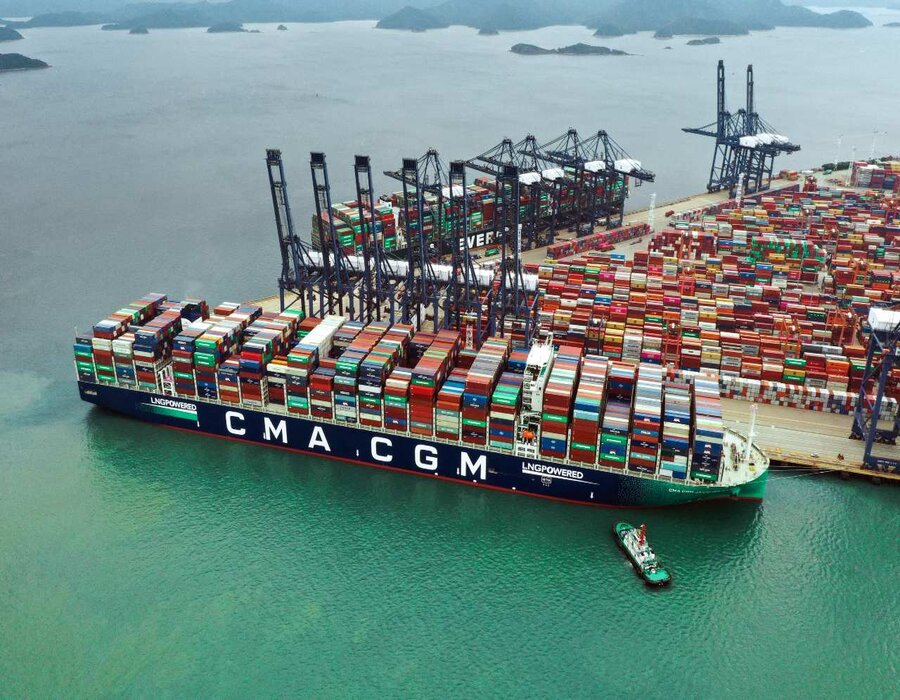
The conversion of biodegradable part of household waste from the Marseille Provence region, BioLNG  allows the decarbonisation of shipping services departing from the Grand Port Maritime in Marseille and would be used primarily for the CMA CGM Group’s LNG-powered vessels.

The project’s circular economic system will use the area’s household waste to lessen air pollutants (nitrogen oxides, sulfur oxides and fine particles), improve air quality, sustain a healthy life for people living in the region and supporting the energy transition in the shipping industry.

A concrete commitment to energy transition in shipping

BioLNG, combined with the dual-fuel gas engine technology developed by CMA CGM, reduces greenhouse gas emissions (including carbon dioxide) by at least 67% relative to well-to-wake VLSFO (the complete value chain). On the basis of a tank-to-wake measurement (at vessel level), greenhouse gas emissions are reduced by 88%.

Liquefied natural gas allows for a 99% reduction in sulfur oxide emissions, a 91% reduction in fine particles emissions and a 92% reduction in nitrogen oxide emissions. By the end of 2024, 44 of the CMA CGM Group’s vessels will be powered by LNG.

A project integrated into the local ecosystem

The project fits perfectly into the local ecosystem, benefiting from the particularly well-suited and already existing infrastructure at the Grand Port Maritime, including EveRé’s waste methanation unit, Elengy’s LNG terminals, which will be used for the storage and delivery of the BioLNG, TotalEnergies’ bunker vessel, which will be located at the port as of January 2022, and CMA CGM’s fleet of LNG-powered vessels. The feasibility study has been launched within the framework of this large-scale project, which corresponds with the national drive to promote BioLNG as defined in France’s Mobility Orientation Law.

CMA CGM, Engie and TotalEnergies: three corporations committed to supporting sustainable mobility

The CMA CGM Group, Engie and TotalEnergies have already been working together for several months as part of the Coalition for the Energy of the Future, which aims to step up the pace of development of future energy sources, technologies and to support new sustainable mobility models, thereby reducing the environmental impact of transportation and logistics.

In order to make true technological revolutions possible and achieve tangible results by 2030, the Coalition has set three main targets:

  • to considerably increase clean energy supply sources;
  • to reduce energy consumption per equivalent kilometer transported;
  • to reduce the proportion of emissions attributable to transportation and logistics.


Photo credit: CMA CGM
Published: 6 July, 2021


Continue Reading

Biofuel

China conducts first dedicated marine biofuel spill response drill in Tangshan

Exercise simulated a leak of 10 metric tonnes of biodiesel from a vessel experiencing a spill during cargo operations at a terminal.
Admin

Published

on

By

China conducts first dedicated marine biofuel spill response drill in Tangshan

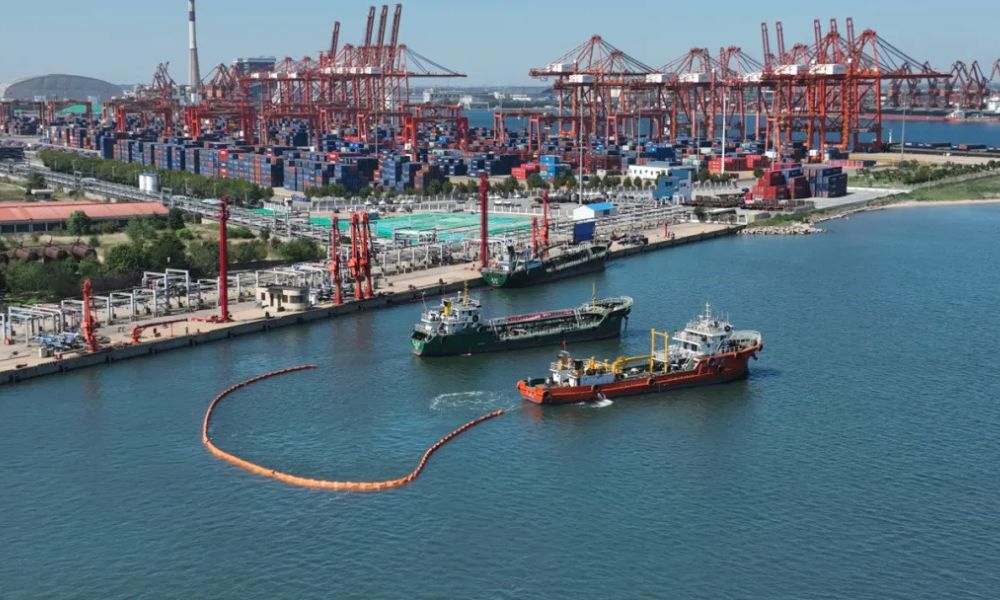
China’s Tangshan Maritime Safety Administration (MSA) on Thursday (10 September) conducted the country’s first dedicated emergency response exercise for a marine biofuel spill at Jingtang Port in Tangshan, Bohai Sea.

The “2026 Green Power Mission” exercise simulated a leak of 10 metric tonnes of biodiesel from a vessel experiencing a spill during cargo operations at a terminal. 

Following the incident report, the Tangshan MSA’s vessel traffic management centre activated its emergency response procedures, issued a navigation warning and established a traffic control area.

The maritime patrol vessel Haixun 04501 arrived at the scene to coordinate the response, involving a drone unit, an oil spill response vessel and terminal emergency personnel.

A drone equipped with fluorescence detection equipment was deployed to identify the contaminated area. Terminal personnel used oil recovery equipment, while response vessels deployed containment booms to limit the spread of the spill and spraying equipment to remove the surface oil film.

The exercise also trialled the use of 355-nanometre ultraviolet light combined with drone-mounted fluorescence detection equipment to locate biodiesel contamination.

The Tangshan MSA said unlike conventional fuel oil, biodiesel spill traces can be difficult to identify by eye under natural light. The fluorescence detection system can identify biodiesel’s characteristic fluorescence signal, enabling responders to determine the spill boundary and support subsequent containment and recovery operations.

While biodiesel is biodegradable and has a lower sulphur content than conventional fuel oil, its behaviour following a spill and the methods required to detect it differ from those used for conventional oil spills, the MSA said.

The exercise tested response procedures covering incident reporting, aerial monitoring, surface containment, spill recovery and residual pollution removal.

The Tangshan MSA said it will use the exercise to improve biofuel spill emergency response plans, specialist training and equipment development as part of its “Green Bohai Sea” initiative.

The authority will also strengthen pollution risk prevention and accident response capabilities for vessels using new and clean energy fuels, it said.


Photo credit: Tangshan Maritime Safety Administration
Published: 16 September, 2026

Continue Reading

Alternative Fuels

APPEC 2026: Panellists navigate maritime decarbonisation and alternative marine fuel strategies

Experts discuss maritime decarbonisation, emphasising global regulatory clarity, crew training, and collaborative strategies for adopting sustainable alternative marine fuels.
Admin

Published

on

By

IMG 9319 MT

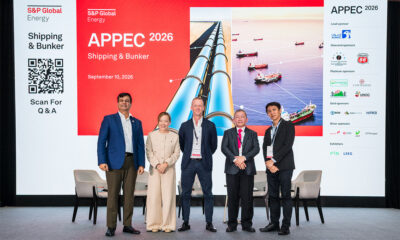
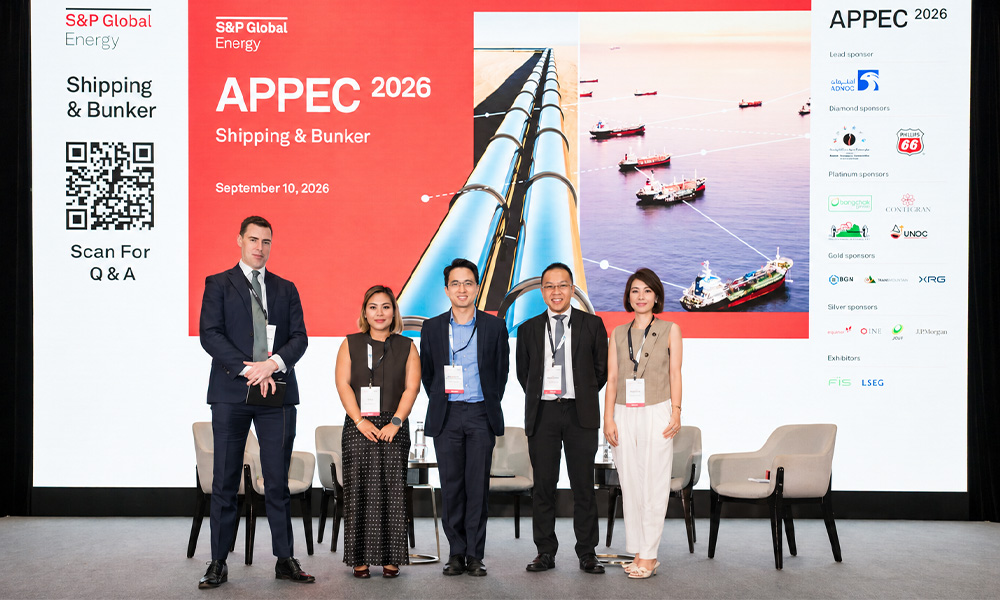
Panel members consisting of Singapore’s maritime and port regulator Maritime and Port Authority of Singapore (MPA), legal firm Rajah & Tann, bunker trading firm Sing Fuels, and the International Bunker Industry Association (IBIA) discussed the complexities of maritime decarbonisation at APPEC 2026 on Thursday (10 September).

The panel Balancing the Bunker Fuel Mix on the Path to Decarbonization moderated by John Morley, Global Director, Crude and Fuel Oil Markets, S&P Global Energy explored the complex landscape of maritime decarbonisation, sanctions fragmentation, and the transition to alternative marine fuels in Singapore.

Panellists broadly agree regulatory clarity – particularly from the International Maritime Organization (IMO) – is the single most critical enabler for large-scale investment, whilst highlighting regional fragmentation, crew competency gaps, and trade finance constraints pose significant near-term challenges.

Biofuels were seen as the most immediately scalable alternative marine fuel, with methanol and ammonia as longer-term prospects.

The following points were raised by panel members during discussion:

New Wei Siang, Director, Maritime Decarbonisation & Net-Zero Pathways, MPA, advocated for a global, IMO-led regulatory framework to guide shipping’s decarbonisation.

He believed regional patchwork regulations create unhelpful uncertainty, whereas a unified approach would be more helpful for long-term investment.

While acknowledging progress at recent IMO inter-sessional meetings held in September has been “slow but deliberate,” he remains focused on the upcoming MEPC 85 scheduled from November 30 to December 3, 2026.

To address the technical and safety challenges of new bunker fuels, he pointed out the MPA has established the Maritime Energy Training Facility (METF) to upskill crews on handling future marine fuels including methanol.

Furthermore, the MPA has launched ten green and digital shipping corridor partnerships to trial alternative fuels, exchange knowledge, and raise safety standards.

Mr New emphasised Singapore’s goal is to serve as a comprehensive maritime hub, balancing global regulatory engagement with practical, collaborative efforts to build competency for the future.

Nathanael Lin, Partner, Shipping & International Trade, Rajah & Tann Singapore, highlighted the significant legal and commercial challenges posed by regulatory fragmentation.

He argued regional environmental rules, such as those in the EU, force shipowners to make high-stakes gambles on trade routes and infrastructure until the IMO codifies standards into MARPOL Annex VI.

He also noted sanctions compliance has become dramatically more complex, with competing unilateral regimes replacing the previous era of UN consensus, creating immense operational risk for industry participants.

Furthermore, Mr Lin warned trade finance frameworks are currently ill-equipped to handle the complexities of blended alternative bunker fuels; he recommended banks to actively upskill their compliance functions to support the maritime energy transition.

Finally, he observed while claims regarding alternative marine fuels remained low due to the sophistication of early adopters, they will likely rise as adoption broadens. He also flagged the future migration of residual fuel demand as a critical, under-examined industry issue.

Juwita Setiawan, Trading Manager & New Fuels Lead, Sing Fuels, emphasised the energy transition has been making bunkering increasingly complex due to overlapping regulations.

She advocated for holistic voyage planning, where shipowners consider total emissions, costs, and marine fuel flexibility rather than evaluating port calls in isolation. She highlighted the critical role of high-quality data, fuel flexibility, including dual-fuel capabilities and fuel optimisation as essential tools for navigating the increasingly complex energy transition and supporting a practical pathway towards decarbonisation.

Regarding market structure, Ms Setiawan believed a symbiotic partnership between large integrated energy companies – which provide necessary capital and infrastructure – and agile, specialist suppliers is vital for success.

She identified biofuels and LNG as the most viable near-term maritime decarbonisation solutions, with methanol emerging as a mid-term option.

Ultimately, even though government incentives remain essential to help shipowners manage the high costs associated with adopting greener bunker fuels, regulatory clarity is the single most important factor to simplify market trading.

Looking ahead, she believes three things need to happen over the next three years:

  1. Clear and stable regulation – Shipowners and fuel suppliers need regulatory certainty and confidence to make long-term investments.
  2. Scale in supply and infrastructure – The industry needs to move beyond pilot projects towards reliable volumes, competitive pricing and stronger infrastructure across major bunkering hubs.
  3. Greater confidence in the fuels themselves – Common standards, proven technologies and reliable fuel performance will be essential to building trust and accelerating adoption.

“At Sing Fuels, we believe the transition is not about choosing one fuel for every vessel. It is about optimising the right fuel, at the right place, at the right cost, with the right emissions outcome – while keeping operational realities at the centre of the decision.

Siti Noraini Zaini, Regional Manager, Asia, IBIA, identified energy security and decarbonisation as objectives that need not be competing, noting that when energy security is under pressure, the immediate focus naturally shifts towards availability, reliability and affordability.

Over the longer term, however, a diversified marine fuel mix ultimately enhances industry resilience.

She stressed low carbon fuels alone is insufficient; shipowners need confidence that fuels will be available to meet the demand, where they are needed and at commercially manageable prices.

A critical focus for Ms Siti is the parallel development of standards. She warned the industry could not wait for the market to mature before establishing protocols. Standards for fuel quality measurement, green bunkering procedures, safety, and crew competency must be developed alongside the fuels themselves.

Looking ahead, she identified the upcoming MEPC 85 meeting as the industry’s primary regulatory watchpoint. Achieving clarity at the meeting is essential to enable the safe, financed, and commercially viable bunkering of new marine fuels, ensuring shipping’s decarbonisation transition remains both practical and sustainable.


Photo credit: S&P Global
Published: 14 September 2026

Continue Reading

Methanol

GENA Solutions: Total renewable and low-carbon methanol project pipeline increases from 61.8 to 62.2 Mt by 2032

Information shared by MI – the Global Methanol Alliance meant to assist the maritime industry in the adoption of methanol as a mainstream marine fuel heading into IMO 2030/2050.
Admin

Published

on

By

28 1

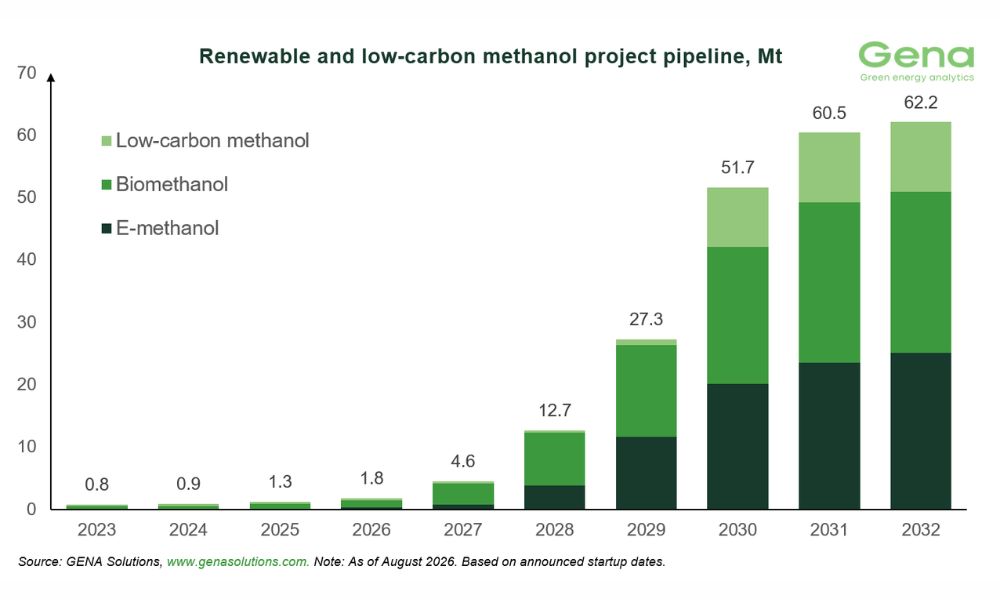
MI – the Global Methanol Alliance recently shared with Manifold Times the renewable and low-carbon methanol project pipeline August 2026 release produced by GENA Solutions Oy.

Information from the release is meant to provide the bunkering publication’s readers with insight on renewable methanol availability, and to assist the maritime industry in the adoption of methanol as a mainstream marine fuel heading into IMO 2030/2050.

Key takeaways from GENA’s August 2026 Methanol release are as follows:

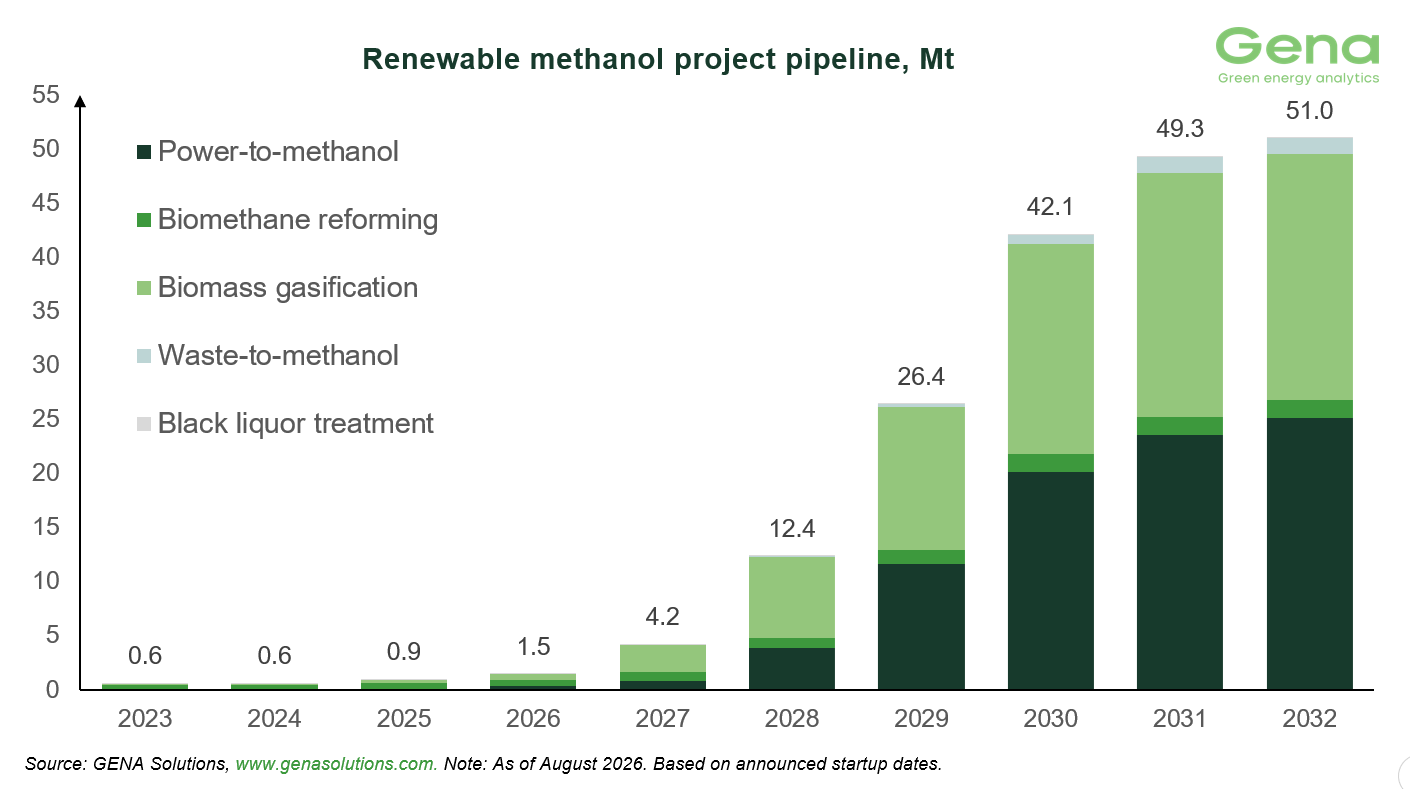
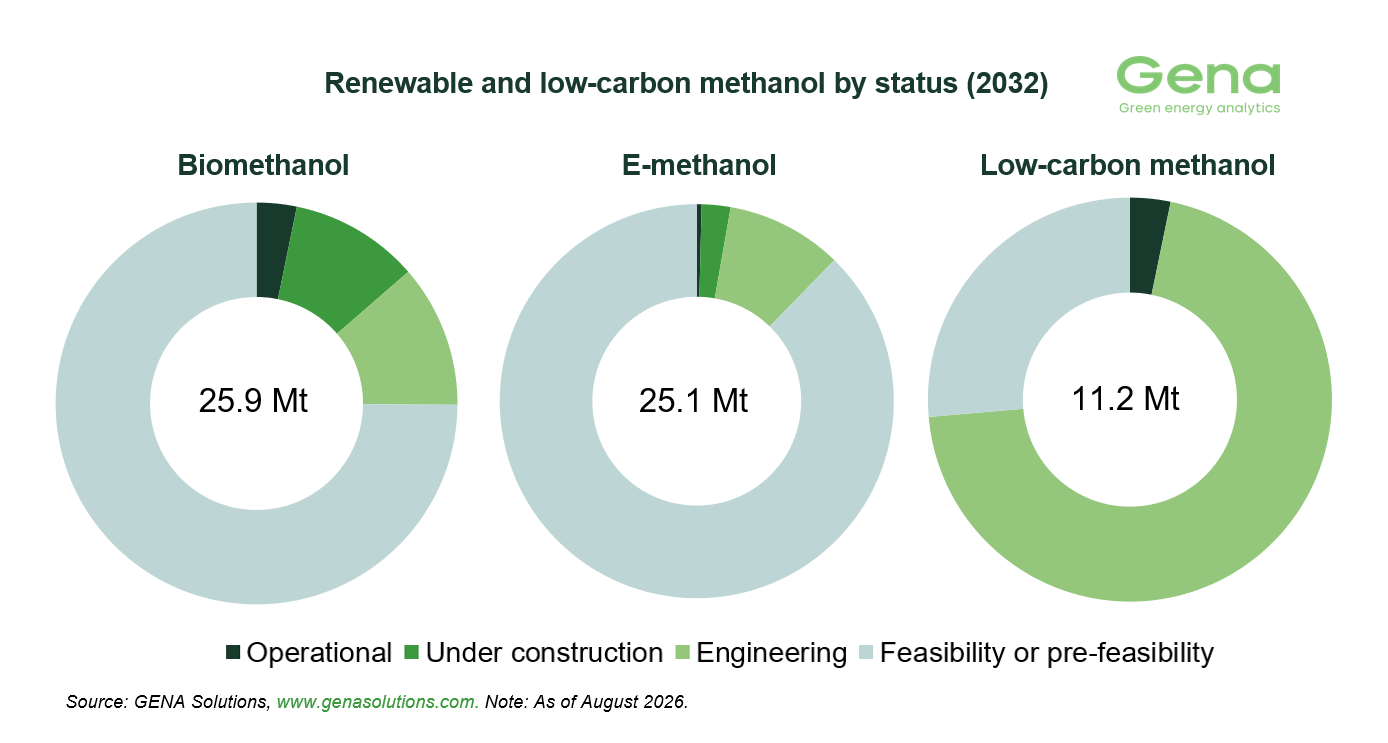
  • As of the end of August 2026, GENA tracks 286 renewable and low carbon methanol projects, representing 62.2 Mt of capacity by 2032. This includes 25.1 Mt of e-methanol, 25.9 Mt of biomethanol, and 11.2 Mt of low carbon methanol capacity.
  • Two new projects were added to Project Navigator last month, while one frozen project was excluded. The project pipeline increased by 0.4 Mt month on month.
  • Four new offtake agreements were registered during August, including two biomethanol and two e-methanol agreements.
  • About 8% of the cumulative renewable methanol project pipeline capacity has reached FID so far, with another 11% at the FEED stage.
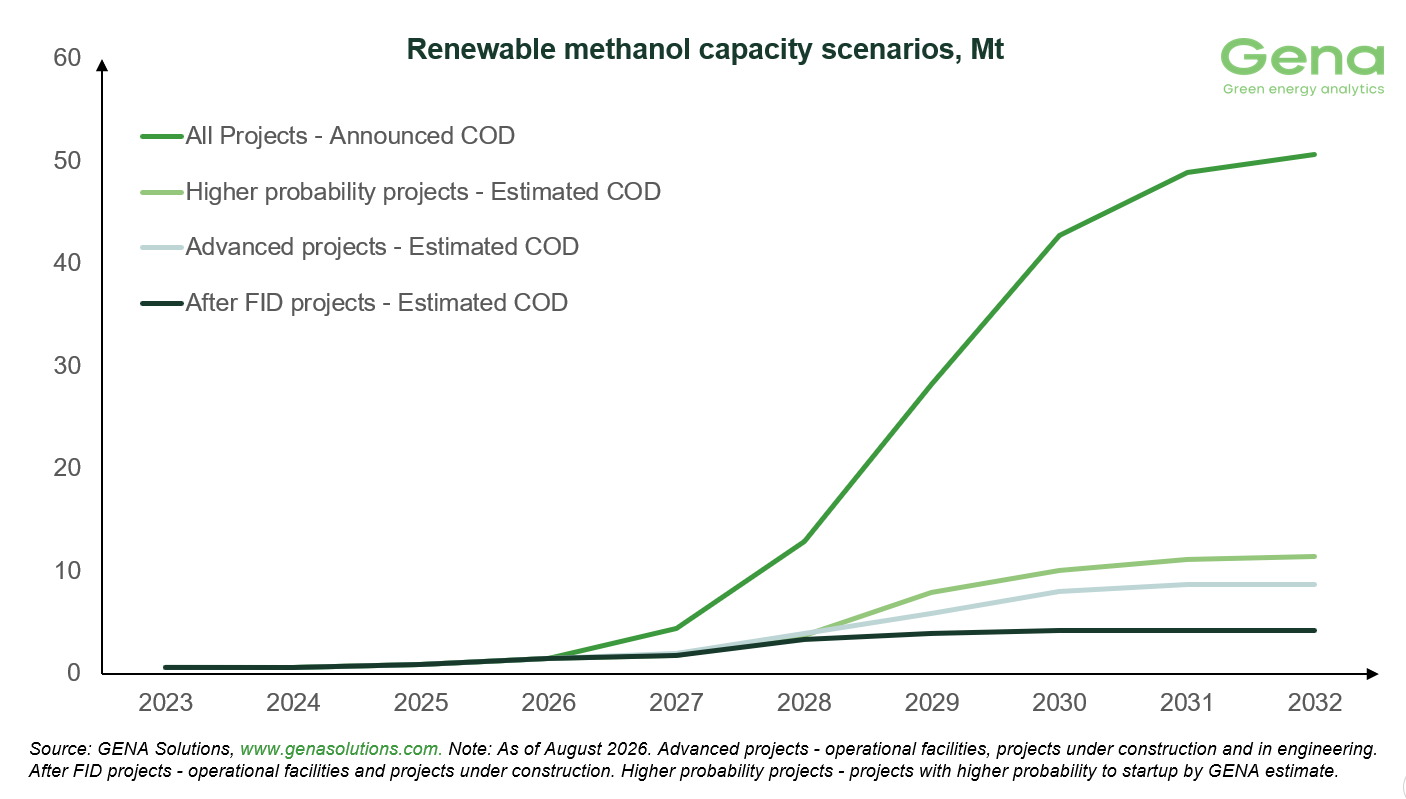
  • Considering the current uncertainty around regulatory developments and demand growth, GENA projects that renewable methanol capacity could reach 6 Mt to 12 Mt by 2031.

Note: The full article can be viewed here.
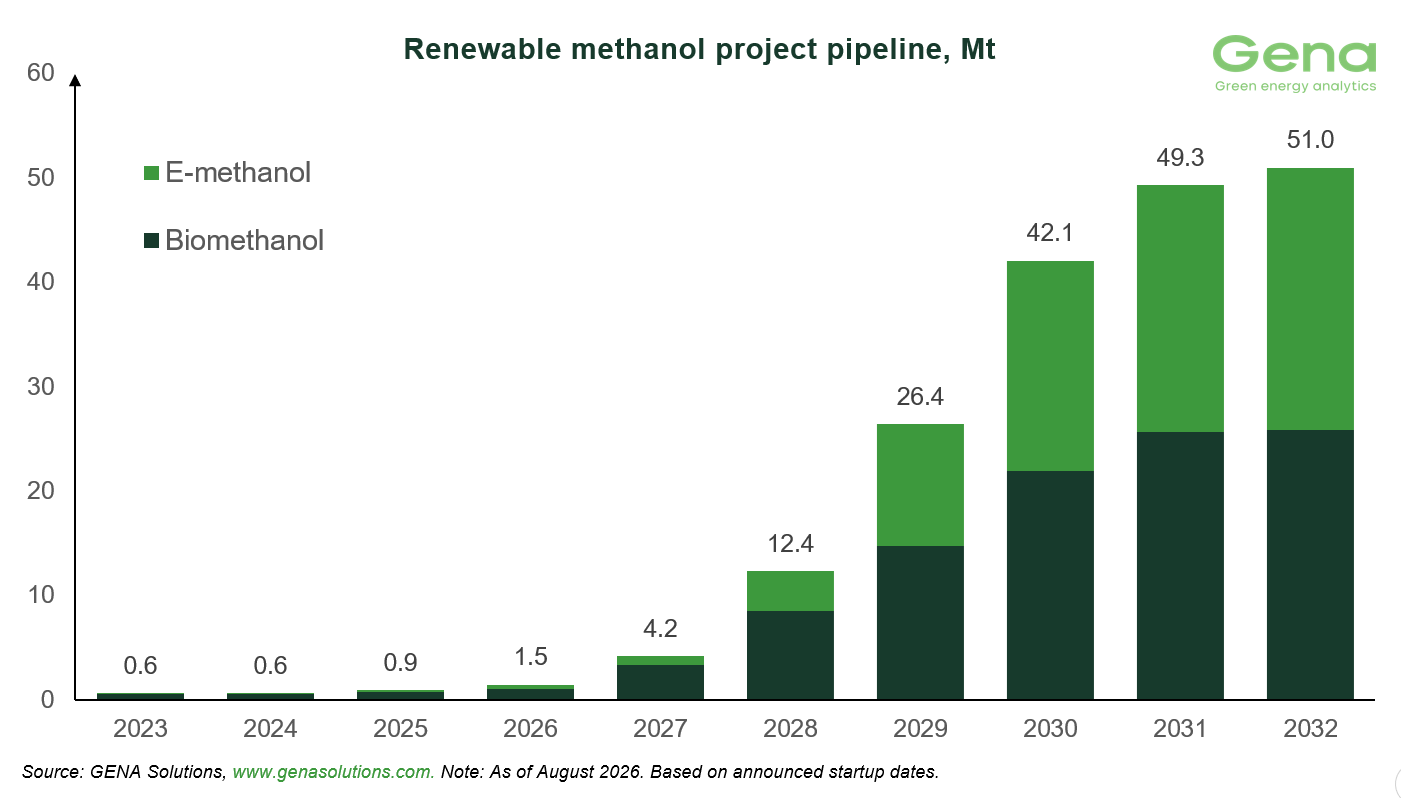
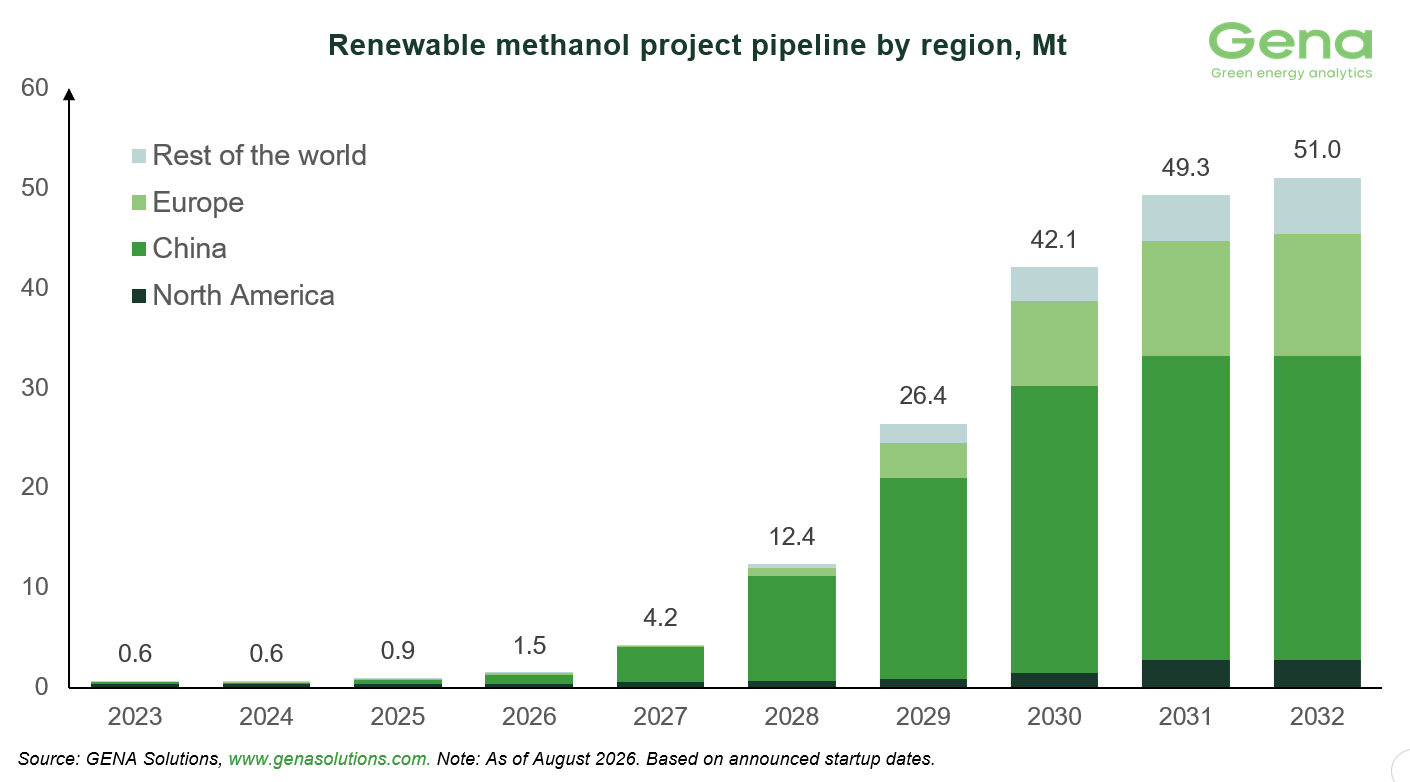
Renewable methanol project pipeline 4 Renewable methanol by feedstock 8 Renewable methanol by region 7 Project pipeline by status Methanol capacity scenarios


Photo credit: GENA Solutions
Published: 4 September, 2026

Continue Reading

Trending