Connect with us
DNV Decarbonization Insight Series August 2026 - What maritime professionals should know about AI Training

Alternative Fuels

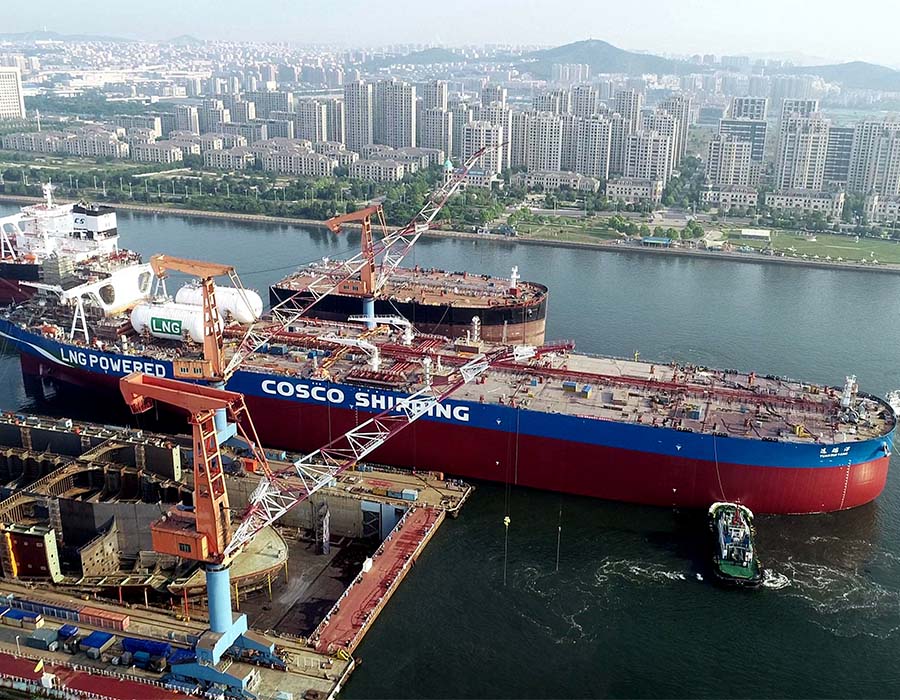
CSSC shipyard first LNG DF VLCC for COSCO Shipping starts sea trial

Vessel has an endurance of 12,000 nautical miles in gas-mode, while the combined endurance of fuel oil and gas is 24,000 nautical miles, states yard.

Admin

Published

on

4fc531af176f47ea87ece7d803ff08e3

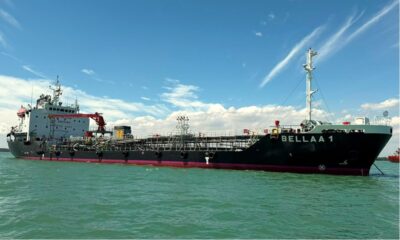
China State Shipbuilding Corporation Limited (CSSC)’s first liquefied natural gas (LNG) dual fuelled VLCC for COSCO Shipping entered sea trials on Friday (3 September), it said.

The 332.6-meter-long ship uses LNG as the main fuel, supplemented by fuel oil. Its propulsion system consists of WINGD low-pressure dual-fuel main engine, and is equipped with dual-fuel generators and dual-fuel boilers.

The ship’s LNG storage system adopts a C-type storage tank design, and is able to receive LNG as a bunker fuel both on the port and port sides, with a filling rate of 1500 cubic meters per hour, which is convenient for the shipowner’s bunkering operations, notes CSSC.

The vessel has an endurance of 12,000 nautical miles in gas-mode, while the combined endurance of fuel oil and gas is 24,000 nautical miles.

During the voyage, the daily gas consumption of LNG is about 60 tons while the daily fuel oil consumption is about 74 tons.

“During the construction process, the ship’s gas supply system, C-type storage tanks, corrosion-resistant steel and many other systems, equipment, and materials were all contacted for the first time, which brought major problems to production,” said a statement.

“In order to promote the orderly production of production, in the early days, Dalian Shipbuilding Group held several technical training and exchange meetings to lay a solid technical foundation for the construction personnel.

“During the production, the management personnel are full-time and responsible for the safety and production management of all areas of the ship, including the engine room, deck, and pump warehouse.

“All the personnel involved in the construction work together to overcome difficulties and ensure the smooth realization of the ship’s various node plans.

“Before this sea trial, in order to ensure the orderly advancement of the sea trial project, the Shipbuilding Group actively communicated with the ship owner, understood the owner’s focus, and made full preparations to ensure the smooth completion of the sea trial.”


Photo credit: China State Shipbuilding Corporation Limited
Published: 7 September, 2021

Continue Reading

Alternative Fuels

ClassNK updates safety guidelines for alternative-fuelled ships

The classification society says it has revised the safety requirements within its guidelines for ships using methanol, ethanol and hydrogen as marine fuels.
Admin

Published

on

By

RESIZED Venti Views on Unsplash

Classification society ClassNK on Tuesday (18 August) said it has revised the safety requirements within its guidelines for ships using methanol, ethanol and hydrogen as marine fuels. 

In Part D of the guidelines, covering hydrogen-fuelled ships, the revision incorporates the Interim Guidelines for the Safety of Ships Using Hydrogen as Fuel (MSC.1/Circ.1701) issued by the IMO this year, and additionally introduces a hydrogen leak frequency table that can be used for the safety assessments required under the IMO guidelines. 

In Part A, covering methanol and ethanol-fuelled ships, new structural strength requirements for methanol/ethanol fuel tanks—which are not addressed in the IMO guidelines—have been established. 

“Through this revision, shipyards, designers, and shipowners can carry out design and safety assessments in line with the latest international standards, and by utilizing ClassNK’s own leak frequency estimates and the relevant requirements, they can proceed the development of alternative-fuelled ships in a more rationally,” ClassNK said in a statement. 

As the building of alternative-fuelled ships advances in response to the global challenge of reducing GHG emissions, ClassNK has comprehensively compiled the safety requirements for ships using methanol, ethanol, LPG, ammonia, and hydrogen—fuels regarded as promising alternatives—and has issued the guidelines. 

“Taking into account the risks that the use of alternative fuels poses to the environment, seafarers, and ships, the guidelines set out requirements for equipment, controls, and safety devices to minimize such risks,” it added. 

With the issuance of the IMO guidelines for hydrogen-fueled ships (MSC.1/Circ.1701), ClassNK said it has fully incorporated the IMO guidelines to make the guidelines more user-friendly for shipyards, designers, and shipowners, while also enhancing the requirements serving as design and assessment guidance for other alternative fuels. 

In the development of the IMO guidelines, now reflected in Part D, ClassNK participated as a member of the Japanese delegation to the IMO Sub-Committee CCC 11 and contributed to the discussions.

Note: The Guidelines for Ships Using Alternative Fuels (Edition 3.1)  can be viewed under “Guidelines” on My Page by registering as a user on the ClassNK website. 


Photo credit: Venti Views on Unsplash
Published: 20 August, 2026

Continue Reading

Decarbonisation

CSA and MFA partner to support shipowners, bunker suppliers on emissions compliance

Clean Shipping Alliance and the Marine Fuels Alliance signed a MoU to also advance transition to alternative bunker fuels and emissions reduction technologies.
Admin

Published

on

By

CSA and MFA partner to support shipowners, bunker suppliers on emissions compliance

The Clean Shipping Alliance (CSA) and the Marine Fuels Alliance (MFA) on Wednesday (19 August) said they have signed a Memorandum of Understanding (MoU) to support the shipping industry and bunker suppliers in meeting regulatory requirements on emissions, and to advance the transition to alternative fuels and emissions reduction technologies.

The agreement will see CSA’s expertise in exhaust gas cleaning systems and marine environmental technology brought together with MFA’s network and knowledge across the marine fuels supply chain. 

Both organisations share an interest in supporting the maritime industry’s transition toward a sustainable, compliant and lower-emission future, and the agreement sets out a structure for the two bodies to share technical insight and coordinate on regulatory pathways.

Through the collaboration, the two associations intend to encourage dialogue between technology providers, fuel suppliers and ship operators, share technical insights and support the development of practical regulatory pathways.

Under this framework, the two associations will:

  • Share technical data and research: on MARPOL compliance, alternative fuels and emissions reduction technologies.
  • Coordinate joint advocacy: including at the International Maritime Organization (IMO) level and alongside sessions of the IMO’s Marine Environment Protection Committee (MEPC).
  • Support industry events: on fleet modernisation, retrofitting and fuel quality standards.
  • Develop practical operational guidance: linking technology providers, fuel suppliers and ship operators.

Andreas Chrysostomou, Executive Director of the Clean Shipping Alliance, said: “Shipping’s compliance and availability challenges won’t be solved by one technology or one fuel. It needs ongoing communication between different elements of the value chain, and that’s why CSA and MFA have signed this MoU. Technologies, fuels and regulation cannot be considered in isolation, and by working together we can bring together complementary expertise, improve the exchange of technical knowledge and contribute to solutions that are both environmentally effective and operationally realistic.”

Anthony Mollet, Executive Officer of the Marine Fuels Alliance, said: “The CSA brings a wealth of technical knowledge and first-hand industry experience, particularly in relation to emissions, environmental regulation and the technologies being adopted by shipowners and operators. This partnership will give our members an important additional source of expertise and insight, helping them better understand the challenges facing the industry and make informed decisions as the transition towards cleaner shipping continues.

“For companies across the contractual chain in bunkers, it is increasingly important to understand the decisions being made by shipowners and operators around fuel choice, emissions technologies and the future fuels they intend to use. 

“The selection of a particular fuel grade or technology can have significant implications throughout the bunker supply chain, from contractual arrangements and fuel specifications to supply and operational considerations. This is a key area of focus for the MFA, and we are committed to providing our members with clear, practical and relevant resources to help them navigate these developments.”

The non-binding MoU will initially remain in effect for two years, with both associations designating points of contact to coordinate joint initiatives and regularly review the collaboration.


Photo credit: Clean Shipping Alliance and Marine Fuels Alliance
Published: 20 August, 2026

Continue Reading

LNG Bunkering

Bunkering vessel “Avenir Advantage” completes first LNG delivery to cruise ship

Ship delivered LNG to Royal Caribbean Group’s “Icon of the Seas” in Honduras, marking its first LNG bunkering operation for the cruise line and expanding small-scale LNG supply in the Caribbean.
Admin

Published

on

By

Bunkering vessel “Avenir Advantage” completes first LNG delivery to cruise ship

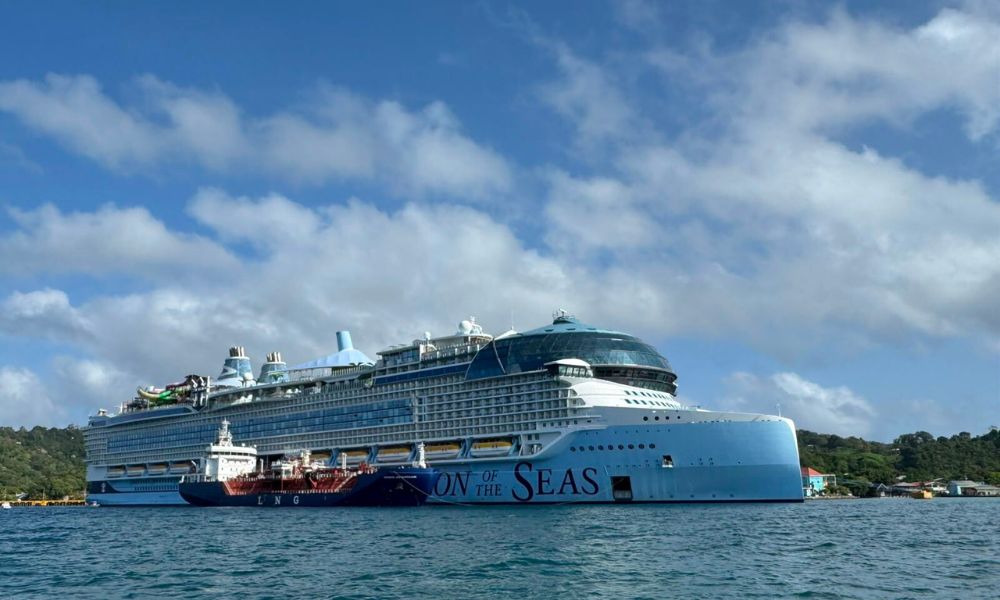
Bunker supplier Avenir LNG on Wednesday (19 August) said its bunkering vessel Avenir Advantage has completed its first LNG bunkering delivery to Royal Caribbean Group’s cruise ship, Icon of the Seas in Honduras, marking a milestone for the company’s LNG supply operations in the Caribbean.

The company said the operation supports the cruise industry’s transition towards lower-emission marine fuels while demonstrating the flexibility of small-scale LNG infrastructure in the region.

Avenir LNG thanked Axpo Group, the vessel’s crew, shore teams, port stakeholders and other partners involved in the operation.

The company added that it aims to support further safe and reliable LNG deliveries in the future. 


Photo credit: Avenir LNG
Published: 20 August, 2026

Continue Reading

Trending