Connect with us
DNV Decarbonization Insight Series August 2026 - What maritime professionals should know about AI Training

Nuclear

Deployable Energy and Hornbeck Offshore partner on microreactors for ships

Deployable Energy’s Unity Nuclear Battery is a 1 MWe, mass-manufactured, transportable microreactor engineered vessel integration, rather than have ships built around reactors.

Admin

Published

on

Deployable Energy and Hornbeck Offshore partner on microreactors for ships

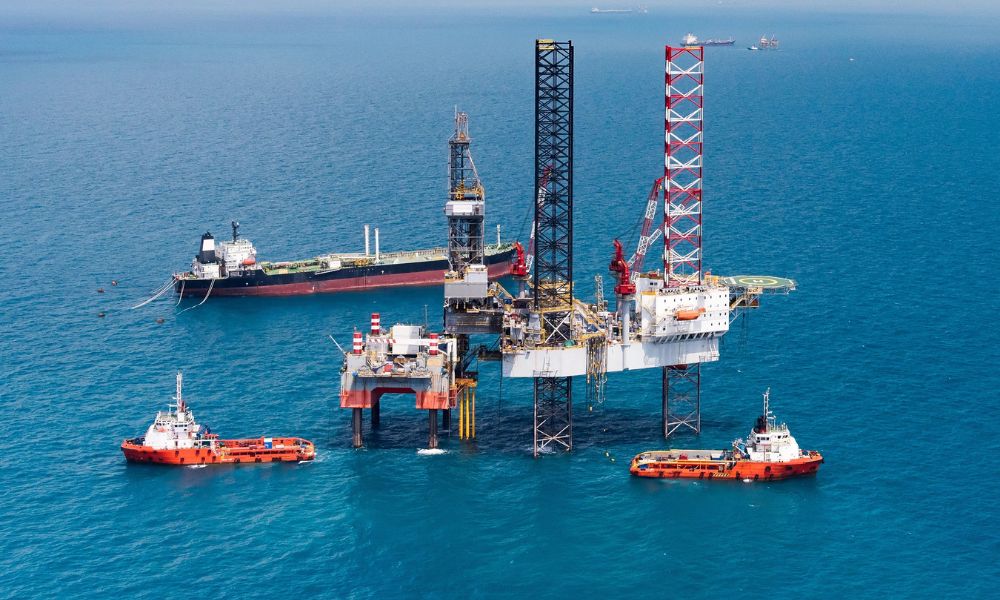
Deployable Energy on Monday (17 August) said it has signed a Memorandum of Understanding with Hornbeck Offshore to transform five strategic maritime and offshore markets through the utilisation of Unity Nuclear Battery, a transportable microreactor technology. 

Hornbeck Offshore has also made a strategic investment in Deployable Energy. 

The collaboration will combine Deployable Energy’s Unity Nuclear Battery with Hornbeck Offshore’s vast marine operating fleet expertise to develop maritime nuclear applications in inland waterways, offshore vessels and platforms, national security logistics and autonomous vessels, power barges, and floating data centers. 

Deployable Energy’s Unity Nuclear Battery is a 1 MWe, mass-manufactured, transportable microreactor engineered vessel integration, rather than have ships built around reactors. It is designed to provide resilient, emissions-free power with refuelling intervals greater than five years and to scale from individual units to large multi-unit deployments.

The companies will establish a joint working group focused on vessel integration, economics, licensing pathways, financing, and commercial structures with a strong focus on near-term US applications. 

The programme will also enable Deployable Energy’s long-term opportunity for multi-gigawatt deployment over a 10-year horizon, with a target of achieving at least a 20% reduction in total cost of ownership versus conventional marine diesel or grid-power alternatives.

“We are proud to partner with one of the leaders in the US maritime sector and one of the largest Jones Act vessel owners to usher in a commercial maritime nuclear industry,” said Bobby Gallagher, CEO and Co-Founder of Deployable Energy. 

“Todd Hornbeck and his founder-led operating experience coupled with his team’s proven ability to bring new technologies to market will enable us to move from demonstration to real-world deployment. Together, we’re forging a path to lower energy costs, greater endurance and entirely new maritime power applications.”

“Deployable Energy’s speed of execution, culture, and ability to understand requirements in the maritime industry are why we chose them to partner on five priority maritime markets that can utilize compact nuclear power to improve economics, endurance and energy resilience,” said Todd M. Hornbeck, Chairman, President and CEO of Hornbeck Offshore. 

The MOU and strategic investment mark a key development for maritime nuclear applications through a phased pathway from feasibility and front-end engineering through detailed design, regulatory approvals, initial deployment, scaled fleet deployment and long-term operations.

Any deployment would remain subject to successful technical, commercial and regulatory development and execution of definitive agreements.


Photo credit: Deployable Energy
Published: 20 August, 2026

Continue Reading

Nuclear

Core Power and Port of Corpus Christi to explore maritime nuclear readiness

Study at the port will examine opportunities for firm, reliable power from floating nuclear power plants and readiness for future calls by nuclear-powered commercial ships.
Admin

Published

on

By

Core Power and Port of Corpus Christi to explore maritime nuclear readiness

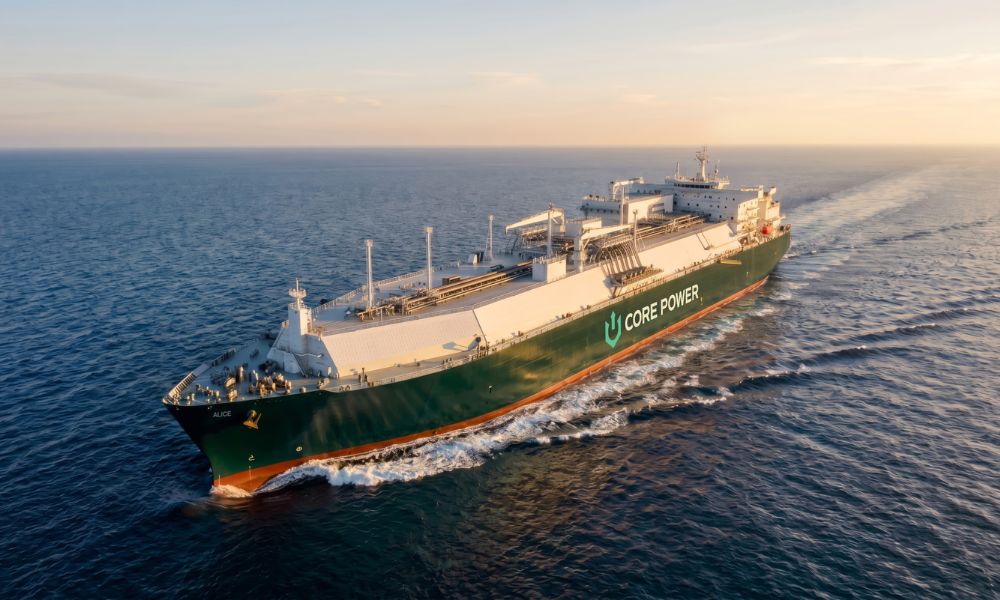
UK-based firm Core Power on Wednesday (19 August) said it has signed a Memorandum of Collaboration with the Port of Corpus Christi Authority (PCCA), establishing a framework for a site-specific maritime nuclear readiness study at the Port of Corpus Christi. 

The study will examine how a major US energy and trade gateway could prepare for two additional distinct future roles: as a potential location for a floating nuclear power plant (FNPP) supplying firm power for port and regional demand, and as a gateway for future calls by nuclear-powered commercial ships.

For the Port, the work is intended to provide a practical evidence base for considering how future ship-based power and shipping technologies could support regional growth, energy resilience and long-term competitiveness. 

For Core Power, the study will build out the practical requirements of its two product pathways in a real port operating environment. FNPPs require suitable sites, grid connections, customers, regulatory and environmental pathways, operating arrangements and long-term service support. Nuclear-powered commercial ships require safe and predictable pathways for transit, berthing and routine port operations. 

“The Port of Corpus Christi provides an opportunity to assess both pathways separately while understanding the shared infrastructure, safety, regulatory and commercial questions around them,” the company said. 

Separately, PCCA Commissioners have agreed to execute a Memorandum of Cooperation with the U.S. Department of Transportation’s Maritime Administration to examine the technical, regulatory and operational requirements for U.S. seaports to support the potential deployment of floating nuclear power plants and provide safe harbour for civil nuclear-powered vessels. 

The agreement recognises PCCA’s work with Core Power to assess the feasibility of both pathways. 

“Taken together, these separate but complementary agreements represent an important step toward translating maritime nuclear technology into practical readiness requirements for US ports,” Core Power said. 

Jeff Pollack, Chief Strategy and Innovation Officer of the Port of Corpus Christi Authority, said: “Port Corpus Christi, as the preeminent energy gateway in North America, is committed to remaining a leader in the global energy marketplace, even as that marketplace expands and evolves. 

“This collaboration will help us understand what would be required technically, environmentally, operationally and commercially for floating nuclear power plants and future calls by nuclear-powered commercial ships to be considered in the real-world context of the Port. It is about gathering evidence and keeping our region competitive for future investment, industry, and high-value jobs.”

Related: Port of Corpus Christi ink agreement to explore nuclear maritime technologies


Photo credit: Core Power
Published: 21 August, 2026

Continue Reading

Nuclear

Port of Corpus Christi ink agreement to explore nuclear maritime technologies

MARAD and port join forces to explore opportunities to advance maritime energy systems, including infrastructure capable of supporting emerging vessel propulsion concepts.
Admin

Published

on

By

Port of Corpus Christi ink agreement to explore nuclear maritime technologies

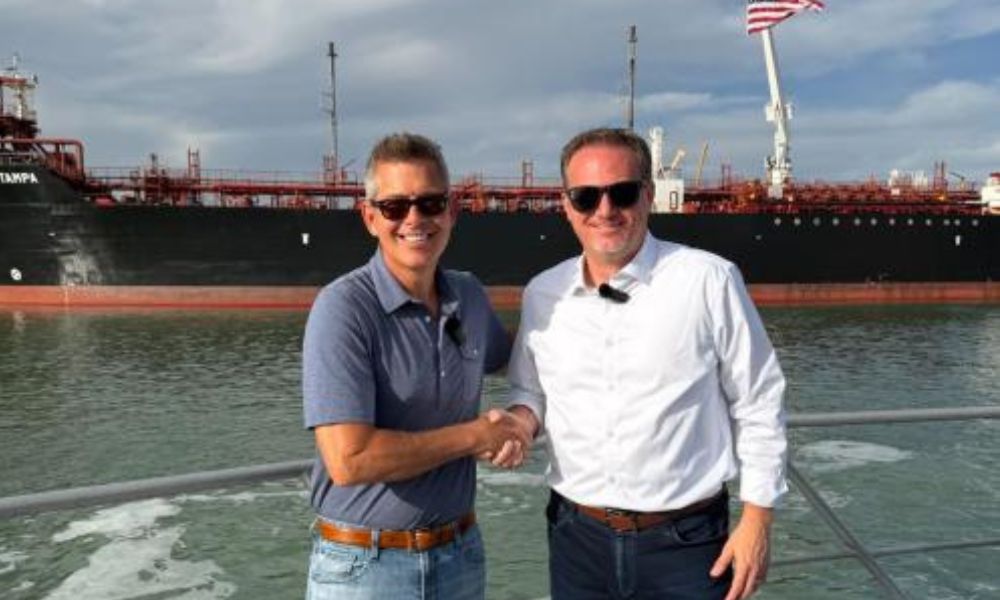
Texas’ Port of Corpus Christi on Wednesday (19 August) signed an agreement with US Department of Transportation’s Maritime Administration (MARAD) to kick off a new partnership focused on small modular reactor (SMR) technology for maritime applications. 

Through a Memorandum of Cooperation (MOC), MARAD and the Port of Corpus Christi agreed to work together to explore opportunities to advance maritime energy systems, including through the potential integration of SMR technologies, resilient port microgrids, shoreside power architecture, infrastructure capable of supporting emerging vessel propulsion concepts, and related workforce development opportunities.

By testing the latest innovations in SMRs, the Department said it can help revitalise US shipbuilding and cut fuel costs.

“Small modular reactors have the potential to reshape America’s maritime sector, lower shipping costs, and bolster our supply chains,” said U.S. Transportation Secretary Sean P. Duffy. 

“This agreement with the Port of Corpus Christi demonstrates that the leading energy port in the nation understands the significance of this technology,” said Maritime Administrator Stephen  M. Carmel. 

“SMR integration has the potential to drive down costs and guarantee that our critical Gulf Coast maritime supply chains remain resilient against any contingency, from extreme weather to power grid disruptions, while training the next generation of high-skilled American mariners.”

This is the second agreement the Department has signed since Secretary Duffy launched the SMR initiative in May.

In June, the Trump Administration signed an agreement to establish the nation’s first testing area for nuclear-powered vessels with the Port of Long Beach.

Related: Long Beach becomes first US port to partner with MARAD on nuclear-powered shipping


Photo credit: US Department of Transportation
Published: 20 August, 2026

Continue Reading

Nuclear

NEMO taskforce examines seafarer training needs for nuclear-powered merchant ships

Taskforce is exploring how existing Standards of Training, Certification and Watchkeeping for Seafarers frameworks may evolve to support future nuclear-powered merchant ships.
Admin

Published

on

By

NEMO taskforce examines seafarer training needs for nuclear-powered merchant ships

The Nuclear Energy Maritime Organization (NEMO) on Tuesday (28 July) said its taskforce is exploring how existing Standards of Training, Certification and Watchkeeping for Seafarers (STCW) frameworks may evolve to support future nuclear-powered merchant ships.

The NEMO STCW Task Force, led by Mark Smith at NorthStandard, is currently engaging with maritime training institutions, reactor developers, ship operators, regulators, and industry experts to better understand:

  • What nuclear-related maritime training already exists
  • Where potential skills and competency gaps may emerge
  • How future training requirements may differ across reactor technologies
  • What role emergency preparedness and incident response training should play

“We know there are individuals and organisations around the world already thinking about these challenges and already undertaking important work in this area,” NEMO said on a social media post. 

“Whether you work in maritime education, nuclear training, reactor development, regulation, classification, human factors, simulation, radiation protection, or crew competency development, we would like to hear from you.”

Smith will shortly be hosting a roundtable discussion to bring together expertise from across the sector and help shape the future conversation

NEMO is inviting organisations and individuals to participate in the discussion and help inform the future skills and competency framework for maritime nuclear applications.

Note: Registration to participate in the discussion can be found here


Photo credit: Nuclear Energy Maritime Organization
Published: 29 July, 2026

Continue Reading

Trending