Connect with us
DNV Decarbonization Insight Series August 2026 - What maritime professionals should know about AI Training

Business

China: Hainan island to implement 0.1% sulphur limit ECA from January 1, 2022

In addition, vessels plying at Hainan are required to meet the International Maritime Organization Tier III standard for nitrogen oxide emission levels.

Admin

Published

on

fd4e2058c7ff43f39b2615f6ced7b1d5

The following article first published by Manifold Times on 28 December was sourced from China’s domestic market through a local correspondent. An online translation service was used in the production of the current editorial piece:

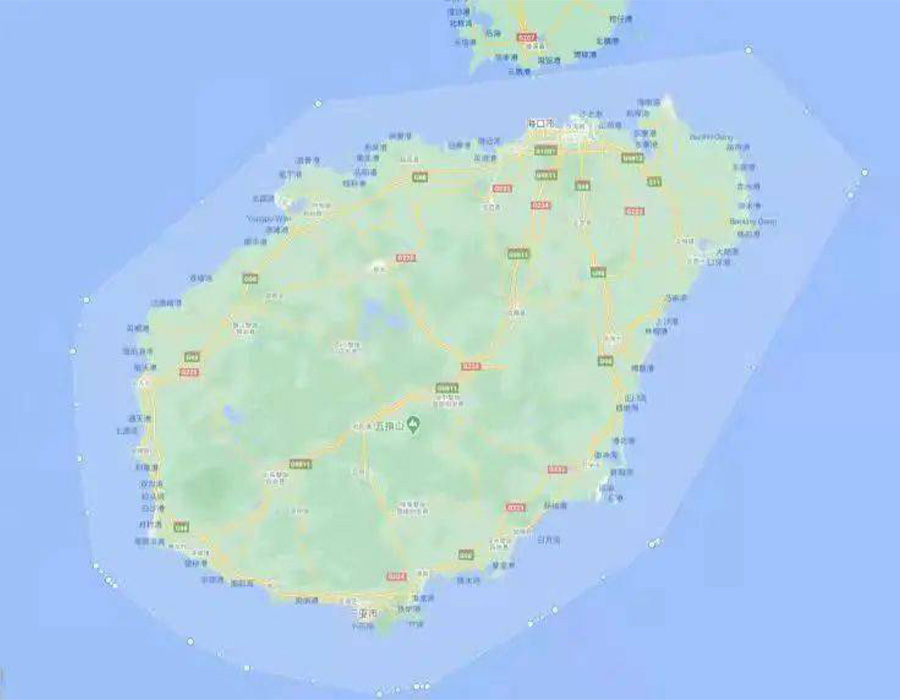
Hainan, an island province of China located in the nation’s southernmost point, will be implementing a 0.1% sulphur limit emission control area (ECA) from January 1, 2022 onwards, according to the Danzhou Municipal Ecological and Environmental Protection Bureau.

In addition, vessels plying at Hainan are required to meet the International Maritime Organization (IMO) Tier III standard for nitrogen oxide (NOx) emission levels.

Under the Tier III standard, NOx emission levels for an engine installed on a ship constructed on or after 1 January 2016 must be reduced to 3.4 g/kWh on any vessel operating in a designated Emission Control Area (ECA).

The development is a result of the “Implementation Plan for Ship Air Pollutant Emission Control Zone” introduce by the Chinese Ministry of Transport in November 2018.

The implementation plan delineates Hainan’s coastal emission control area covering the waters within the line of 20 boundary control points.

Related: DNV GL: Update on air regulations for ships operating in Chinese ECA
RelatedGard alert: China expands its sulphur emission control areas
RelatedGard alert: Sulphur cap ahead!
RelatedChina Classification Society releases China ECA technical notice
RelatedLR FOBAS issues reminder on Chinese domestic ECAs and Taiwan
RelatedCCS presents ‘simplified overview’ of Shanghai ECA
RelatedChina Classification Society update: China emissions control


Photo credit: Danzhou Municipal Ecological and Environmental Protection Bureau
Published: 29 December, 2021

Continue Reading

Business

Asian Shipowners Association among groups to raise concerns on Hormuz tolls

Eight shipping organisations wrote an open letter to the UN and IMO to raise concerns regarding the potential imposition of tolls or service fees in the Strait of Hormuz.

Admin

Published

on

By

RESIZED william william on Unsplash

Eight shipping organisations wrote an open letter to the United Nations (UN) and the International Maritime Organization (IMO) to raise concerns regarding the potential imposition of tolls or service fees in the Strait of Hormuz, warning that such a move would undermine international law and disrupt global trade.

In an open letter dated 3 August to UN Secretary-General António Guterres and IMO Secretary-General Arsenio Dominguez, the organisations said the safety of seafarers and the principle of freedom of navigation must remain paramount amid ongoing uncertainty surrounding the strategic waterway.

The signatories comprise the Asian Shipowners’ Association (ASA), BIMCO, Cruise Lines International Association (CLIA), European Shipowners (ECSA), International Chamber of Shipping (ICS), INTERCARGO, INTERTANKO and the World Shipping Council (WSC). 

“Introducing compulsory charges for transit, or service fees that are a toll in all but name, through the Strait of Hormuz would represent a significant departure from established international practice,” the groups said in the letter. 

“Beyond the immediate financial implications for global trade, it would establish a precedent that could undermine the internationally recognised legal framework governing straits used for international navigation and transit passage.”

“Once such a precedent is established, it becomes increasingly difficult to resist similar measures elsewhere, creating uncertainty for international shipping and global commerce.”

The groups also said any additional costs imposed on maritime transport inevitably flow through international supply chains.

“These consequences extend beyond shipping costs, contributing to higher energy prices, higher inflation, and higher economic uncertainty,” they added.

“Ultimately, these impacts will carry a human cost, affecting livelihoods around the world. It is vital that we continue supporting the preservation of freedom of navigation as the foundation of international maritime governance.”


Photo credit: william william on Unsplash
Published: 6 August, 2026

Continue Reading

Biofuel

Peninsula and Evos to develop bio bunker fuel storage facility in Port of Algeciras

Proposed Evos expansion includes plans to develop up to 60,000 cubic metres of storage capacity, fully allocated to Peninsula to support the expansion of its marine biofuels supply chain in the region.

Admin

Published

on

By

Peninsula

Marine fuels supplier Peninsula on Wednesday (5 August) said it has signed a Memorandum of Understanding (MOU) with European independent liquid energy and chemicals storage company Evos to jointly progress the development of dedicated biofuel storage infrastructure at Evos’ terminal in the Port of Algeciras.

The proposed Evos expansion includes plans to develop up to 60,000 cubic metres of storage capacity, fully allocated to Peninsula to support the expansion of its biofuels supply chain in the region.

Located at the Strait of Gibraltar—one of the world’s busiest maritime corridors—the Evos Algeciras expansion project is intended to strengthen infrastructure for the energy transition in shipping. It will provide dedicated storage and handling capacity for low-carbon marine fuels, underpinning Peninsula’s quality proposition through control of its own supply chain.

John A. Bassadone, founder and CEO of Peninsula, said: “We are seeing an acceleration of biofuel adoption as a result of price volatility of conventional fuels and regulatory measures such as FuelEU and EU ETS. These regulations are designed to ratchet up, and biofuels are the most versatile, available option today to meet decarbonisation targets. 

“By partnering with Evos to build storage infrastructure, it allows us to control the quality of product and to blend biofuel ratios according to market demand. It will also offer our customers full flexibility and optionality when lifting bio products from us and further demonstrates Peninsula’s active commitment to the decarbonisation of marine fuels.”

Under the MOU, the parties will continue technical and commercial discussions on a long-term storage and handling agreement, subject to Evos’ final investment decision.

Evos will lead project development at its Algeciras terminal, including engineering, permitting and construction, while Peninsula will integrate the capacity into its growing global biofuels supply network.

Daan Vos, CEO at Evos, said: “Algeciras is already an important bunker and trading hub, with direct relevance to global shipping activity and inter-Mediterranean trade flows. Evos has a well-established position in the port as a bunker fuel storage terminal, and the expansion project with a strategic partner such as Peninsula builds on that position. 

“By developing infrastructure for marine biofuels, we can respond to changing demand in the bunker market and strengthen Algeciras’ role in the transition to lower-carbon shipping.”

The agreement reflects a shared ambition to support the evolution of the marine energy sector by investing in scalable, future-facing infrastructure in key global hubs.


Photo credit: Peninsula
Published: 6 August, 2026


Continue Reading

Alternative Fuels

India’s SCI launches global tender for up to six LNG dual-fuel containerships

Tender covers two firm orders with options for four additional vessels and each ship will have a capacity of approximately 8,000 TEU and be capable of operating on LNG as well as conventional marine fuels.

Admin

Published

on

By

india flag

State-owned Shipping Corporation of India (SCI) recently launched an international tender for the construction of up to six LNG dual-fuel container vessels as part of its fleet renewal programme.

The tender covers two firm orders with options for four additional vessels. Each ship will have a capacity of approximately 8,000 TEU and be capable of operating on LNG as well as conventional marine fuels.

Both Indian and foreign shipyards are eligible to bid, subject to SCI’s technical and financial requirements. 

Foreign yards must have delivered at least two container vessels exceeding 5,000 TEU that have entered service within the past 10 years. Indian shipyards without prior containership construction experience must partner with a reputed foreign yard that has previously built LNG dual-fuel vessels, capable of running on LNG and Conventional fuel which are in service.

According to the tender documents, SCI will evaluate bids based on factors including delivery and payment schedule of the vessel, bunker fuel consumption, service speed and cargo-carrying capacity.

Bids for the tender must be submitted by 31 August at 1700 hours IST and a virtual pre-bid meeting will be held on 18 August at 1500 hours. 


Photo credit: Naveed Ahmed on Unsplash
Published: 6 August, 2026

Continue Reading
Advertisement

OUR INDUSTRY PARTNERS


Trending