Connect with us
DNV Decarbonization Insight Series August 2026 - What maritime professionals should know about AI Training

Alternative Fuels

Bunker One Brazil to start eight-month B7 bio-diesel trial on tugboats at Rio de Janeiro port

Managing Director of Bunker One Brazil, Flavio Ribeiro, says Bunker One intends to position itself as a global supplier of blended biodiesel in the long term.


Admin

Published

on

Bunker One Brazil to start eight month B7 bio diesel trial on tugboats at Rio de Janeiro port

The Brazil branch of Bunker One is planning to add 7% biodiesel into the marine diesel consumed by two of its self-operated tugboats at Rio de Janeiro port, reports Valor Econômico.

The eight-month trial will be conducted in partnership with the Federal University of Rio Grande do Norte (UFRN) to validate the blending ratio of the biodiesel and marine fuel oil, and cost the company between R 250,000 to R 300,000 (USD 43,733 to USD 52,479).

Managing Director of Bunker One Brazil, Flavio Ribeiro, says Bunker One intends to position itself as a global supplier of blended biodiesel in the long term.

The objective of the trial, at the moment, is to gain market confidence of using biofuel and position the firm to be an exporter of the product.

According to Ribeiro, the B7 blend of marine fuel oil represents a potential global demand of 14 million tons/year – and if it is blended with marine diesel, the potential is 3.7 million tons per year.

Introducing biodiesel as a bunker fuel to the shipping industry opens a new market for Brazilian biodiesel producers which are going to operate with idle capacity from 2022 onwards.

The idle capacity comes from a government mandate to reduce the percentage of biodiesel blend in automotive diesel to 10% in 2022; the current mandate is 13%.

Questioned whether the high prices of Brazilian biodiesel could compromise the biofuel’s economic viability in the shipping industry, Ribeiro stated calculations and correct tests will be made during the eight-month trial.

The trend is that as the idle capacity of the plants is reduced, the price of the biodiesel will also fall, he forecasts.


Photo credit: Agustin Diaz Gargiulo on Unsplash
Published: 23 December, 2021

Continue Reading

Alternative Fuels

Olam Agri, Vitol Bunkers wrap up co-processed VLSFO bio-bunkering operation in Singapore

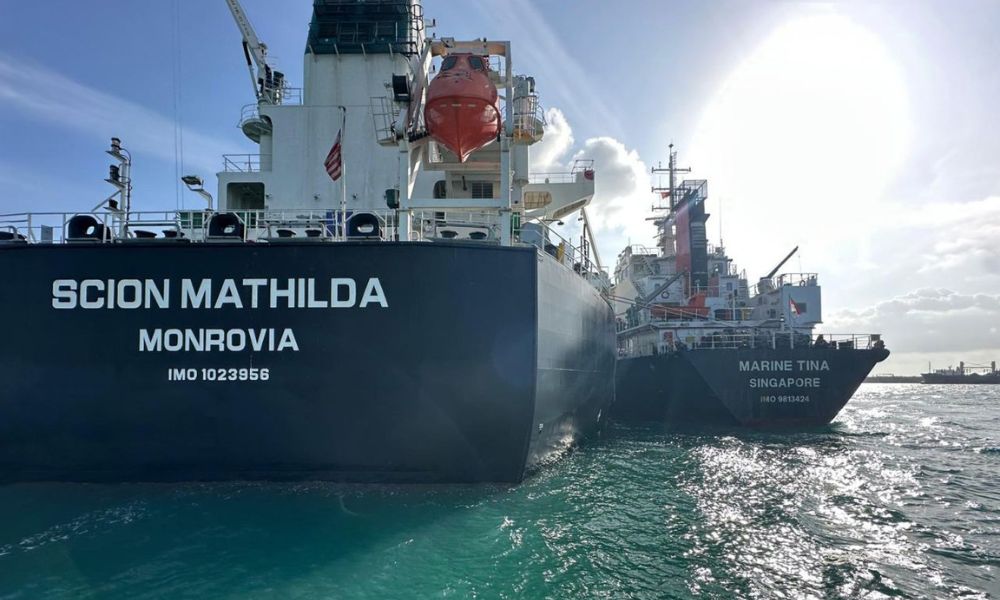
“MV Scion Mathilda” was supplied with 246.5 mt of co-processed VLSFO at the Port of Singapore, comprising 212 mt of conventional VLSFO and 34.5 mt of co-processed CNSL VLSFO.
Admin

Published

on

By

Olam Agri, Vitol Bunkers wrap up co-processed VLSFO bio-bunkering operation in Singapore

Agri-business Olam Agri on Thursday (20 August) said it successfully completed Singapore’s first bio-bunkering operation with Vitol Bunkers, using Very Low Sulphur Fuel Oil (VLSFO) co-processed with Cashew Nutshell Liquid (CNSL), showcasing a waste-to-energy approach. 

MV Scion Mathilda was supplied with 246.5 metric tonnes (mt) of co-processed VLSFO at the Port of Singapore, comprising 212 mt of conventional VLSFO and 34.5 mt of co-processed CNSL VLSFO. The product was supplied by Vitol Bunkers and procured by Olam Agri’s ocean freight business.

The fuel was subsequently consumed during a voyage from Caofeidian (China) to Rotterdam (Netherlands), followed by a ballast leg from Rotterdam to Barcarena (Brazil). 

Total fuel consumption across the voyage comprised 1,354 mt of VLSFO, 101 mt of MGO and 34.1 mt of co-processed VLSFO. The vessel completed the voyage without any operational remarks, confirming the product’s performance in real-world conditions.

The operation marks a significant step forward in the search for practical, scalable alternatives to conventional marine fuels, and demonstrates that meaningful greenhouse gas (GHG) reductions can be achieved without any change to vessel operations.

Martin Fynbo, Head of Bunkers at Olam Agri’s ocean freight business, said: “The successful deployment of this product, achieving verified greenhouse gas mitigation alongside ensuring operational integrity, serves as a definitive proof of concept. This milestone provides validation to a traditionally risk-averse sector, demonstrating that a previously disregarded bio-product solution can both be operationally viable and sustainable.”

Sherman Yeo, Trading Manager, Vitol Bunkers, said: “This operation proves that co-processed VLSFO can be delivered and consumed at sea without any compromise to vessel performance or operational routine. The mass balance solution we have developed opens up a genuinely new avenue for GHG reduction in marine fuels.”

The co-processed VLSFO carries a GHG intensity of 2.02 gCO2eq/MJ, delivering savings of at least 120 MT CO2eq compared with conventional VLSFO on an equivalent basis. This outcome was achieved with no additional onboard handling or fuel treatment requirements.

Vitol’s co-processing and mass balancing methodology resolves a longstanding challenge in the use of CNSL as a marine biofuel. Direct blending of CNSL has historically been dismissed by the industry due to material compatibility and handling issues. By co-processing CNSL within the refinery stream, Vitol has opened a commercially viable pathway for CNSL to contribute to GHG reduction in shipping.

The co-processed VLSFO used in this operation conforms to RMG380 VLSFO grade and has the same chemical composition and quality as conventional fuel, eliminating the need for additional permissions or special clauses in charter party agreements.

“CNSL, derived as a by-product of cashew processing, represents an underutilised feedstock with genuine potential as a scalable marine biofuel component,” Olam Agri added. 

“This trial demonstrates that with the right processing approach, it can be integrated into existing supply chains without disruption.”


Photo credit: Vitol
Published: 21 August, 2026

Continue Reading

Alternative Fuels

China: CIMC Enric and Sinopec to team up on LNG, methanol bunker fuels in new deal

Under the new agreement, the companies will deepen cooperation across the LNG value chain and develop bunkering solutions including truck-to-ship bunkering services.
Admin

Published

on

By

China: CIMC Enric and Sinopec to team up on LNG, methanol bunker fuels in new deal

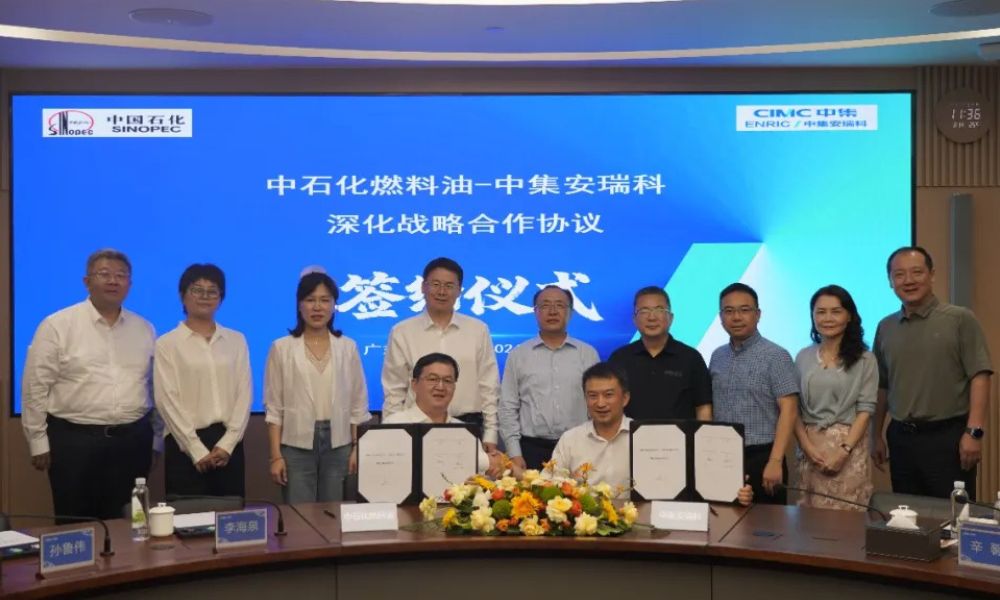
Clean energy equipment and services provider CIMC Enric on Monday (17 August) said it has signed a strategic cooperation agreement with Sinopec Fuel Oil Sales Co Ltd, covering LNG, green methanol, shipbuilding and new energy for marine applications.

Under the new agreement, the companies will deepen cooperation across the LNG value chain and develop bunkering solutions including truck-to-ship bunkering services. They also plan to expand into emerging marine fuels and energy solutions, including green methanol and sustainable aviation fuel (SAF).

The partnership will focus on five areas: energy-resource cooperation, shipbuilding, marine-fuel bunkering, vehicle-related services and integrated services.

The agreement was signed in Shenzhen on 14 August by Yang Xiaohu, executive director and president of CIMC Enric, and Xu Tao, deputy general manager and Party committee member of Sinopec Fuel Oil.

The cooperation will span commercial implementation, industry development and technology innovation.

The partnership comes as the shipping industry accelerates its transition towards lower-carbon fuels amid tightening International Maritime Organization emissions regulations and China’s carbon-reduction goals.

CIMC Enric specialises in equipment for the clean-energy sector, while Sinopec Fuel Oil leverages the resource and supply network of China Petroleum & Chemical Corporation (Sinopec). Both said their complementary capabilities provide a basis for moving beyond a conventional equipment-supply relationship towards broader cooperation integrating equipment, fuels, applications and technology.

The two companies began working together in October 2022, initially focusing on LNG and CNG storage and transportation equipment. Their cooperation has since expanded into marine equipment, green methanol bunkering, storage and transportation equipment, and external gas-source procurement.

The companies said they will establish a regular cooperation mechanism and develop detailed projects to accelerate implementation. The partnership is intended to strengthen collaboration between energy-equipment and energy-supply companies and support the maritime industry’s transition towards lower-carbon fuels.


Photo credit: CIMC Enric
Published: 21 August, 2026

Continue Reading

Ammonia

Azane signs ammonia bunkering deal with Equinor, first deliveries due in H2 2026

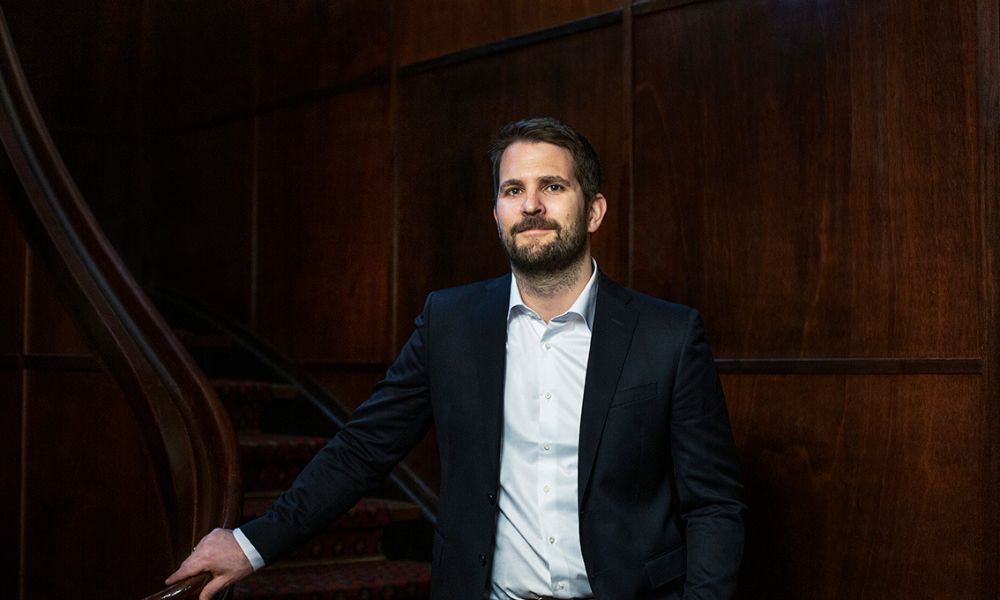
Both signed a framework agreement for the supply of ammonia and the execution of truck-to-ship ammonia bunkering operations for ammonia-fuelled vessels.
Admin

Published

on

By

Azane signs ammonia bunkering deal with Equinor, first deliveries due in H2 2026

Azane Fuel Solutions (Azane) on Thursday (20 August) said it has signed a framework agreement with Equinor Energy AS for the supply of ammonia and the execution of truck-to-ship ammonia bunkering operations for ammonia-fuelled vessels. 

The first deliveries will commence during the second half of 2026. The agreement establishes a framework for future ammonia fuel deliveries and bunkering operations supporting the maritime industry’s transition towards lower-emission solutions. 

“This agreement marks an important milestone for Azane and demonstrates growing confidence in ammonia as a marine fuel,” said Steinar Kostøl, CEO of Azane. 

“Truck-to-ship bunkering offers a practical and flexible solution for the early adoption of ammonia-fuelled vessels while the broader ammonia fuel ecosystem continues to develop.”  

The agreement covers truck-to-ship ammonia bunkering operations, where ammonia is transported to the quayside and transferred directly to the receiving vessel. 

The contract supports Azane’s strategy of enabling near-term deployment of ammonia as a marine fuel while continuing to develop dedicated ammonia infrastructure for future market growth. 


Photo credit: Azane Fuel Solutions
Published: 21 August, 2026

Continue Reading

Trending